Tag Archives: Western Snowy Plover

Snowy Plovers Are (Nearly) as Enchanting as Piping Plovers!

Dear PiPl Friends,

During my recent trip to Los Angeles, our daughter provided wonderful opportunities for us to take several joyous expeditions to see Western Snowy Plovers. I write joyous because we thought we would be fortunate to see one or two, when we actually saw several hundred!
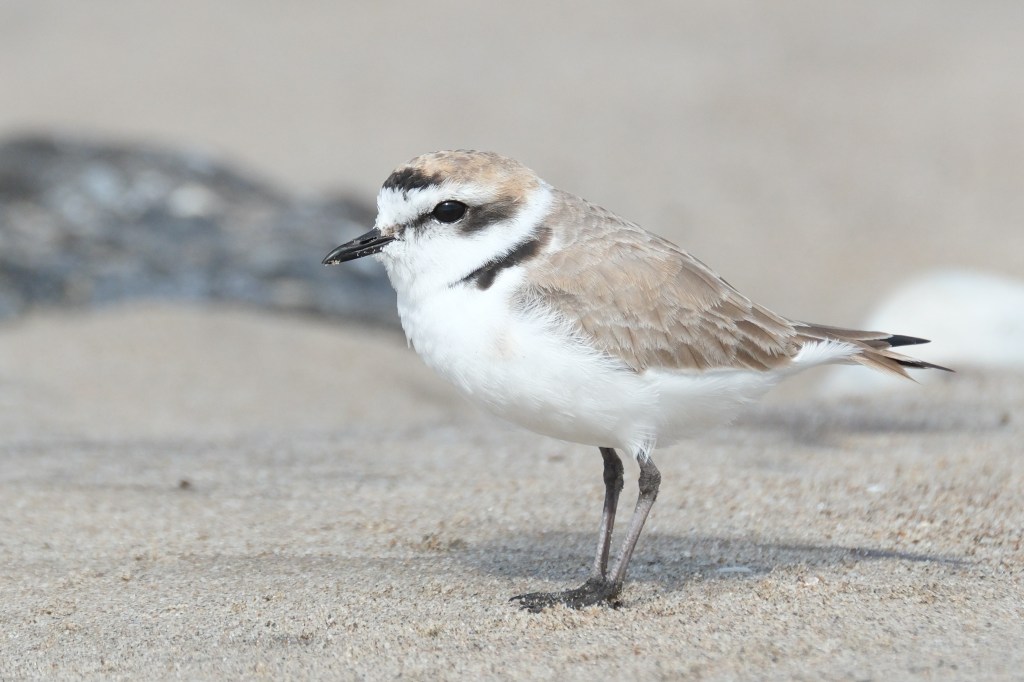
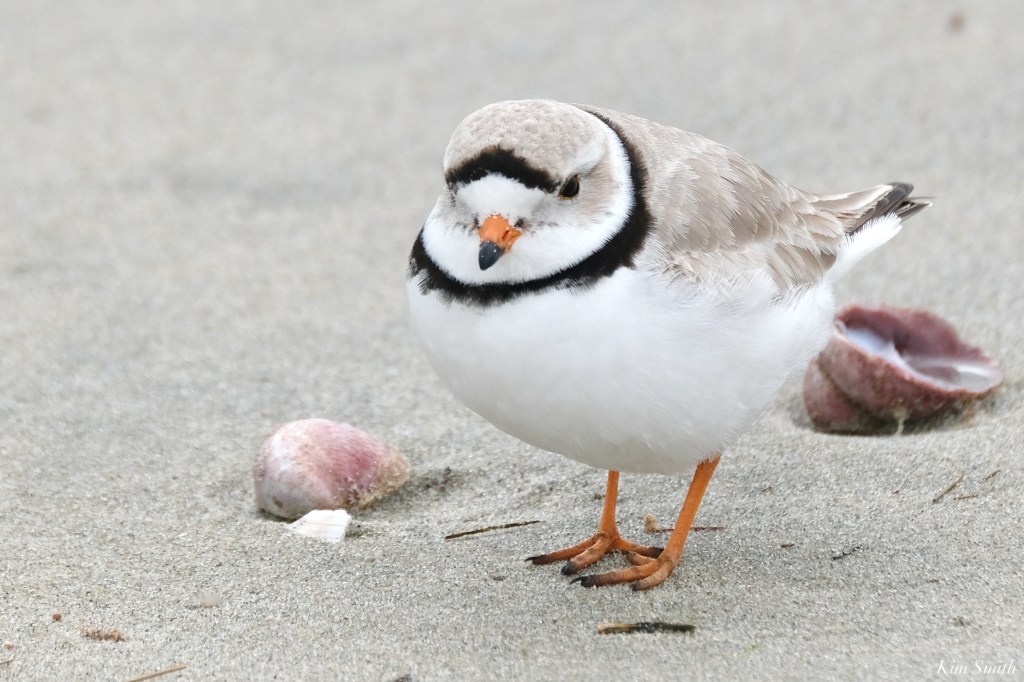
Snowy Plover (left), Piping Plover (right) – some key field mark differences at a glance – Snowy Plovers have black or gray legs, compared to the PiPls orange legs and feet; the beak of the SNPl is longer and solid black whereas the PiPls is beak is orange and black. Snowy Plover’s headband and collar band are not as pronounced. Piping Plovers lack the black eye patch.

We came across three breeding colonies; the largest was located on a relatively remote beach with an estuary bordering the northern end of the sandy dunes. We observed that Snowy Plovers share many similar traits to Piping Plovers including their love for invertebrates, both land and marine. PiPls and SnPl are visual feeders and utilize the “run-stop-peck” foraging method. Like Piping Plovers, Snowy Plovers display much territorial behavior towards one another and I imagine when the breeding season gets fully underway, there will be a great many more disputes.
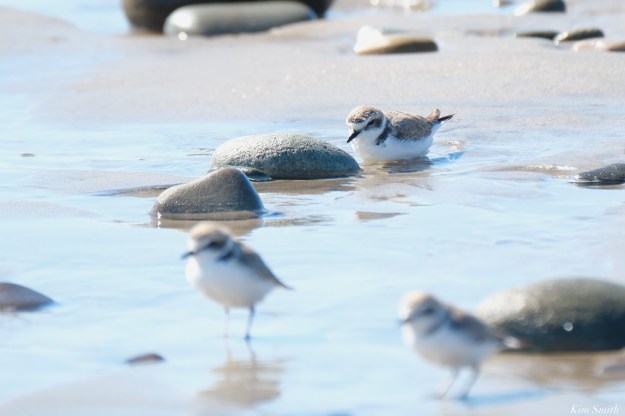
One notable difference is the Snowy Plovers communal “in-unison” bathing habit, which was absolutely charming to observe. A flock of 100 or so were foraging on kelp flies in the wrack when they all took off over the water, circling round several times in an exquisitely beautiful flight pattern before landing on the pebbly banks at the mouth of the estuary. After a few moments of seeming to observe whether it was safe or not to bathe, one by one they began entering the water, then in small groups, then even greater numbers joined the Plovers that were already in the water. Some were bathing singularly in the puddles made by rocks in the tide pools but for the most part, they were in the estuary creek dipping and splashing all along the banks.  At one point I wasn’t entirely sure what was happening as they appeared to be continuing their onshore battles while they were bathing.
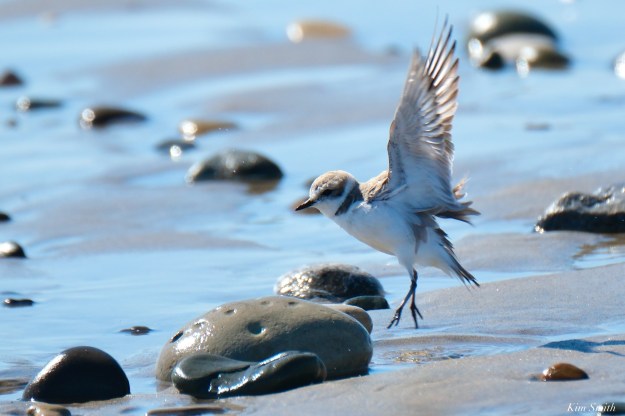
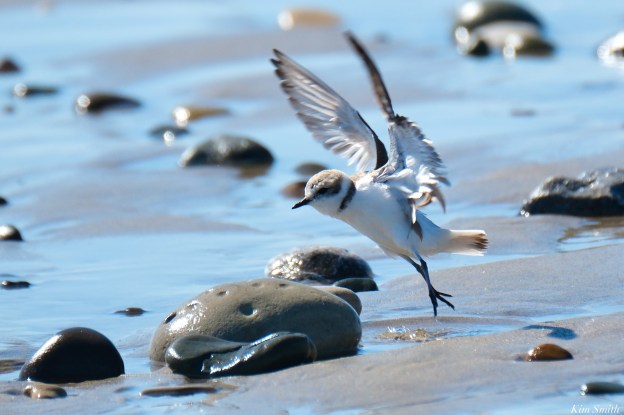
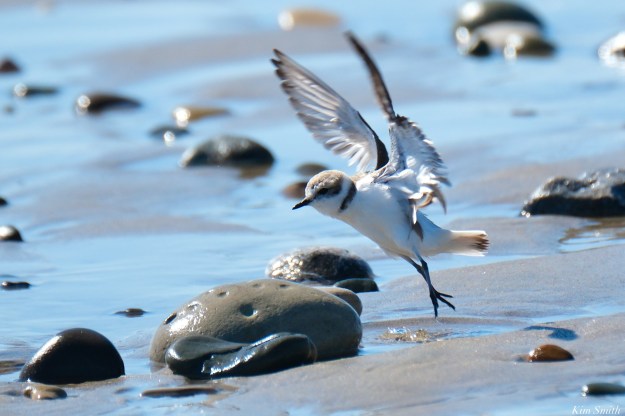
Snowy Plover drying wings after bathing

Another very notable difference is the bird’s vocalizations. The Snowy Plover’s song is more of a ta-wheet interspersed with sweet trilling chirps, rather than the penny whistle call of the Piping Plover. It was too windy to capture a really good audio recording, but you can hear the flock in the background of the bathing scenes in the video. To hear more  variations in their birdsong, go here: Snowy Plover’s vocalizations.

Unlike Piping Plovers and many species of shorebirds, Snowy Plovers have no aerial flight display. Snowies also routinely have two broods, sometimes three, with three being the average number of eggs, as opposed to the PiPls four eggs. Typically about a week after hatching, mom pairs up with another male to begin establishing a second nest, leaving dad alone to raise the chicks.

Both Snowies and PiPls have similar predators including falcons, raccoons, coyotes, owls, crows, and ravens. And both species have been negatively impacted by extensive loss of habitat and human caused disturbances, most notably dogs crushing eggs and disturbing nesting areas. We observed volunteer docents at the nesting sites reminding scofflaw dog owners that dogs are not allowed at Snowy Plover breeding locations. California has approximately 3,400 miles of coastline and 420 state beaches. It’s unfortunate that despite the near limitless access of beaches to beachgoers that permit pets, dog owners still allow their dogs to run freely through the comparatively minuscule (area-wise) nesting sites.

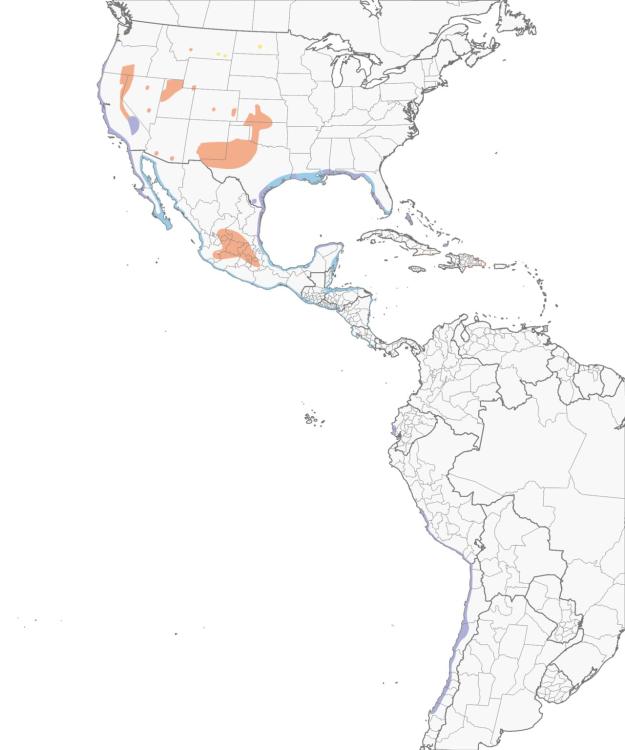
There are only about 2,000 Western Snowy Plovers that breed along California’s coast, from San Francisco to the Baja. The West Coast population is deemed a Threatened Species. At one time it was thought there were tens of thousands nesting at more than fifty breeding locations along the Pacific Coast. Today, there are only a handful of coastal nesting sites. Nationwide, there are approximately 24,000, compared to the total Piping Plover population, which is roughly 13,000 to 14,000 birds. You can also see Snowy Plovers along the Gulf Coast. Some nest there while others have migrated from their summer breeding grounds.
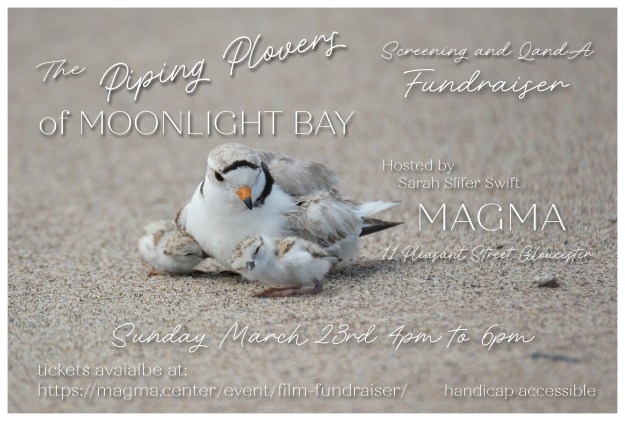
Please join us Sunday, March 23rd at 4pm, at MAGMA for a Piping Plover film screening and fundraiser. We’ll have much to talk about! Please R.S.V.P. and let us know if you are planning to come as we are providing refreshments. I hope to see you there!

Link to event tickets at MAGMA: https://magma.center/event/film-fundraiser/

Suggested contribution is $50. however, if that is not affordable for you please, contribute what you can. Thank you 🙂

Warmest wishes,

Kim
Happy almost-Spring

Dear PiPl Friends,

At last, spring-like temperatures! It won’t be long before the crocus are peeking through (and for some friends, you may already have seen signs of life in your gardens). I think we could all use a breath of fresh air.

Lots to share – we are extremely occupied getting the files ready for our American Public Television debut, which takes place on April 1st, to coincide with PBS Earth Day month-long programming. I am overjoyed to write that The Piping Plovers of Moonlight Bay will be airing on over 289 stations, representing 85.5 percent of the US TVviewing audience, including 9 of the top 10 stations, and 21 of the top 25 markets (the major urban areas). And we were accepted to the Santa Monica Film Festival! Which is also a lovely segue to sharing about my recent trip to Los Angeles to visit our daughter. I arrived at her home with the flu, left with a virus, as did she have an entirely different virus, nonetheless, it did not stop us from adventuring all along the Central Coast. My daughter had planned a wonderful itinerary for our visit (she travels around the world through her work and could be a travel guide if she wanted!) and she took me to all her favorite wildlife hotspots, which are also some of the most staggeringly beautiful places along the Pacific Coast.

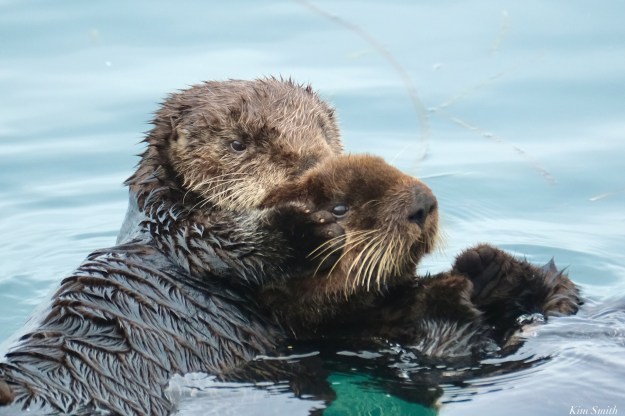
From Malibu to Ragged Point, we filmed and photographed many species of wildlife that are considered conservation success stories, along with species continuing to struggle against habitat loss and a warming climate. Some highlights of which I will be sharing their stories include Snowy Plovers, Sea Lions, Elephant Seals, and Sea Otter Moms and pups (THE most adorable). We saw many splendid bird species, some that we see on the East Coast, and many only found on the West. It was so interesting to compare Snowy Plovers to Piping Plovers, her garden’s Allen’s Hummingbirds to our Ruby-throated Hummingbirds, Black Oystercatchers to American Oystercatchers, and Black Phoebes to Eastern Phoebes, to mention just a few. We visited bays and estuaries and along the way found heron rookeries, a Surf Scoter up close and actually in the surf (not far off as they are typically seen here in the East) and even met Malibu Lagoon’s resident Osprey.

Sadly, the Monarch Reserve at Pismo Beach was abysmal. The winter of 2024-2025 has been the second lowest count on record of the Pacific Monarchs however, I was very disappointed to see that there were absolutely no nectar plants blooming at the Reserve for the few Monarchs that were there. The butterflies were flying around, clearly looking for nectar. We did see about a dozen Monarchs further north at the Ragged Point Inn and Resort, but then again, the proprietors had taken the time and forethought to plant many nectar-rich flowering plants that were inviting to both the Monarchs and to the hummingbirds.

A reminder that our film screening and Q and A fundraiser is the afternoon of March 23rd at 4pm at Sarah Slifer Swift’s lovely MAGMA dance studio. As soon as I finish organizing the files to send to APT, I’ll send an evite postcard with information on how to purchase tickets. Thank you to all who are planning to come. I think it is going to be a wonderfully fun afternoon and I am looking forward to seeing everyone and talking about all things Plover!

Happy Spring ❤
xxKim

GRAND NEWS FOR PIPING PLOVERS AND PROGRESS UPDATE ON OUR DOCUMENTARY #ploverjoyed

Dear PiPl Friends,

Based on preliminary data from Mass Wildlife’s Endangered Species and Natural Heritage Program, approximately 1,145 pairs of Piping Plovers nested on Massachusetts beaches in 2023. This number is remarkable considering that when conservationists first began monitoring PiPls on Massachusetts beaches, there were fewer than 200 pairs. Because of the dedicated work of coastal waterbird conservation partners, volunteers, and regular beach going citizens, who all care deeply about the fate of these vulnerable little shorebirds, 50 percent of the Atlantic seaboard Piping Plover population now nests on Massachusetts beaches.

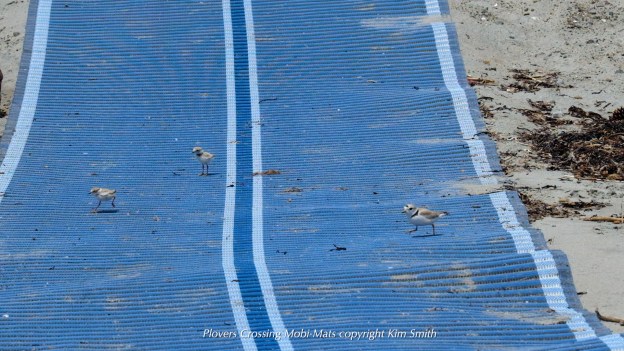
The short features two PiPl chicks and Dad Plover crossing handicap mats. The blue roll-out accessibility Mobi-mats have been installed at a number of Massachusetts beaches. They are wonderfully helpful for accessing the beach for wheel-chair bound people, and for families with baby strollers and wagons. I wondered how the Plovers would react. After a few moments of hesitation, our little Plover friends appeared unafraid, striding confidently across, and even stopping to investigate a bug.

The footage is from the forthcoming film, The Piping Plovers of Moonlight Bay. We are finessing, finessing, and finessing. With each edit, the film grows stronger. I am so proud of the work we have accomplished so far and in January we will begin submitting to film festivals!

Although Piping Plovers are slowly returning to the shores of Massachusetts, the Atlantic Coast Plover population as a whole remains at tremendous risk. Climate change, loss of habitat, vandalism, and predation are the primary challenges impeding the birds’ recovery. These same challenges are affecting not only Piping Plovers, but nesting shorebirds from coast to coast. I am thinking about the Western Snowy Plover, a closely related species that nests along the coast of California. Our documentary features the conservation policies and protocols of Massachusetts organizations. Whether a beachgoer recreating on the Atlantic Coast, shores of the Great Lakes, or Pacific Coast, The Piping Plovers of Moonlight Bay will be tremendously valuable in helping communities better understand why these protocols are in place, precisely how the policies help Plovers, and how we can collectively, and individually, help plover species recover nationwide. And, I think too, you will be smitten by the loveable Plover family featured in our film.

Please consider making a tax-deductible donation to our online fundraiser to help complete our documentary. Filming is finished, however, post-production and festival costs have sky-rocketed; they are much greater than when we released our sister film project about species at risk, Beauty on the Wing: Life Story of the Monarch Butterfly. Working with the community to produce Beauty on the Wing was by far the most meaningful way to launch a film and we could not have done it without your help.

Please donate here to our Network for Good online fundraiser .

Feel free to call or write with any questions. We are deeply appreciative of any gifts given. Thank you.

With gratitude to the following PiPl friends for their kind contributions – Alice and David Gardner (Beverly), JoeAnn Hart (Gloucester), Kim Tieger (Manchester), Joanne Hurd (Gloucester), Holly Niperus (Phoenix), Bill Girolamo (Melrose), Claudia Bermudez (Gloucester), Paula and Alexa Niziak (Rockport), Todd Pover (Springfield), Cynthia Dunn (Gloucester), Nancy Mattern (Albuquerque), Sally Jackson (Gloucester), Marion Frost (Ipswich), Cecile Christianson (Peabody), Donna Poirier Connerty (Gloucester), Mary Rhinelander (Gloucester), Jane Hazzard (Georgetown), and my sweet husband Tom 🙂 Thank you so very much for your support and for seeing the tender beauty in the life story of the Piping Plover.

Very best wishes,

xxKim