Tag Archives: The Piping Plover Film Project

GRAND NEWS FOR PIPING PLOVERS AND PROGRESS UPDATE ON OUR DOCUMENTARY #ploverjoyed

Dear PiPl Friends,

Based on preliminary data from Mass Wildlife’s Endangered Species and Natural Heritage Program, approximately 1,145 pairs of Piping Plovers nested on Massachusetts beaches in 2023. This number is remarkable considering that when conservationists first began monitoring PiPls on Massachusetts beaches, there were fewer than 200 pairs. Because of the dedicated work of coastal waterbird conservation partners, volunteers, and regular beach going citizens, who all care deeply about the fate of these vulnerable little shorebirds, 50 percent of the Atlantic seaboard Piping Plover population now nests on Massachusetts beaches.

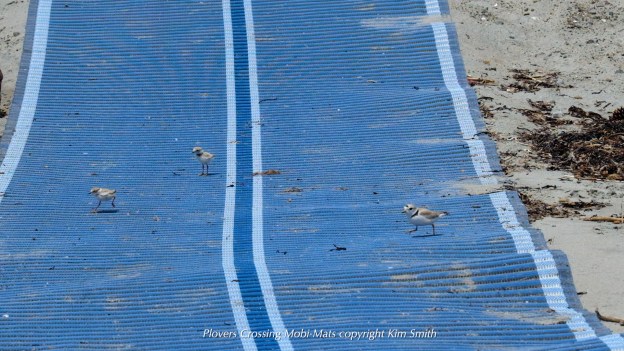
The short features two PiPl chicks and Dad Plover crossing handicap mats. The blue roll-out accessibility Mobi-mats have been installed at a number of Massachusetts beaches. They are wonderfully helpful for accessing the beach for wheel-chair bound people, and for families with baby strollers and wagons. I wondered how the Plovers would react. After a few moments of hesitation, our little Plover friends appeared unafraid, striding confidently across, and even stopping to investigate a bug.

The footage is from the forthcoming film, The Piping Plovers of Moonlight Bay. We are finessing, finessing, and finessing. With each edit, the film grows stronger. I am so proud of the work we have accomplished so far and in January we will begin submitting to film festivals!

Although Piping Plovers are slowly returning to the shores of Massachusetts, the Atlantic Coast Plover population as a whole remains at tremendous risk. Climate change, loss of habitat, vandalism, and predation are the primary challenges impeding the birds’ recovery. These same challenges are affecting not only Piping Plovers, but nesting shorebirds from coast to coast. I am thinking about the Western Snowy Plover, a closely related species that nests along the coast of California. Our documentary features the conservation policies and protocols of Massachusetts organizations. Whether a beachgoer recreating on the Atlantic Coast, shores of the Great Lakes, or Pacific Coast, The Piping Plovers of Moonlight Bay will be tremendously valuable in helping communities better understand why these protocols are in place, precisely how the policies help Plovers, and how we can collectively, and individually, help plover species recover nationwide. And, I think too, you will be smitten by the loveable Plover family featured in our film.

Please consider making a tax-deductible donation to our online fundraiser to help complete our documentary. Filming is finished, however, post-production and festival costs have sky-rocketed; they are much greater than when we released our sister film project about species at risk, Beauty on the Wing: Life Story of the Monarch Butterfly. Working with the community to produce Beauty on the Wing was by far the most meaningful way to launch a film and we could not have done it without your help.

Please donate here to our Network for Good online fundraiser .

Feel free to call or write with any questions. We are deeply appreciative of any gifts given. Thank you.

With gratitude to the following PiPl friends for their kind contributions – Alice and David Gardner (Beverly), JoeAnn Hart (Gloucester), Kim Tieger (Manchester), Joanne Hurd (Gloucester), Holly Niperus (Phoenix), Bill Girolamo (Melrose), Claudia Bermudez (Gloucester), Paula and Alexa Niziak (Rockport), Todd Pover (Springfield), Cynthia Dunn (Gloucester), Nancy Mattern (Albuquerque), Sally Jackson (Gloucester), Marion Frost (Ipswich), Cecile Christianson (Peabody), Donna Poirier Connerty (Gloucester), Mary Rhinelander (Gloucester), Jane Hazzard (Georgetown), and my sweet husband Tom 🙂 Thank you so very much for your support and for seeing the tender beauty in the life story of the Piping Plover.

Very best wishes,

xxKim
THANK YOU TO ALL WHO ARE DONATING TO OUR PIPING PLOVER FILM PROJECT!

Dear PiPl Friends,

A huge shout out to our newest contributors to our Piping Plover film project fundraiser. My deepest thanks and appreciation to Alice and David Gardner (Beverly), JoeAnn Hart (Gloucester), Kim Tieger (Manchester), Joanne Hurd (Gloucester), Holly Niperus (Phoenix), Bill Girolamo (Melrose), Claudia Bermudez (Gloucester), Paula and Alexa Niziak (Rockport), Todd Pover (Springfield), Cynthia Dunn (Gloucester), Nancy Mattern (Albuquerque), and my sweet husband Tom 🙂 Thank you so very much for your support and for seeing the tender beauty in the life story of the Piping Plover.

Progress update – We are currently working with the stellar editing staff at Modulus Studios in Boston. Eric Masunaga and his assistant Shannon also worked on our sister film project, Beauty on the Wing. Keeping my fingers crossed and not wanting to jinx our progress, but the hope/goal is to have a cut ready to begin submitting to film festivals by the end of 2023. We have also received exceptionally helpful content advice from both Carolyn Mostello, the Massachusetts Coastal Waterbird Biologist and Todd Pover, Senior Wildlife Biologist for Conserve Wildlife New Jersey.

Thank you so very much again for your kind help.

Warmest wishes,

Kim

To contribute to The Piping Plovers of Moonlight Bay, please consider making a tax-deductible donation to our online Network for Good fundraiser DONATE HERE

To learn more about The Piping Plovers of Moonlight Bay documentary please go here.

FUNNY PIPING PLOVER CHICKS NEW SHORT FILM

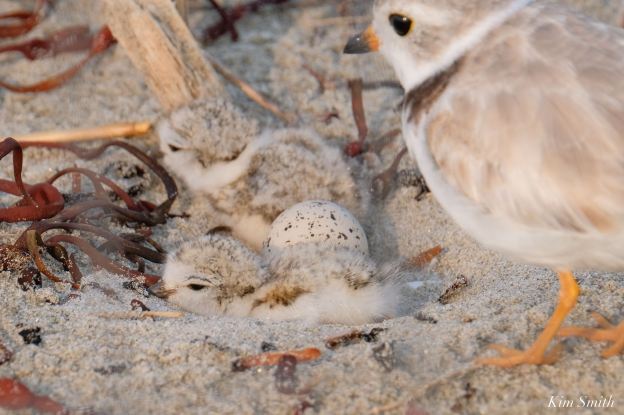
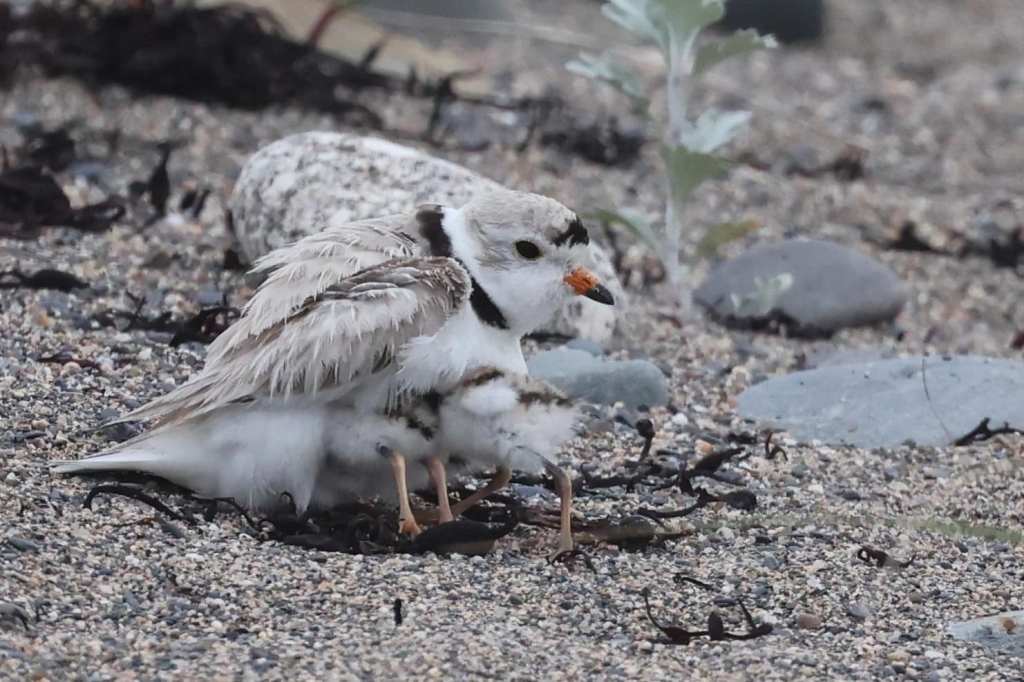
Tiny Piping Plover chicks weigh about as much as a nickel at the time of hatching. Although capable of running about within a few hours after pushing out of their eggshells, one-day-old chicks are extraordinarily vulnerable. They are also adorably funny as they learn how to navigate the varied beach terrain and to forage for food. The hatchlings study their out-sized feet, stretch tiny wing buds, fall into mini fox holes, and tumble over even while only trying to scratch themselves. It’s not easy being one-day-old!

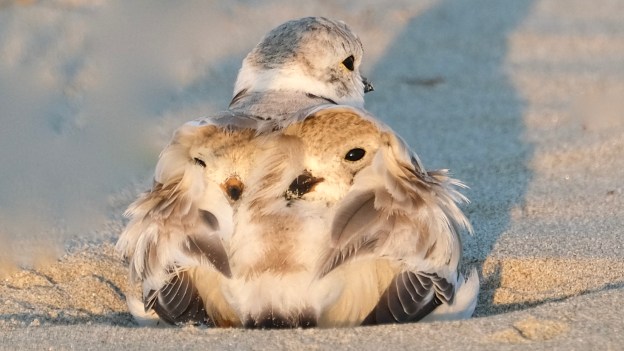
Mom and Dad spend a great deal of time helping the chicks to regulate their body temperature, especially in the earliest days of the chick’s life. In the last clips, Dad calls to the four siblings to warm up under his downy soft underwing feathers.  And by the way, Plover Dads are true super heroes in the life story of the Piping Plover, co-parenting equally, and even then some.

The footage in this short is from the forthcoming film, The Piping Plovers of Moonlight Bay. Please consider making a tax-deductible donation to our online fundraiser to help complete our documentary. Filming is finished however, post-production and festival costs have sky-rocketed; they are much greater than when we released our sister film project about species at risk, Beauty on the Wing: Life Story of the Monarch Butterfly. Without our community’s help, we could not have launched Beauty on the Wing. Working with the community to produce Beauty on the Wing made it far more meaningful.

We are deeply appreciative of any gifts given.

Thank you.

Please donate here to our Network for Good online fundraiser https://filmmakerscollab.networkforgood.com/projects/55077-filmmakers-collaborative-the-piping-plovers-of-moonlight-bay

WORLD SHOREBIRDS DAY – A CELEBRATION OF SHOREBIRDS!

HAPPY WORLD SHOREBIRDS DAY! Today, September 6th, marks the 10th anniversary of Worlds Shorebird Day. Worlds Shorebird Day was founded to help bring awareness to the plight of  shorebirds. More than 50 percent of shorebird species around the globe are in decline. 

Our documentary, The Piping Plovers of Moonlight Bay, shines a light on the Plovers and how these remarkably valiant little birds are surviving the pressures of habitat loss, human disturbance, and a warming climate. Massachusetts is at the fore of Piping Plover recovery and we are doing much that is right however, the recovery is not going as well in other regions.

Please think about donating to our film. I think of Plovers as a gateway species, similar to Monarch butterflies. Through developing a deeper understanding of the birds, people will be inspired to do all they can to join citizens around the world in providing safe habitat for nesting and migrating shorebirds.  Our sister film, Beauty on the Wing: Life Story of the Monarch Butterfly is currently airing on PBS and has reached markets in 87 percent of US households, in all major cities. Wouldn’t it be wonderfully meaningful to have that kind of outreach for Plovers!

DONATE HERE https://filmmakerscollab.org/films/piping-plovers-of-moonlight-bay/

LAUNCHING OUR PIPING PLOVER FILM FUNDRAISING EVENT TODAY!

Dear PiPl Friends,

As many of you know that while we Piping Plover Ambassadors have been looking out over Cape Ann’s PiPls, I have also been working on a documentary film about Plovers nesting in Gloucester, along with filming Plover populations found at communities all around the north of Boston coastal region. Our GHB Plovers first arrived in Gloucester in 2016 and it was evident from the very first days that they were struggling to survive under the pressures of human and pet disturbances. As we were learning how to best help the Plovers nest undisturbed, I began to document Plovers at many other beaches to learn how other communities managed their Plover populations. I focused mostly on urban beaches as they are most similar to Good Harbor Beach.

Over the course of filming, I have spent several years documenting nesting Piping Plovers pairs that are extraordinary in their parenting skills, similar to our original pair of GHB Plovers, Super Dad and Super Mom. The documentary, The Piping Plovers of Moonlight Bay, is based on true life stories and is set in a fictional Massachusetts coastal town to protect the location of the Plovers.

Today we are launching our fundraising campaign. I am very proud to share that we have received our very first grant, from the Massachusetts Division of Fisheries and Wildlife. Here is a link to our online fundraiser:

Link to our 501c fiscal sponsor Filmmakers Collaborative: https://filmmakerscollab.org/films/piping-plovers-of-moonlight-bay/
Link to the trailer: https://vimeo.com/818861213
Link to the Piping Plover Project website: https://wordpress.com/view/pipingploverproject.org

Gifts for The Piping Plovers of Moonlight Bay will support post production and distribution costs, including re-recording voiceover narration, color and sound editors, picture mastering, studio time, festival fees and applications, music and map rights, and an underwriting agent to bring the film to the wide audience of public television. Our goal is to raise $80,500.00 for post production with a total of $115,000.00 if the film is accepted to air on public television.

The names of underwriters contributing $10,000.00 and above will be proudly listed in the film’s special underwriting credit pod. What does it mean to be an underwriter? When you watch a film on public television and the announcer says (for example), “This program was made possible by gifts from Katherine and Charles Cassidy, by The Fairweather Foundation, by Lillian B. Anderson, and by The Arnhold Family, in Memory of Clarisse Arnhold,” that’s where your name, or the name of your foundation, will appear, at both the beginning and at the end of the film.

If you are interested in becoming an underwriter, please feel free to phone (978-290-3804) or email and I will be happy to send the formal proposal and budget.

All supporters, no matter how large or small the donation, will be listed on the film’s website. Any amount contributed is tremendously appreciated.

Thank you for being part of launching The Piping Plovers of Moonlight Bay!

Very best wishes,

Kim

Congratulations to Piping Plover Conservation in Nova Scotia!

We have exciting plover news to share today! 🐣

After nearly 20 years (2004), a Plover pair has hatched a nest at Crescent Beach in Lockeport, NS this summer! We are celebrating the fantastic community of supporters who helped the plovers get there, including our amazing volunteer, Jane.

We hope the chicks survive and fledge but we need your help. Please stick to the wet sand, keep your pets on leash and give these chicks plenty of space to thrive. And keep in mind that these chicks will venture around the beach so make sure to #sharetheshore #pipingplover #conservation #shorebirds #beach #protection #novascotia

HAPPY FATHER’S DAY TO ALL THE SUPER DADS!

HAPPY FATHER’S DAY TO ALL THE WONDERFUL SUPER DAD’S, both human and avian!

My husband Tom is the best Dad you could ever imagine. From Tom, I inherited the best father-in-law, his Dad. My heart is filled with much joy when I see my son Alex with his daughter and know he has inherited their same thoughtful and kind, gentle loving nature. I don’t want to go on about this because I realize not everyone is so blessed and that there are many absentee fathers out there, mine included. Enjoy all the Dads in your life and know you are so blessed if you are fortunate to know a good one.

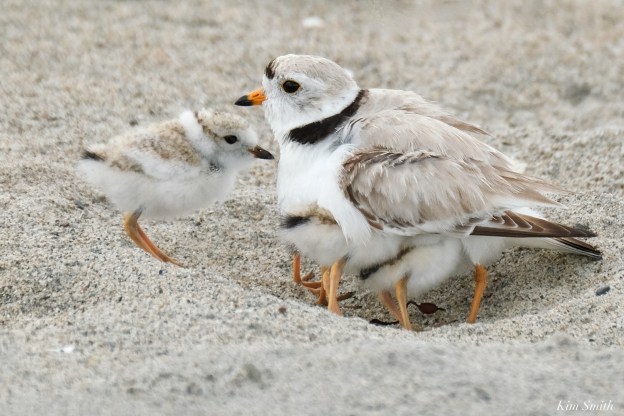
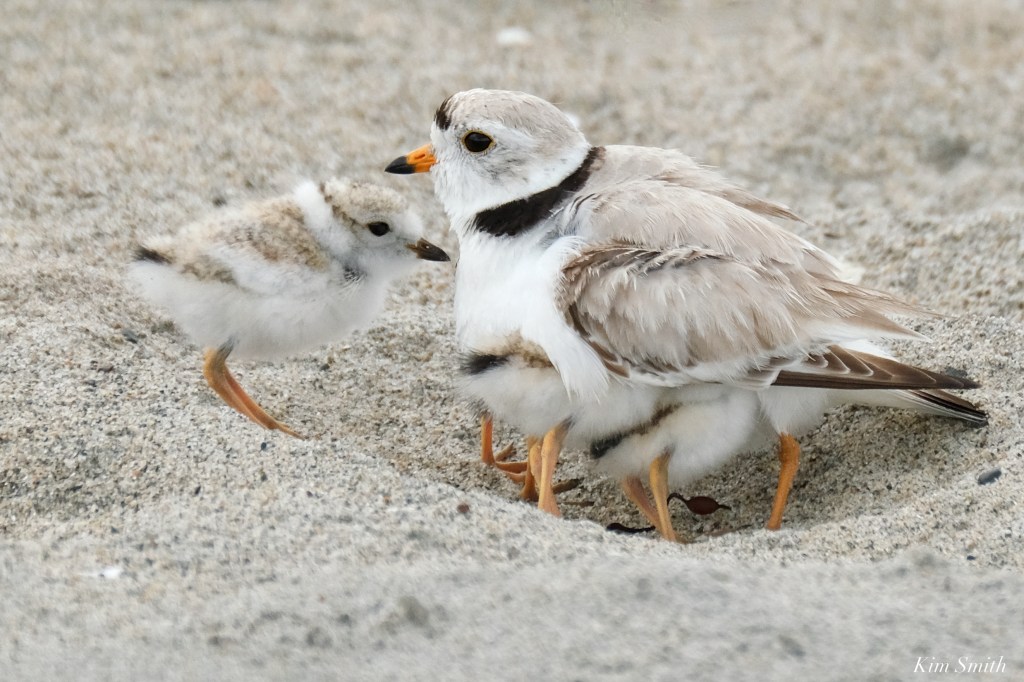
The first photo is of a Piping Plover Dad thermosnuggling his three chicks and was taken recently at a beach on the south shore. I think the chicks are about three weeks old in the photo and it reminded me of our Good Harbor Super Dad. We call him Super Dad for a variety of reasons, but one of the most poignant is how he stayed with the handicapped chick for a month beyond the date when HipHop’s siblings had already learned to fly. It took Hip Hop twice as long to manage sustained flight but Super Dad was with him every step of the way. I think this is very unusual in the animal kingdom and is counter intuitive to the survival of the adult.

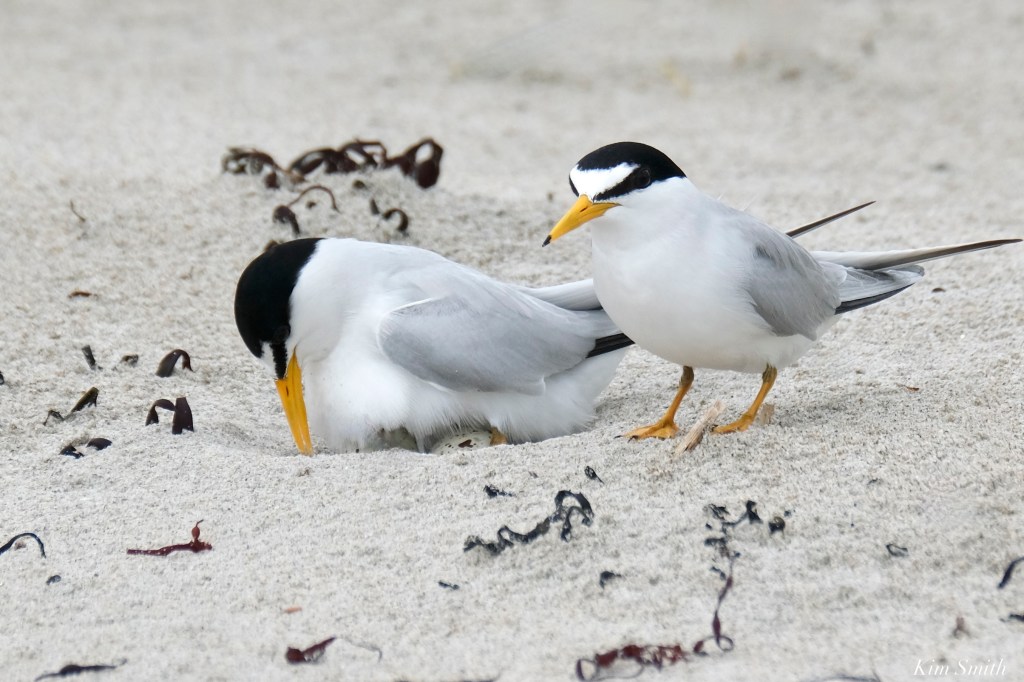
The second photo is of another species of shorebird that breeds along the New England coast, the Least Tern. Least Tern Dads share equally in brooding eggs.

Unlike Piping Plover chicks, which are precocial birds and can feed themselves within hours after hatching, Least Terns are semi-precocial and need to be fed by the adults. Least Tern Dads share equally in feeding the chicks.

Gloucester Ambassadors First Full Week Working with Mass Audubon – June 11th Plover Lover Weekend Update

Dear PiPl Friends,

As many of our PiPl followers are aware, this year the City of Gloucester hired Mass Audubon to help manage Cape Ann’s Plover population. We’ve had our first full week of collaborating with Mass Audubon and I have to say it just could not be better for all involved, but most importantly, for the Piping Plovers! The Mass Audubon staff is tremendously professional, kind, friendly, dedicated to wildlife conservation, and very personable. Lyra, who heads the coastal waterbird program for Mass Audubon, and Devon, Gloucester’s assistant conservation agent both have a great deal of experience managing Piping Plovers and are quick to respond to questions and challenges as they arise.

A few changes have been made to the beach. The roped off Plover areas to protect the Plovers has increased, however, there is still loads of space for beachgoers. An added bonus to creating safe spaces for Plovers is that over time, we have seen how the established protected areas for the Plovers has vastly improved the overall health of the beach. Why is that? Because when people and pets aren’t recreating up against the dunes, new vegetation is allowed to take hold including native American Beach Grass (Ammophila breviligulata), American Sea-rocket (Cakile edentula), Common Milkweed (Asclepias syriaca), Beach Pea (Lathyrus japonicus) and Seaside Goldenrod (Solidago sempervirens). Protecting the dunes is one of the best coastal strategies for combating a warming climate. It’s truly a beautiful thing to see how much healthier are our dunes!

Another change that has taken place are the guidelines in how close we should stand when observing the Plovers. One of the most important ways to help the Plovers is to give them lots and lots of space. If we hover/stand/place camera gear for long periods of time pointing to the Plovers, wildlife biologists working with Mass Audubon have documented that this activity attracts Crows and Gulls! You may ask, “why is that a bad thing?” Crows voraciously eat Plover eggs and hungry seagulls eat Plovers at all stages of development, including eggs, hatchlings, and even 3 week old chicks.

The best way for we beachgoers to help the Plovers is to watch from a distance and not hover near the birds. With a half-way decent lens and a camera sensor with a good crop factor we can get beautiful shots from a safe distance. The City, Mass Audubon, and we Ambassadors are all asking this of the community and we are deeply appreciative of your help.

Piping Plover smackdown – The video is of our handicapped Super Mom. Her disability does not impede her determination nor ability in defending her territory. She is perhaps Good Harbor Beach’s most fierce Plover, despite her missing foot.

Piping Plovers ferociously defend their nesting territory from intruders of every shape and size; puffing up their feathers to appear larger, chasing, and even biting the offender. Here she is in early spring defending her little slice of Good Harbor Beach from Scruffy Boy’s shenanigans!

PIPING PLOVER JUNE 4th UPDATE

Dear PiPl Friends,

Many have written looking for a PiPl update and I just want to assure everyone that the PiPls have so far managed to survive the high tides and very unseasonably cold temperatures. The tides are predicted to be very high this week so we’ll just keep our hopes up we won’t have a wash out.

A first ever for me this morning; I checked on the Plovers wearing a wooly winter weight sweater, heavy coat, and thick socks. The temperature was 45 degrees on the beach!

Super Mom foot pattering

Super Mom is doing especially beautifully. Plovers do a sort of “foot pattering” when foraging. The behavior is also called “foot-trembling” or “foot-tapping.” They shake their foot in the sand, then cock their heads as though listening. The vibrations caused by the foot pattering helps to bring worms and mollusks closer to the surface. The prey is usually a few inches away from where they are pattering, but sometimes as much as a foot away, nonetheless, the PiPl runs to the potential prey, plunges their beak into the sand, and almost always surfaces with some kind of invertebrate.

This seems like such an important behavior for the Plovers to enable them to successfully forage. I wondered if Mom would still shake her leg with her missing foot. Last week I observed Mom foot pattering! She doesn’t alternate feet, as is typical, but uses only her footless right leg to patter and stir up the sand. Her ability to adapt her behaviors to survive her handicap is extraordinary!

Super Dad napping (on a warmer day this past week)

THE BEST PLOVER NEWS! #ploverjoyed

Hello PiPl Friends!

Joyful update to share – Super Dad and Handicapped Mom have done it again!! We have a nest! Our Super Couple has been nesting at GHB since 2016, making this their 8th nest in 8 years. We are so blessed to have this valiant, beautiful little pair of PiPls that call GHB their home ❤

Nesting is going more slowly at other areas of the beach. We are consistently seeing 3 males duking it out, from one end of the beach to the opposite end. The females that have stopped at GHB have not stayed long. I think we should keep a strong eye out at Cape Hedge because it is only one beach further north and because one of the females that was briefly at GHB had very pale markings, similar to the female that nested at Cape Hedge.

I am very behind in updates and apologize for that! My butterfly and native plants ABC garden for the elementary kids at Phillips Academy campus in Andover needed much attention after a period of neglect due to Covid. This past week, we had a team of FORTY EIGHT volunteers from Liberty Mutual come and help clean up the campus and dig new beds. They were beyond unbelievable. This is a program offered by Liberty Mutual to help nonprofits. Even the CEO was there pitching in, working just as hard as everyone else, digging and carting away wheelbarrows of soil. It was a whirlwind cleanup, amazing, and I am still reeling from the amount of work they accomplished.

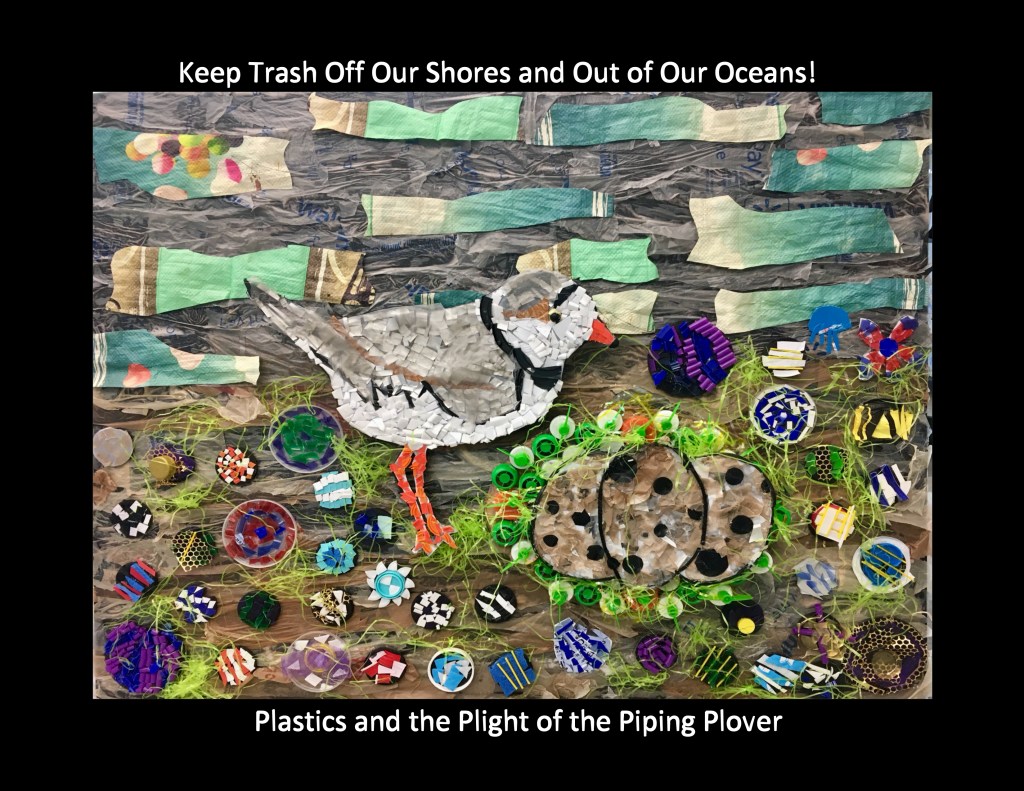
This fantastic illustration was shared by our dedicated and long-time PiPl Ambassador Jill Ortiz.

“This submission is a photograph of a poster sized piece of artwork created by students from Hanscom Primary School on Hanscom Air Force Base.
Students learned about the piping plover and the impact of plastics on shore and marine life. Students drew the bird, nest and eggs. They used plastics that were to be trashed and repurposed them to create this collage. Every student then made a shell to add to the creation.”

Happy Mother’s Day to all our PiPl Friends that are Moms!
xoxo Kim

P.S. Did you know that we have Water Snakes at nearly every body of water on Cape Ann and in Massachusetts? I did not, but became interested in learning more after seeing several while working on my pond film. May is an amazing time of year for wildlife in New England! Scroll through to see just some of the wildlife happenings taking place right here in our midst – – https://kimsmithdesigns.com/