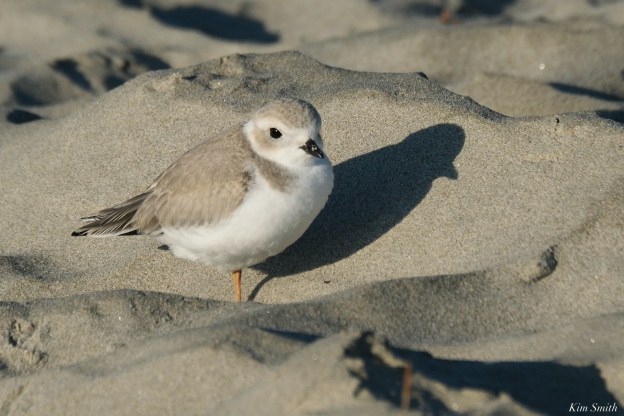
Happy Bday to our 45-day-old Piping Plover fledgling! He/she is the last of the Good Harbor Beach flyers. The photo/video was taken on Thursday when the little one was 42 days, or six weeks old. This is the age when we typically see them head out for their southbound migration. He’s still here as of Saturday but we are hoping to not see him any day now 🙂
I am very sorry to share that the rescue Plover did not survive. Tufts wrote that the chick had multiple chronic healed fractures and that the wing was held in a permanently drooped position. He would never be able to fly. I was at first feeling extremely low about this but both our partners at Audubon and Lis from DCR wrote that if left on the beach its demise would have been very traumatic and, if not eaten by a predator, would slowly starve to death.
Thank you so very much to everyone who wrote with well-wishes for the injured Plover.
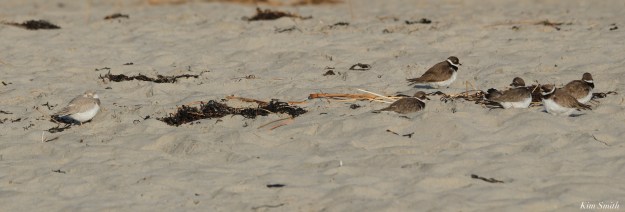
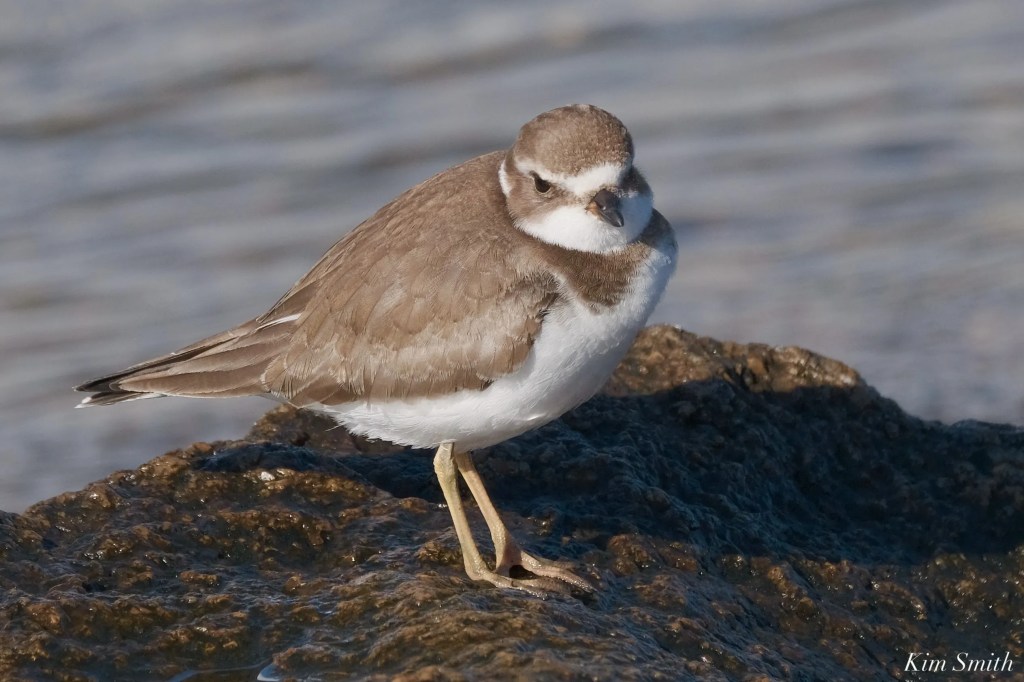
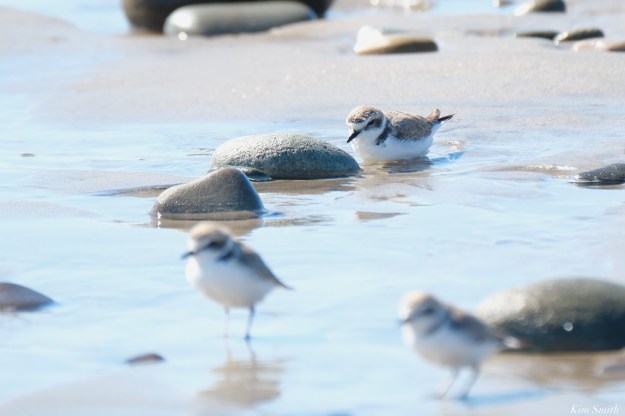
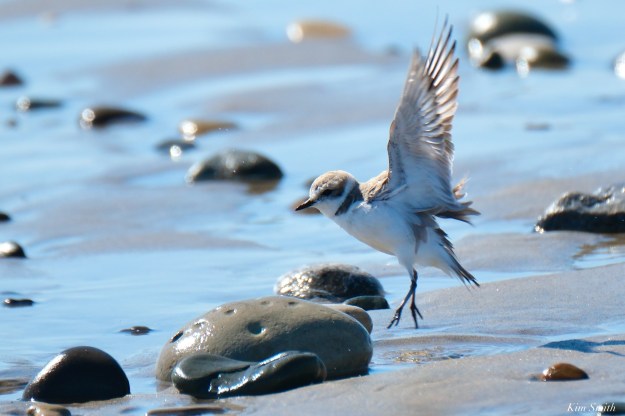
Our youngest fledgling has resurfaced at Good Harbor Beach! He/she had not been since the morning of the fierce hail and rain storm but there she was in the soft sand today, preening and sleeping alongside a mini flock of Semipalmated Plovers. Will they migrate south together? Piping Plovers are reportedly solitary but are often seen during the non-breeding months foraging in mixed groups of Semipalmated Plovers, Sanderlings, and Dunlins. Several years ago, during their southward migration, I saw a flock of a dozen Piping Plovers tucked in with several hundred Semipalmated Plovers, all resting on the upper part of the beach.
39 day old Piping Plover fledgling with Semipalmated Plovers
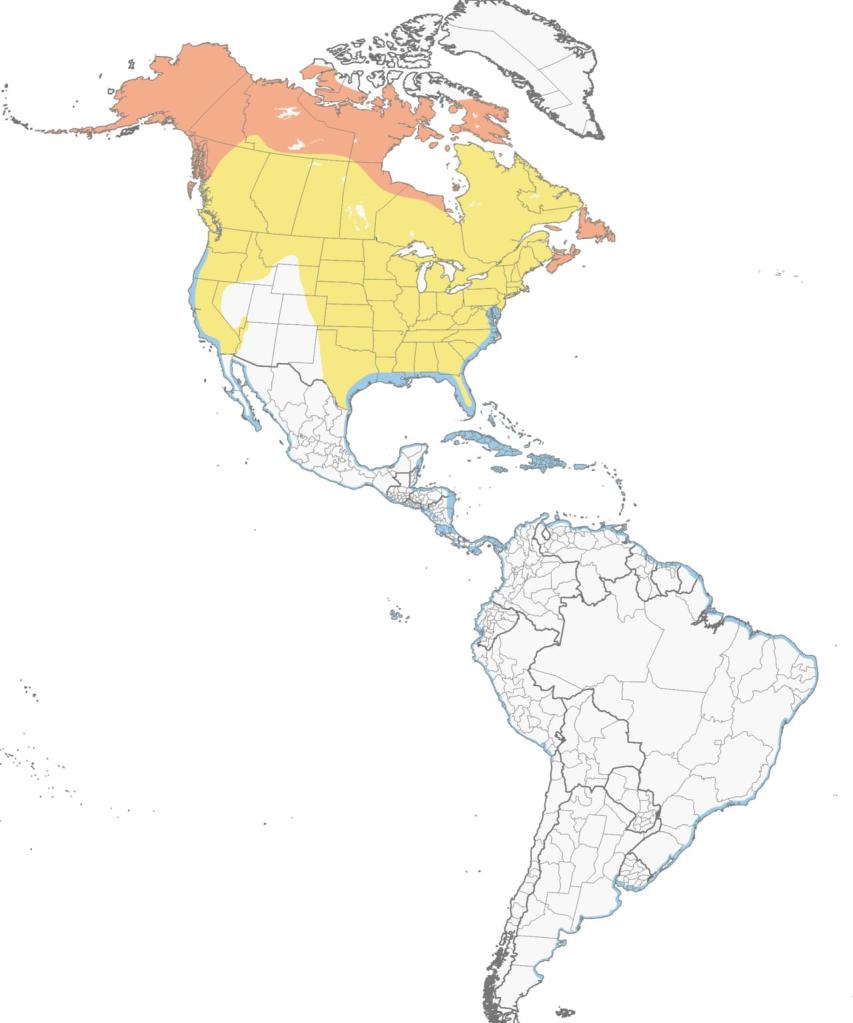
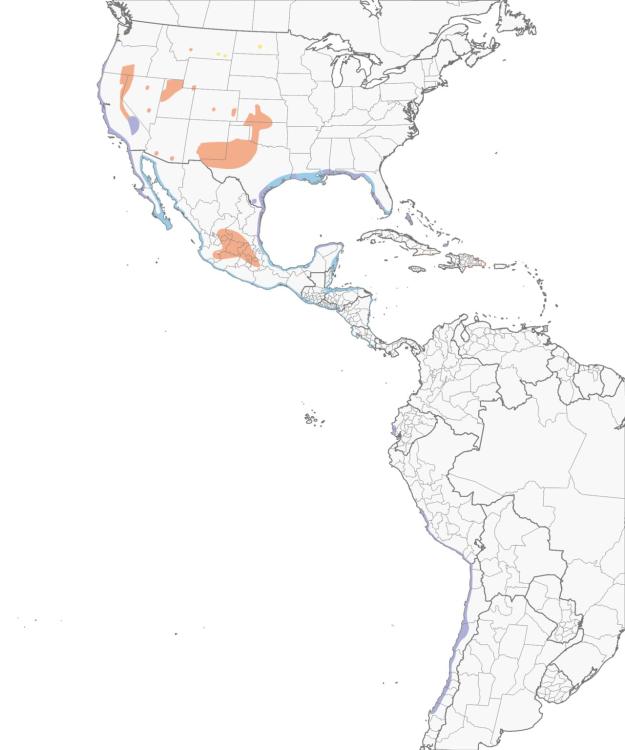
Semipalmated Plover range map – orange = breeding, yellow = migration, blue = wintering grounds
You can see from the map that the range of Semipalmated Plovers is vast when compared to Piping Plovers. They nest in subarctic and arctic environments and that is why we do not see them nesting at our local beaches. August is the peak time of year for the Semipalmated Plover’s southbound migration and we have seen many at Good Harbor Beach over the past month. Partners in Flight estimates the global population to be about 200,000 while the Piping Plover population as of 2020 was only about 8,000 adults.
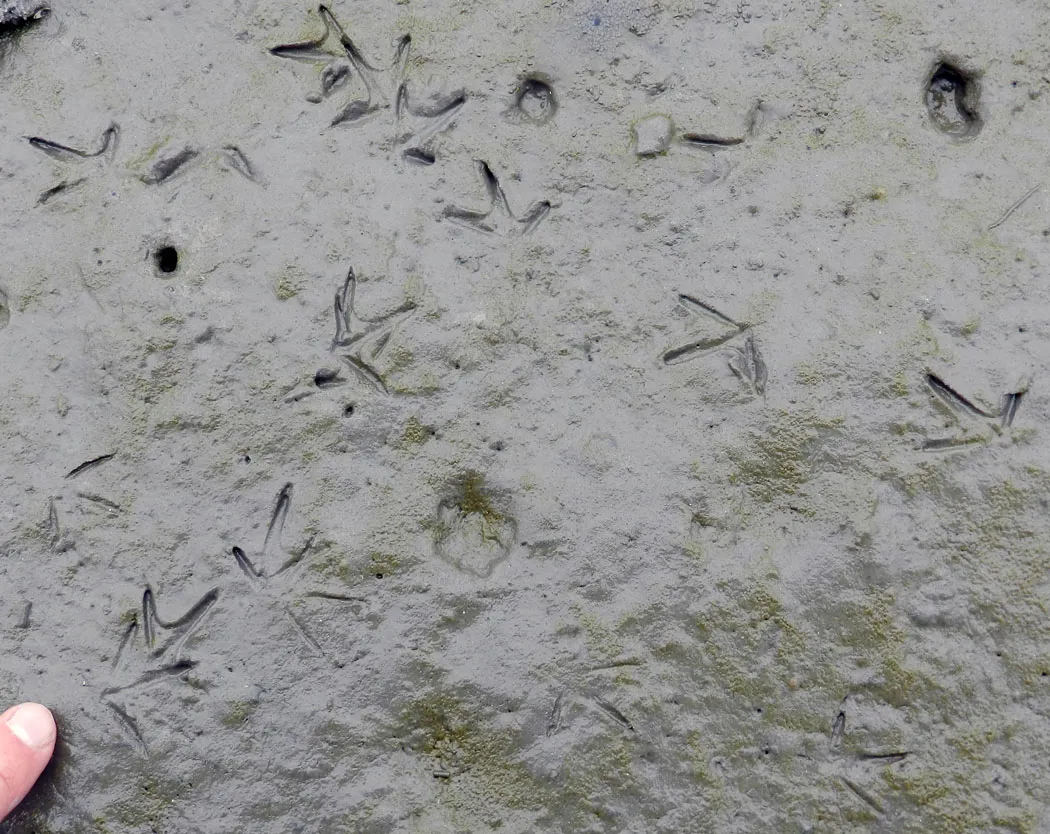
Semipalmated Plovers are called as such because only their two outer toes are webbed, ie. semi. The photos show the webbed tracks and the partial webbing of the toes.
Our Plover partners at Audubon received a call over the weekend that there was a Piping Plover at Coffins Beach with a broken wing. Plover Ambassador Deborah B located the Plover yesterday afternoon and Charlotte and I headed over to Coffins. Sure enough, its left wing was dragging on the ground but it appeared otherwise in good shape, foraging and running the length of the beach. It also seemed very bonded with another Plover, possibly a sibling.
Through Carolyn Mostello, the Massachusetts Coastal Waterbird Biologist with Mass Wildlife, we received clearance to rescue the Plover. Because Plovers are listed as a threatened species there are specific protocols that must be followed before handling the bird. Next we needed to get the go ahead from Tufts Wildlife Clinic that they could at this time accept the Plover.
After the all clear, Lis Kernan , Mass DCR Shorebird Recovery Program Coordinator, and I met at Coffins. We quickly found the Plover. Lis had brought two nets and she expertly guided me on how we could safely steer the bird into the nets. She was soooo fast and in no time, the bird was safely tucked into a waiting cardboard box outfitted with a soft towel, as was recommended by local wildlife rehabber Jodi Swenson from Cape Ann Inc..
As I was driving the little one to Tufts Wildlife Clinic in Grafton he/she began piping. It wasn’t the sharply piercing warning call Plovers make when stressed but the gentle sing-song piping that we hear when they are communicating with one another. I think it was calling to see if there were other Plovers in the vicinity. I responded (with words, not piping) and we seemed to have a back and forth conversation but then I wanted it to conserve its energy and stop piping. I tried singing lullabies to see if that would soothe its little soul, but he kept piping all along until the car stopped.
A very kind staff member, Patrick, was waiting at the clinic. He provided us with a case number so that we can check in periodically. If all goes well, it should take about three weeks for the broken wing to heal and then several more weeks to learn how to fly. I am afraid it will miss peak migration and see a road trip to North Carolina in our future 🙂
As Jamie from Audubon mentioned, today was a great example of cross-organization collaboration to help an injured creature.
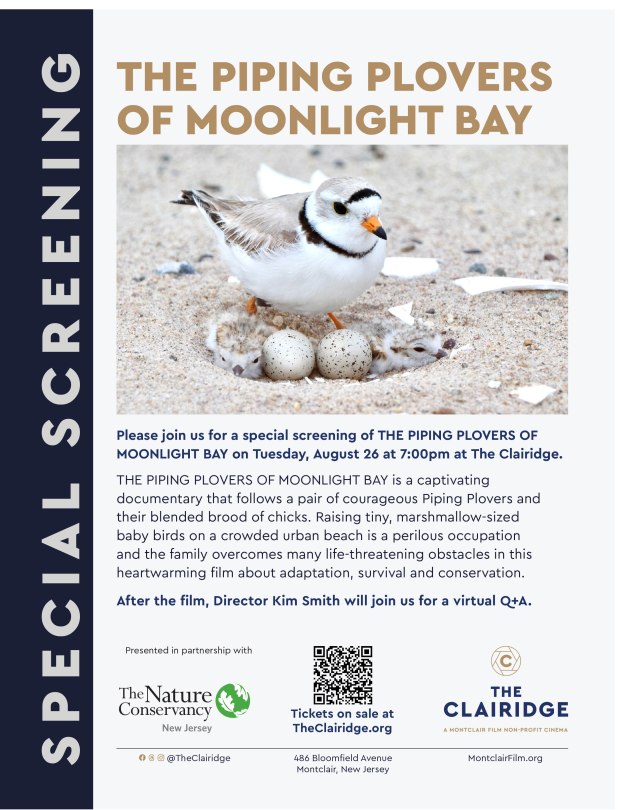
For my New Jersey Friends and Family – Montclair Film and The Nature Conservancy of NJ are hosting a special screening of The Piping Plovers of Moonlight Bay on Tuesday, August 26th at 7pm. QandA with me to follow. To purchase tickets, please go here: https://theclairidge.org/events/the-piping-plovers-of-moonlight-bay/
According to the Gloucester City ordinance code, it is a $300.00 fine (doubled during the season) to bring a dog to Good Harbor Beach. For example, if you bring two dogs, that is 600. x 2 = $1200.
But stating the fines right off doesn’t explain why.
Health and Safety
Our beaches are wonderfully filled with beachgoers during the summer months. Can you imagine adding dogs, either on or off leash, to the mix? Dog ownership is at a record high, much greater than even a generation ago. In 2000 there were roughly 68 million pet dogs, today there are about 90 million dogs. What if everyone who owns a dog brought theirs to the beach?
Let’s face the facts, a great many dogs are not on voice command. We have dogs jumping on children, knocking over the young and old, biting people, and getting into dog fights and biting each other. That is not a safe scenario for any beachgoer.
But what if the law were changed to allow dogs on leash?
We would have half abiding by the leash law and half saying “I left my leash at home,” or “I thought it was okay to let my dog off leash after 5pm,” or “I thought it was okay before 8am,” etc. etc. How do we know this? Because we already hear these statements during the off leash/on leash days at Good Harbor Beach.Pile of poop at the Good Harbor Beach snack bar area
Good Harbor Beach Footbridge
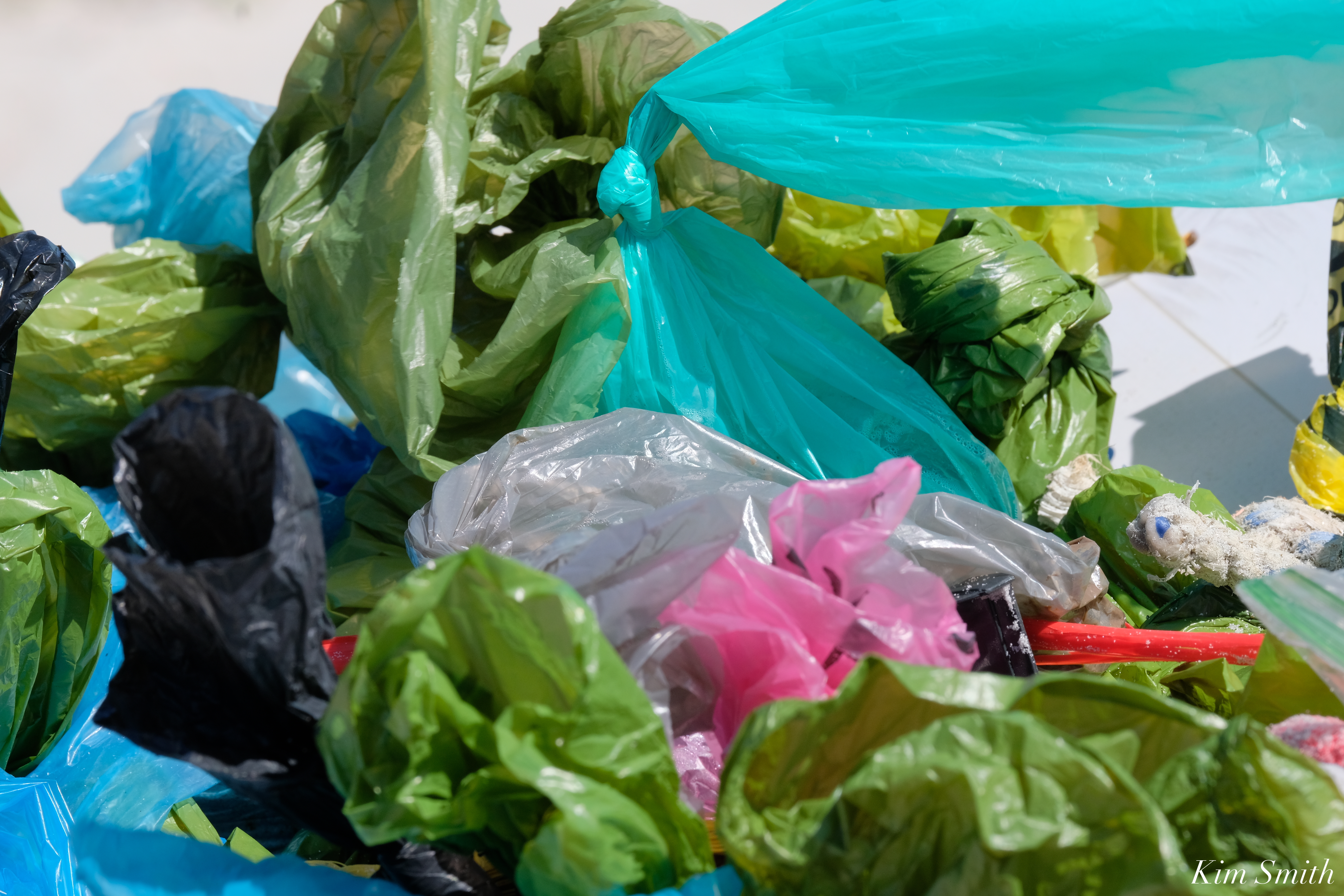
Dog Poop is a consequential environmental issue. During the season when dogs are allowed on the beach we see the gamut of poop-maintenance behaviors. Most people clean up after their pet. However, many people bury the poop in the sand or leave their poop bags behind. When someone leaves their bag by the footbridge, then other dog owners take it as a sign as a place to deposit their bag. The pile of dog poop in a rainbow color of bags grows and grows. Do we want beachgoers stepping in sand covered poop or being confronted with piles of dog poop? There is no poop cleaning fairy. It is left to our awesome DPW or one of the very nice volunteers, like Chris Cefalo, his brother, and Michael Cook who regularly cleans GHB to remove garbage and also the bags of poop.
Keeping Dogs out of the Dunes During the Growing Season Helps Protect the Dune Ecosystem
If you regularly visit Good Harbor Beach during the off season, you can’t help but notice, the “Keep out of Dunes” signs are frequently ignored by pet owners. There are many who do respect this vital habitat, but also many who don’t. Dogs running and playing vigorously through the vegetation tears at the roots and weakens the plants. Vegetation holds the dune sand in place and without plants the dunes continually recede.
Over the past several years, you may also have noticed the vast improvement in the overall health of the dunes. There is a direct correlation to keeping the symbolically roped off areas up through out the summer season and into the fall because by preventing people and pets from recreating right up to the base of the dunes, it allows just that much more room for vegetation to take hold, and is one fantastic tool in the tool box against fighting erosion.
Dog going pooh within nesting area
Keeping Dogs off the Beach Helps Nesting Shorebirds Survive
Last, but not least, dogs on the beach are a well-known threat to shorebird nests and especially to young birds that can’t yet fly to escape danger.
How so you may wonder? “My dog is so sweet and would never harm a baby bird.”
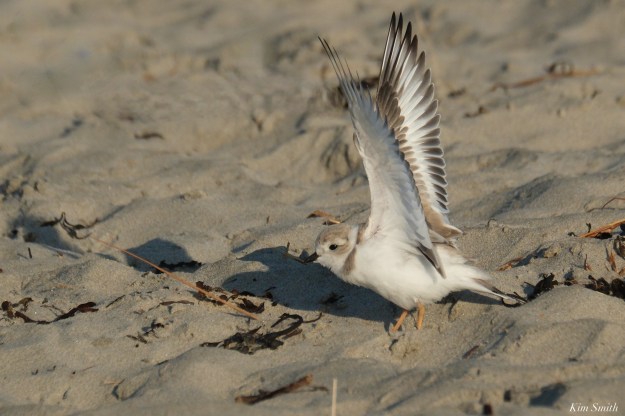
When there are baby birds on the beach, the Plover parents do their absolute utmost best to keep the chicks safe. The parents exhibit all sorts of distraction behaviors including dragging and fluttering their wings on the ground to fake injury, thereby encouraging the predator to follow it and drawing the threat away from their most vulnerable chicks.
Plovers cannot tell the difference between a domestic dog, Fox, or Coyote. Dogs bound exuberantly on the beach through nesting areas and Coyotes and Fox dig in the sand for eggs and chicks. The ever vigilant Plover parent will leave the nest and fly at any creature Canid. Often, both parents will fly away from the nest in a sort of tag team distraction method. But while they are busy defending the chicks from a member of the dog family, that is the perfect time for a gull, crow, hawk, or falcon to swoop in and snatch the eggs or eat the baby chicks. Crows focus on eggs and gulls not only eat the eggs, they also eat chicks at every stage of development, even fledglings that have grown as large as the parent. Coyotes eat both eggs and chicks.
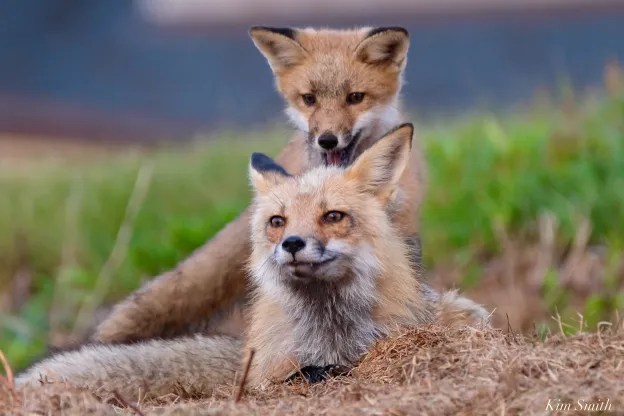
Especially during pupping season, Red Fox scavenge the beach looking for shorebird eggs, small mammals, and birds to feed their growing family. Plovers cannot distinguish the difference between a Coyote, Fox, or domestic dog.
Fierce Dad and FairFeathered Mom tag team distracting a Herring Gull
As I am writing this message, please know that we still have young birds at Good Harbor Beach that can’t yet fly well enough to escape predators. This is extremely late in the season and is due to the tremendous loss of nests during the May Nor-easter; losses all along the coast of Massachusetts. Many of the nesting birds eventually re-nested and we are seeing their offspring. Shorebird managers across Massachusetts are contending with taking care of these late flying chicks.
Here are on Cape Ann we are blessed with many beautiful alternative locations to walk our dogs, including Crab Beach (adjacent to the Boulevard), which is open year round to dogs and dog owners.
If you would like to see scenes of Plovers displaying their fascinating distraction techniques and learn more about predators on beaches, please watch our film The Piping Plovers of Moonlight Bay, which I created specifically for people to learn more about how we can all help protect shorebird wildlife and their habitats. Our documentary is streaming on the PBS Passport AP 24/7. Anyone can become a member of PBS Passport by donating to PBS. It’s so worthwhile, especially for young children with curious minds. What other streaming service can you get for $5.00 a month!!
As I first wrote, it is a $300.00 fine and doubled during the season to bring dogs to Good Harbor Beach, so please dog owners, for your sake, for the health of the beach ecosystem, and for the safety of growing shorebirds, please do not walk your dog at Good Harbor Beach or any beach where there is precious habitat and baby birds. Thank you!The No Dogs from April 1st through September 30th signs are boldly displayed at every entryway to Good Harbor Beach
I hope to see you Sunday at our film screening fundraiser. Refreshments will be provided and following the screening, we’ll have lots of good discussion and wonderful news to share.
Although the postcard says handicapped accessible, unfortunately the elevator is now temporarily not working. Please let me know if you have purchased tickets and can no longer attend due to inaccessibility.
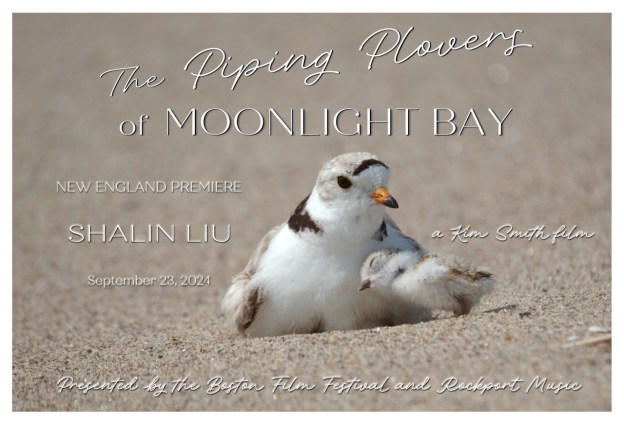
The Piping Plovers of Moonlight Bay is a 57-minute narrated documentary by Kim Smith that tells the story of the Piping Plover as it unfolds along the North Atlantic coastline. The film features a pair of courageous Plovers that overcome life-threatening obstacles while nesting at one of the region’s most popular beaches.
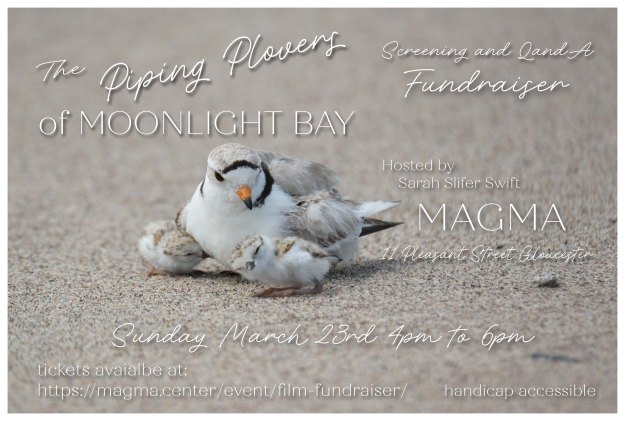
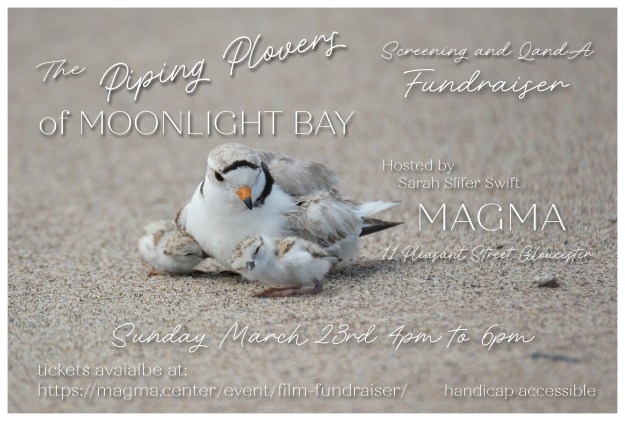
On Sunday March 23 at 4pm, MAGMA will host a fundraiser to help support the production and distribution of the film. This evening will include a showing of the film and a Q & A with filmmaker Kim Smith. Refreshments will be served. Suggested donation for this event is $50 (or what you can afford). For tickets please go here.
Each spring, northward migrating Atlantic coast Piping Plovers return to breeding sites located from North Carolina to Newfoundland. Amazingly, nesting often takes place on public beaches, where anyone can observe their beautiful life story unfolding. But in such areas, where people enjoy a full range of recreational activities, nesting and raising chicks is a perilous occupation.
Set against the backdrop of the ever-dynamic Atlantic shoreline, the documentary illustrates how conservation partners have provided safe corridors that allow these highly vulnerable birds to raise chicks to fledge at even the most well-loved beaches.
The Piping Plovers of Moonlight Bay is a film for all ages, and was created to inspire a love for wild creatures and their habitats, and to develop a deeper understanding of the vital role that wildlife play in our interconnected ecosystem.
Every stage of the Plover’s life cycle is experienced in vibrant HD and 4K close-up, from egg to chick to adult.
Production and distribution of The Piping Plovers of Moonlight Bay will be made possible by tax-deductible contributions from individuals, corporations, foundations, and public agencies.
To date, among other generous donations, we have received a leadership grant of $15,000 from the Massachusetts Division of Fisheries and Wildlife.
Gifts for The Piping Plovers of Moonlight Bay will support post production and distribution costs, color and sound editors, picture mastering, studio time, festival fees and applications, music and map rights, and an underwriting agent to bring the film to the wide audience of public television. Our goal is to raise $115,000.
During my recent trip to Los Angeles, our daughter provided wonderful opportunities for us to take several joyous expeditions to see Western Snowy Plovers. I write joyous because we thought we would be fortunate to see one or two, when we actually saw severalhundred!
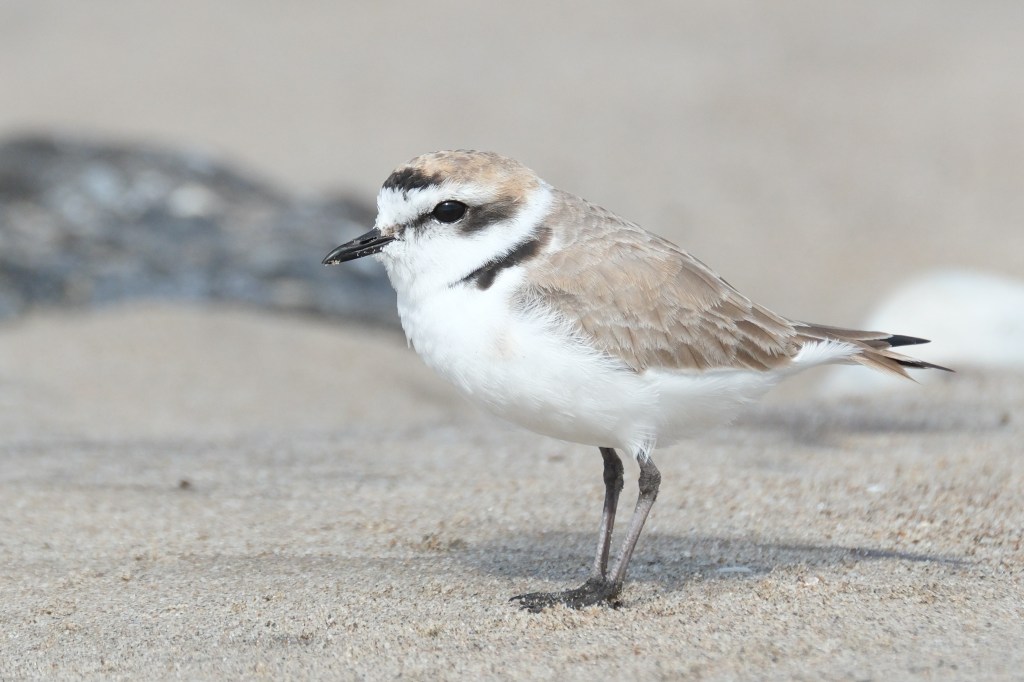
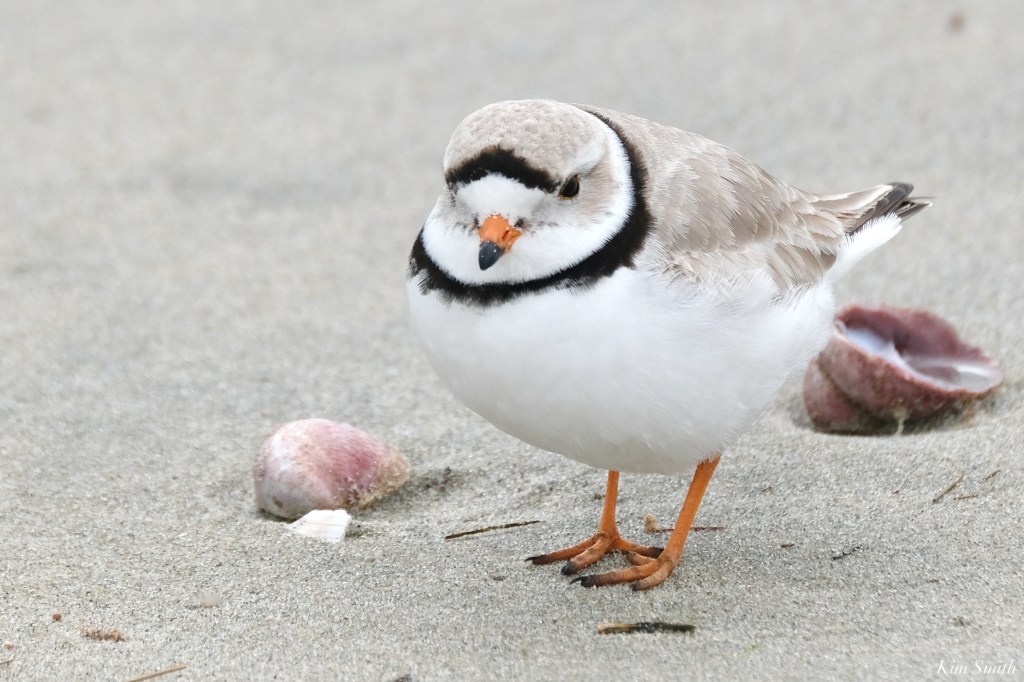
Snowy Plover (left), Piping Plover (right) – some key field mark differences at a glance – Snowy Plovers have black or gray legs, compared to the PiPls orange legs and feet; the beak of the SNPl is longer and solid black whereas the PiPls is beak is orange and black. Snowy Plover’s headband and collar band are not as pronounced. Piping Plovers lack the black eye patch.
We came across three breeding colonies; the largest was located on a relatively remote beach with an estuary bordering the northern end of the sandy dunes. We observed that Snowy Plovers share many similar traits to Piping Plovers including their love for invertebrates, both land and marine. PiPls and SnPl are visual feeders and utilize the “run-stop-peck” foraging method. Like Piping Plovers, Snowy Plovers display much territorial behavior towards one another and I imagine when the breeding season gets fully underway, there will be a great many more disputes.
One notable difference is the Snowy Plovers communal “in-unison” bathing habit, which was absolutely charming to observe. A flock of 100 or so were foraging on kelp flies in the wrack when they all took off over the water, circling round several times in an exquisitely beautiful flight pattern before landing on the pebbly banks at the mouth of the estuary. After a few moments of seeming to observe whether it was safe or not to bathe, one by one they began entering the water, then in small groups, then even greater numbers joined the Plovers that were already in the water. Some were bathing singularly in the puddles made by rocks in the tide pools but for the most part, they were in the estuary creek dipping and splashing all along the banks. At one point I wasn’t entirely sure what was happening as they appeared to be continuing their onshore battles while they were bathing.
Snowy Plover drying wings after bathing
Another very notable difference is the bird’s vocalizations. The Snowy Plover’s song is more of a ta-wheet interspersed with sweet trilling chirps, rather than the penny whistle call of the Piping Plover. It was too windy to capture a really good audio recording, but you can hear the flock in the background of the bathing scenes in the video. To hear more variations in their birdsong, go here: Snowy Plover’s vocalizations.
Unlike Piping Plovers and many species of shorebirds, Snowy Plovers have no aerial flight display. Snowies also routinely have two broods, sometimes three, with three being the average number of eggs, as opposed to the PiPls four eggs. Typically about a week after hatching, mom pairs up with another male to begin establishing a second nest, leaving dad alone to raise the chicks.
Both Snowies and PiPls have similar predators including falcons, raccoons, coyotes, owls, crows, and ravens. And both species have been negatively impacted by extensive loss of habitat and human caused disturbances, most notably dogs crushing eggs and disturbing nesting areas. We observed volunteer docents at the nesting sites reminding scofflaw dog owners that dogs are not allowed at Snowy Plover breeding locations. California has approximately 3,400 miles of coastline and 420 state beaches. It’s unfortunate that despite the near limitless access of beaches to beachgoers that permit pets, dog owners still allow their dogs to run freely through the comparatively minuscule (area-wise) nesting sites.
There are only about 2,000 Western Snowy Plovers that breed along California’s coast, from San Francisco to the Baja. The West Coast population is deemed a Threatened Species. At one time it was thought there were tens of thousands nesting at more than fifty breeding locations along the Pacific Coast. Today, there are only a handful of coastal nesting sites. Nationwide, there are approximately 24,000, compared to the total Piping Plover population, which is roughly 13,000 to 14,000 birds. You can also see Snowy Plovers along the Gulf Coast. Some nest there while others have migrated from their summer breeding grounds.
Please join us Sunday, March 23rd at 4pm, at MAGMA for a Piping Plover film screening and fundraiser. We’ll have much to talk about! Please R.S.V.P. and let us know if you are planning to come as we are providing refreshments. I hope to see you there!
I hope all is going well with your holiday making. I am grateful for the return of warm weather even if it is only going to last a few days, not only for the sunshine but also because our visiting Wood Duck has also been spotted basking in the warmth.
I have excellent news to share. The Piping Plovers of Moonlight Bay has been accepted to the Festival de l’Oiseau et de la Nature! It is the largest nature festival in France and takes place over a nine day period at the Bay of Somme. Located in the North of France, the Bay of Somme is an internationally recognized migratory site. For the past 33 years, in celebration of spring migration, the Festival has offered documentary screenings, activities for children, lectures, courses, and photo and art exhibits. This is a festival we were really, really hoping to be accepted to and I am over the Moon. We also recently received Best in Festival at the Nature Without Borders Film Festival and Outstanding Excellence at their sister festival, Documentaries Without Borders. It’s been a very exciting last couple of weeks.
Many readers who receive this newsletter have already contributed to the first phase of fundraising, to bring our documentary to festivals, and we are beyond grateful. We are now in the second round of fundraising, to bring the film to public television. A bunch of PiPl friends have mentioned they would like to contribute to this second round by year’s end. We are so appreciative of all the generous donations given to date and this is just a gentle reminder. If you are planning to contribute, or if I can answer any questions, please let me know. Again, all contributions, both through our online fundraiser and larger contributions, are tax deductible as we work with our 501c3 fiscal sponsor, Filmmakers Collaborative.
On a much less positive note, here is a link to a recent story that I wrote about the parasitic disease mange, the connection between the disease and rodenticides, and how rat poison is impacting both mammals and raptors. I shared photos of a local Coyote suffering from an advanced stage of mange, so don’t click on this link if you are feeling at all low.
Perhaps the most positive news of the month is that the Monarch may soon be listed as Threatened under the Endangered Species Act. Many organizations and individuals have worked tirelessly to bring this proposed listing about. USFWS is seeking public input on the Monarch’s ESA listing over a 90 day period, from December 12th through March 12th. If you would like to comment, please follow this link.
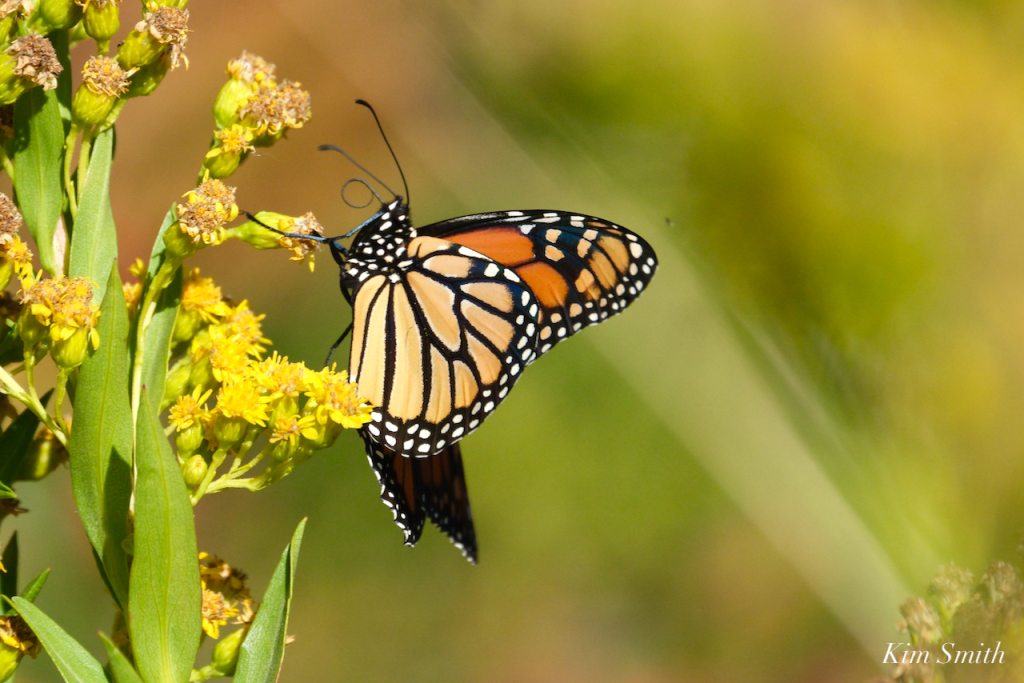
The photo below is of a Monarch and Seaside Goldenrod and was taken at the beautiful Manomet Center for Conservation Sciences this past October.
Happy Holidays and holiday-making! Warmest wishes, xxKim
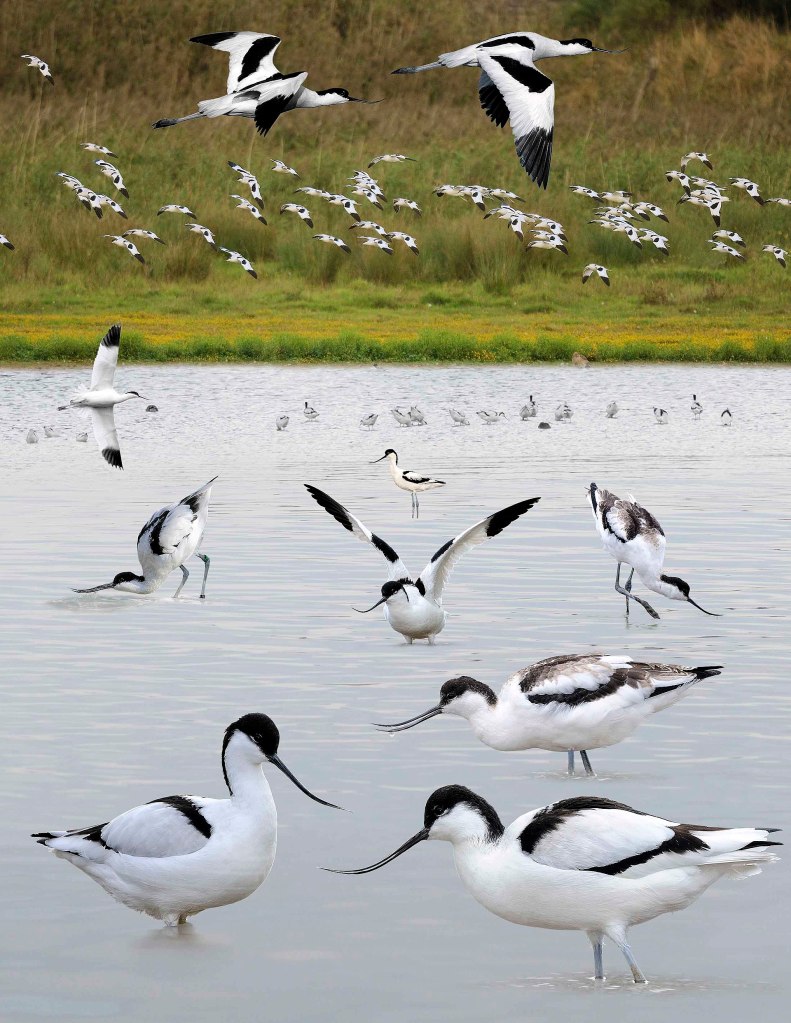
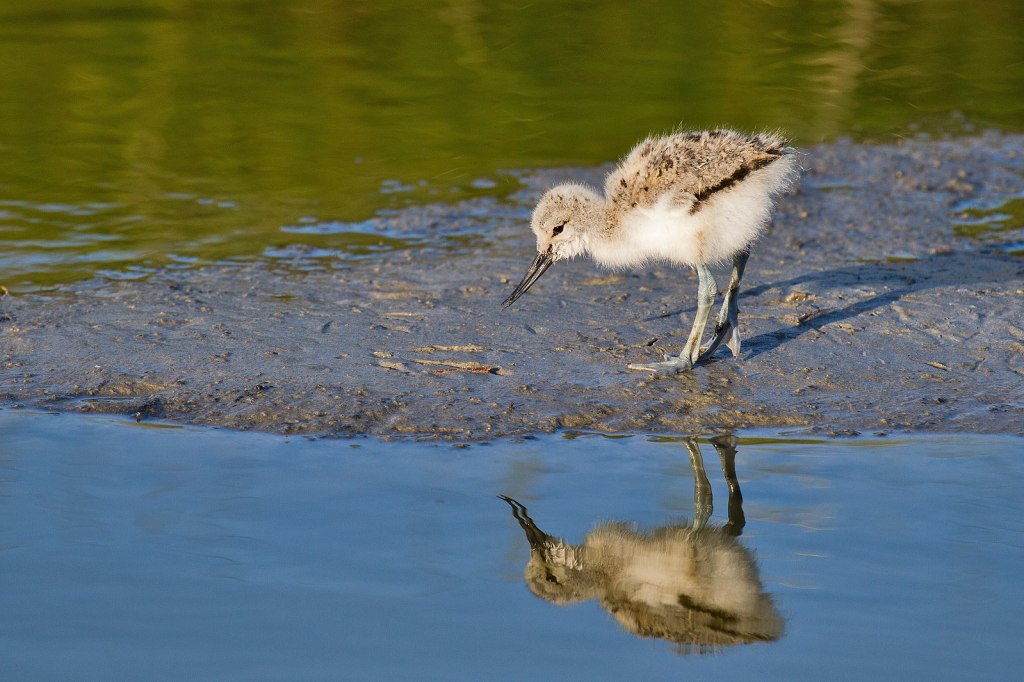
Isn’t this bird just beyond exquisite?! The Pied Avocet. It returns each spring to the Bay of Somme to breed. I read that after mating, a pair will cross their bills as part of the bonding ritual, and you can see how absolutely adorable are the chicks. Composite image and chick photo courtesy wikicommons media.
In thinking about Thanksgiving, I just wanted to say thank you to all of you for your generous contributions and tremendous help in our efforts to bring our documentary to public television. We still have aways to go, but are making good headway in the fundraising department. Your gifts have been tremendously impactful and we could not have gotten this close without your help.
After my last post about the continued harassment and heartbreaking death of one of the recently arrived Snowy Owls, I wanted to share with you a much more joyful story for Thanksgiving, a story about a very inspiring person and her gift to our Plover documentary.
Through a mutual friend, Scott Hecker, I have met the actress and wildlife conservationist Jane Alexander. Many of our PiPl friends in Massachusetts will recognize Scott’s name. He has been a resolute force in Atlantic shorebird conservation for decades. Scott led Mass Audubon’s Piping Plover recovery efforts, resulting in the threatened species’ state population increasing from 126 pairs in 1987 to 530 pairs by 2002. He subsequently served as Director of National Audubon’s Coastal Bird Conservation program and currently works with the International Conservation Fund of Canada to manage and develop the organization’s shorebird conservation efforts.
Jane Alexander is the multi-talented Emmy and Tony award winning stage and film actress, producer, and director who you may recall, starred with James Earl Jones in the groundbreaking film, The Great White Hope, political thrillers such as All the President’s Men, and many, many other plays and films that have captured the zeitgeist of our times. She also served as chairwoman for the National Endowment for the Arts under President Clinton.
In addition to her wide-ranging theatrical accomplishments, Jane is also a dedicated conservationist and champion of creatures great and small, and their habitats. She uses her powerful voice to write beautifully thoughtful stories about wildlife. I have loved reading her most recent book, Wild Things Wild Places, Adventurous Tales of Wildlife and Conservation on Planet Earth and think you will love it, too. One of the main themes of the book is documenting the work that field biologists are doing within communities to save the species where the species they are studying lives. She writes about biologists who are helping people understand what they have in their own backyards and to feel pride in their beautiful place, recognizing there is no conservation without inclusion.
Jane is also a Piping Plover guardian at her home in Nova Scotia! She has been monitoring Piping Plovers in Shelburne County for close to 25 years. Jane spoke about her responsibilities in an Audubon article “Bird Talk with Jane Alexander,” “I go out two times a week to check on the nests that we know of on the beaches in the southwest area here in Nova Scotia. If there are people with dogs off the leash, I speak to them. I make sure the signs are still up, and if it’s a beautiful, sunny day and there are many people on the beach, I talk to them about the birds. Lots of people are doing this all over the Maritimes during the nesting season, which began about a month ago and will go rarely past the second week of July.”
In addition to the many conservation organizations she works with, Jane has been deeply involved with the Indianapolis Zoological Society for a number of years. She is an honorary chair and jurist for the Indianapolis Prize, which was explained to me as something akin to the Nobel prize for conservationists. It is the world’s largest individual award given for animal conservation and brings attention to the achievements of Earths greatest conservationists.
As a thank you gift for Jane’s invaluable guidance to the deliberation committee, she was given a $5,000 honorarium. Jane in turn has directed her honorarium to our documentary, The Piping Plovers of Moonlight Bay. Jane’s honorarium will go towards our fundraising efforts to bring the film to public television.
Thank you to Jane Alexander and the Indianapolis Zoological Society. Words cannot express how very deeply touched I am by this incredibly generous gift.
Happy Thanksgiving and thank you my dear friends for your continued support of The Piping Plovers of Moonlight Bay.
Warmest wishes,
xxKim
With gratitude to the following PiPl friends for their kind contributions – Jane Alexander (Nova Scotia) Lauren Mercadante (New Hampshire), Cornelius Hauck (Cincinnati), Sally Jackson (Gloucester), Cape Ann Garden Club, Brace Cove Foundation (Gloucester), JH Foundation/Fifth Third Bank (Ohio), Janis and John Bell (Gloucester), Jennie Meyer (Gloucester), Alice and David Gardner (Beverly), JoeAnn Hart (Gloucester), Kim Tieger (Manchester), Joanne Hurd (Gloucester), Holly Niperus (Phoenix), Bill Girolamo (Melrose), Claudia Bermudez (Gloucester), Paula and Alexa Niziak (Rockport), Todd Pover (Springfield), Cynthia Dunn (Gloucester), Nancy Mattern (Albuquerque), Marion Frost (Ipswich), Cecile Christianson (Peabody), Sally Jackson (Gloucester), Donna Poirier Connerty (Gloucester), Mary Rhinelander (Gloucester), Jane Hazzard (Georgetown), Duncan Holloman (Gloucester), Karen Blandino (Rockport), Duncan Todd (Lexington), Sue Winslow (Gloucester), Amy Hauck-Kalti (Ohio), JoAnn Souza (Newburyport), Karen Thompson (San Francisco), Carolyn Mostello (Rhode Island), Susan Pollack (Gloucester), Peggy O’Malley (Gloucester), Hilda Santos (Gloucester), Maggie Debbie (Gloucester), Sandy Barry (Gloucester), The Massachusetts Daughters of the American Revolution, Mary Keys (Madeira, Ohio), Barbara Boudreau (Gloucester), Suki Augusti, Jonathan and Sally Golding (Gloucester), Sue Winslow (Gloucester), Cecile Christensen (Peabody), Marty and Russ Coleman (Dallas, Texas), David Brooks (Troy, Michigan), Karen Maslow (Gloucester), Lisa Craig (Winchester), Menotomy Bird Club (Winchester), Lyda Kuth (Belmont), and my sweet husband Tom 🙂
My sincerest thanks to all who are planning to attend the premiere tonight. It’s my greatest hope that you enjoy and are inspired by our documentary. Thank you to Robin Dawson and the outstanding Boston Film Festival team and to Michelle Alekson and the equally outstanding Rockport Music crew. Thank you also to Gail McCarthy and Andrea Holbrook for the awesome press and to Dan Driscoll from CapeAnn MA and Rockport Stuff Facebook pages for helping to get the word out.
With love, gratitude, and the deepest appreciation for your support.










 The Piping Plover Project