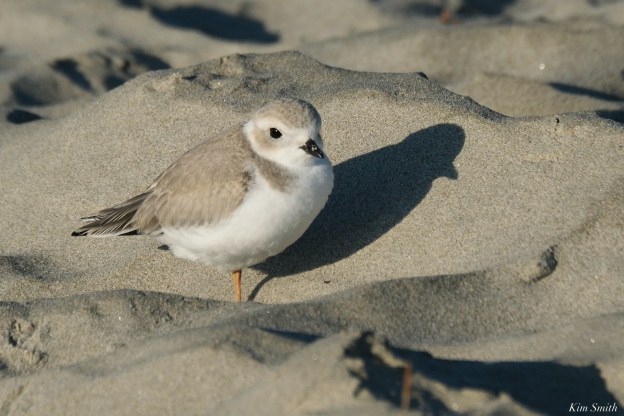
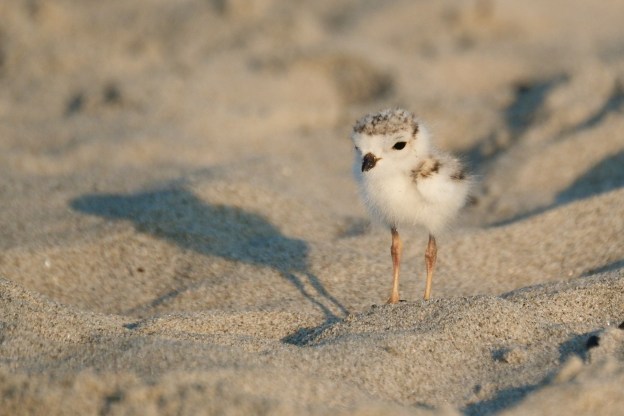
Happy Bday to our 45-day-old Piping Plover fledgling! He/she is the last of the Good Harbor Beach flyers. The photo/video was taken on Thursday when the little one was 42 days, or six weeks old. This is the age when we typically see them head out for their southbound migration. He’s still here as of Saturday but we are hoping to not see him any day now 🙂
I am very sorry to share that the rescue Plover did not survive. Tufts wrote that the chick had multiple chronic healed fractures and that the wing was held in a permanently drooped position. He would never be able to fly. I was at first feeling extremely low about this but both our partners at Audubon and Lis from DCR wrote that if left on the beach its demise would have been very traumatic and, if not eaten by a predator, would slowly starve to death.
Thank you so very much to everyone who wrote with well-wishes for the injured Plover.
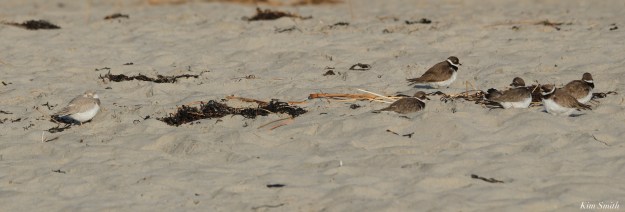
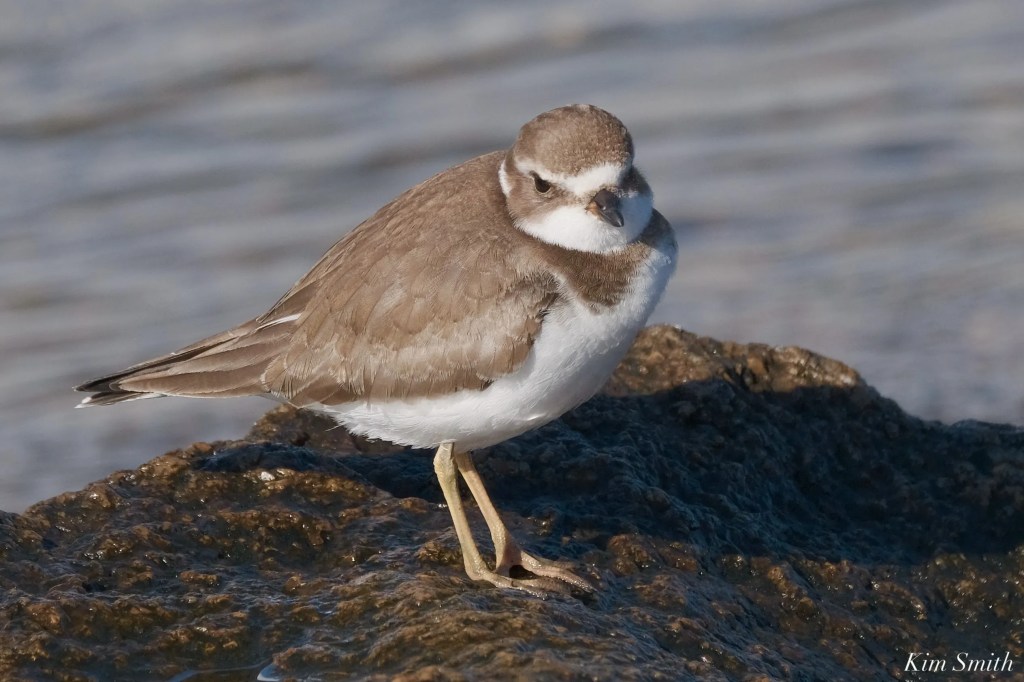
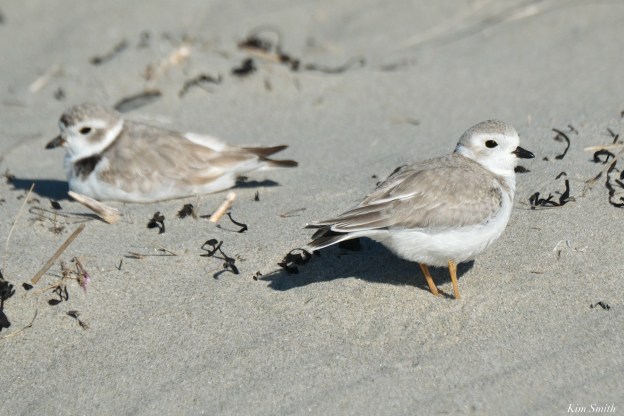
Our youngest fledgling has resurfaced at Good Harbor Beach! He/she had not been since the morning of the fierce hail and rain storm but there she was in the soft sand today, preening and sleeping alongside a mini flock of Semipalmated Plovers. Will they migrate south together? Piping Plovers are reportedly solitary but are often seen during the non-breeding months foraging in mixed groups of Semipalmated Plovers, Sanderlings, and Dunlins. Several years ago, during their southward migration, I saw a flock of a dozen Piping Plovers tucked in with several hundred Semipalmated Plovers, all resting on the upper part of the beach.
39 day old Piping Plover fledgling with Semipalmated Plovers
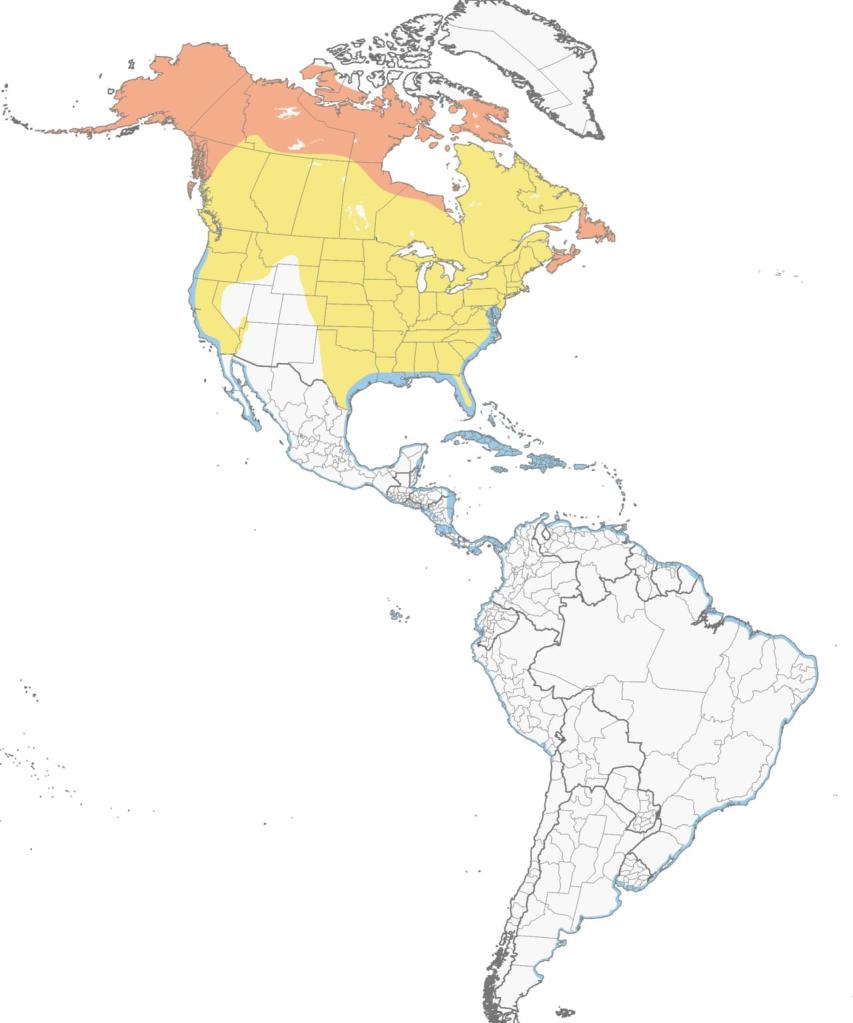
Semipalmated Plover range map – orange = breeding, yellow = migration, blue = wintering grounds
You can see from the map that the range of Semipalmated Plovers is vast when compared to Piping Plovers. They nest in subarctic and arctic environments and that is why we do not see them nesting at our local beaches. August is the peak time of year for the Semipalmated Plover’s southbound migration and we have seen many at Good Harbor Beach over the past month. Partners in Flight estimates the global population to be about 200,000 while the Piping Plover population as of 2020 was only about 8,000 adults.
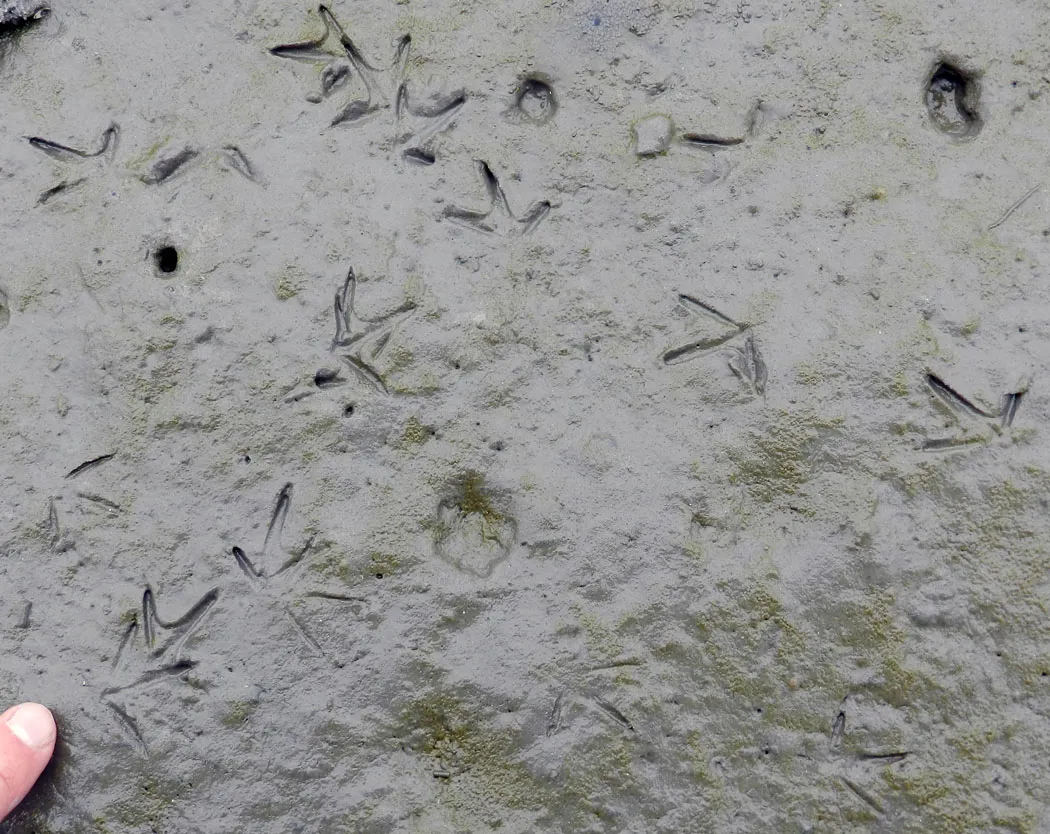
Semipalmated Plovers are called as such because only their two outer toes are webbed, ie. semi. The photos show the webbed tracks and the partial webbing of the toes.
Our Plover partners at Audubon received a call over the weekend that there was a Piping Plover at Coffins Beach with a broken wing. Plover Ambassador Deborah B located the Plover yesterday afternoon and Charlotte and I headed over to Coffins. Sure enough, its left wing was dragging on the ground but it appeared otherwise in good shape, foraging and running the length of the beach. It also seemed very bonded with another Plover, possibly a sibling.
Through Carolyn Mostello, the Massachusetts Coastal Waterbird Biologist with Mass Wildlife, we received clearance to rescue the Plover. Because Plovers are listed as a threatened species there are specific protocols that must be followed before handling the bird. Next we needed to get the go ahead from Tufts Wildlife Clinic that they could at this time accept the Plover.
After the all clear, Lis Kernan , Mass DCR Shorebird Recovery Program Coordinator, and I met at Coffins. We quickly found the Plover. Lis had brought two nets and she expertly guided me on how we could safely steer the bird into the nets. She was soooo fast and in no time, the bird was safely tucked into a waiting cardboard box outfitted with a soft towel, as was recommended by local wildlife rehabber Jodi Swenson from Cape Ann Inc..
As I was driving the little one to Tufts Wildlife Clinic in Grafton he/she began piping. It wasn’t the sharply piercing warning call Plovers make when stressed but the gentle sing-song piping that we hear when they are communicating with one another. I think it was calling to see if there were other Plovers in the vicinity. I responded (with words, not piping) and we seemed to have a back and forth conversation but then I wanted it to conserve its energy and stop piping. I tried singing lullabies to see if that would soothe its little soul, but he kept piping all along until the car stopped.
A very kind staff member, Patrick, was waiting at the clinic. He provided us with a case number so that we can check in periodically. If all goes well, it should take about three weeks for the broken wing to heal and then several more weeks to learn how to fly. I am afraid it will miss peak migration and see a road trip to North Carolina in our future 🙂
As Jamie from Audubon mentioned, today was a great example of cross-organization collaboration to help an injured creature.
The morning after the first super high tide at Good Harbor Beach we were surprised and delighted to see a third Plover had joined our Fierce Dad and his almost-fledged chick. We found the three on the narrowest strip of beach that had not been impacted by the hurricane tide. They have been seen together ever since!
First Photo: Mystery/Butterball left, Fierce Dad right Second Photo: 30 day old Piping Plover chick
I think my daughter may have solved the Mystery and we believe this Plover could be what would now be the 54-day-old fledgling we were calling Butterball. He appears to be a similar stage of development and it makes sense; after Butterball’s Dad departed, Butterball attempted to forage alongside Fierce Dad’s chick several weeks back, but FDad would have none of it and was in maximum defensive mode for his little one at that time. Now that his chick is older and more independent perhaps he feels it’s safe to socialize with other Plovers; although at one point FDad planted himself firmly between his chick and Mystery.
Below are photos of 40 to 42 day old Plovers from years past and they are the only photos I can locate at the moment of Plovers past 36 days. Our Mystery Plover looks to be at least as old as the Plovers in the photos
This last photo if of HipHop, Super Dad, and HipHop’s 46-day-old sibling. Although the sibling is out of focus, you can see its feather patterning is similar to the Mystery Plover. This was such a sweet sibling; he stayed with HipHop until he could fly. You may recall HipHop who was developmentally challenged. The first year Mom returned to Good Harbor Beach missing a foot, one of her chicks sustained a hip injury.He was nicknamed HipHop for his hopping gait and it took him many, many weeks to catch up to his siblings. Both Super Dad and this one sibling gave HipHop lots of snuggles and stayed with him well beyond the time frame in which they would typically migrate.
For my New Jersey Friends and Family –
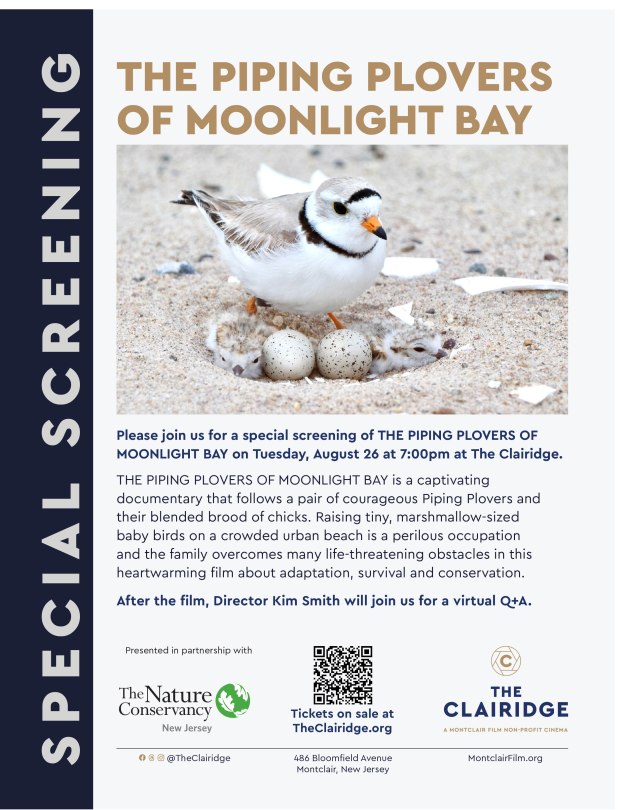
For my New Jersey Friends and Family – Montclair Film and The Nature Conservancy of NJ are hosting a special screening of The Piping Plovers of Moonlight Bay on Tuesday, August 26th at 7pm. QandA with me to follow. To purchase tickets, please go here: https://theclairidge.org/events/the-piping-plovers-of-moonlight-bay/
For my New Jersey Friends and Family – Montclair Film and The Nature Conservancy of NJ are hosting a special screening of The Piping Plovers of Moonlight Bay on Tuesday, August 26th at 7pm. QandA with me to follow. To purchase tickets, please go here: https://theclairidge.org/events/the-piping-plovers-of-moonlight-bay/
The anticipated update for the 2025 season with these most beautiful and most vulnerable of mini beach friends I feel is finally ‘safe’ to write. I only write safe because we try very hard to find a balance between sharing information to help create an awareness about the Plovers and also not bringing too much attention to the nesting birds.
First off I would like to thank our outstanding crew of kind-hearted volunteers, especially our core group who sign up for shifts that are an hour or longer and come everyday. This summer we had a very extended season with the chicks (more about that below) yet despite that, they stuck it out to the very end. Thank you to Jennie Meyer, Paula and Alexa Niziak, Kim Bouris, Steve Spina, Sandy Barry, Deborah Brown, Barbara Boudreau, Jill Ortiz, and Marty Coleman. We’d also like to thank our subs Heidi, Velia, Sally, and Jonathan.
If you see these kind and caring people around town, please thank them for their dedicated wildlife conservation work that they do so graciously and so tirelessly.
Thank you to Lyra Brennan, Rose Caplan, Jamie Infanti, and all our Audubon partners. We saw a great deal of Emma this summer and she is wonderful, staying extra long hours in the summer’s heat to watch over the chicks. Audubon does such great work and are responsible for not only Good Harbor Beach, but many other shorebird nesting areas all along the Massachusetts coastline. We appreciate their thoughtful and action oriented responses so much, especially when it comes to some of the more serious issues that arise over the course of the season. With thanks and gratitude to Lyra, Rose, Jamie, Will, Emma, Charles, and Claudia.
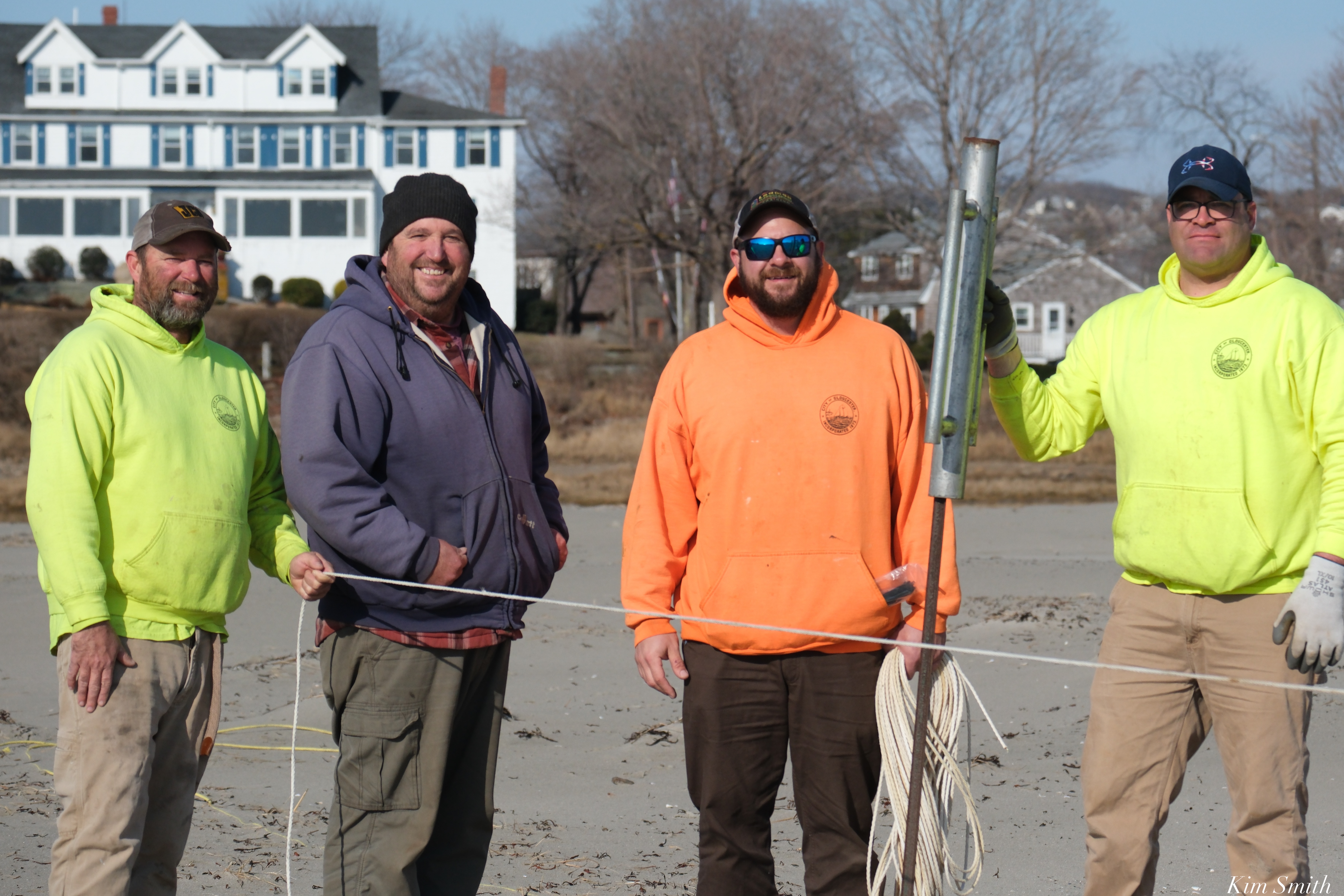
Thank you also to Gloucester’s Joe Lucido, Tom Nolan, and the entire DPW Crew. These guys are amazing and are always working so hard to make our beaches safe and presentable. Despite the double load imposed on the Crew (because of the additional work they are doing during the garbage strike), they are ever present and so very much appreciated.
DPW Crew setting the roping in place n March
We’d also like to thank several gentlemen who are at GHB nearly every single morning, starting in the spring. While most beach visitors are still sleeping, these gentlemen voluntarily pick up the plethora of garbage found littering the beach leftover from the previous day. They ensure our beaches look pristine by the time the gate opens at 8am. Chris Cefalo, his brother Fred, Michael Cook (and there is a fourth gentleman whose name I don’t know), work tirelessly cleaning the beach, from the tiniest bits of plastic to hauling off the larger items like chairs, tables, umbrellas, and tents. If you see these gentlemen around town, please thank them for the good work they do.
And a huge shout out to all the many, many beachgoers who express interest in the Plovers, want to learn more, give the chicks lots of space, and respect the cordoned off areas.
Piping Plover Smooshies
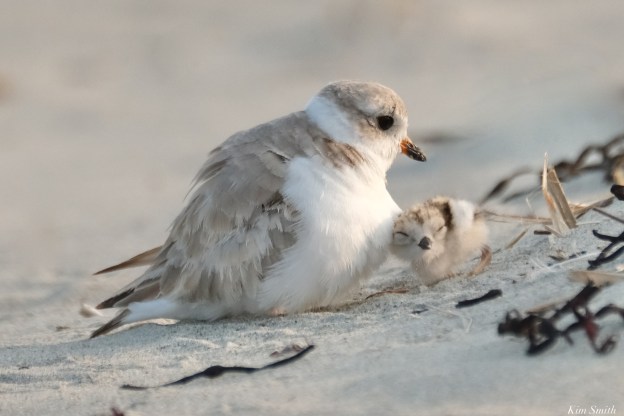
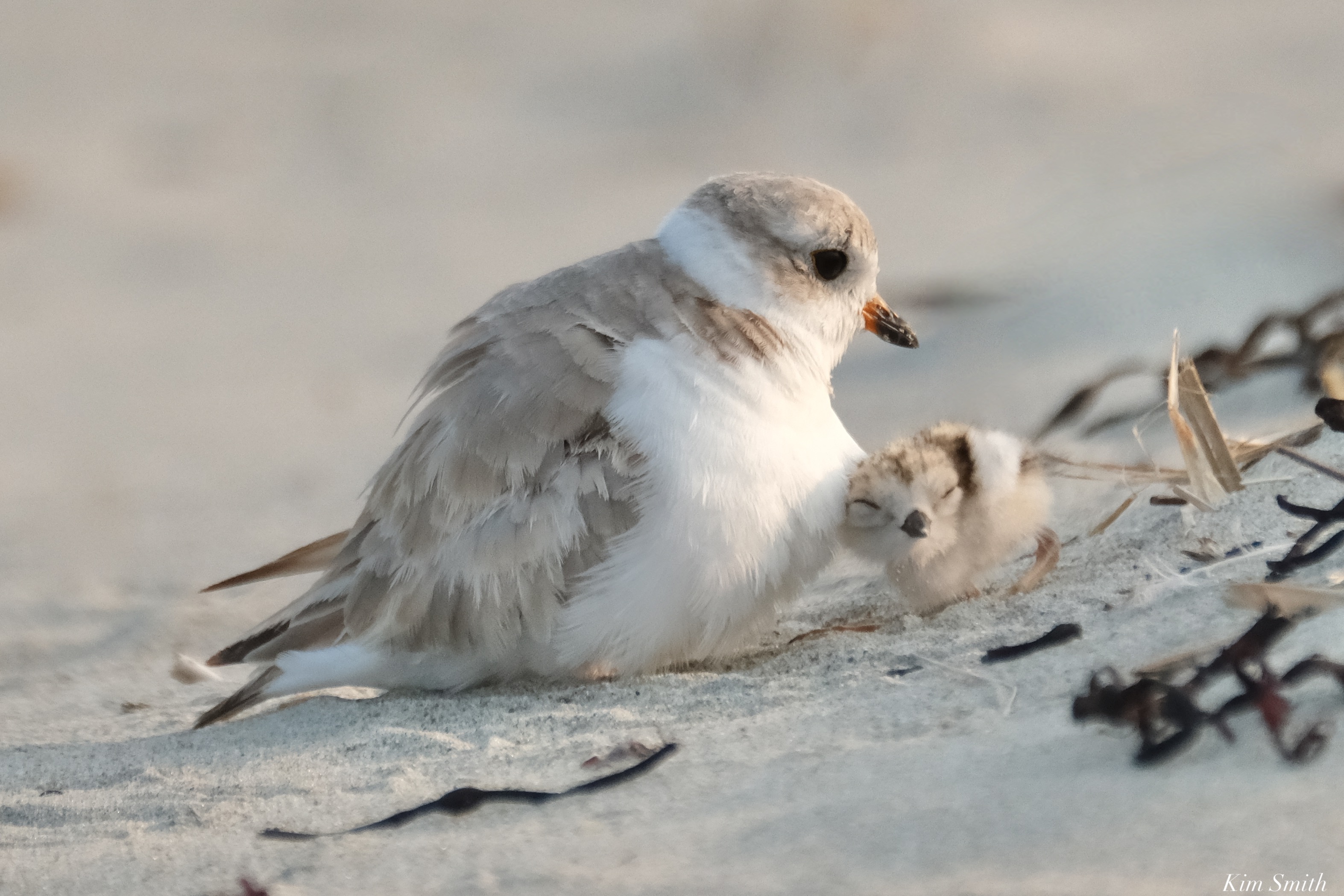
One of the many gifts we receive as Plover Ambassadors is watching tiny baby birds the size marshmallows develop into beautiful little flyers. The clips are of Fierce Dad and FairFeathered Mom’s offspring; the first clip is of two-day-old hatchlings, the second clip is of two-week-old chicks, and the last clips of the three- and a half-week-old chick. When Plovers hatch they can feed themselves entirely independent of the parent however, they need to thermoregulate to keep warm (otherwise known as thermo-snuggles and smooshies). The birds instinctively know to tuck under Mom and Dad’s wing to keep warm.
The 2025 Piping Plover Season at Good Harbor Beach
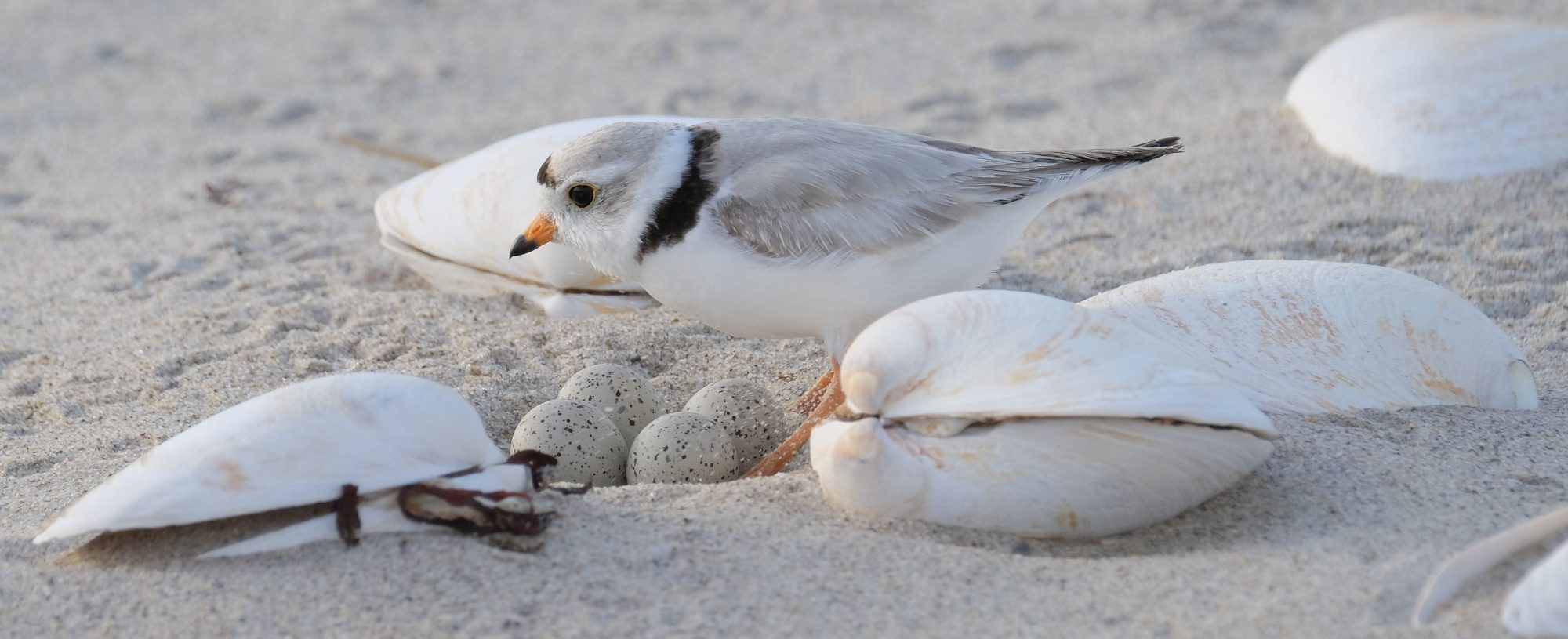
The season started phenomenally well, with the earliest arrival ever of Super Dad and our footless Handicapped Mom. Fierce Dad also arrived on the very same day as this original pair. It is always a much anticipated and joyful moment when we begin to see the first Plovers returning, especially Super Mom and Dad. This resilient little pair are at least 11 years old. We know this because they began nesting at Good Harbor Beach in 2016 and Plovers have to be at least one year old before they can begin breeding. Each year its become more and more tenuous as to whether or not we will see the return of our wonderful original pair. Plovers only live on average 3 to 5 years and this pair, at 11 years young, are quite a respectable age for their species.
Piping Plover Courtship
Fierce Dad and Original Dad spent a good part of the first few weeks in competition for territory and for Super Mom, with Fierce Dad even putting the moves on Mom several times. At one point we had nine Plovers, and four were nesting pairs, the most ever! There were lots of territorial disputes, some ending in serious smackdowns but for the most part, the birds began to settle in to brood their eggs.Piping Plovers Mating
Original Mom and Dad’s clutch was nearing hatch date when on May 22nd, the coast of Massachusetts was walloped by a late season nor’easter. The tide rose higher than we have ever seen in late May and three of the four nests were washed away. As devastating as that was, it was a joy to find one remaining nest, the young parents that are a new pair to Good Harbor Beach. From their nest of three eggs, two chicks hatched.
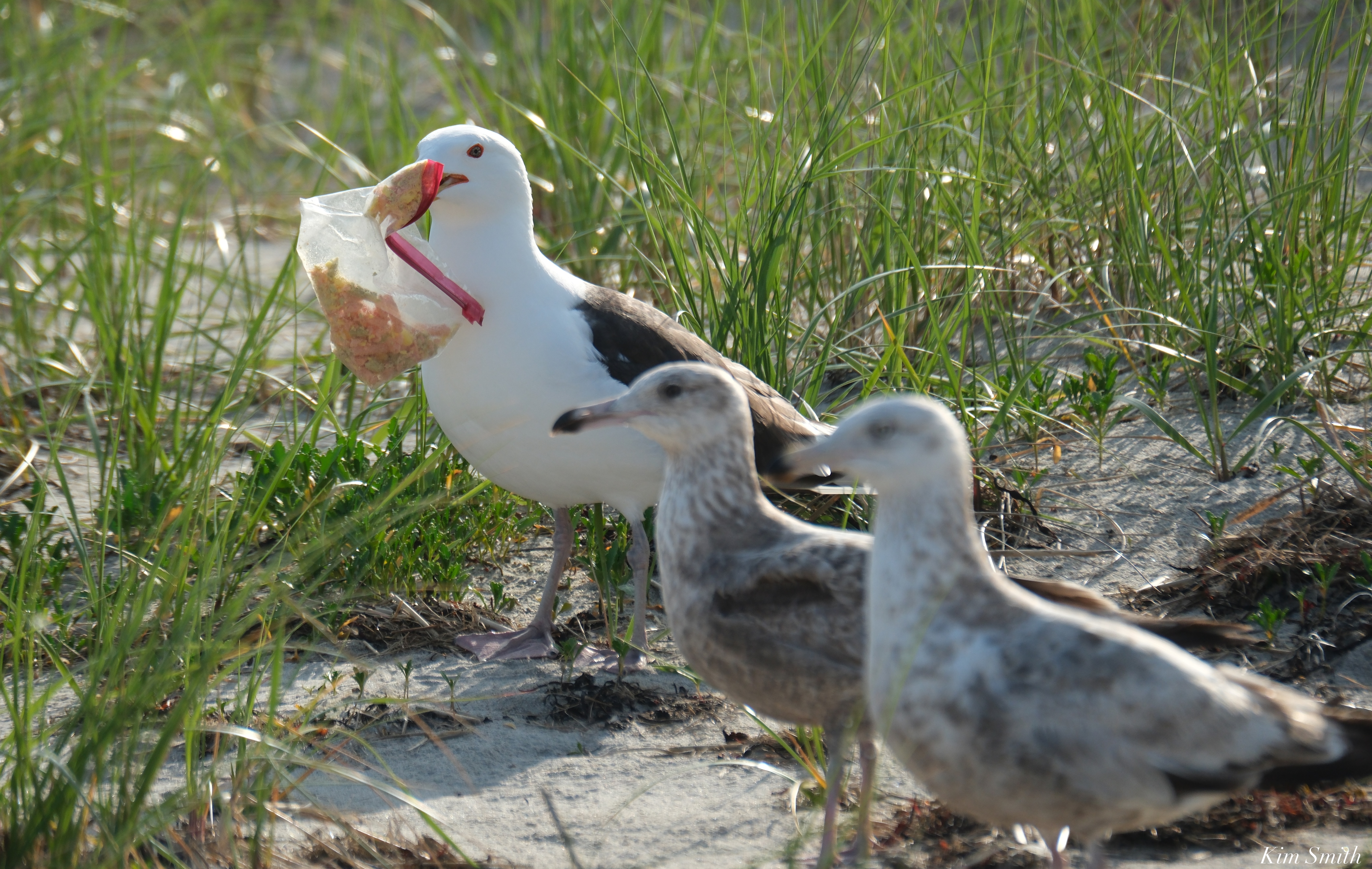
Over time original Mom and Dad attempted to re-nest. After a brief recovery period, Mom laid a new clutch of three eggs. However, this second clutch of eggs was predated by a Crow. As the season progresses there are more and more Crows and gulls scavenging the beach, seeking garbage left behind by people. We know it was a Crow from the tracks found around the nest.
Remarkably Mom and Dad laid four more eggs, a grand three clutches, 11 eggs in total. Once again, the eggs were snatched and Crow tracks were found encircling the nest scrape. Our Handicapped Mom left shortly after the third nest was lost. Super Dad hung on for a bit longer but he too departed. All was not lost as the one remaining chick from the young parents grew and developed into a lovely, albeit super chunky, fledgling and has begun its southward migration. Note – we love super chunky fledglings. They’ll have lots of stored fat reserves to get them through their first migration.
FairFeathered Mom and one-day-old hatchling
Today we still have one almost-fledged chick remaining at Good Harbor Beach. This little chunkola is Fierce Dad and FairFeathered Mom’s offspring, from their re-nest. Because the eggs hatched so late in the season and the females usually begin migrating before the males, FairFeathered Mom left when her chick was only five days old, leaving Fierce Dad to raise the chick solo. Fierce Dad has lived up to his name, fighting off every gull, crow and even other shorebirds that dare to come within 100 yards of his offspring. He is still parenting the chick who is quite independent at this point. Nonetheless, the almost fledged chick still goes in for snuggles and smooshies and relies on Dad to keep the gulls at bay.
Along with a great bounty of seaweed washed in with the late May nor’easter, the seaweed was littered with zillions of pieces of small yellow and green plastic
Just as has happened at GHB this summer, nests were washed out along the entire coastline of Massachusetts. With many pairs re-nesting, the conservation biologists from every Mass coastal region saw much lower productivity with these second nests, and in some cases (Super Mom and Dad), third nests. What does low-productivity mean? Not as many eggs were laid and of the eggs that were laid, fewer than usual hatched. So, for example a second clutch with only three eggs, only one or two of the eggs may hatch. And all coastal areas across the region experienced higher than usual heavy predation by Herring and Great Black-backed Gulls, Crows, and Eastern Coyotes. My own theory for that is because when chicks hatch in May for example there are far fewer flocks of seagulls on the beach. But when chicks hatch in July and August, Crows, Gulls, and Coyotes are acclimated to finding free food, i.e. garbage, at the beach, which leads to greater interest in shorebird eggs and chicks. Also at this later time in the summer, there are thousands of hungry fledglings on beaches begging their parents for food.
We are hopeful that next year we won’t have another late, late nor’easter and all the pairs that attempted to nest at GHB this season will return and try again. If you would like to join our volunteer team of Plover Ambassadors, please contact me either by leaving a comment or emailing me at kimsmithdesigns@hotmail.com. We would love to have you!
If you would like to learn more about how we can all help protect shorebird wildlife and their habitats, please watch our film The Piping Plovers of Moonlight Bay. Our documentary is streaming on the PBS Passport AP anytime you would like to watch it. Everyone can become a member of PBS Passport by donating to PBS. It’s so worthwhile, especially for young children with curious minds. What other streaming service can you get for $5.00 a month!!
According to the Gloucester City ordinance code, it is a $300.00 fine (doubled during the season) to bring a dog to Good Harbor Beach. For example, if you bring two dogs, that is 600. x 2 = $1200.
But stating the fines right off doesn’t explain why.
Health and Safety
Our beaches are wonderfully filled with beachgoers during the summer months. Can you imagine adding dogs, either on or off leash, to the mix? Dog ownership is at a record high, much greater than even a generation ago. In 2000 there were roughly 68 million pet dogs, today there are about 90 million dogs. What if everyone who owns a dog brought theirs to the beach?
Let’s face the facts, a great many dogs are not on voice command. We have dogs jumping on children, knocking over the young and old, biting people, and getting into dog fights and biting each other. That is not a safe scenario for any beachgoer.
But what if the law were changed to allow dogs on leash?
We would have half abiding by the leash law and half saying “I left my leash at home,” or “I thought it was okay to let my dog off leash after 5pm,” or “I thought it was okay before 8am,” etc. etc. How do we know this? Because we already hear these statements during the off leash/on leash days at Good Harbor Beach.Pile of poop at the Good Harbor Beach snack bar area
Good Harbor Beach Footbridge
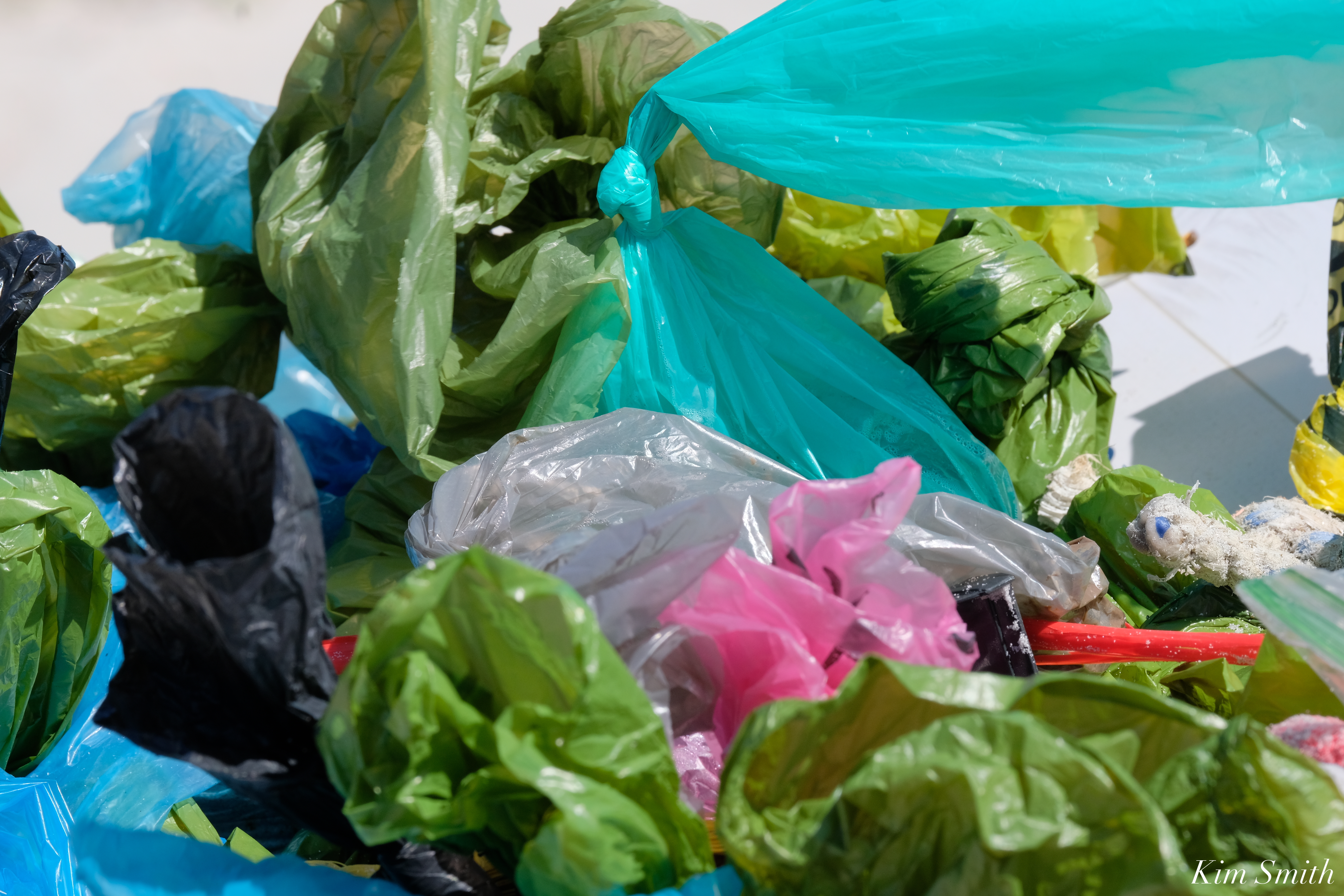
Dog Poop is a consequential environmental issue. During the season when dogs are allowed on the beach we see the gamut of poop-maintenance behaviors. Most people clean up after their pet. However, many people bury the poop in the sand or leave their poop bags behind. When someone leaves their bag by the footbridge, then other dog owners take it as a sign as a place to deposit their bag. The pile of dog poop in a rainbow color of bags grows and grows. Do we want beachgoers stepping in sand covered poop or being confronted with piles of dog poop? There is no poop cleaning fairy. It is left to our awesome DPW or one of the very nice volunteers, like Chris Cefalo, his brother, and Michael Cook who regularly cleans GHB to remove garbage and also the bags of poop.
Keeping Dogs out of the Dunes During the Growing Season Helps Protect the Dune Ecosystem
If you regularly visit Good Harbor Beach during the off season, you can’t help but notice, the “Keep out of Dunes” signs are frequently ignored by pet owners. There are many who do respect this vital habitat, but also many who don’t. Dogs running and playing vigorously through the vegetation tears at the roots and weakens the plants. Vegetation holds the dune sand in place and without plants the dunes continually recede.
Over the past several years, you may also have noticed the vast improvement in the overall health of the dunes. There is a direct correlation to keeping the symbolically roped off areas up through out the summer season and into the fall because by preventing people and pets from recreating right up to the base of the dunes, it allows just that much more room for vegetation to take hold, and is one fantastic tool in the tool box against fighting erosion.
Dog going pooh within nesting area
Keeping Dogs off the Beach Helps Nesting Shorebirds Survive
Last, but not least, dogs on the beach are a well-known threat to shorebird nests and especially to young birds that can’t yet fly to escape danger.
How so you may wonder? “My dog is so sweet and would never harm a baby bird.”
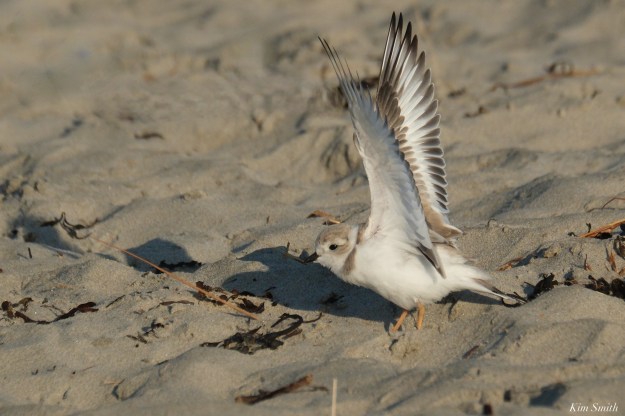
When there are baby birds on the beach, the Plover parents do their absolute utmost best to keep the chicks safe. The parents exhibit all sorts of distraction behaviors including dragging and fluttering their wings on the ground to fake injury, thereby encouraging the predator to follow it and drawing the threat away from their most vulnerable chicks.
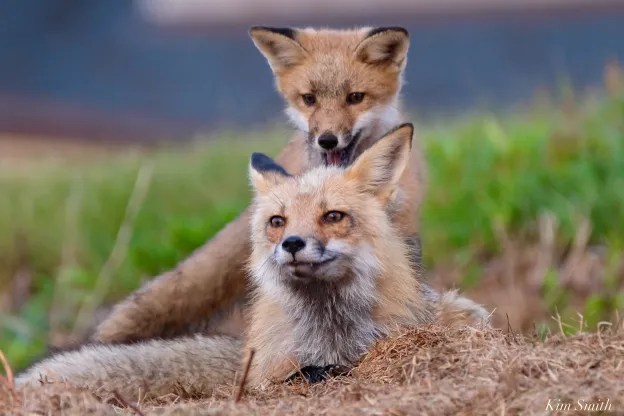
Plovers cannot tell the difference between a domestic dog, Fox, or Coyote. Dogs bound exuberantly on the beach through nesting areas and Coyotes and Fox dig in the sand for eggs and chicks. The ever vigilant Plover parent will leave the nest and fly at any creature Canid. Often, both parents will fly away from the nest in a sort of tag team distraction method. But while they are busy defending the chicks from a member of the dog family, that is the perfect time for a gull, crow, hawk, or falcon to swoop in and snatch the eggs or eat the baby chicks. Crows focus on eggs and gulls not only eat the eggs, they also eat chicks at every stage of development, even fledglings that have grown as large as the parent. Coyotes eat both eggs and chicks.
Especially during pupping season, Red Fox scavenge the beach looking for shorebird eggs, small mammals, and birds to feed their growing family. Plovers cannot distinguish the difference between a Coyote, Fox, or domestic dog.
Fierce Dad and FairFeathered Mom tag team distracting a Herring Gull
As I am writing this message, please know that we still have young birds at Good Harbor Beach that can’t yet fly well enough to escape predators. This is extremely late in the season and is due to the tremendous loss of nests during the May Nor-easter; losses all along the coast of Massachusetts. Many of the nesting birds eventually re-nested and we are seeing their offspring. Shorebird managers across Massachusetts are contending with taking care of these late flying chicks.
Here are on Cape Ann we are blessed with many beautiful alternative locations to walk our dogs, including Crab Beach (adjacent to the Boulevard), which is open year round to dogs and dog owners.
If you would like to see scenes of Plovers displaying their fascinating distraction techniques and learn more about predators on beaches, please watch our film The Piping Plovers of Moonlight Bay, which I created specifically for people to learn more about how we can all help protect shorebird wildlife and their habitats. Our documentary is streaming on the PBS Passport AP 24/7. Anyone can become a member of PBS Passport by donating to PBS. It’s so worthwhile, especially for young children with curious minds. What other streaming service can you get for $5.00 a month!!
As I first wrote, it is a $300.00 fine and doubled during the season to bring dogs to Good Harbor Beach, so please dog owners, for your sake, for the health of the beach ecosystem, and for the safety of growing shorebirds, please do not walk your dog at Good Harbor Beach or any beach where there is precious habitat and baby birds. Thank you!The No Dogs from April 1st through September 30th signs are boldly displayed at every entryway to Good Harbor Beach
I am very delighted to write that our Piping Plovers of Moonlight Bay is screening on Monday, August 18th at 6:00pm. We are sharing the billing with another animal welfare documentary, The Ramba Effect, about an Asian Elephant and her 2,550 mile journey to her new home at an elephant sanctuary. If you are in the New Hope area and would like to see The Piping Plovers of Moonlight Bay and The Rhamba Effect, please go here https://www.goelevent.com/NewHopeFilmFestival/e/AnimalWelfareDocumentaries
I hope you are having a lovely summer. I am so looking forward to these last three weeks of August and then we go into the wonderfully atmospheric months of September and October. Is there anywhere in the north Atlantic region where these months aren’t sublime?
I have held off on writing about PiPls all summer because we have had some very late season nesters. I’ll share an extensive report about the Plovers when I feel its safe for them and they are well on their way to fledging. In the meantime, I am very delighted to write that our Piping Plovers of Moonlight Bay has been accepted to the New Hope Film Festival and is screening on Monday, August 18th at 6:00pm. We are sharing the billing with another animal welfare documentary, The Ramba Effect, about an Asian Elephant and her 2,550 mile journey to her new home at an elephant sanctuary. If you are in the New Hope area and would like to see The Piping Plovers of Moonlight Bay and The Rhamba Effect, please go here: https://www.goelevent.com/NewHopeFilmFestival/e/AnimalWelfareDocumentaries
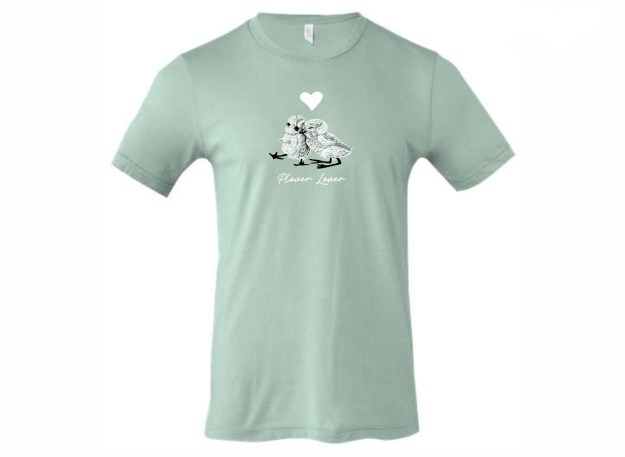
We also have all new Plover Lover T-shirts in all sizes and a great color, a sort of light sea green. For fans of West Coast Snowy Plovers, these chicks could easily pass for Snowy Plovers too. Please let me know if you like the new color. They are a beautiful quality, all cotton, unisex sizing from xs to xl. The Tees are 30.00 plus 5. shipping.
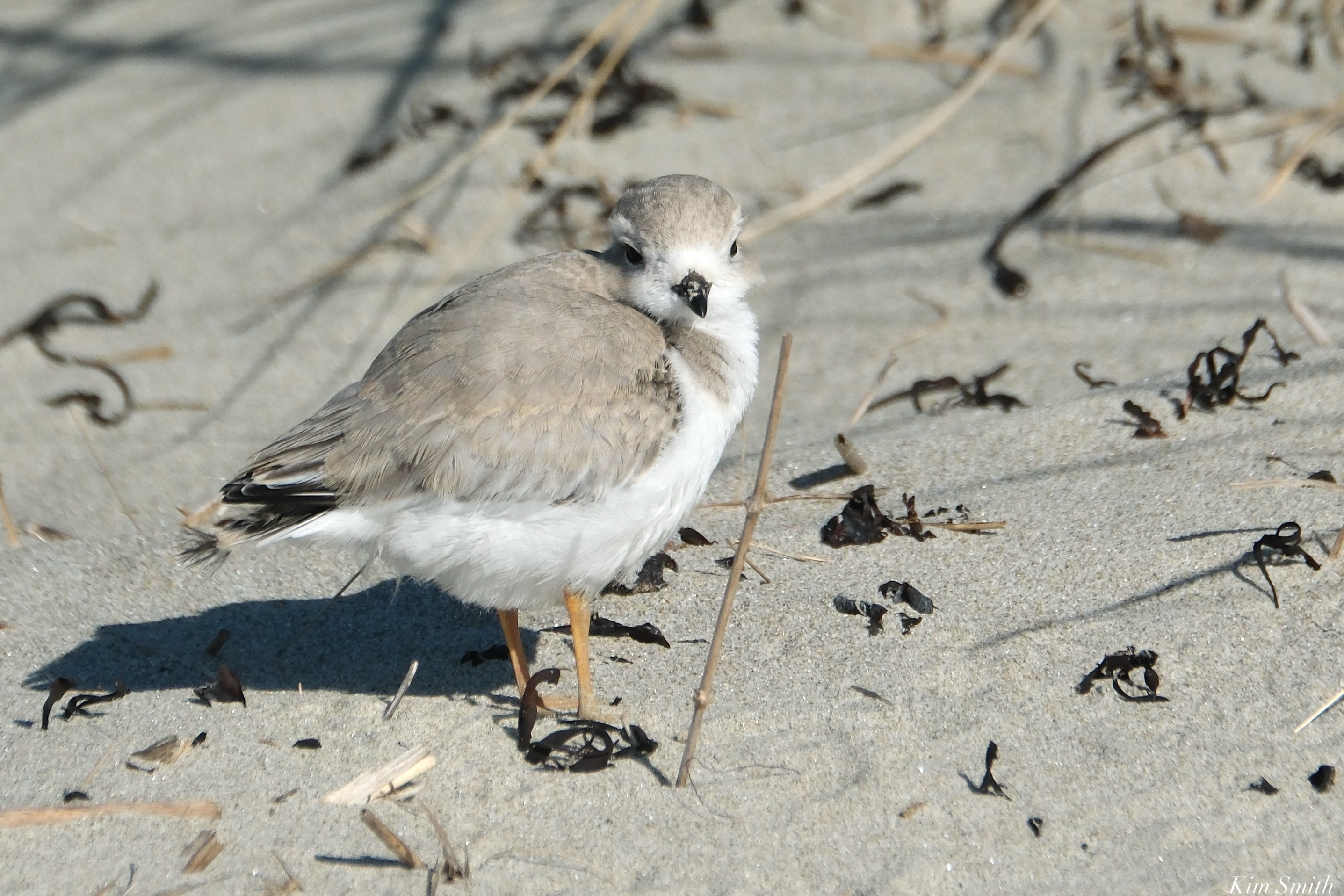
We have had some adorable “Butterballs” on the beach this summer. I define a Butterball as a fledgling that is so pudgy it looks nearly as big, if not bigger, than its parent and barely seems as though it can become airborne. Rest assured these Butterballs do fly, eventually ❤
Screenshot
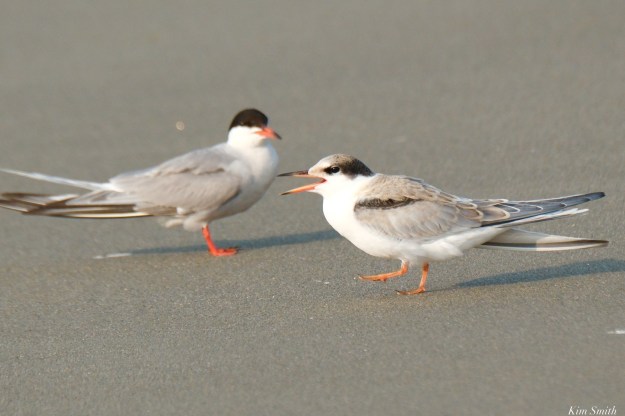
Common Tern fledgling squawking to parent, “Feed Me, Feed Me, I’m Starving!”
Fairly frequently when coming onto Good Harbor Beach to check on the Plovers, we find the birds off their nests and in utter panic. I have learned over time that there is only one reason why the birds along the one mile stretch of beach are frightened enough to leave their nests, in unison. Sure enough, in a moment or two, you hear the drone’s whirring motor first and then observe as it passes over the protected areas of the beach. Usually not one go-around, but the operators make repeated passes over the birds. Whether zooming at top speed or hovering, the Plovers are terrified by these modern day avian predator-like cameras.
It is illegal and considered harassment under the Migratory Bird Treaty Act to operate a drone over breeding areas. People are either unaware, feign ignorance, or even worse, are aware and simply don’t care. Countless times we have come onto our shifts to find all the birds in the area in complete meltdown mode. The birds think the drone is a predator that has come to eat their eggs, chicks, or themselves. There are even instances where a bird has flown after the drone and becomes injured. Today a man told me he was fully licensed to fly his drone over Good Harbor Beach. Drone operators need to understand that state, federal, and local ordinances supersede any licensing permit (see below for Good Harbor Beach regulations regarding drones).
There is accumulating evidence that the mere presence of drones causes direct harm to birds, not just during breeding season. The unfamiliarity and noise interrupts courtship, mating, and feeding. Entire tern and heron colonies have been abandoned due to drone disturbances.
Plover in crouched position, frightened by overhead drone, and off her nest
This past spring there was a political rally at Good Harbor Beach. We thought it tremendous that people were gathering in support of their views and the birds had absolutely no problem with the steady stream of people entering the beach from all directions. However, the representative’s organizers began preparing a sign that could be read only from an aerial pov, which meant they intended to fly a drone over the beach. We asked the organizers to please not fly the drone but they ignored our pleas and told us the drone was only going to fly over the water and the drone would only be on the beach for a few minutes. Of course we knew that would not be the case and sure enough the drone flew repeatedly over the dunes, disturbing every bird along the entire length of the beach. After fifteen minutes of sounding their alarm calls, all the birds on the beach flew off in unison. The drone was documented flying low over the beach for 45 minutes. Clearly, a beach with nesting birds is not the place to hold a rally if a drone is part of the equation, particularly when there are other locations as easily accessed.
Over millennia, nesting birds evolved with the constant threat of avian predators, including hawks, falcons, crows, gulls, and eagles. They have not adapted to understand that a drone is not a predator, no matter how much the drone operator protests that the birds are unbothered by the drone and have become used to its presence.
It is imperative for the safety of the birds that they have a healthy fear of drones. The last thing we want are nestlings thinking that hovering airborne shapes are nothing to be afraid of.
In our collective experiences monitoring the Plovers, we come across unethical behavior not only on the part of drone operators but also by fellow wildlife enthusiasts. We have seen photographers mashed up against the symbolically roped off areas, despite massively long telephoto lens, parking themselves for hours on end, and also following the birds relentlessly up and down the beach, despite the bird’s clear signals it is trying to get away and/or tend to its chicks. Early on in the pursuit of my dream to document wildlife, I was part of crowds that photographed owls. Observing how sensitive are owls, I no longer film owls in known locations. If I come across an owl or rare bird when out filming, I take a few photos and footage and go on my way. Crowds and hovering persons are also the reason why I no longer post specific locales and keep location information general.
To ethically document wildlife requires thought and is also a tremendous responsibility. We can all do our part to protect the beautiful creatures in our midst by being mindful and sensing their boundaries, especially, especially during the time of year when they are breeding.
Thank you for taking the time to read this information. I hope your question is answered, and why. Please share this post. Thank you 🙂
Many thanks to City Councilman Scott Memhard for helping me locate the regulations on the City’s website!
City of Gloucester Good Harbor Beach Regulations for Model Airplanes, Radio Controlled Aircraft, Drones
Good Harbor Beach Parking Lot
1. Permitted to fly only when beach parking lot is not in operation (no attendant on duty).
2. Restricted to times when pedestrian and vehicle traffic are at a minimum.
3. Not permitted before 8:30am.
4. Shall fly over the parking lot and marsh areas, not the road or beach.
5. Noise levels will be restricted to an acceptable level (non-flow thru, expansion chamber mufflers only).
6. Pilots shall fly in a safe and responsible manner at all times.
7. Pilots will be responsible and liable for their actions.
8. Pilots will abide by regulations in effect and maintain a safe environment.
9. Pilots will be considerate of wetlands and wildlife.













 The Piping Plover Project