Tag Archives: Piping Plover update

HAPPY FATHER’S DAY TO ALL THE SUPER DADS!

HAPPY FATHER’S DAY TO ALL THE WONDERFUL SUPER DAD’S, both human and avian!

My husband Tom is the best Dad you could ever imagine. From Tom, I inherited the best father-in-law, his Dad. My heart is filled with much joy when I see my son Alex with his daughter and know he has inherited their same thoughtful and kind, gentle loving nature. I don’t want to go on about this because I realize not everyone is so blessed and that there are many absentee fathers out there, mine included. Enjoy all the Dads in your life and know you are so blessed if you are fortunate to know a good one.

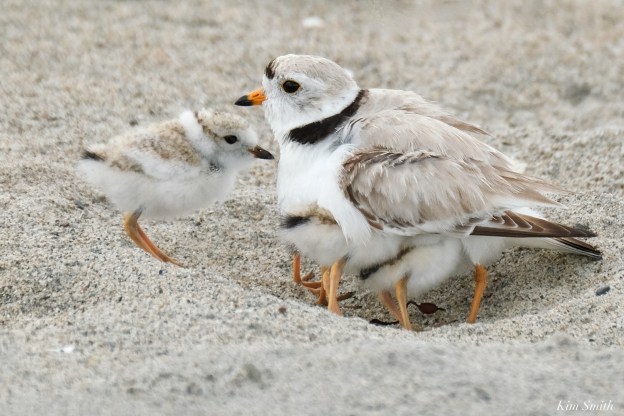
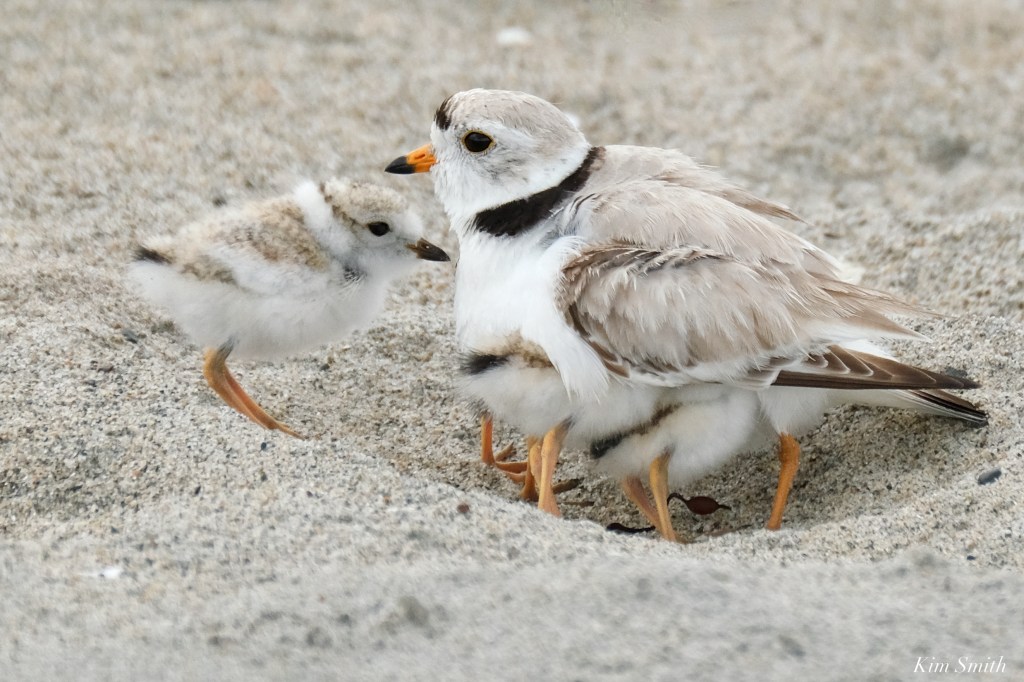
The first photo is of a Piping Plover Dad thermosnuggling his three chicks and was taken recently at a beach on the south shore. I think the chicks are about three weeks old in the photo and it reminded me of our Good Harbor Super Dad. We call him Super Dad for a variety of reasons, but one of the most poignant is how he stayed with the handicapped chick for a month beyond the date when HipHop’s siblings had already learned to fly. It took Hip Hop twice as long to manage sustained flight but Super Dad was with him every step of the way. I think this is very unusual in the animal kingdom and is counter intuitive to the survival of the adult.
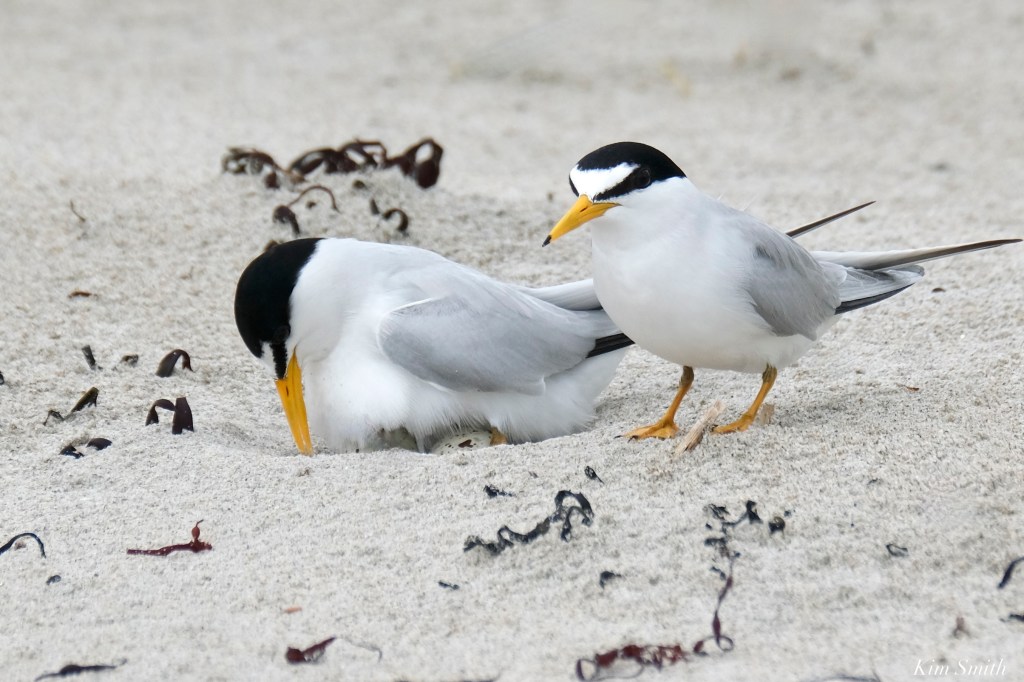
The second photo is of another species of shorebird that breeds along the New England coast, the Least Tern. Least Tern Dads share equally in brooding eggs.

Unlike Piping Plover chicks, which are precocial birds and can feed themselves within hours after hatching, Least Terns are semi-precocial and need to be fed by the adults. Least Tern Dads share equally in feeding the chicks.
Gloucester Ambassadors First Full Week Working with Mass Audubon – June 11th Plover Lover Weekend Update

Dear PiPl Friends,

As many of our PiPl followers are aware, this year the City of Gloucester hired Mass Audubon to help manage Cape Ann’s Plover population. We’ve had our first full week of collaborating with Mass Audubon and I have to say it just could not be better for all involved, but most importantly, for the Piping Plovers! The Mass Audubon staff is tremendously professional, kind, friendly, dedicated to wildlife conservation, and very personable. Lyra, who heads the coastal waterbird program for Mass Audubon, and Devon, Gloucester’s assistant conservation agent both have a great deal of experience managing Piping Plovers and are quick to respond to questions and challenges as they arise.

A few changes have been made to the beach. The roped off Plover areas to protect the Plovers has increased, however, there is still loads of space for beachgoers. An added bonus to creating safe spaces for Plovers is that over time, we have seen how the established protected areas for the Plovers has vastly improved the overall health of the beach. Why is that? Because when people and pets aren’t recreating up against the dunes, new vegetation is allowed to take hold including native American Beach Grass (Ammophila breviligulata), American Sea-rocket (Cakile edentula), Common Milkweed (Asclepias syriaca), Beach Pea (Lathyrus japonicus) and Seaside Goldenrod (Solidago sempervirens). Protecting the dunes is one of the best coastal strategies for combating a warming climate. It’s truly a beautiful thing to see how much healthier are our dunes!

Another change that has taken place are the guidelines in how close we should stand when observing the Plovers. One of the most important ways to help the Plovers is to give them lots and lots of space. If we hover/stand/place camera gear for long periods of time pointing to the Plovers, wildlife biologists working with Mass Audubon have documented that this activity attracts Crows and Gulls! You may ask, “why is that a bad thing?” Crows voraciously eat Plover eggs and hungry seagulls eat Plovers at all stages of development, including eggs, hatchlings, and even 3 week old chicks.

The best way for we beachgoers to help the Plovers is to watch from a distance and not hover near the birds. With a half-way decent lens and a camera sensor with a good crop factor we can get beautiful shots from a safe distance. The City, Mass Audubon, and we Ambassadors are all asking this of the community and we are deeply appreciative of your help.

Piping Plover smackdown – The video is of our handicapped Super Mom. Her disability does not impede her determination nor ability in defending her territory. She is perhaps Good Harbor Beach’s most fierce Plover, despite her missing foot.

Piping Plovers ferociously defend their nesting territory from intruders of every shape and size; puffing up their feathers to appear larger, chasing, and even biting the offender. Here she is in early spring defending her little slice of Good Harbor Beach from Scruffy Boy’s shenanigans!