Tag Archives: Piping Plover Ambassador

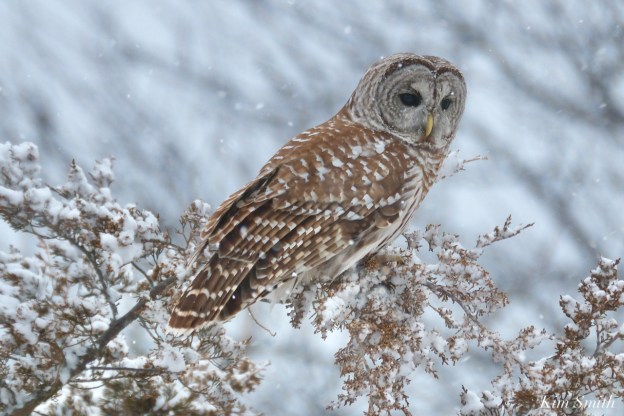
PLover and Monarch News, Full Wolf Moon, and Barred Owl in the Snow

Dear PiPl Friends,

I hope you are doing well. We are keeping our family and friends in our hearts as they struggle to return to a normal way of life after the tragic LA firestorms. I hope the winds die down soon so recovery can begin in earnest. Our daughter shares that she and her boyfriend are bringing supplies to firehouse donation centers and she is keeping her hummingbird feeders well-filled as there are more birds than ever in her garden.

Thursday night I am giving a screening and Q and A of our Monarch film, Beauty on the Wing: Life Story of the Monarch Butterfly for the Carlisle Conservation Foundation at the Gleason Public Library. We have super good news to share regarding the Monarch film – the contract has been renewed with American Public Television, which means our documentary will be airing on PBS for another three years! We will have two nature documentaries simultaneously airing on public television 🙂 Our film about the magnificent migrating Monarchs provides a wealth of information not only about the life story of the butterfly, but also suggestions on what to plant to support the Monarchs throughout their time spent in their northern breeding range.

We had a beautiful snowfall this past weekend. Snow storms and snowfalls have become so few and far between over the past few years in our area that I hopped in my car before sunrise and headed north to film what I could, hopefully before the snow stopped. There was hardly a soul about. A wonderful variety of songbirds was foraging in the falling snow and also a very hungry Barred Owl was zooming from tree to tree surrounding an adjacent field. I pulled myself away before she caught her prey because I didn’t want to have any part in preventing her from capturing her breakfast. Fortuitously, the very next day, a friend shared a post on how to tell the difference between a male and female Barred Owl. You can read the post here. I concluded the BO flying to and from her tree perches was a female. It was magical watching her in the falling snow. Link to video of her flying –https://vimeo.com/1047197766 or you can watch it on Facebook or Instagram.

The deadline is fast approaching for underwriting opportunities for our documentary, The Piping Plovers of Moonlight Bay. We need to have all the names of underwriters in by January 20th to fulfill our contract with American Public Television. If you would like to join our underwriting pod with a contribution to our film and have your name or your organization’s name included in our underwriting credit pod please email me asap. An example of an underwriting pod  – This film was brought to you by the Apple Tree Foundation, The Shorebird Conservation Fund, Lark and Phoenix Bird, …, and viewers like you (these are just sample names). Please note that every time the film airs and streams on PBS over the next three years, possibly six years, the name of your organization will be acknowledged. Of course, we gratefully accept all contributions to our documentary at any time, but if you would like to be recognized in this way, please let me know.

Common Grackle Eating Plover eggs
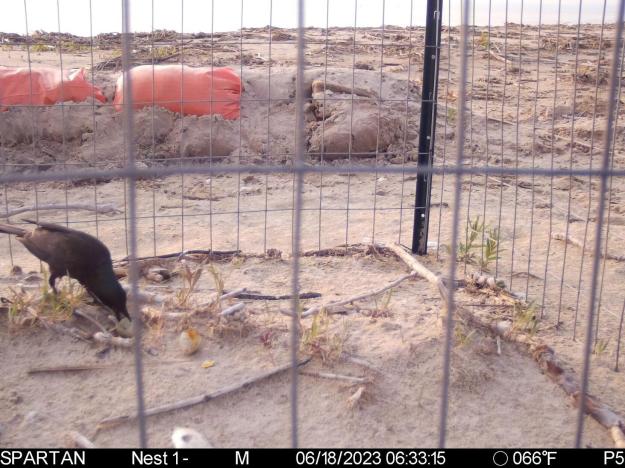
I can’t believe that in only two short months Plovers and shorebirds will be returning to our beaches. Please contact me if you would like to join our Plover Ambassador team. Research from scientists in the Michigan Great Lakes region made Plover news this past week. Common Grackles were documented foraging on Piping Plover eggs. This is very noteworthy but not too surprising to our Cape Ann Plover Ambassadors as we have seen our Plovers defending their nests from Grackles. There is a very large roost of Common Grackles on Nautilus Road, opposite Good Harbor Beach. The Plovers distract the Grackles with their broken wing display and tag-team attack behavior. We wondered, were the Grackles posing a real threat or did the Plovers behave this way because Common Crows and Grackles look somewhat similar? Crows notoriously eat Plover eggs at every stage of development, from newly laid to near hatch date. We now know definitively the answer as to why our Good Harbor Beach Plovers are on high alert around Grackles!

Stay safe and warm and cozy,

xxKim

Watch how handicapped Super Mom has adapted in how she gets around

Lots of folks are asking, “how does Piping Plover Super Mom manage with her missing foot?” She has adapted beautifully however, you can see from these short clips, that it takes much more effort to get around.

If you see Plovers on the beach know that one may be Super Mom. Plovers need minimal disruption as they are becoming established at their nesting sites and Super Mom even more so.

Thank you for giving the Plovers all the space that they need!

In the summer of 2021, one of the Good Harbor Beach Piping Plover’s foot became entangled in dried seaweed and monofilament. Over the winter she lost all the toes on her right foot. She returned to GHB in 2022. Piping Plover Super Mom has adapted in how she walks, runs, forages, preens, and even in how she mates. Over the summer of 2022 she and her long time partner, Super Dad, successfully raised four chicks to fledge. She has again returned to her nesting site in the spring of 2023. She is healthy, foraging well, and nest scraping with her mate!

FROM THE GLOUCESTER DAILY TIMES – MASS AUDUBON TO HELP PROTECT PLOVERS

We’d like to send a heartfelt thank you to the Gloucester Daily Times staff writer Ethan Forman and editor-in-chief Andrea Holbrook for writing about our Good Harbor Beach Plovers. We friends of Cape Ann Plovers appreciate so much your thoughtful writing and taking the time to get the story straight!

Mass Audubon to help protect threatened plovers

By Ethan Forman

The sighting of the one-footed piping plover Super Mom, and others like her on Good Harbor Beach during the last week in March, coincides with human activity there meant to help preserve and protect coastal shorebirds during the busy summer beach season.

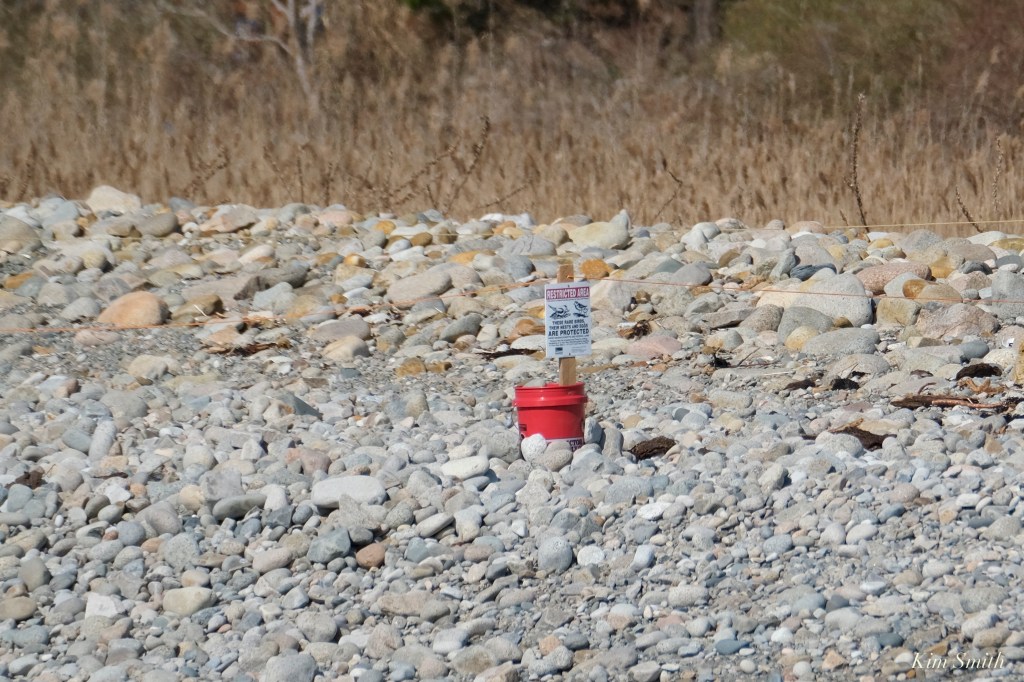
That includes the installation of symbolic fencing made up of metal posts and yellow rope around the dunes with signs letting beachgoers know the “Restricted Area” is “a natural breeding ground for piping plovers.”

“These rare birds, their nests and eggs are protected under Massachusetts and federal laws,” the signs read.

The nation’s oldest seaport is taking extra steps this year to monitor and minimize disturbances to Super Mom and others of her threatened species of small, stocky migratory birds that have made the popular beach their summer home in recent years.

On Monday, the city announced it had entered into an agreement with Mass Audubon to help with the monitoring and management of coastal nesting birds, including piping plovers, on the city’s public beaches, according to a press release.

READ THE FULL STORY HERE

WONDERFUL NEWS – HANDICAPPED PIPING PLOVER SUPER MOM AND SUPER DAD REUNITED!!!

Dear PiPl Friends,

We are overjoyed to share that our Super Mom and Dad have reunited!

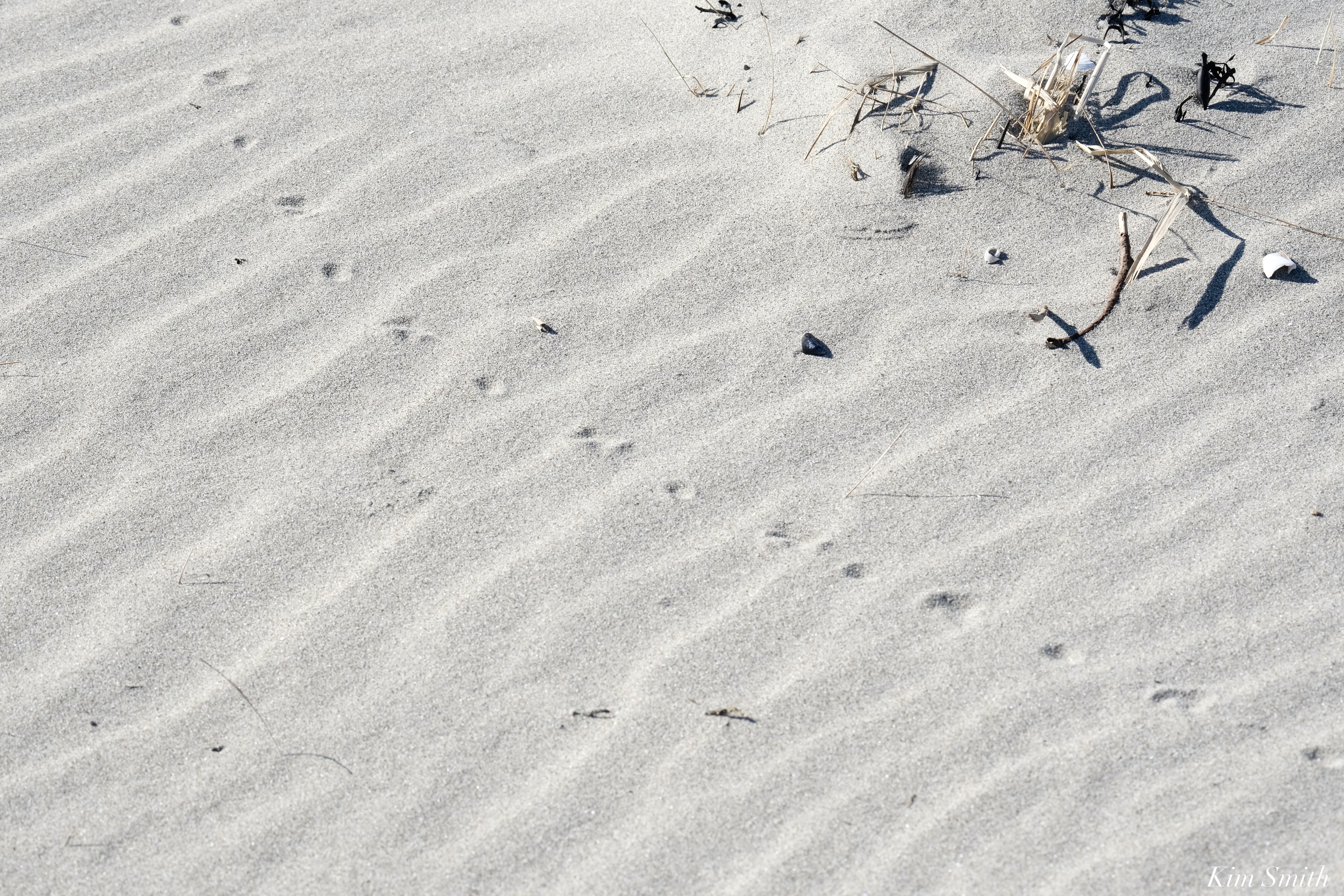
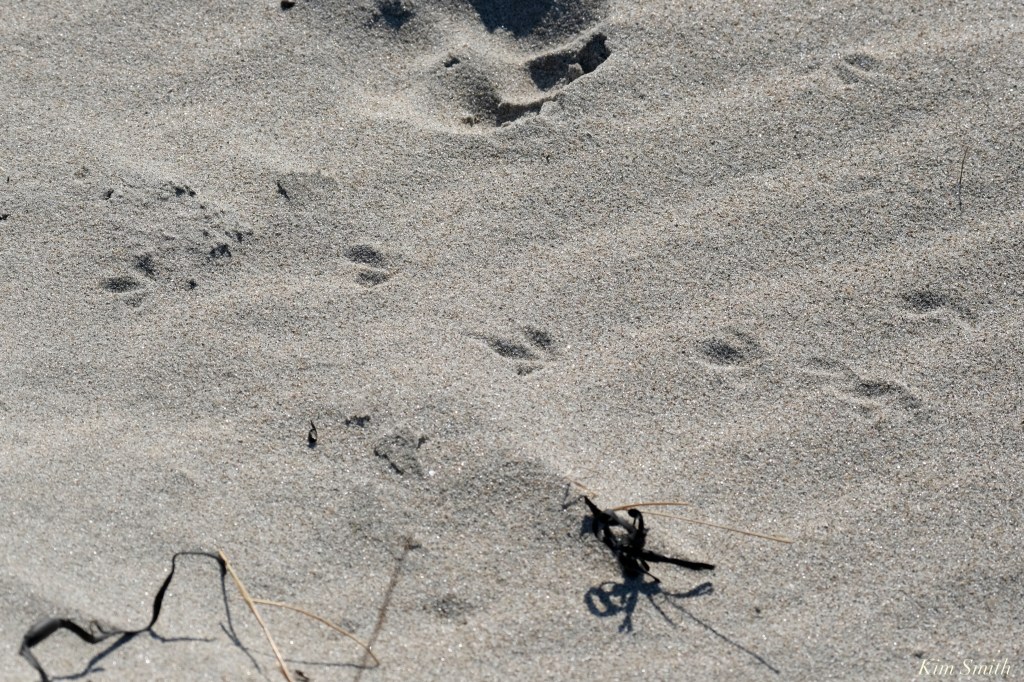
Early last week while checking on Plovers, it appeared as though one of the sets of Plover tracks was our Super Mom. The day was very windy and the tracks were disappearing as I was filming however, it looked like tracks made by a peg leg. Later in the week, I spotted the pair we have been seeing since the last week in March. Because of the cold and wind, they had been laying low. But sure enough, as soon as the female moved, it was clear she was our handicapped Mom!

Handicapped Mom’s tracks

I think it’s truly extraordinary that our handicapped Mom has twice been able to make the round trip migration south to north and north to south, despite her missing digits. With her missing toes, she has had to totally adapt in how she walks, runs, stands, forages, nests, preens and even how she mates.

Wildlife can be remarkably resilient. I am reminded of the Great Lakes Old Man Plover, one of the oldest Plovers on record. When he was about 11 years old, he lost the toes on his left leg, just like our Super Mom has lost hers on her right leg. He continued to return to Sleeping Bear Dunes until 2017, when he disappeared. He was fifteen years old when last seen.

Super Mom

We also have a handsome bachelor who is actively calling for a mate. Hopefully his loud piping will entice a migrating female to check out GHB!

One Plover has been spotted at Cape Hedge by Plover Ambassador Paula. The weather was cold and windy and the PiPl was difficult to see from a distance whether male or female.

Piping Plovers are extremely vulnerable to disturbance while trying to establish their nests. If you see them on the beach, give them a nod, but please give them lots and lots of space. We all thank you for your kind consideration!

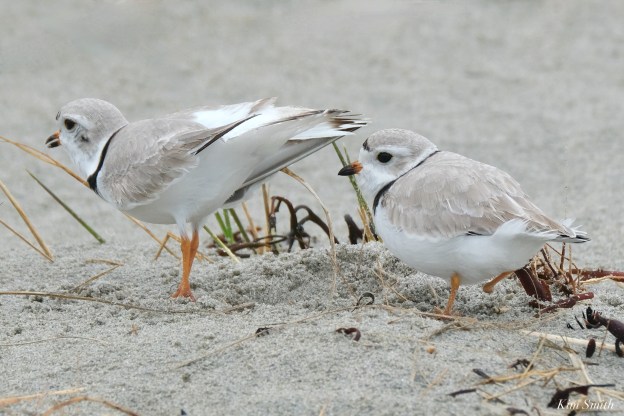
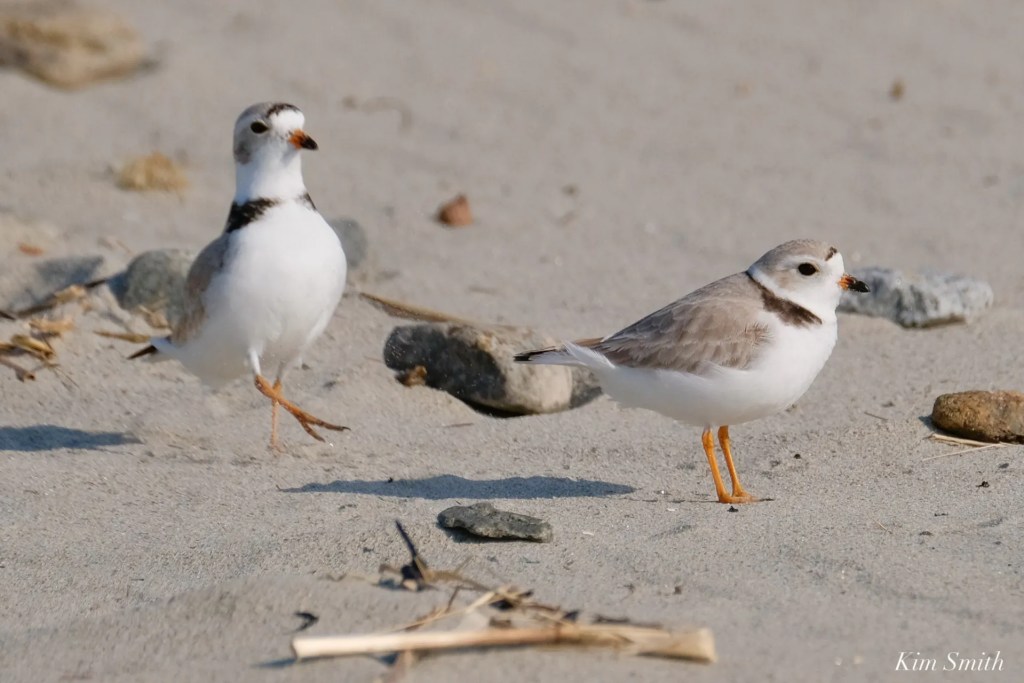
Nest-making – Dad on the left, Mom with missing foot on the right

If you would like to join our Piping Plover Ambassador group, please email me at kimsmithdesigns@hotmail.com, or leave a comment in the comment section and I will get back to you. Thank you.

HOW WE CAN ALL HELP CAPE ANN PLOVERS SETTLE IN FOR THE NESTING SEASON

Dear PiPl Friends,

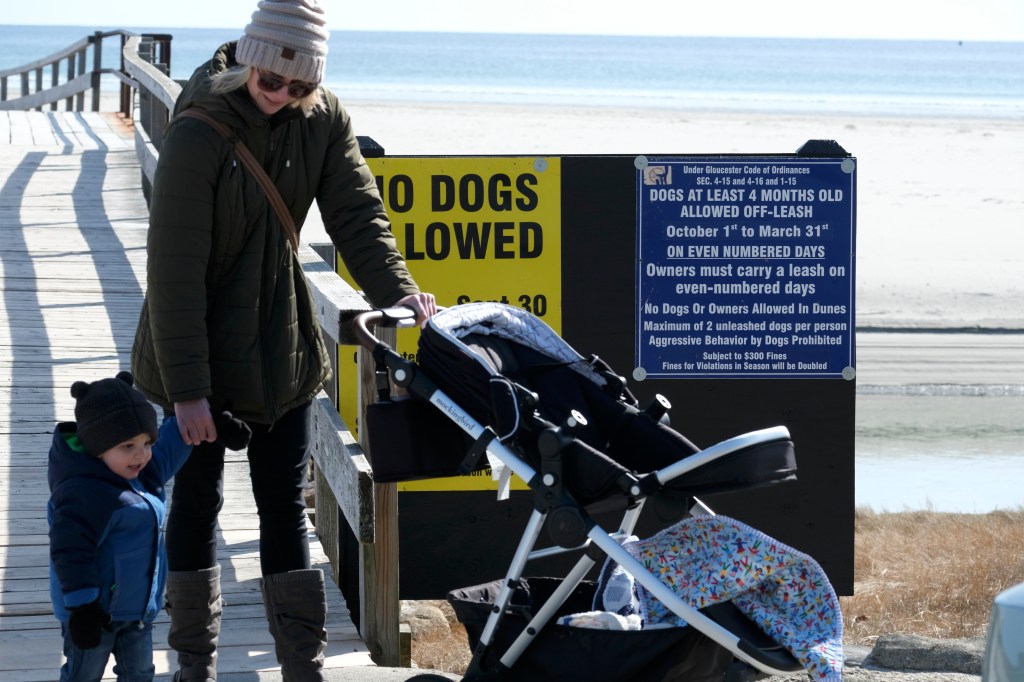
A friendly reminder that after March 31st,  pets are not permitted at Good Harbor Beach until after September 30th. Thank you!

At this time each year, we receive many reports of, and are sent photos of, dog owners not adhering to the seasonal change in policy regarding pets on the beach. If you see a dog on the beach, the best way to help is to please take a photo and call the Gloucester PD Animal Control phone line at 978-281-9746. If no one answers, please leave a message with the time and location.

We are hoping the no pets sign at the Salt Island end of the beach will be installed soon and that the flashing sign will again be put to good use. Our Animal Control Officers Jamie and Teagan work very hard patrolling the beach and chasing after scofflaws, but they can’t be there 24/7. For the common good of the community, it’s up to us as individuals to follow the signage and respect wildlife that makes their home on the beach.

Every community in Massachusetts that is home to nesting shorebirds has both a legal and principled obligation to share the share with wildlife. To say nothing of the joy to be found in helping vulnerable and endangered creatures. Please try to understand that if dog owners continue to bring their dogs to the beach and the City does not enforce the pet ordinance, Good Harbor (and any beach) is at risk of shutting down for the summer. NO ONE WANTS THAT. The City and we Ambassadors work very hard to be in compliance with Massachusetts and Federal regulations to protect nesting shorebirds and other wildlife. Saving the Beaches Equals Protecting our Plovers!

Equally as important as following pet ordinances, please give the birds lots and lots of space. Enjoy that they are here, take a few photos from a distance, and then move on and allow them to do their thing. At this time of year, they are fortifying after the long migration and resting up so they can begin courting, mating, and become excellent parents to their highly energetic and rambunctious chicks.

Please help spread the word about Cape Ann Plovers. If you see a Piping Plover at one of our beautiful Cape Ann beaches, please email me at kimsmithdesigns@hotmail.com, leave a comment in the comment section, or let one of our other Ambassadors know.

For more information and answers to frequently asked questions, which also provides several reasons as to why its so important that pets are off the beach by April first, please go here: The Piping Plover Project

If you would like to join our Piping Plover Ambassador program, please email Kim Smith at kimsmithdesigns@hotmail.com or leave a comment and I will get back to you.

xxKim

Thank you for Giving a Peep About Plovers!!

THEY’RE BACK! CAPE ANN PIPING PLOVER UPDATE AND A HUGE SHOUT OUT TO MAYOR VERGA, MARK COLE AND THE GLOUCESTER DPW, AND ROCKPORT RESIDENT ERIC HUTCHINS!!

Dear PiPl Friends,

Yesterday I had planned and written this post to be about the Good Harbor Beach and Cape Hedge Plover signs and symbolically roped off area installations but the grand news is that our first pair of PiPls arrived overnight!!

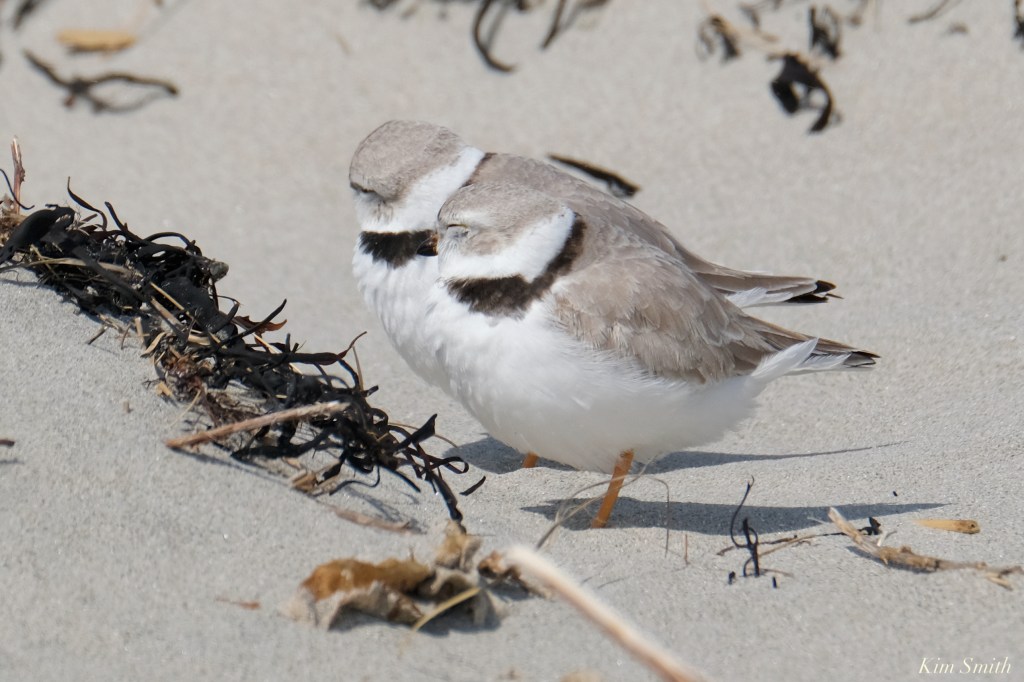
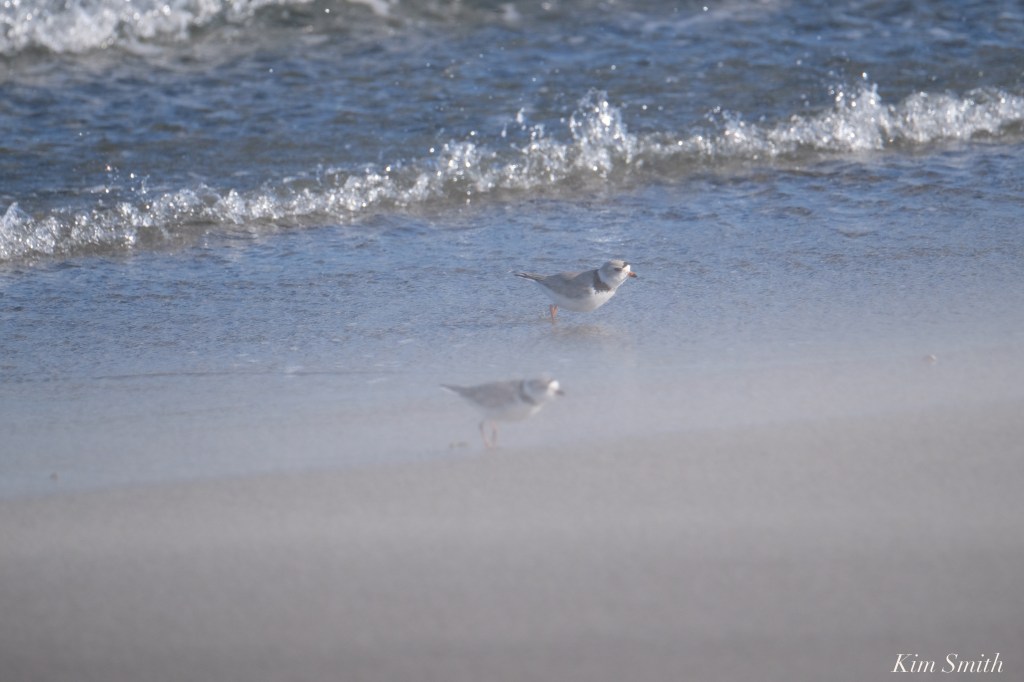
They are worn out from the long migration. The pair spent the morning sheltering behind mini hummocks, out of the way of the cold biting wind, and warming in the morning sun. If you see them on the beach please give them lots and lots of space. They are travel-weary and need to rest up. Thank you!

Thank you to Good Harbor Beach daily walkers and super Plover friends Pat and Dolores, and to my husband Tom, for being the first to spot the 2023 GHB Plovers!

We’d like to thank Mark Cole and the DPW Crew for installing the symbolically roped off areas ahead of  April 1st. And for also reinstalling the pet rules sign at the footbridge. We are so appreciative of their kind assistance.

We’d also like to thank Plover Ambassador Eric Hutchins, who made the barrels to hold signs and installed all yesterday at Cape Hedge Beach. The barrels were Eric’s idea and I think it’s a fantastic solution for the deeply poppled beach scape.

If you would like to join our Piping Plover Ambassador Team, please email me at kimsmithdesigns@hotmail.com or leave a comment in the comment section and I will get back to you. Thank you!

CAPE ANN PIPING PLOVER UPDATE!

Dear PiPl Friends,

Very Happy News to share – yesterday at GHB I spotted a little smattering of PiPl tracks. I could not locate any Plovers, but the beach has been very busy with dogs and they may just be lying low. Their arrival is right on schedule. The past several years the first sightings have been on the 25th and 26th.

Piping Plover tracks, Good Harbor Beach, March 27, 2023

If anyone is concerned as to why the dog regulations are not yet posted at the footbridge, it is because the old sign and posts were damaged during a winter storm. The DPW is building a new one, the second coat of paint is going on tomorrow, and signs should be posted by the 30th. Keeping our fingers crossed that they do go up before the 31st! The symbolically roped off areas have not yet been installed. Last year this was done prior to April 1st, so we are very much hoping that this job is on DPW’s  agenda for this week as well.

Signage really helps more than many people fully understand. Yesterday was an on-leash day however, there are currently no signs at the footbridge end. At this time of year, the footbridge side of GHB is the main access point to the beach as the parking lot is still closed. I only ever take Charlotte to the beach on on-leash days because although dogs off-leash are supposed to be under voice command, that is simply not the case at any public space in Gloucester where dogs are allowed off-leash. In the forty-five minute time frame that Charlotte and I were there, 14 dogs were on the beach, two on-leash, the other 12 were not on-leash. I thought we were safe as we were up by the dunes looking for tracks while all the dogs were down by the water’s edge. We did not hear the German Shepherd approaching. The dog knocked Charlotte over and left her in hysterics. The owners did nothing to control their dog as it came back around a second time, only shouting that their dog was “friendly.” We walked back to the car through the parking lot as it was the least threatening choice. Charlotte is not prone to hysterics but when you are only three and a half feet tall and an animal twice your size knocks you down, well it just made us both feel terrible. Me, because I let it happen and her because she was so frightened. I don’t want my granddaughter to grow up feeling so terribly afraid of large dogs.

Back to good news – On Boston’s North Shore, Plovers have been spotted at Crane, Plum Island, and Winthrop Beaches. Our Cape Ann Plover Ambassadors are ready for a super summer of Plover monitoring. Rockport has a new conservation agent, John Lopez who, coincidentally, did his thesis on how off road vehicles impact Plovers. Gloucester City Councilors Scott Memhard and Jeff Worthley have been working with the ambassadors this winter on creating Plover awareness and also working with the Clean the Creek grassroots organization to get to the bottom of the Creek contamination. We have many new Ambassadors and are looking forward to meeting them all at our first informational meeting, which will take place when the Plovers are more settled in. If you would like to be a Piping Plover Ambassador this summer, please contact me at kimsmithdesigns@hotmail.com or leave a comment in the comment section. We would love to have you!

xxKim

PIPING PLOVER SPOTTED AT WEST DENNIS!

Hello PiPl Friends!

Cheery news to share from PiPl Ambassador Deb- Friday, March 3rd, a Piping Plover was spotted at beautiful West Dennis Beach, on Cape Cod! It won’t be long 🙂

Thank you so very much to Jonathan and Sally for hosting the PiPl meeting and for organizing and compiling the notes. There’s a great deal to tackle here, but we’ll work away at the list. And many thanks to Councilor Jeff for sending the beach regulations, which are also attached. Additionally, Jayne Knot sent along the data from the contaminated Creek reports – very interesting read. I’ve been in touch with Rory McCarthy, who is heading up the Clean the Creek initiative and hope to speak with her this week to see how we can help. She shares lots of great information on her Instagram page at clean_the_creek.

Happy Monday!
Warmest wishes,
Kim

PiPls in a windy March snowstorm several years ago

1033 PAIRS OF PLOVERS WITH 1,330 CHICKS FLEDGED!!!

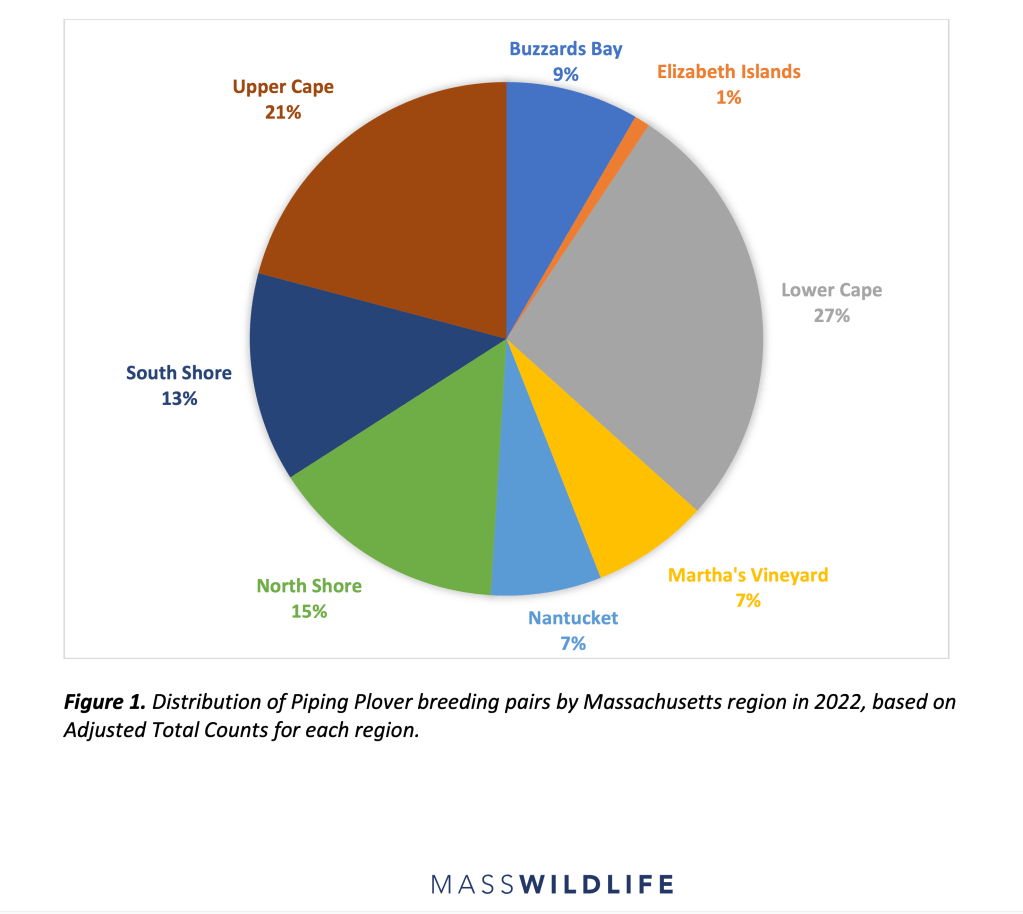
We have received outstanding news from our Massachusetts Coastal Waterbird Biologist, Carolyn Mostello. She shared the” Summary of the 2022 Massachusetts Piping Plover Census.” The grand total for Massachusetts breeding pairs of Plovers is a whopping 1033, up 6.8 percent relative to 2021. A total of 1,330 chicks was reported fledged for an overall productivity of 1.31 fledglings per pair.

The summary is prepared each year by the Natural Heritage and Endangered Species Program, a division of Mass Wildlife. The Summary is in pdf form and I am happy to email anyone the report if you are interested. Please leave a comment in the comment section and your email will pop up on my end. Thank you for your interest!

The following are some highlights from the Summary –

ABSTRACT

This report summarizes data on abundance, distribution, and reproductive success of Piping Plovers (Charadrius melodus) in Massachusetts during the 2022 breeding season. Observers reported breeding pairs of Piping Plovers present at 209 sites; 150 additional sites were surveyed at least once, but no breeding pairs were detected at them. The population increased 6.8% relative to 2021. The Index Count (statewide census conducted 1-9 June) was 1,013 pairs, and the Adjusted Total Count (estimated total number of breeding pairs statewide for the entire 2022 breeding season) was 1,033 pairs. A total of 1,330 chicks was reported fledged in 2022, for an overall productivity of 1.31 fledglings per pair, based on data from 98.6% of pairs.

INTRODUCTION

Piping Plovers are small, sand-colored shorebirds that nest on sandy beaches and dunes along the Atlantic Coast from North Carolina to Newfoundland. The U.S. Atlantic Coast population of Piping Plovers has been federally listed as Threatened, pursuant to the U.S. Endangered Species Act, since 1986. The species is also listed as Threatened by the Massachusetts Division of Fisheries and Wildlife pursuant to the Massachusetts’ Endangered Species Act.

Population monitoring is an integral part of recovery efforts for Atlantic Coast Piping Plovers (U.S. Fish and Wildlife Service 1996, Hecht and Melvin 2009a, b). It allows wildlife managers to identify limiting factors, assess effects of management actions and regulatory protection, and track progress toward recovery. In this report, we summarize data on abundance, distribution, and reproductive success of Piping Plovers breeding in Massachusetts in 2022, as observed and reported by a coast-wide network of cooperators.

METHODS

Monitoring and management of Piping Plovers and other coastal waterbirds in Massachusetts is carried out by wildlife biologists, seasonal shorebird monitors, beach managers, researchers, and volunteers affiliated with over 20 federal and state agencies, local municipalities, local and regional land trusts, private conservation organizations, and universities. Cooperators monitored 359 sites in Massachusetts in 2022 for the presence of breeding Piping Plovers.

 *     *     *

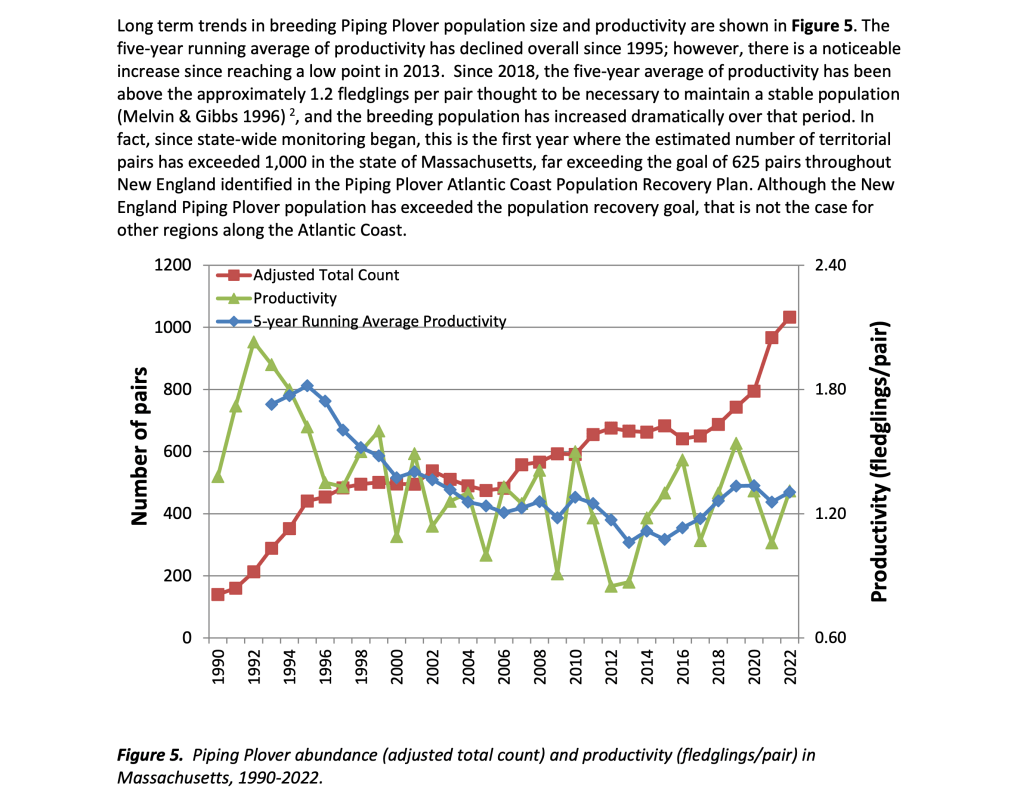
Long term trends in breeding Piping Plover population size and productivity are shown in Figure 5. The five-year running average of productivity has declined overall since 1995; however, there is a noticeable increase since reaching a low point in 2013. Since 2018, the five-year average of productivity has been above the approximately 1.2 fledglings per pair thought to be necessary to maintain a stable population (Melvin & Gibbs 1996) 2, and the breeding population has increased dramatically over that period. In fact, since state-wide monitoring began, this is the first year where the estimated number of territorial pairs has exceeded 1,000 in the state of Massachusetts, far exceeding the goal of 625 pairs throughout New England identified in the Piping Plover Atlantic Coast Population Recovery Plan. Although the New England Piping Plover population has exceeded the population recovery goal, that is not the case for other regions along the Atlantic Coast.

CHECK OUT TODAY’S GLOUCESTER TIMES “TALK OF THE TIMES!” Ambassadors sought to watch over Plover chicks

GLOUCESTER DAILY TIMES

TALK OF THE TIMES/ All Hands

Saturday, February 18, 2022

A Gloucester group is seeking volunteers to help look after the piping plovers when they nest at Good Harbor Beach, and setting up a website, pipingploverproject.org, offering information on the birds.

“We have received a number of inquiries regarding the upcoming plover season,” said Gloucester resident and Piping Plover Ambassador Kim Smith of the website. “And we wanted to have a page ready where people could find sign up information.”

“I envision this site as a place where we can not only get information, updates, and stories about our Cape Ann plover families, but to also learn more about plovers in general, other shorebirds, habitat conservation, and how climate change is impacting all,” said Smith in an email.

READ THE FULL “TALK’ HERE!