I am so very honored to receive a nomination from our Ward One City Councilor, Scott Memhard, for the City of Gloucester’s 2025 Kindness Campaign. I accept this nomination on behalf of myself and all our Piping Plover Ambassadors, DPW, Conservation Commission, and Mass Audubon. Our Gloucester Plovers are very fortunate to have such a dedicated and kind team working to keep them safe and their habitat intact.
I’d also like to thank Scott especially, who has been a supporter since the Plovers first arrived in 2016. He has been a tremendous help navigating with the City to develop conservation protocols for the Plovers. The Plovers are under Scott’s ‘jurisdiction,’ so to speak, as Good Harbor Beach is part of Scott’s ward, and we couldn’t ask for a more helpful and engaged advocate.
Thank you to Scott, all our PiPl Ambassadors, the Gloucester DPW, Conservation Commission, Mass Audubon, and all our Plover friends and advocates ❤
“I would nominate Kim Smith for her tireless environmental advocacy & her documentary photography and film educational outreach, now on PBS.
For years Kim has worked tirelessly with the Gloucester DPW, Conservation Commission & MA Audubon. Kim has organized the local citizen group of the Piping Plovers Ambassadors at Good Harbor Beach.
In addition to the Piping Plovers, with her new documentary “Piping Plovers of Moonlight Bay”, and working to protect Good Harbor Beach and dunes, Kim has produced a remarkable film documentation “Beauty on the Wing” of migrating Monarch butterflies which pass through Cape Ann every Fall.
The morning after the first super high tide at Good Harbor Beach we were surprised and delighted to see a third Plover had joined our Fierce Dad and his almost-fledged chick. We found the three on the narrowest strip of beach that had not been impacted by the hurricane tide. They have been seen together ever since!
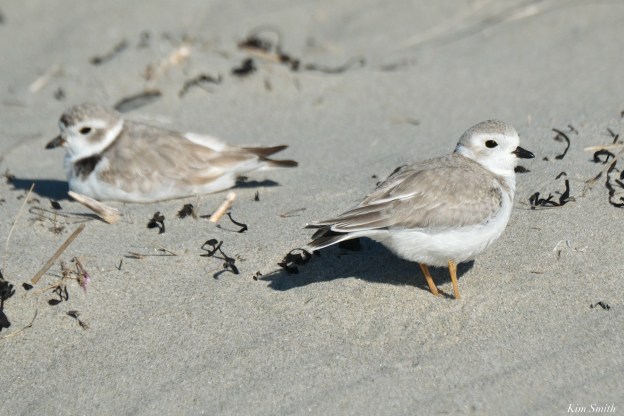
First Photo: Mystery/Butterball left, Fierce Dad right Second Photo: 30 day old Piping Plover chick
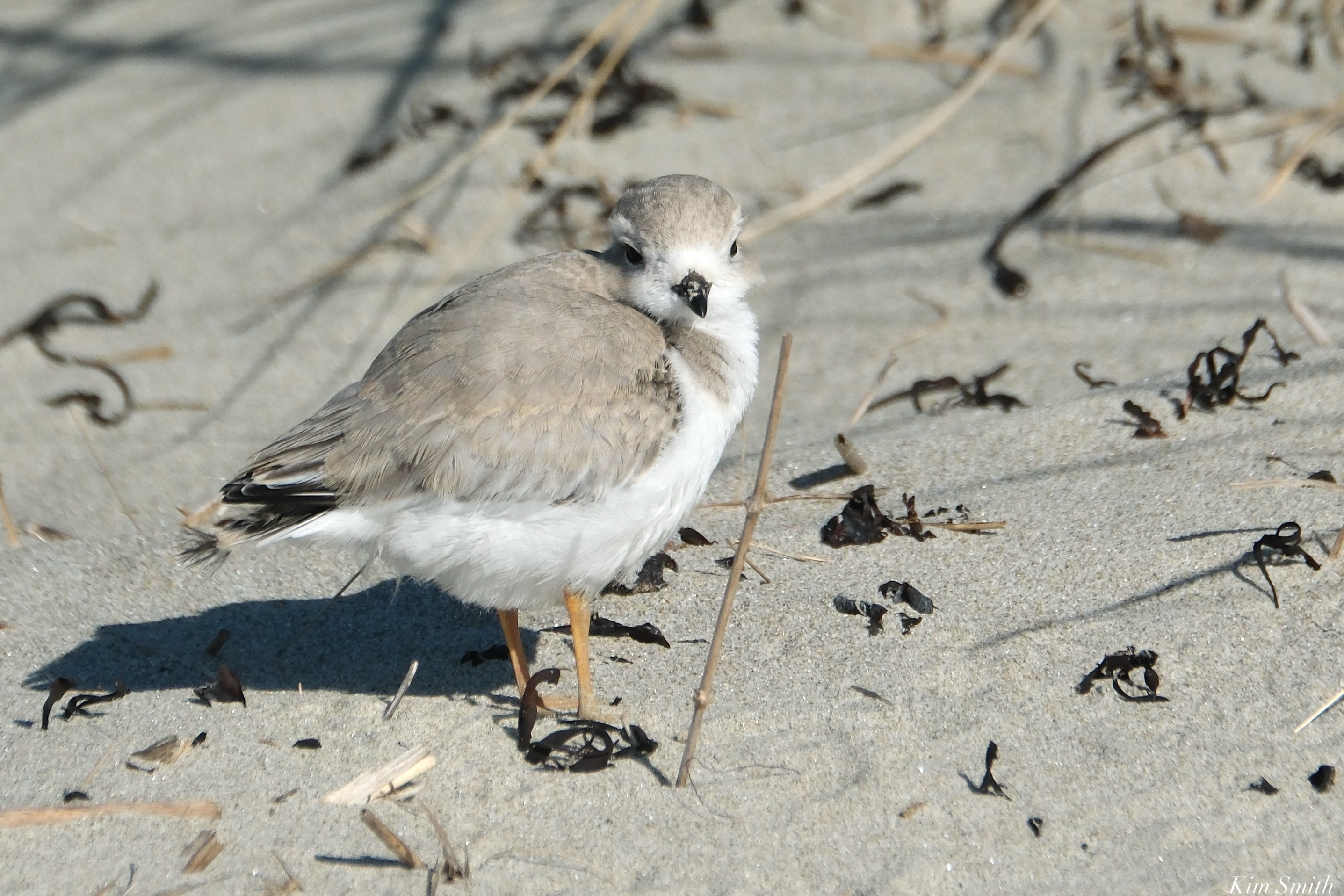
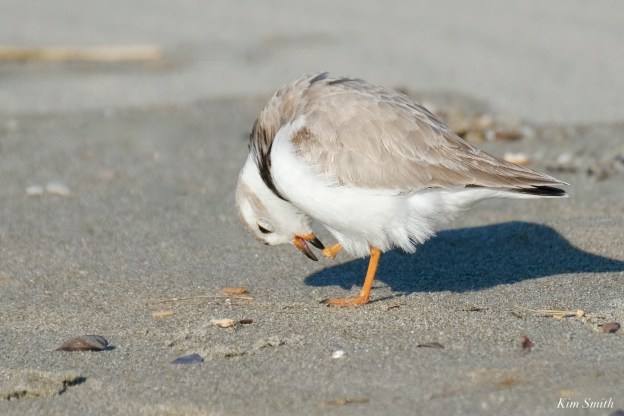
I think my daughter may have solved the Mystery and we believe this Plover could be what would now be the 54-day-old fledgling we were calling Butterball. He appears to be a similar stage of development and it makes sense; after Butterball’s Dad departed, Butterball attempted to forage alongside Fierce Dad’s chick several weeks back, but FDad would have none of it and was in maximum defensive mode for his little one at that time. Now that his chick is older and more independent perhaps he feels it’s safe to socialize with other Plovers; although at one point FDad planted himself firmly between his chick and Mystery.
Below are photos of 40 to 42 day old Plovers from years past and they are the only photos I can locate at the moment of Plovers past 36 days. Our Mystery Plover looks to be at least as old as the Plovers in the photos
This last photo if of HipHop, Super Dad, and HipHop’s 46-day-old sibling. Although the sibling is out of focus, you can see its feather patterning is similar to the Mystery Plover. This was such a sweet sibling; he stayed with HipHop until he could fly. You may recall HipHop who was developmentally challenged. The first year Mom returned to Good Harbor Beach missing a foot, one of her chicks sustained a hip injury.He was nicknamed HipHop for his hopping gait and it took him many, many weeks to catch up to his siblings. Both Super Dad and this one sibling gave HipHop lots of snuggles and stayed with him well beyond the time frame in which they would typically migrate.
For my New Jersey Friends and Family –
For my New Jersey Friends and Family – Montclair Film and The Nature Conservancy of NJ are hosting a special screening of The Piping Plovers of Moonlight Bay on Tuesday, August 26th at 7pm. QandA with me to follow. To purchase tickets, please go here: https://theclairidge.org/events/the-piping-plovers-of-moonlight-bay/
The anticipated update for the 2025 season with these most beautiful and most vulnerable of mini beach friends I feel is finally ‘safe’ to write. I only write safe because we try very hard to find a balance between sharing information to help create an awareness about the Plovers and also not bringing too much attention to the nesting birds.
First off I would like to thank our outstanding crew of kind-hearted volunteers, especially our core group who sign up for shifts that are an hour or longer and come everyday. This summer we had a very extended season with the chicks (more about that below) yet despite that, they stuck it out to the very end. Thank you to Jennie Meyer, Paula and Alexa Niziak, Kim Bouris, Steve Spina, Sandy Barry, Deborah Brown, Barbara Boudreau, Jill Ortiz, and Marty Coleman. We’d also like to thank our subs Heidi, Velia, Sally, and Jonathan.
If you see these kind and caring people around town, please thank them for their dedicated wildlife conservation work that they do so graciously and so tirelessly.
Thank you to Lyra Brennan, Rose Caplan, Jamie Infanti, and all our Audubon partners. We saw a great deal of Emma this summer and she is wonderful, staying extra long hours in the summer’s heat to watch over the chicks. Audubon does such great work and are responsible for not only Good Harbor Beach, but many other shorebird nesting areas all along the Massachusetts coastline. We appreciate their thoughtful and action oriented responses so much, especially when it comes to some of the more serious issues that arise over the course of the season. With thanks and gratitude to Lyra, Rose, Jamie, Will, Emma, Charles, and Claudia.
Thank you also to Gloucester’s Joe Lucido, Tom Nolan, and the entire DPW Crew. These guys are amazing and are always working so hard to make our beaches safe and presentable. Despite the double load imposed on the Crew (because of the additional work they are doing during the garbage strike), they are ever present and so very much appreciated.
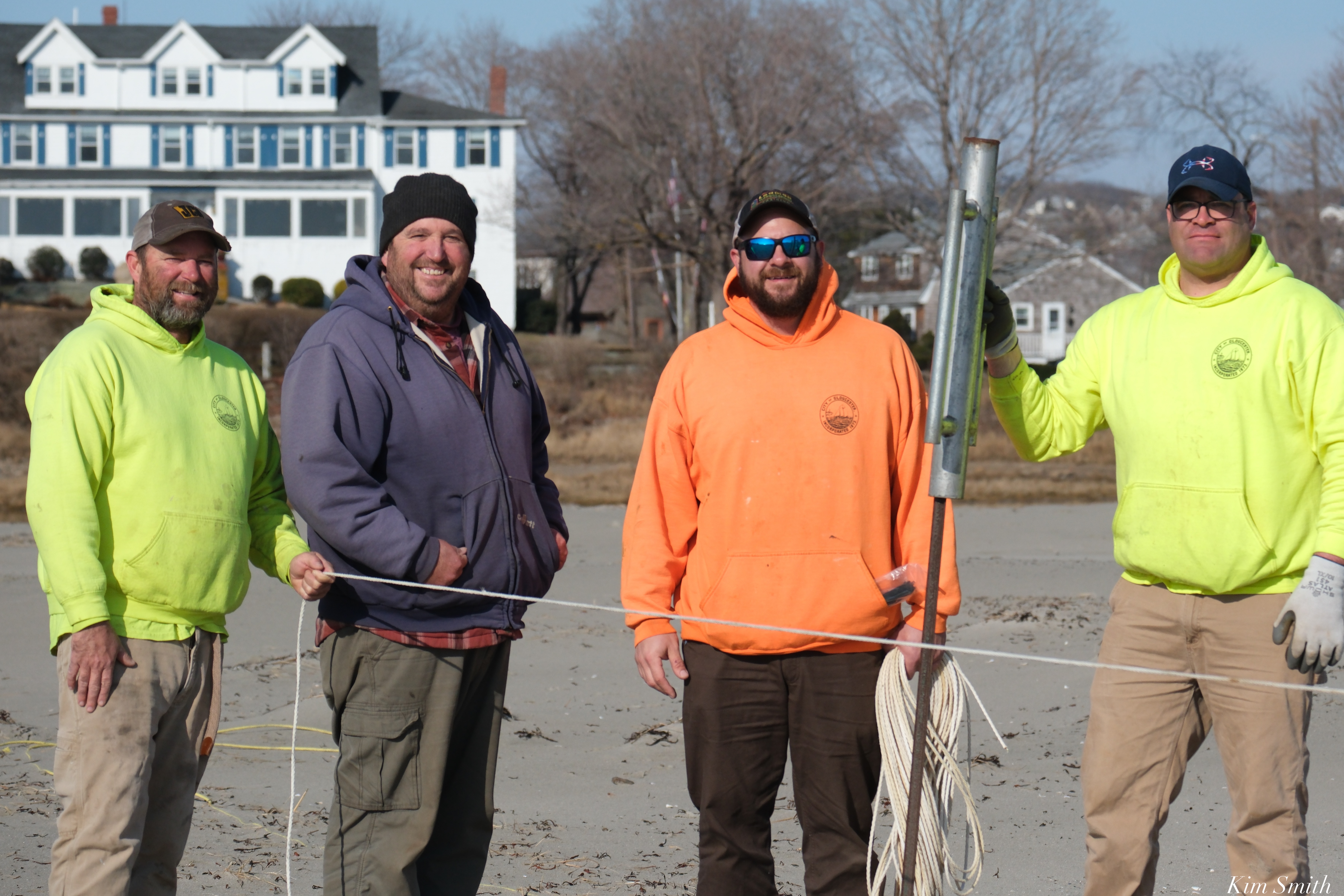
DPW Crew setting the roping in place n March
We’d also like to thank several gentlemen who are at GHB nearly every single morning, starting in the spring. While most beach visitors are still sleeping, these gentlemen voluntarily pick up the plethora of garbage found littering the beach leftover from the previous day. They ensure our beaches look pristine by the time the gate opens at 8am. Chris Cefalo, his brother Fred, Michael Cook (and there is a fourth gentleman whose name I don’t know), work tirelessly cleaning the beach, from the tiniest bits of plastic to hauling off the larger items like chairs, tables, umbrellas, and tents. If you see these gentlemen around town, please thank them for the good work they do.
And a huge shout out to all the many, many beachgoers who express interest in the Plovers, want to learn more, give the chicks lots of space, and respect the cordoned off areas.
Piping Plover Smooshies
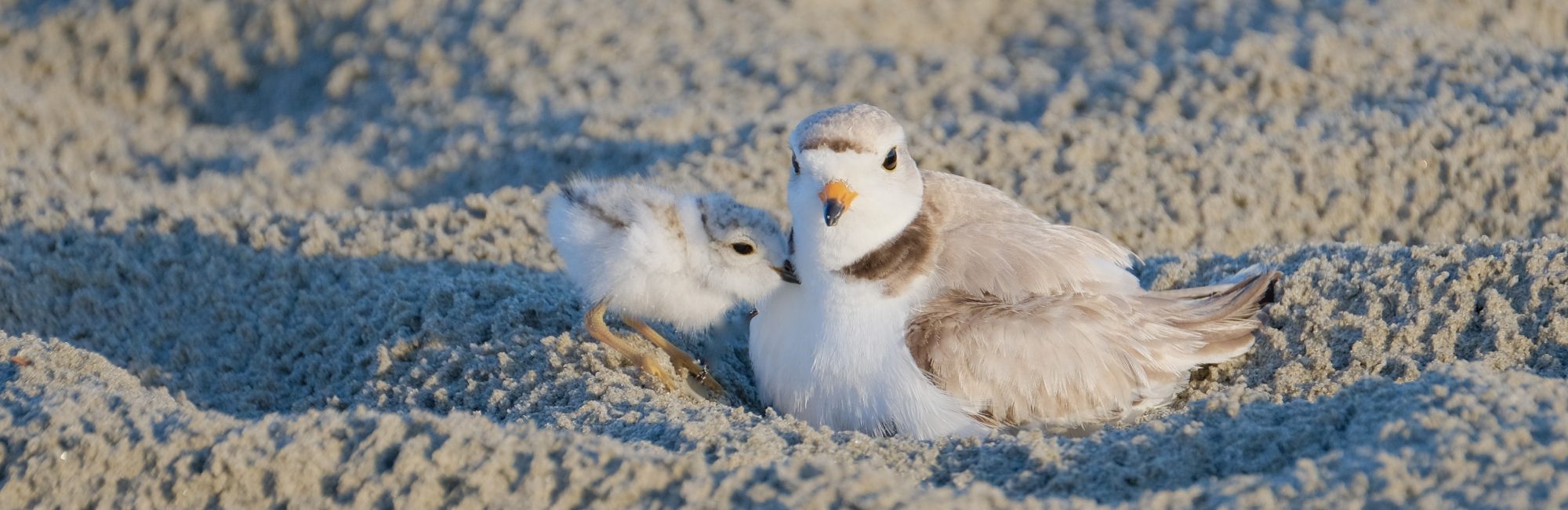
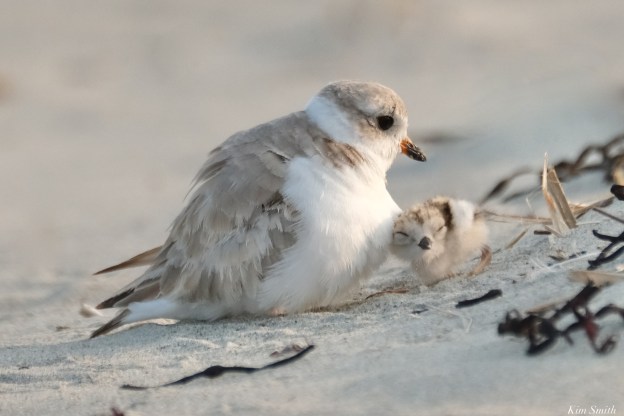
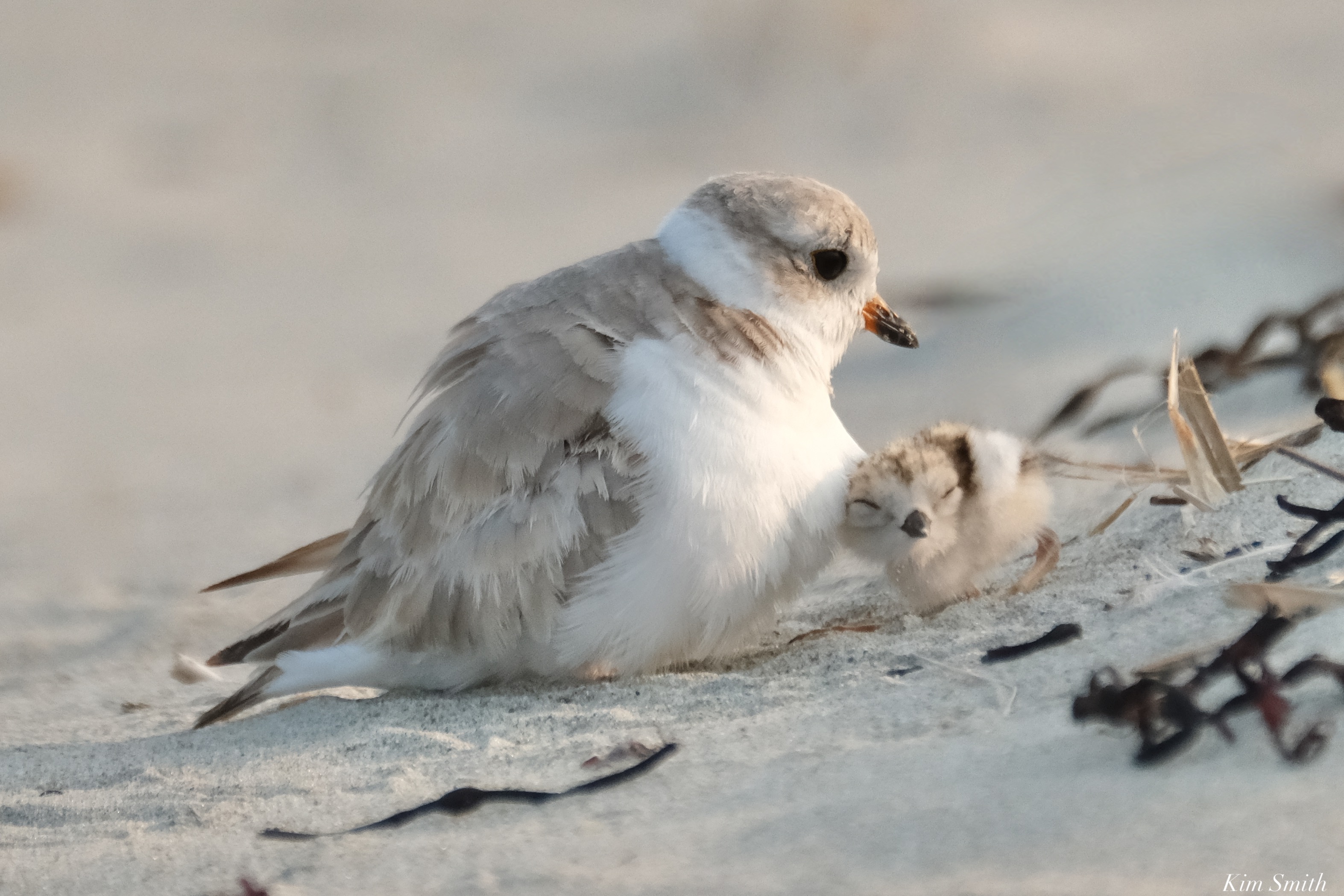
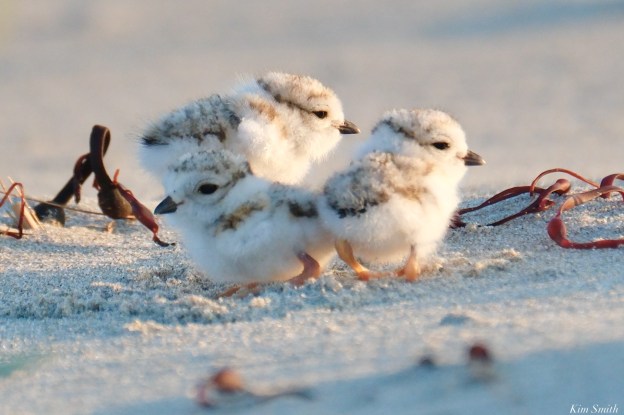
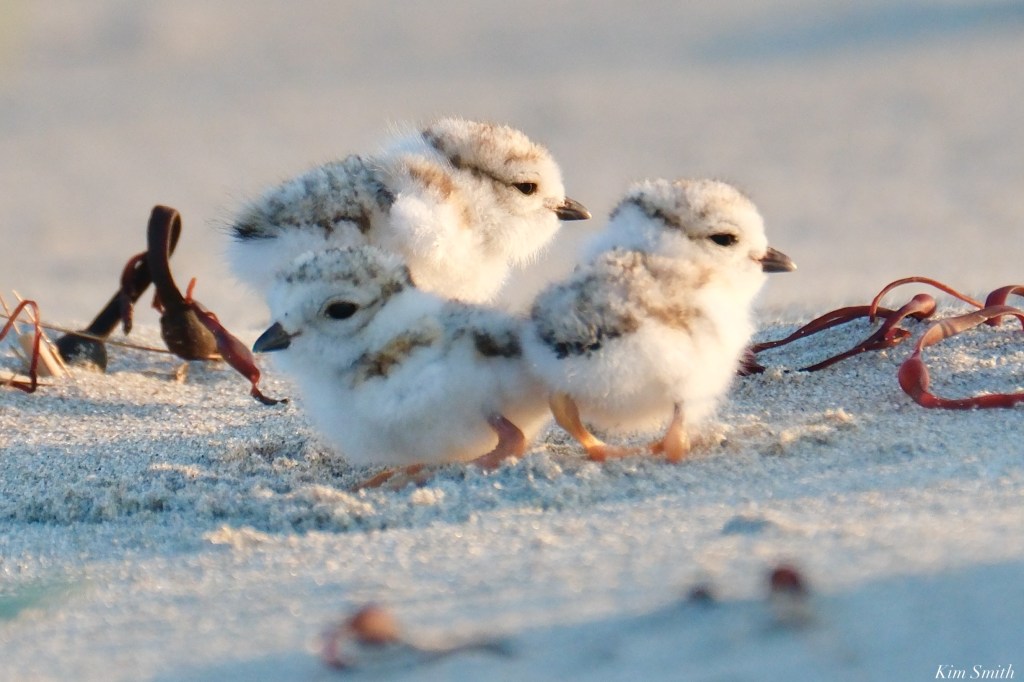
One of the many gifts we receive as Plover Ambassadors is watching tiny baby birds the size marshmallows develop into beautiful little flyers. The clips are of Fierce Dad and FairFeathered Mom’s offspring; the first clip is of two-day-old hatchlings, the second clip is of two-week-old chicks, and the last clips of the three- and a half-week-old chick. When Plovers hatch they can feed themselves entirely independent of the parent however, they need to thermoregulate to keep warm (otherwise known as thermo-snuggles and smooshies). The birds instinctively know to tuck under Mom and Dad’s wing to keep warm.
The 2025 Piping Plover Season at Good Harbor Beach
The season started phenomenally well, with the earliest arrival ever of Super Dad and our footless Handicapped Mom. Fierce Dad also arrived on the very same day as this original pair. It is always a much anticipated and joyful moment when we begin to see the first Plovers returning, especially Super Mom and Dad. This resilient little pair are at least 11 years old. We know this because they began nesting at Good Harbor Beach in 2016 and Plovers have to be at least one year old before they can begin breeding. Each year its become more and more tenuous as to whether or not we will see the return of our wonderful original pair. Plovers only live on average 3 to 5 years and this pair, at 11 years young, are quite a respectable age for their species.
Piping Plover Courtship
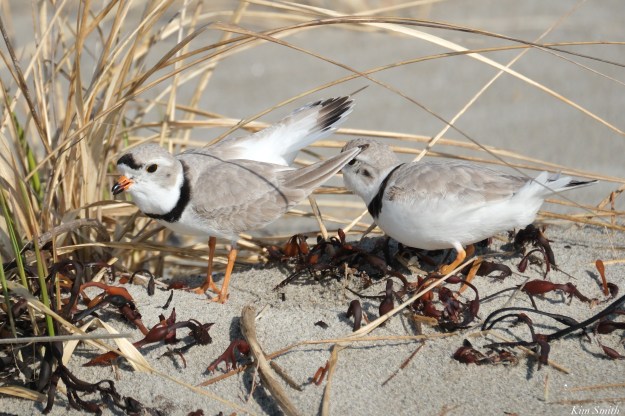
Fierce Dad and Original Dad spent a good part of the first few weeks in competition for territory and for Super Mom, with Fierce Dad even putting the moves on Mom several times. At one point we had nine Plovers, and four were nesting pairs, the most ever! There were lots of territorial disputes, some ending in serious smackdowns but for the most part, the birds began to settle in to brood their eggs.Piping Plovers Mating
Original Mom and Dad’s clutch was nearing hatch date when on May 22nd, the coast of Massachusetts was walloped by a late season nor’easter. The tide rose higher than we have ever seen in late May and three of the four nests were washed away. As devastating as that was, it was a joy to find one remaining nest, the young parents that are a new pair to Good Harbor Beach. From their nest of three eggs, two chicks hatched.
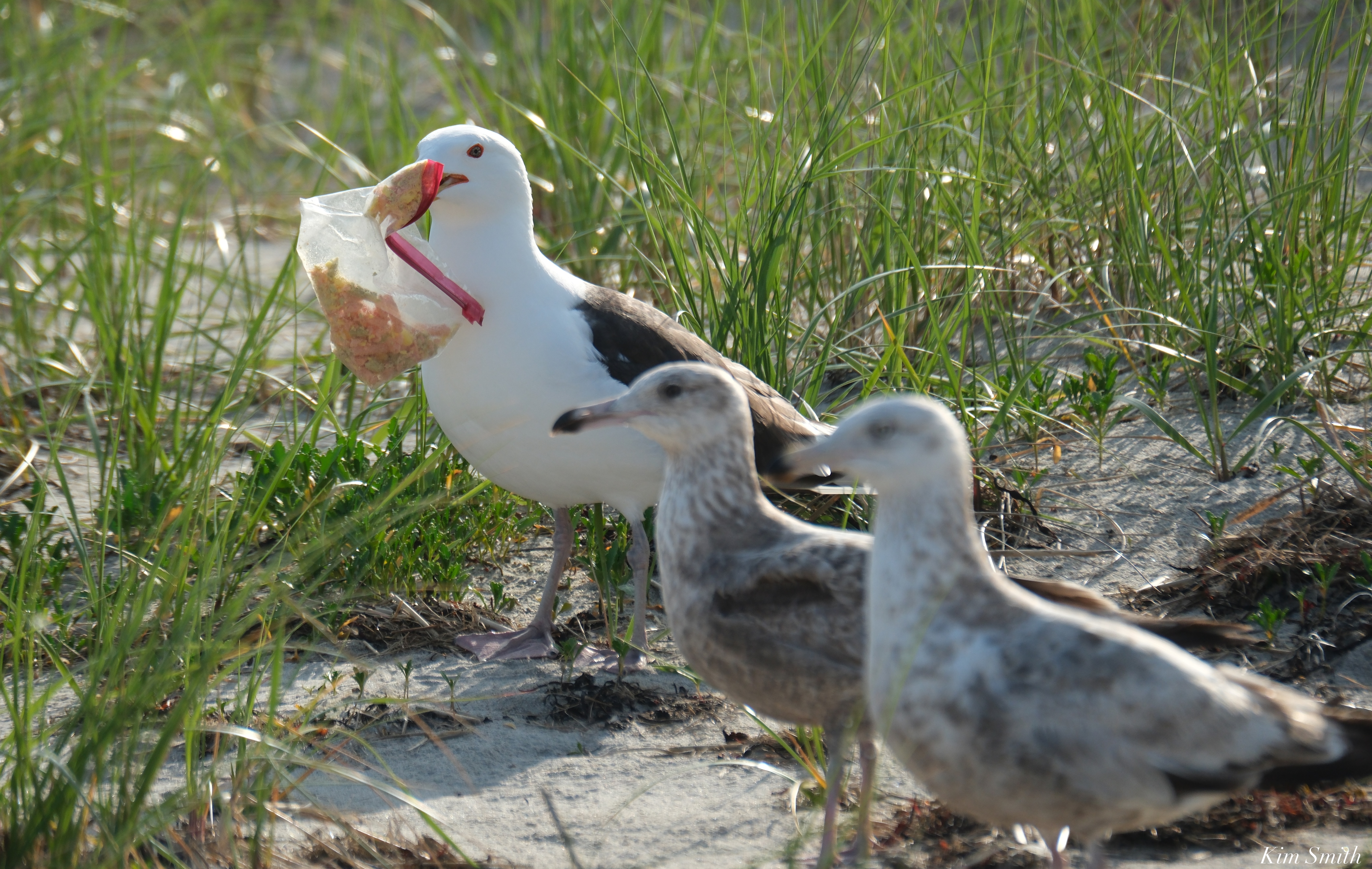
Over time original Mom and Dad attempted to re-nest. After a brief recovery period, Mom laid a new clutch of three eggs. However, this second clutch of eggs was predated by a Crow. As the season progresses there are more and more Crows and gulls scavenging the beach, seeking garbage left behind by people. We know it was a Crow from the tracks found around the nest.
Remarkably Mom and Dad laid four more eggs, a grand three clutches, 11 eggs in total. Once again, the eggs were snatched and Crow tracks were found encircling the nest scrape. Our Handicapped Mom left shortly after the third nest was lost. Super Dad hung on for a bit longer but he too departed. All was not lost as the one remaining chick from the young parents grew and developed into a lovely, albeit super chunky, fledgling and has begun its southward migration. Note – we love super chunky fledglings. They’ll have lots of stored fat reserves to get them through their first migration.
FairFeathered Mom and one-day-old hatchling
Today we still have one almost-fledged chick remaining at Good Harbor Beach. This little chunkola is Fierce Dad and FairFeathered Mom’s offspring, from their re-nest. Because the eggs hatched so late in the season and the females usually begin migrating before the males, FairFeathered Mom left when her chick was only five days old, leaving Fierce Dad to raise the chick solo. Fierce Dad has lived up to his name, fighting off every gull, crow and even other shorebirds that dare to come within 100 yards of his offspring. He is still parenting the chick who is quite independent at this point. Nonetheless, the almost fledged chick still goes in for snuggles and smooshies and relies on Dad to keep the gulls at bay.
Along with a great bounty of seaweed washed in with the late May nor’easter, the seaweed was littered with zillions of pieces of small yellow and green plastic
Just as has happened at GHB this summer, nests were washed out along the entire coastline of Massachusetts. With many pairs re-nesting, the conservation biologists from every Mass coastal region saw much lower productivity with these second nests, and in some cases (Super Mom and Dad), third nests. What does low-productivity mean? Not as many eggs were laid and of the eggs that were laid, fewer than usual hatched. So, for example a second clutch with only three eggs, only one or two of the eggs may hatch. And all coastal areas across the region experienced higher than usual heavy predation by Herring and Great Black-backed Gulls, Crows, and Eastern Coyotes. My own theory for that is because when chicks hatch in May for example there are far fewer flocks of seagulls on the beach. But when chicks hatch in July and August, Crows, Gulls, and Coyotes are acclimated to finding free food, i.e. garbage, at the beach, which leads to greater interest in shorebird eggs and chicks. Also at this later time in the summer, there are thousands of hungry fledglings on beaches begging their parents for food.
We are hopeful that next year we won’t have another late, late nor’easter and all the pairs that attempted to nest at GHB this season will return and try again. If you would like to join our volunteer team of Plover Ambassadors, please contact me either by leaving a comment or emailing me at kimsmithdesigns@hotmail.com. We would love to have you!
If you would like to learn more about how we can all help protect shorebird wildlife and their habitats, please watch our film The Piping Plovers of Moonlight Bay. Our documentary is streaming on the PBS Passport AP anytime you would like to watch it. Everyone can become a member of PBS Passport by donating to PBS. It’s so worthwhile, especially for young children with curious minds. What other streaming service can you get for $5.00 a month!!
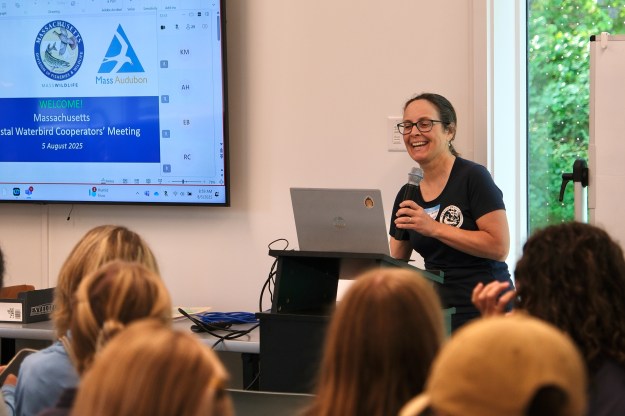
Carolyn Mostello, the Massachusetts Coastal Waterbird Biologist
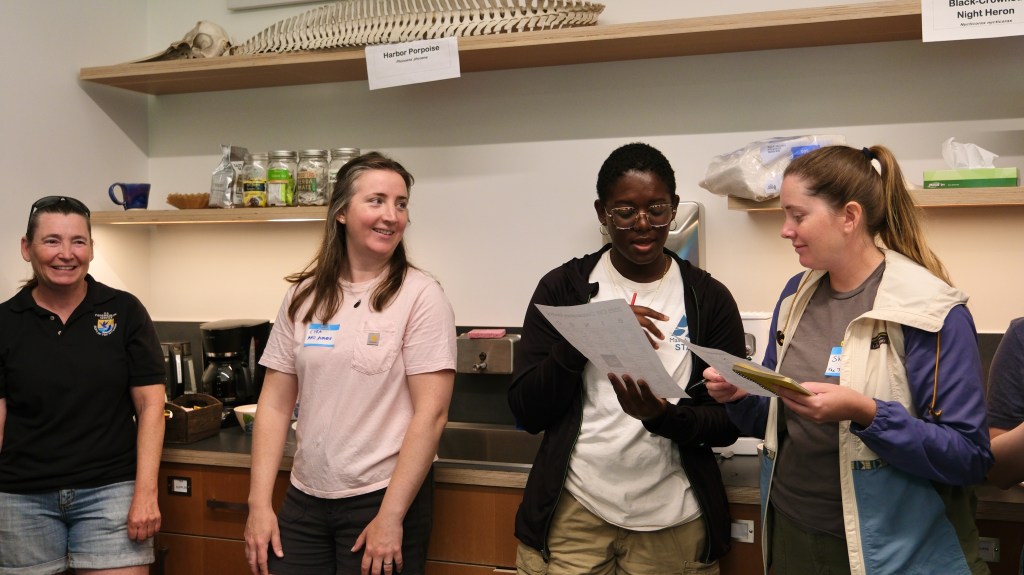
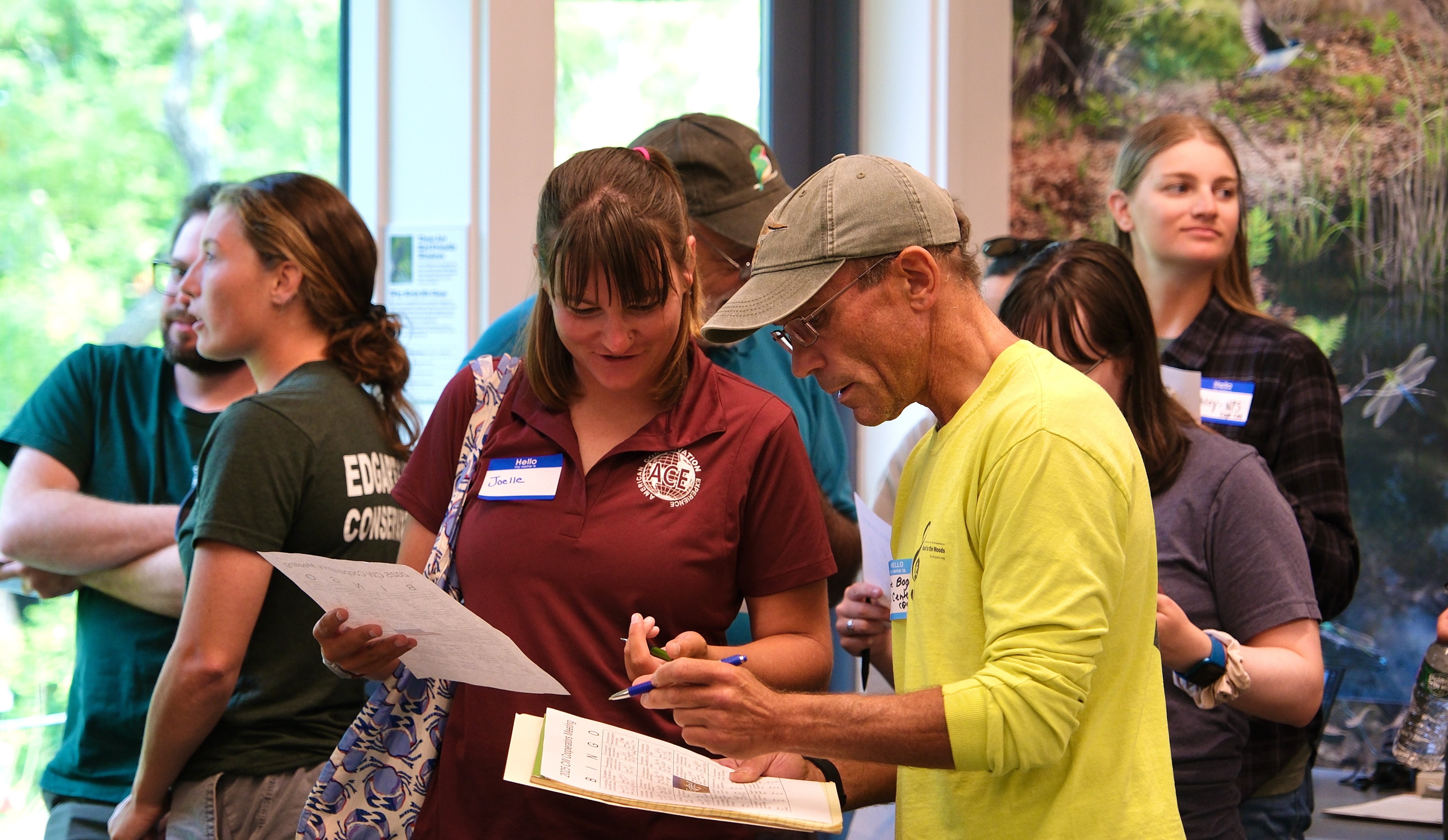
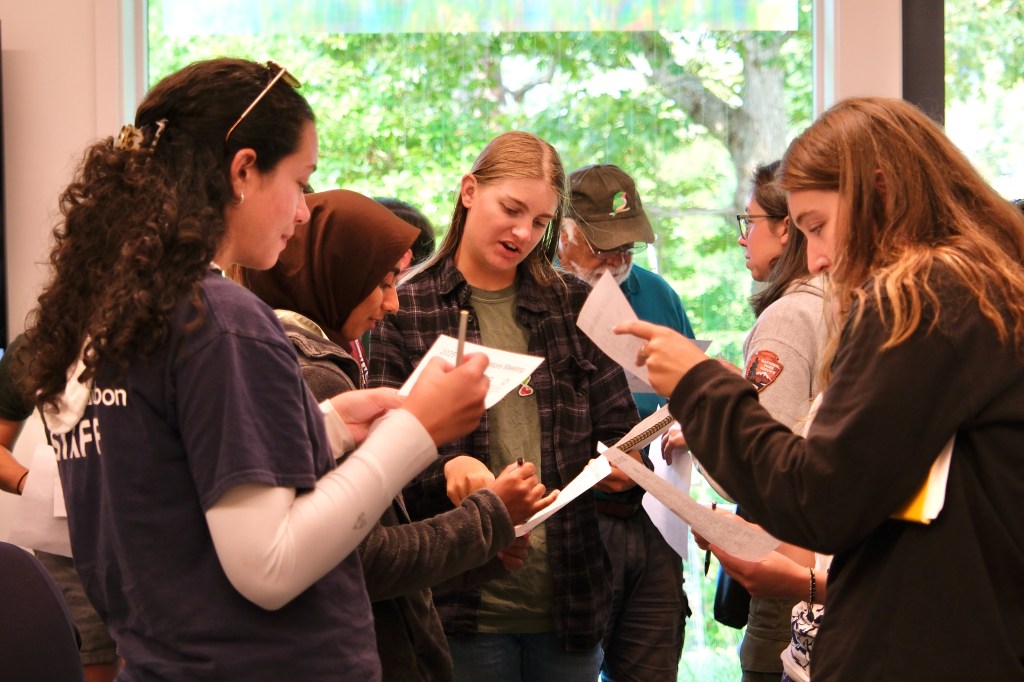
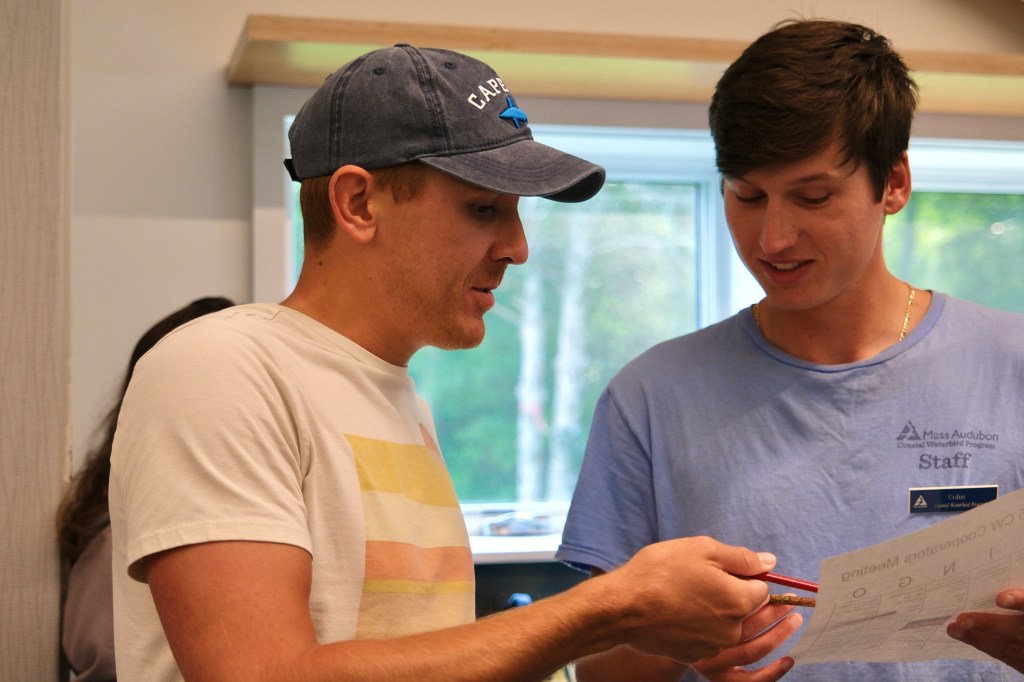
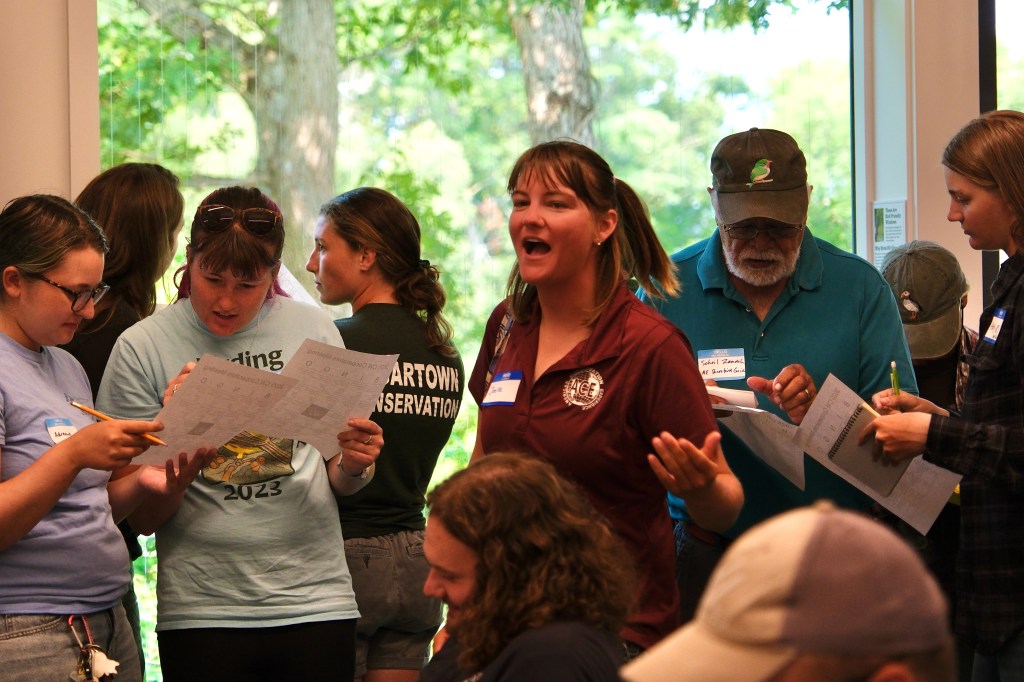
Last week I has the opportunity to attend the Massachusetts Coastal Waterbird Cooperators’ Meeting. The meeting is held annually to bring together people and organizations that are involved with population monitoring and conservation efforts on behalf of coastal waterbirds.
Representatives from the seven Massachusetts coastal regions gather to share information, anecdotes, and data collected throughout the season. This year the meeting was held at Audubon’s stunning Barnstable Great Marsh Wildlife Sanctuary; hosted by Audubon staff and Carolyn Mostello, the Massachusetts Coastal Waterbird Biologist.
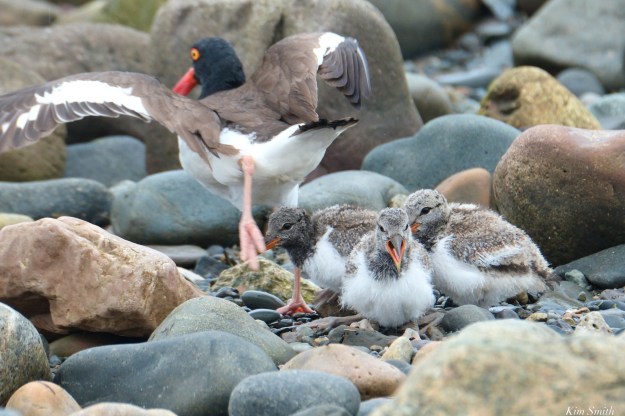
American Oystercatcher chicks
Threatened and endangered species such as Least Terns, Piping Plovers, Roseate Terns, and American Oystercatchers are given the greatest attention.
It’s fascinating to learn how we are all sharing similar experiences including egg predation by Crows, gulls, and Coyotes, disturbances of all shapes and kinds, low egg hatching, and storm washouts. Carolyn directs the event and she does an extraordinary job of weaving all the information together.
Reporting population numbers is followed by “Strange and Unusual,” a super fun section where field agents share funny/odd occurrences, photos, and videos. A special tribute was given to honor Shiloh Schulte, who perished in a tragic helicopter crash while studying shorebirds in Alaska. Shiloh Shulte was a beloved friend and mentor to shorebird conservationists every where and one of the coordinators for the American Oystercatcher Recovery Program. You can read more about Shiloh and his work HERE.
The afternoon programs are especially interesting with presenters sharing experiments, projects, and best practices, including two of special interest to our region; one on launching in-depth data collection on fireworks, and best practice for engaging with landowners. All the programs are wonderfully educational.
Handicapped Mom and Super Dad’s second attempt at nesting
Handicapped Mom and Super Dad’s second attempt at nesting
Despite an extremely challenging year, largely due to the fact that most of the nests around the State were washed out in a late spring storm, perhaps the most outstanding take-away is that this year again, Massachusetts is at the leading edge edge of Piping Plover recovery. We should be super proud of our state. While many regions are seeing very little, none, or even worse, declining numbers, Massachusetts is leading the way in Piping Plover recovery!
I hope you had an enjoyable extended Fourth of July weekend! Like many of us, I feel we who live on Cape Ann are so very blessed, not only for our fantastic community sharing in celebrations like St. Peter’s Fiesta and Independence Day, but also for the natural beauty that surrounds us, which in turn attracts a bevy of beautiful wild creatures to our shores and wild spaces.
Super Mom and Dad arrived from their wintering grounds in early spring
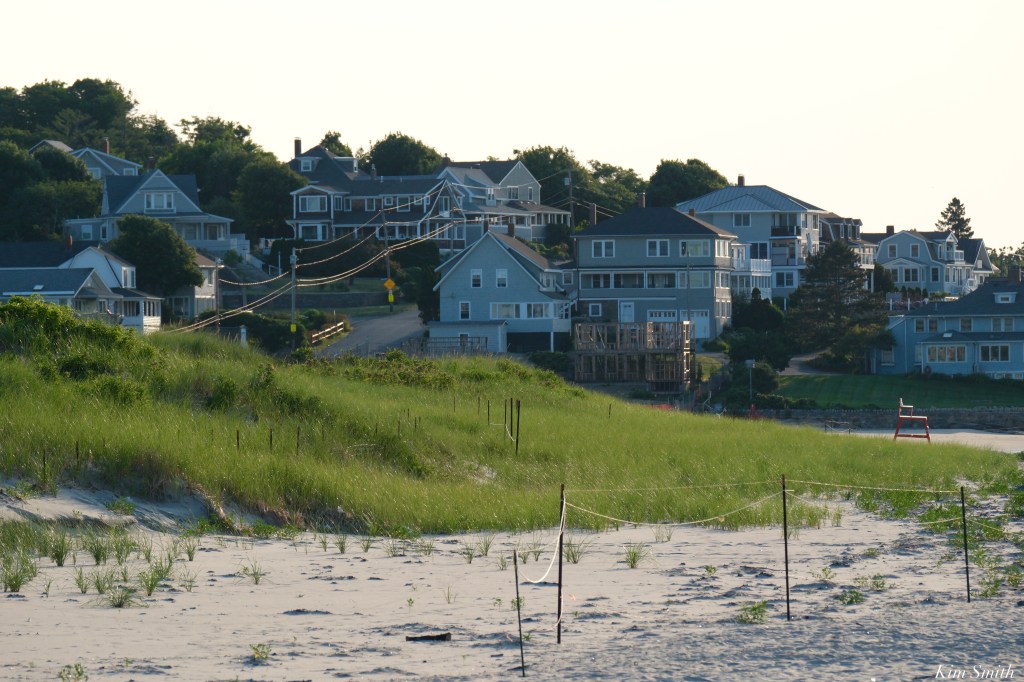
Nine years ago a pair of Piping Plovers began calling Good Harbor Beach home. There is so much good that this intrepid little duo has brought to our community. People have come together to help protect the birds and the community has become more educated about nesting shorebirds. Equally as exciting is the growing awareness of the connection between conserving habitats and wildlife. For decades our dunes have been ravished by storms and a lack of basic protections. Because a narrow corridor that runs the length of the beach was roped off for Plovers, it has largely kept people from recreating close to the dune’s edge. Creating this corridor has allowed beach vegetation to take hold. The areas of the beach that have been consistently roped off for the past eight years are clearly the healthiest.
A vital new habitat has developed in the area of the dunes that has been roped off consistently for eight years.
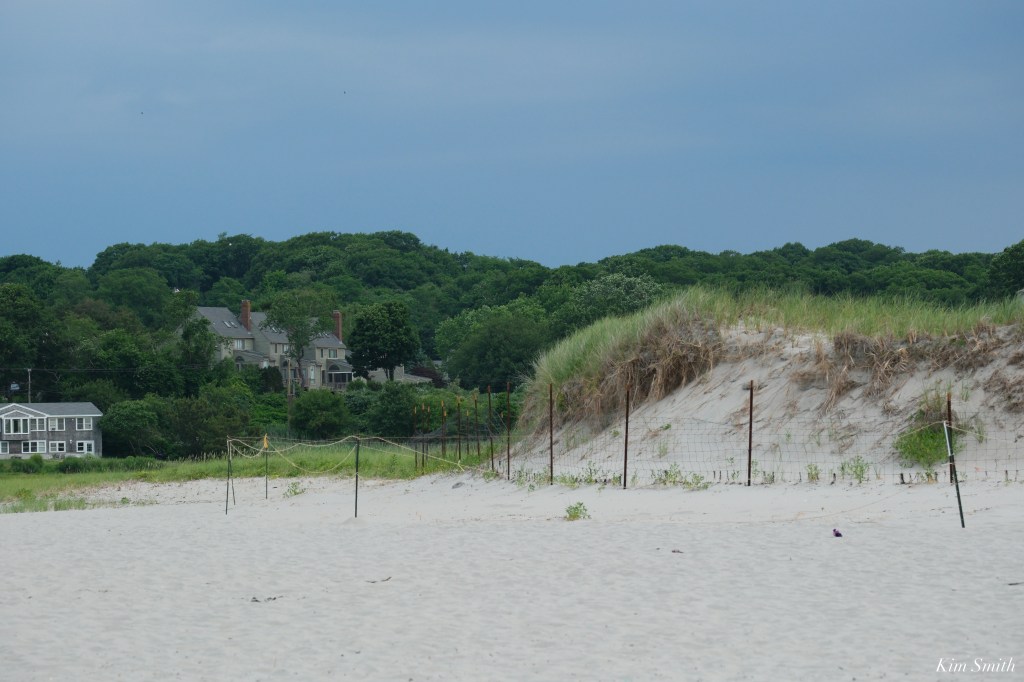
The above area has only this year begun to be roped off. Notice how ravaged is the edge of the dune. That is what the edge of the dunes looked like along the length of the entire beach prior to creating protective corridors. You can see that one of the first plants to begin to take hold is Sea Rocket. The same exact sequence of revegetation happened in the area depicted in the first photo – Sea Rocket, followed by beach grass.
It is one of our greatest hopes that the City will continue to leave the roping in place year round. There is a tiny, and fortunately, diminishing, minority of sour anti-Plover/anti-conservation types however, no matter how one feels about making space for Plovers, it is undeniable that by creating protective corridors, the dunes have never looked as lush and as healthy as they do today. I urge you to go and see for yourself!
Additionally, roping off the areas for the Plovers has had zero economic impact on beach attendance. As a matter of fact, since the Blinkay system was implemented, beach revenue has gone up in the past few years.
We have a wonderfully dedicated crew of Ambassadors hourly monitoring the Plovers and educating beachgoers about the presence of Plovers. I’d like to give a heartfelt thanks to Deborah Brown, Jennie Meyer, Jill Ortiz, Paula and Alexa Niziak, Barbara Boudreau, and our newest Ambassadors, Kim Bouris and Sandy Barry. If you see them around town, please thank them for their hours and hours of dedication to our teeniest neighbors.
Last year, the City hired Mass Audubon to oversee Plover monitoring. The Audubon team is phenomenal -so well-educated, enthusiastic, conscientious, and kind. I can’t say enough good things about Lyra Brennan, Malarie Markowitz, and the entire Audubon crew! The Gloucester DPW has been a tremendous partner as well. The DPW did an outstanding job installing the roped off corridor last spring, not once, but twice, as the first installation was destroyed by a late season storm. We are so fortunate to all be working together for Plover protections, from sunup to sunrise!
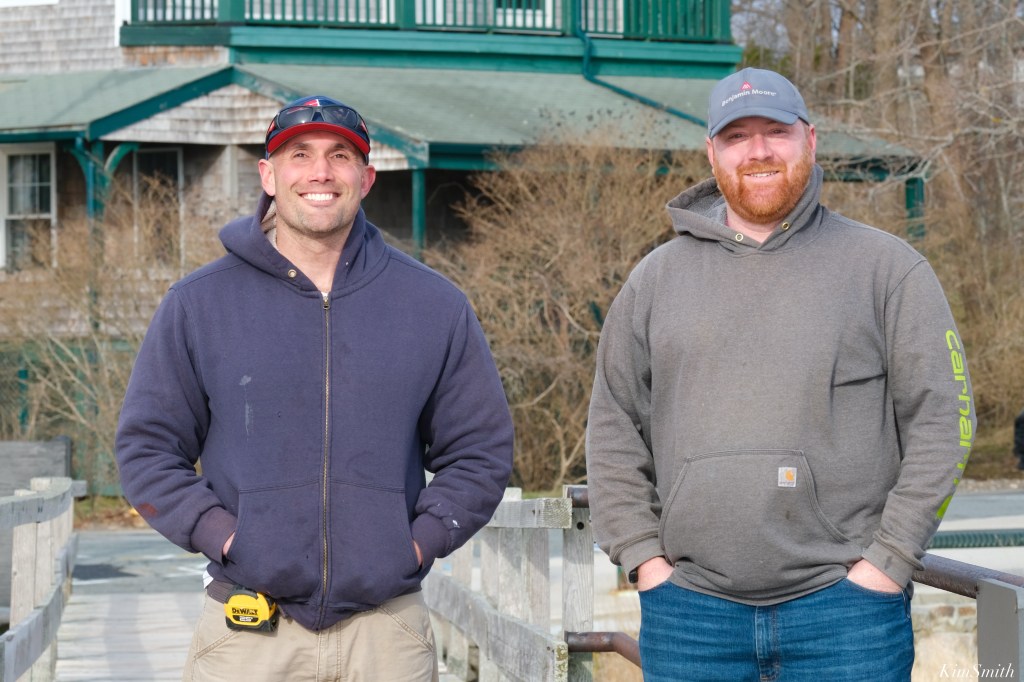
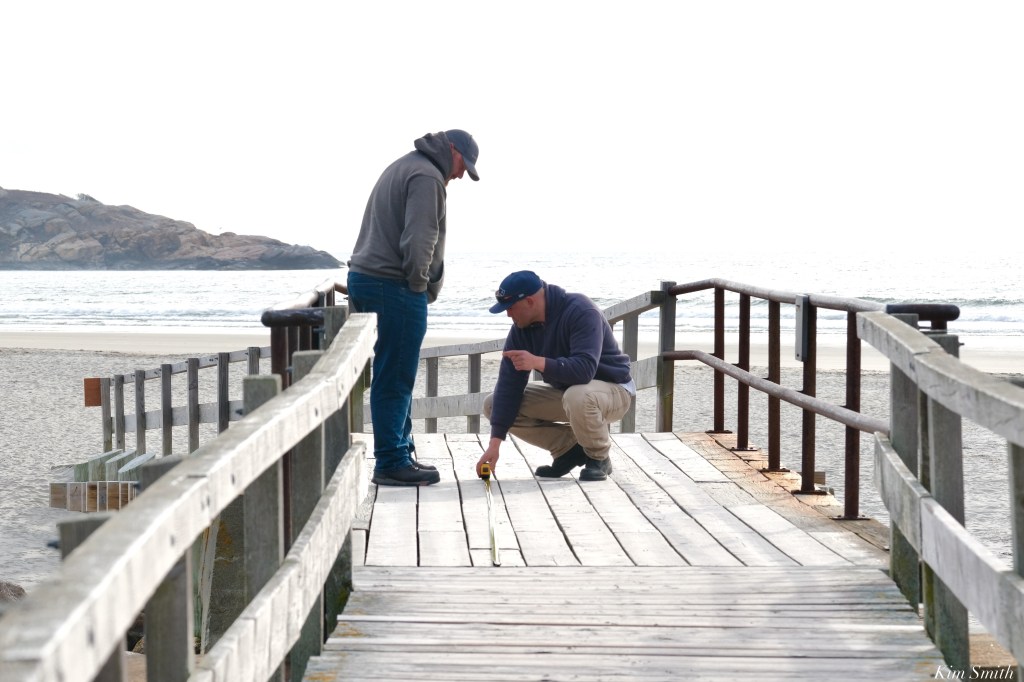
Gloucester’s DW Crew Mike Tarantino and Tyler Curtis
Not all monitoring of Plovers is successful (I’ll write more about that in a future post); we did want to share though the joyful news that our Super Mom and Super Dad have fledged two healthy chubby little chicks. We are so proud of Mom and Dad. No matter what curveballs life throws their way, the pair continue to be phenomenal parents!
From a nest of four eggs, one chick did not survive the very first night. A second chick was lost about a week later. The two remaining chicks thrived and grew to fly. We have lots of wonderful stories to share about their adventures 🙂
The maiden voyage of the Plovers is the most dangerous. We wish our tiny tender fledglings safe travels.
I’ll be posting more about Plovers in the coming weeks. Our Plover documentary is progressing beautifully (updates about that soon,) and I am dropping off new Plover tees and stickers this week at Alexandra’s Bread.
We’d like to send a heartfelt thank you to the Gloucester Daily Times staff writer Ethan Forman and editor-in-chief Andrea Holbrook for writing about our Good Harbor Beach Plovers. We friends of Cape Ann Plovers appreciate so much your thoughtful writing and taking the time to get the story straight!
Mass Audubon to help protect threatened plovers
By Ethan Forman
The sighting of the one-footed piping plover Super Mom, and others like her on Good Harbor Beach during the last week in March, coincides with human activity there meant to help preserve and protect coastal shorebirds during the busy summer beach season.
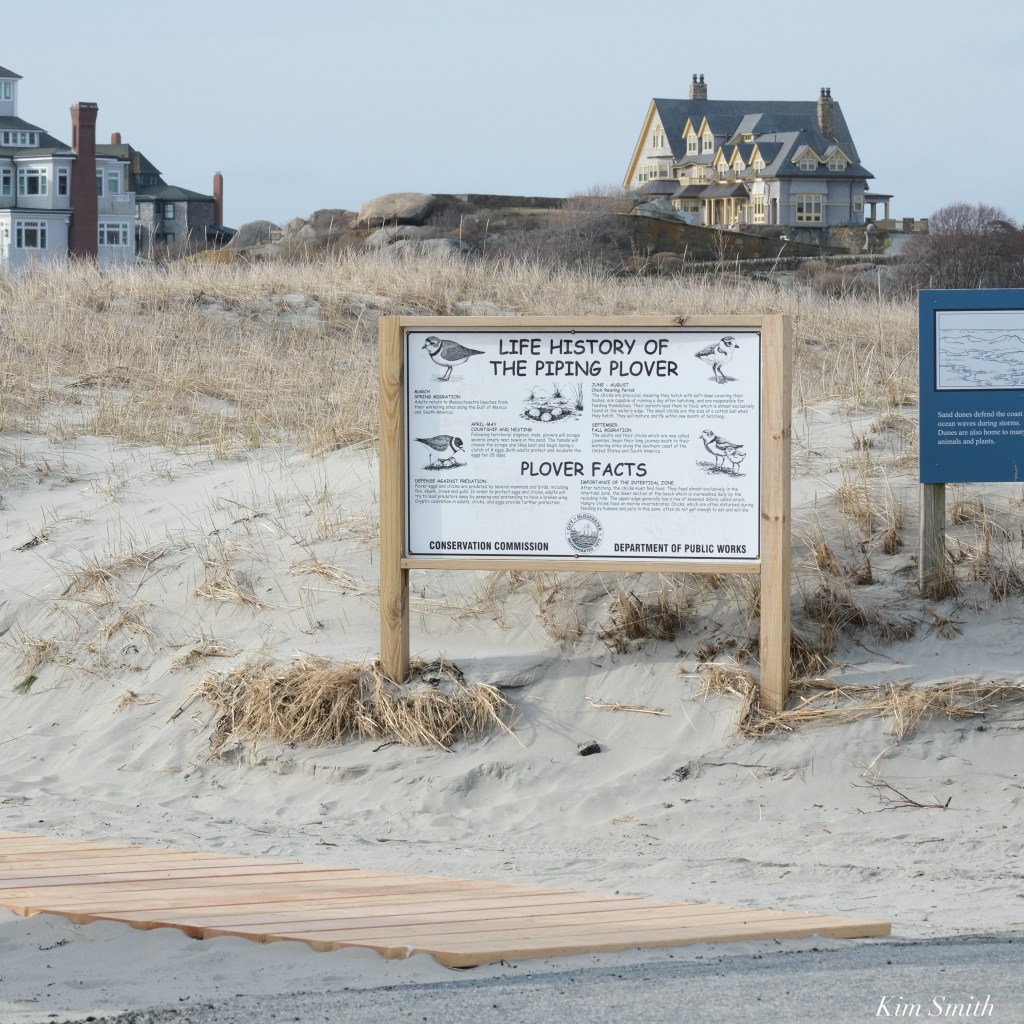
That includes the installation of symbolic fencing made up of metal posts and yellow rope around the dunes with signs letting beachgoers know the “Restricted Area” is “a natural breeding ground for piping plovers.”
“These rare birds, their nests and eggs are protected under Massachusetts and federal laws,” the signs read.
The nation’s oldest seaport is taking extra steps this year to monitor and minimize disturbances to Super Mom and others of her threatened species of small, stocky migratory birds that have made the popular beach their summer home in recent years.
On Monday, the city announced it had entered into an agreement with Mass Audubon to help with the monitoring and management of coastal nesting birds, including piping plovers, on the city’s public beaches, according to a press release.
















 The Piping Plover Project