Dear PiPl Friends,
During my recent trip to Los Angeles, our daughter provided wonderful opportunities for us to take several joyous expeditions to see Western Snowy Plovers. I write joyous because we thought we would be fortunate to see one or two, when we actually saw several hundred!
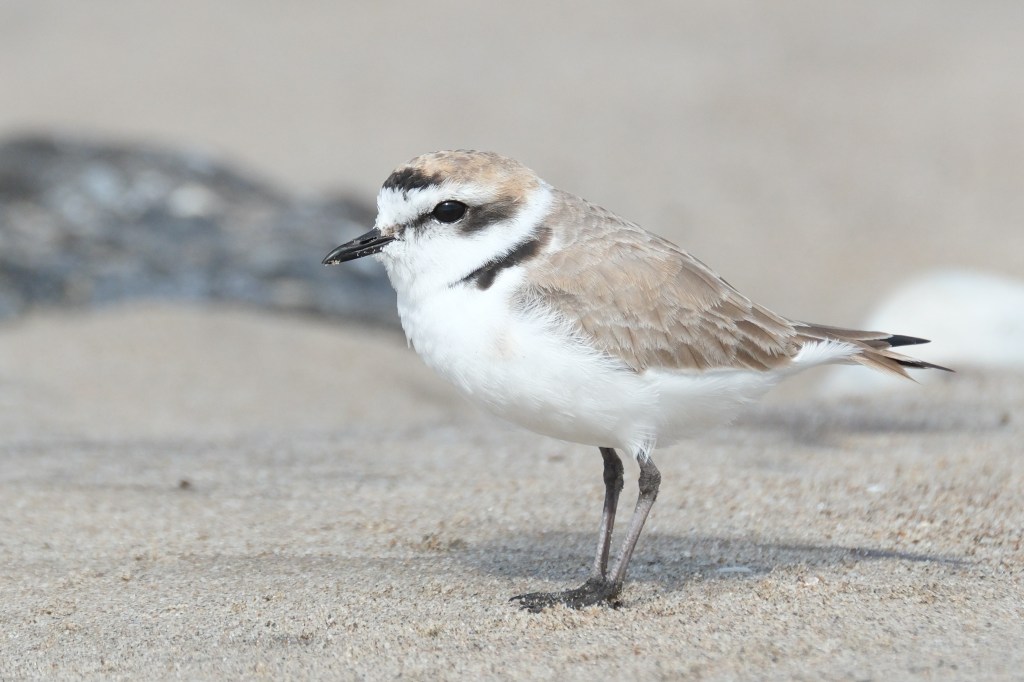
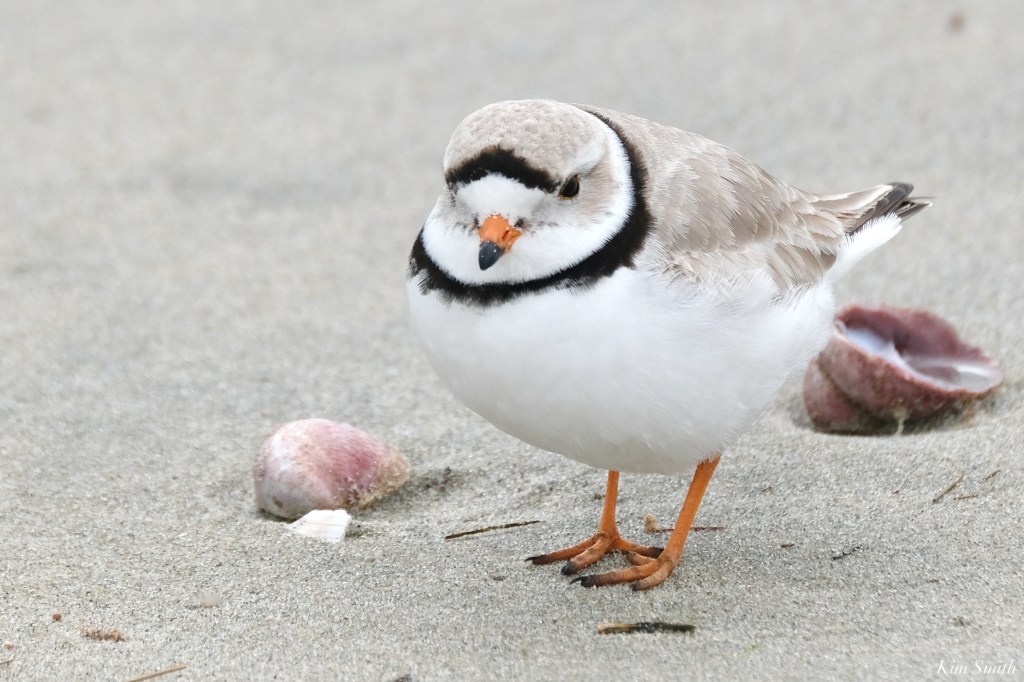
Snowy Plover (left), Piping Plover (right) – some key field mark differences at a glance – Snowy Plovers have black or gray legs, compared to the PiPls orange legs and feet; the beak of the SNPl is longer and solid black whereas the PiPls is beak is orange and black. Snowy Plover’s headband and collar band are not as pronounced. Piping Plovers lack the black eye patch.
We came across three breeding colonies; the largest was located on a relatively remote beach with an estuary bordering the northern end of the sandy dunes. We observed that Snowy Plovers share many similar traits to Piping Plovers including their love for invertebrates, both land and marine. PiPls and SnPl are visual feeders and utilize the “run-stop-peck” foraging method. Like Piping Plovers, Snowy Plovers display much territorial behavior towards one another and I imagine when the breeding season gets fully underway, there will be a great many more disputes.
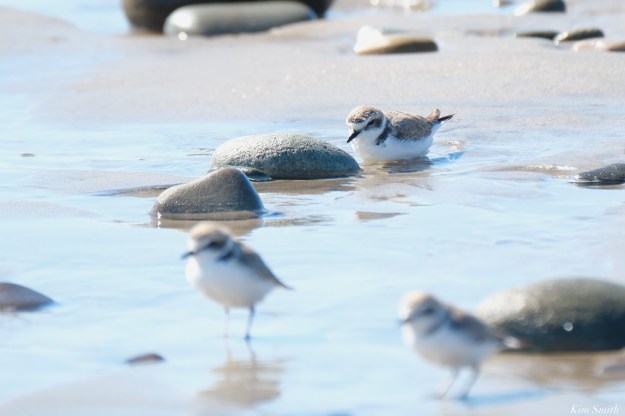
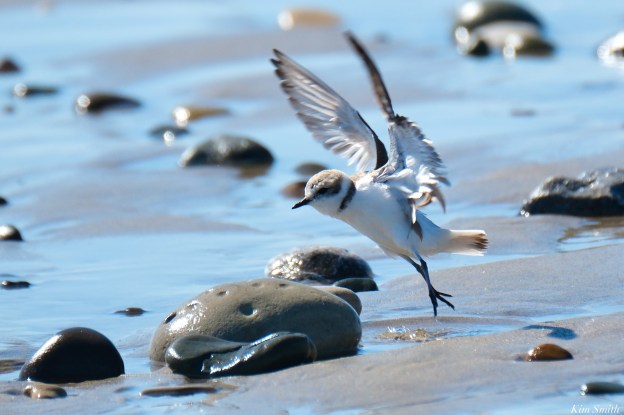
One notable difference is the Snowy Plovers communal “in-unison” bathing habit, which was absolutely charming to observe. A flock of 100 or so were foraging on kelp flies in the wrack when they all took off over the water, circling round several times in an exquisitely beautiful flight pattern before landing on the pebbly banks at the mouth of the estuary. After a few moments of seeming to observe whether it was safe or not to bathe, one by one they began entering the water, then in small groups, then even greater numbers joined the Plovers that were already in the water. Some were bathing singularly in the puddles made by rocks in the tide pools but for the most part, they were in the estuary creek dipping and splashing all along the banks. At one point I wasn’t entirely sure what was happening as they appeared to be continuing their onshore battles while they were bathing.
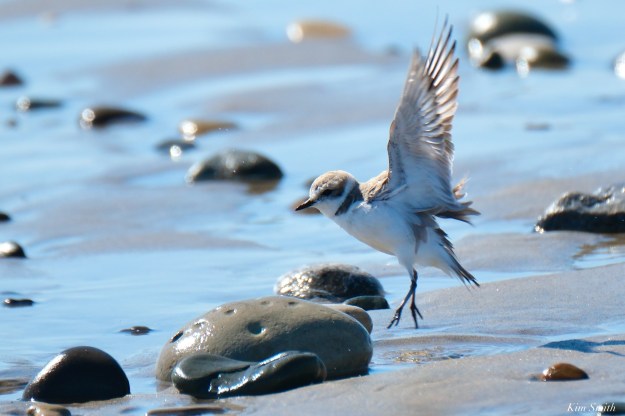
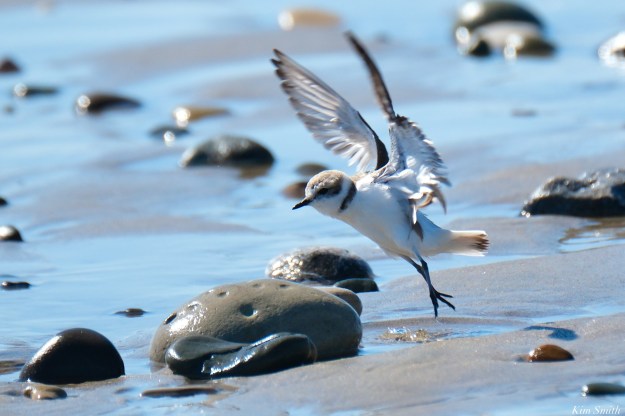
Snowy Plover drying wings after bathing
Another very notable difference is the bird’s vocalizations. The Snowy Plover’s song is more of a ta-wheet interspersed with sweet trilling chirps, rather than the penny whistle call of the Piping Plover. It was too windy to capture a really good audio recording, but you can hear the flock in the background of the bathing scenes in the video. To hear more variations in their birdsong, go here: Snowy Plover’s vocalizations.
Unlike Piping Plovers and many species of shorebirds, Snowy Plovers have no aerial flight display. Snowies also routinely have two broods, sometimes three, with three being the average number of eggs, as opposed to the PiPls four eggs. Typically about a week after hatching, mom pairs up with another male to begin establishing a second nest, leaving dad alone to raise the chicks.
Both Snowies and PiPls have similar predators including falcons, raccoons, coyotes, owls, crows, and ravens. And both species have been negatively impacted by extensive loss of habitat and human caused disturbances, most notably dogs crushing eggs and disturbing nesting areas. We observed volunteer docents at the nesting sites reminding scofflaw dog owners that dogs are not allowed at Snowy Plover breeding locations. California has approximately 3,400 miles of coastline and 420 state beaches. It’s unfortunate that despite the near limitless access of beaches to beachgoers that permit pets, dog owners still allow their dogs to run freely through the comparatively minuscule (area-wise) nesting sites.
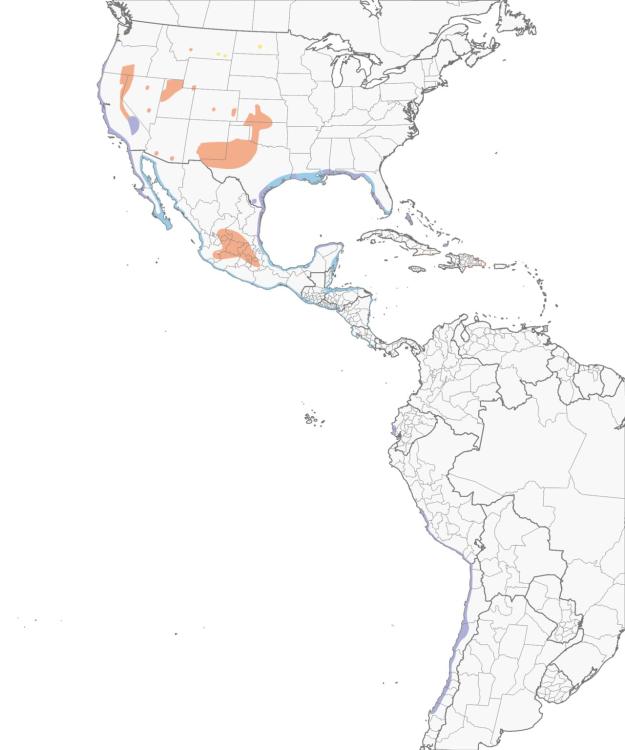
There are only about 2,000 Western Snowy Plovers that breed along California’s coast, from San Francisco to the Baja. The West Coast population is deemed a Threatened Species. At one time it was thought there were tens of thousands nesting at more than fifty breeding locations along the Pacific Coast. Today, there are only a handful of coastal nesting sites. Nationwide, there are approximately 24,000, compared to the total Piping Plover population, which is roughly 13,000 to 14,000 birds. You can also see Snowy Plovers along the Gulf Coast. Some nest there while others have migrated from their summer breeding grounds.
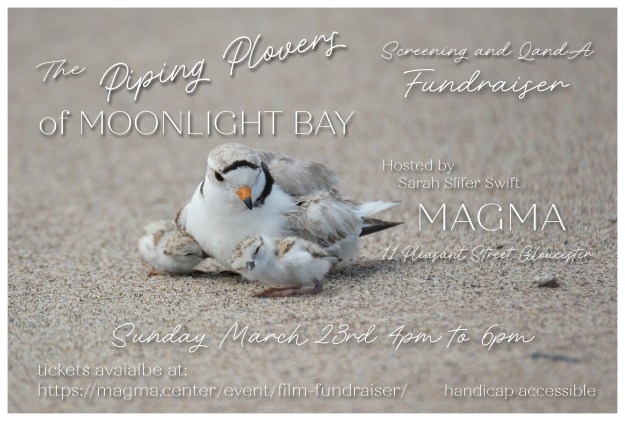
Please join us Sunday, March 23rd at 4pm, at MAGMA for a Piping Plover film screening and fundraiser. We’ll have much to talk about! Please R.S.V.P. and let us know if you are planning to come as we are providing refreshments. I hope to see you there!
Link to event tickets at MAGMA: https://magma.center/event/film-fundraiser/
Suggested contribution is $50. however, if that is not affordable for you please, contribute what you can. Thank you 🙂
Warmest wishes,
Kim
 The Piping Plover Project