Category Archives: #pipingploverproject

WORLD SHOREBIRDS DAY – A CELEBRATION OF SHOREBIRDS!

HAPPY WORLD SHOREBIRDS DAY! Today, September 6th, marks the 10th anniversary of Worlds Shorebird Day. Worlds Shorebird Day was founded to help bring awareness to the plight of  shorebirds. More than 50 percent of shorebird species around the globe are in decline. 

Our documentary, The Piping Plovers of Moonlight Bay, shines a light on the Plovers and how these remarkably valiant little birds are surviving the pressures of habitat loss, human disturbance, and a warming climate. Massachusetts is at the fore of Piping Plover recovery and we are doing much that is right however, the recovery is not going as well in other regions.

Please think about donating to our film. I think of Plovers as a gateway species, similar to Monarch butterflies. Through developing a deeper understanding of the birds, people will be inspired to do all they can to join citizens around the world in providing safe habitat for nesting and migrating shorebirds.  Our sister film, Beauty on the Wing: Life Story of the Monarch Butterfly is currently airing on PBS and has reached markets in 87 percent of US households, in all major cities. Wouldn’t it be wonderfully meaningful to have that kind of outreach for Plovers!

DONATE HERE https://filmmakerscollab.org/films/piping-plovers-of-moonlight-bay/
LAUNCHING OUR PIPING PLOVER FILM FUNDRAISING EVENT TODAY!

Dear PiPl Friends,

As many of you know that while we Piping Plover Ambassadors have been looking out over Cape Ann’s PiPls, I have also been working on a documentary film about Plovers nesting in Gloucester, along with filming Plover populations found at communities all around the north of Boston coastal region. Our GHB Plovers first arrived in Gloucester in 2016 and it was evident from the very first days that they were struggling to survive under the pressures of human and pet disturbances. As we were learning how to best help the Plovers nest undisturbed, I began to document Plovers at many other beaches to learn how other communities managed their Plover populations. I focused mostly on urban beaches as they are most similar to Good Harbor Beach.

Over the course of filming, I have spent several years documenting nesting Piping Plovers pairs that are extraordinary in their parenting skills, similar to our original pair of GHB Plovers, Super Dad and Super Mom. The documentary, The Piping Plovers of Moonlight Bay, is based on true life stories and is set in a fictional Massachusetts coastal town to protect the location of the Plovers.

Today we are launching our fundraising campaign. I am very proud to share that we have received our very first grant, from the Massachusetts Division of Fisheries and Wildlife. Here is a link to our online fundraiser:

Link to our 501c fiscal sponsor Filmmakers Collaborative: https://filmmakerscollab.org/films/piping-plovers-of-moonlight-bay/
Link to the trailer: https://vimeo.com/818861213
Link to the Piping Plover Project website: https://wordpress.com/view/pipingploverproject.org

Gifts for The Piping Plovers of Moonlight Bay will support post production and distribution costs, including re-recording voiceover narration, color and sound editors, picture mastering, studio time, festival fees and applications, music and map rights, and an underwriting agent to bring the film to the wide audience of public television. Our goal is to raise $80,500.00 for post production with a total of $115,000.00 if the film is accepted to air on public television.

The names of underwriters contributing $10,000.00 and above will be proudly listed in the film’s special underwriting credit pod. What does it mean to be an underwriter? When you watch a film on public television and the announcer says (for example), “This program was made possible by gifts from Katherine and Charles Cassidy, by The Fairweather Foundation, by Lillian B. Anderson, and by The Arnhold Family, in Memory of Clarisse Arnhold,” that’s where your name, or the name of your foundation, will appear, at both the beginning and at the end of the film.

If you are interested in becoming an underwriter, please feel free to phone (978-290-3804) or email and I will be happy to send the formal proposal and budget.

All supporters, no matter how large or small the donation, will be listed on the film’s website. Any amount contributed is tremendously appreciated.

Thank you for being part of launching The Piping Plovers of Moonlight Bay!

Very best wishes,

Kim

PIPING PLOVER T-SHIRTS AT ALEXANDRA’S BREAD!!

Dear PiPl Friends,

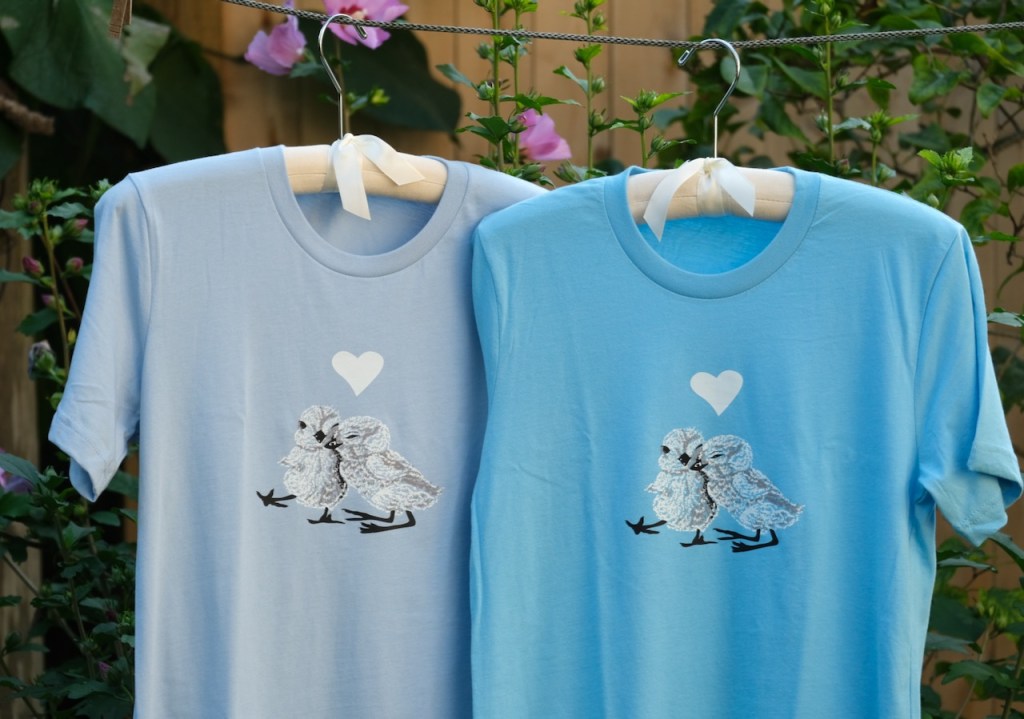
We at long last have our Plover Tees!!! And it was well worth the wait, better than imagined! When picking up the shirts at Seaside Graphics, a customer purchased one on the spot!

The tees are available for sale at our wonderful local bakery and home goods shop, Alexandra’s Bread, located at 265 Main Street in Gloucester. 

These T-shirts are luxuriously silky soft, 100 percent cotton and wash beautifully!  We have two different blues, basically because I couldn’t decide which one everyone would like better 🙂 The Cerulean is a pretty sky blue and the Celestial is a more like a dreamy foggy day, powdery blue.

Mostly Large and Xlarge are available with this batch, with a few  mediums and one small remaining. The cost of the T-shirt is $30.00.

If you purchase a T-shirt or sticker, please send a photo. I am planning on asking friends and family to model the shirts, but in the meantime, our clothesline will have to do.

The chest measurements of the Unisex Tees are as follows. 

Small –  18 inches (total 36inch circumference), to fit 34-37 inch chest

Medium – 20 inches, to fit a 38-41 inch chest

Large – 22 inches, to fit a 42 -45 inch chest

Xlarge –  24 inches, to fit a 46-49 inch chest

Example – the large measures 22 inches across the front, which equals 44 inches total chest circumference, which would fit a 42-45 inch chest, depending on how you like your Tee to fit.

If you are not sure which size you would like, measure your favorite T-shirt, across the front,

from underarm to underarm seam at the chest line at the widest point, and then double that measurement.

Years ago we had Plover T-shirts, thanks to former PiPl ambassador Heather Hall, and ever since then, we have been wanting to do it again. We are so grateful to designer Beth Swan, who created our Plover logo for both stickers and for the tees (the stickers are also available at Alexandra’s Bread). Beth was so fantastic to work with and I highly recommend her beautiful, thoughtful (and fun) designs. You can see a small sampling of Beth’s work here.

Many thanks too, to Seaside Graphics Samantha and Will for their fantastic customer service and speedy printing!

OUR CAPE ANN PIPING PLOVER STICKERS ARE IN AT ALEXANDRA’S BREAD! #ploverjoyed

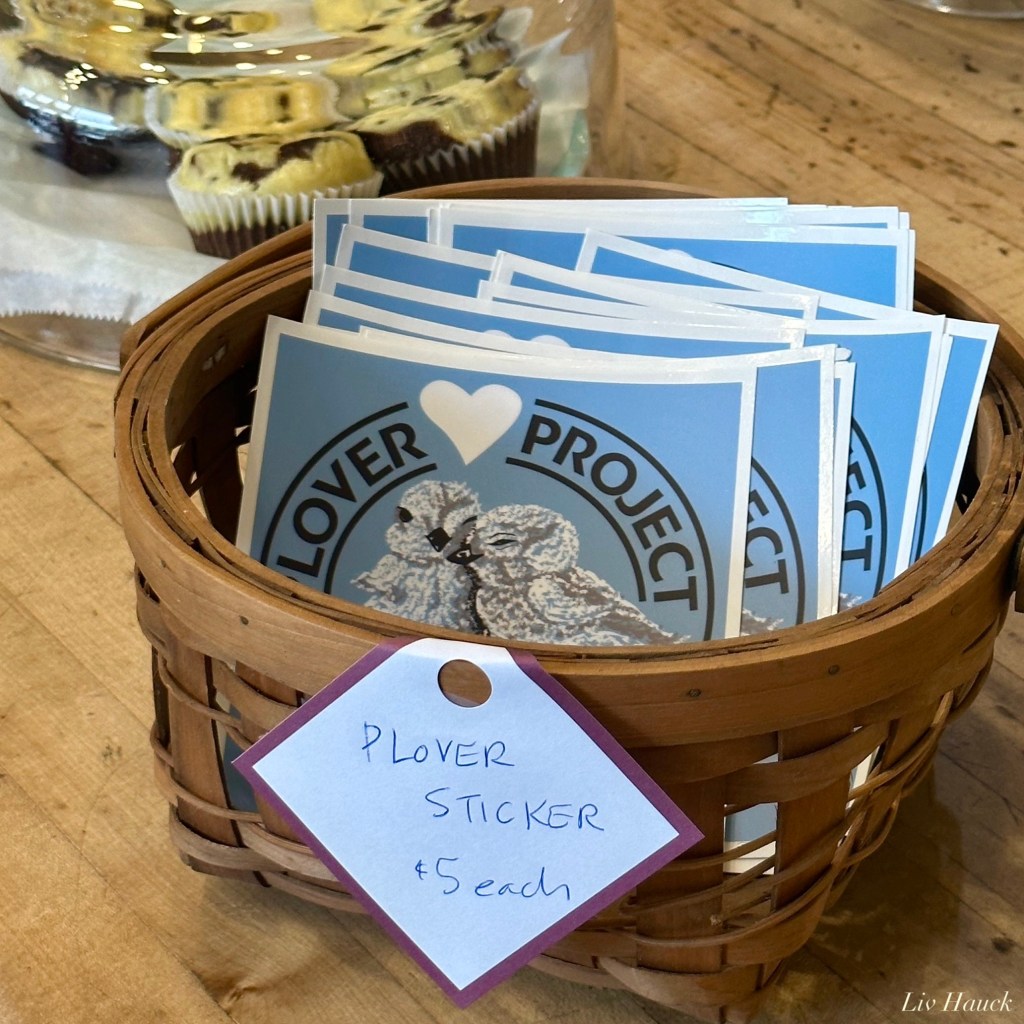
Our long wished-for Cape Ann Piping Plover Project stickers/decals are now available to purchase at Alexandra’s Bread. They are beautiful, so sweet, and I think you will love them!

The stickers are the highest quality vinyl, very durable, and suitable for both indoor and outdoor use. The cost is $5.00 per sticker. Alexandra’s Bread is located at 265 Main Street, Gloucester.

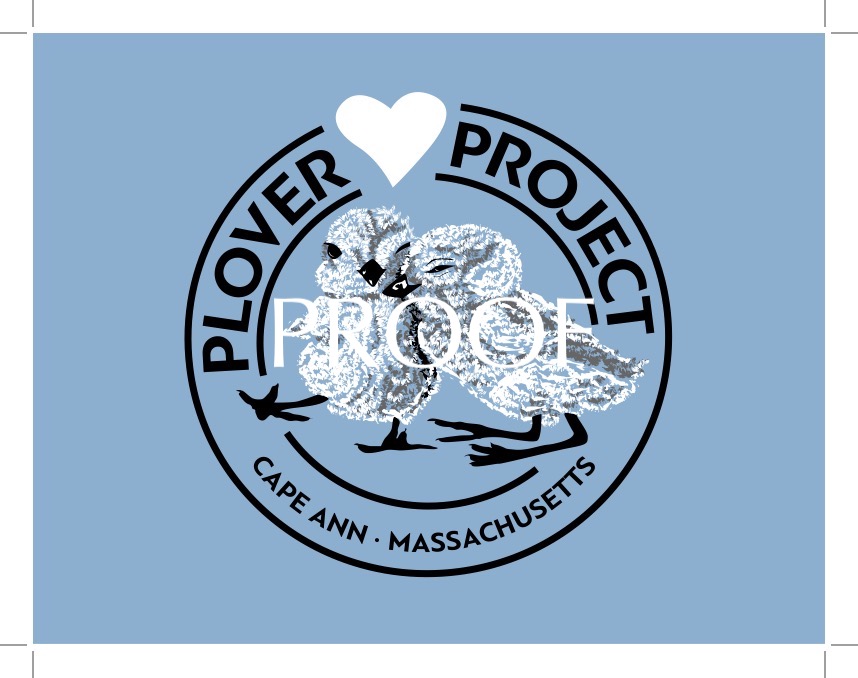
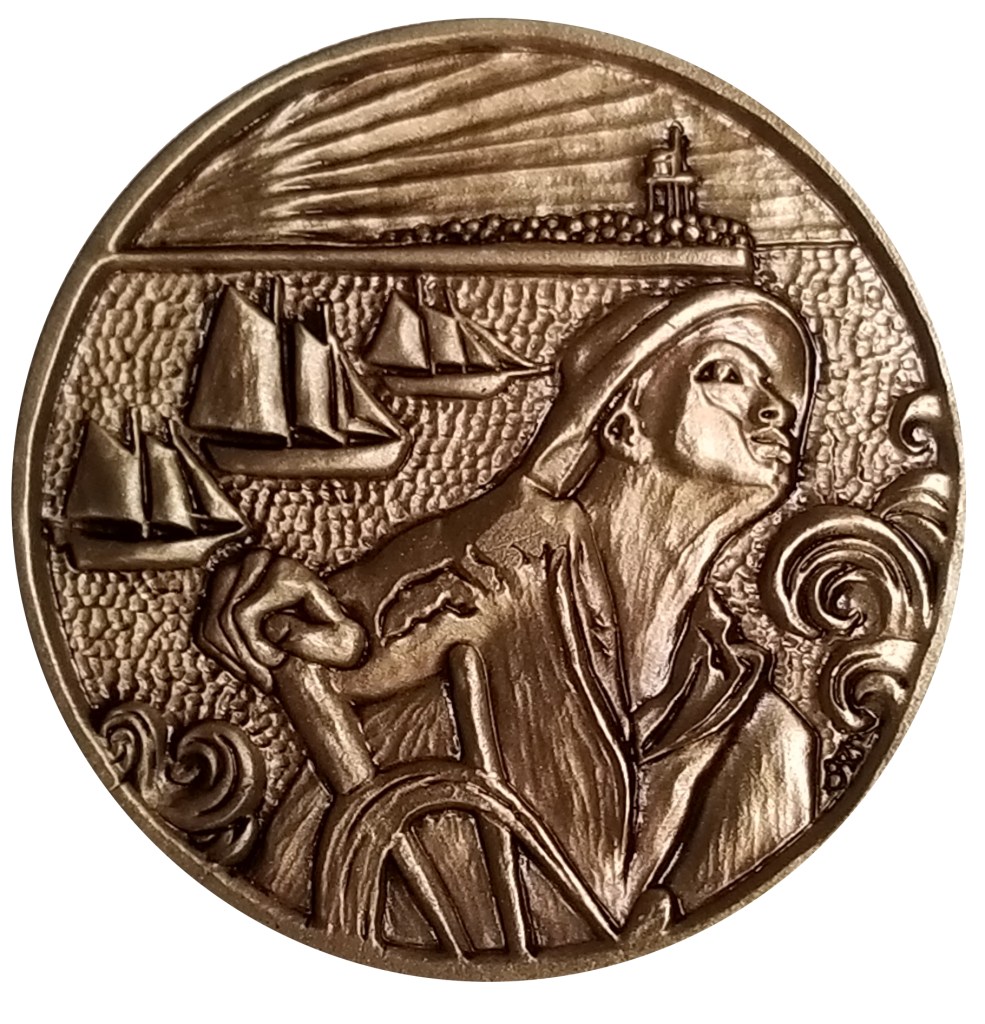
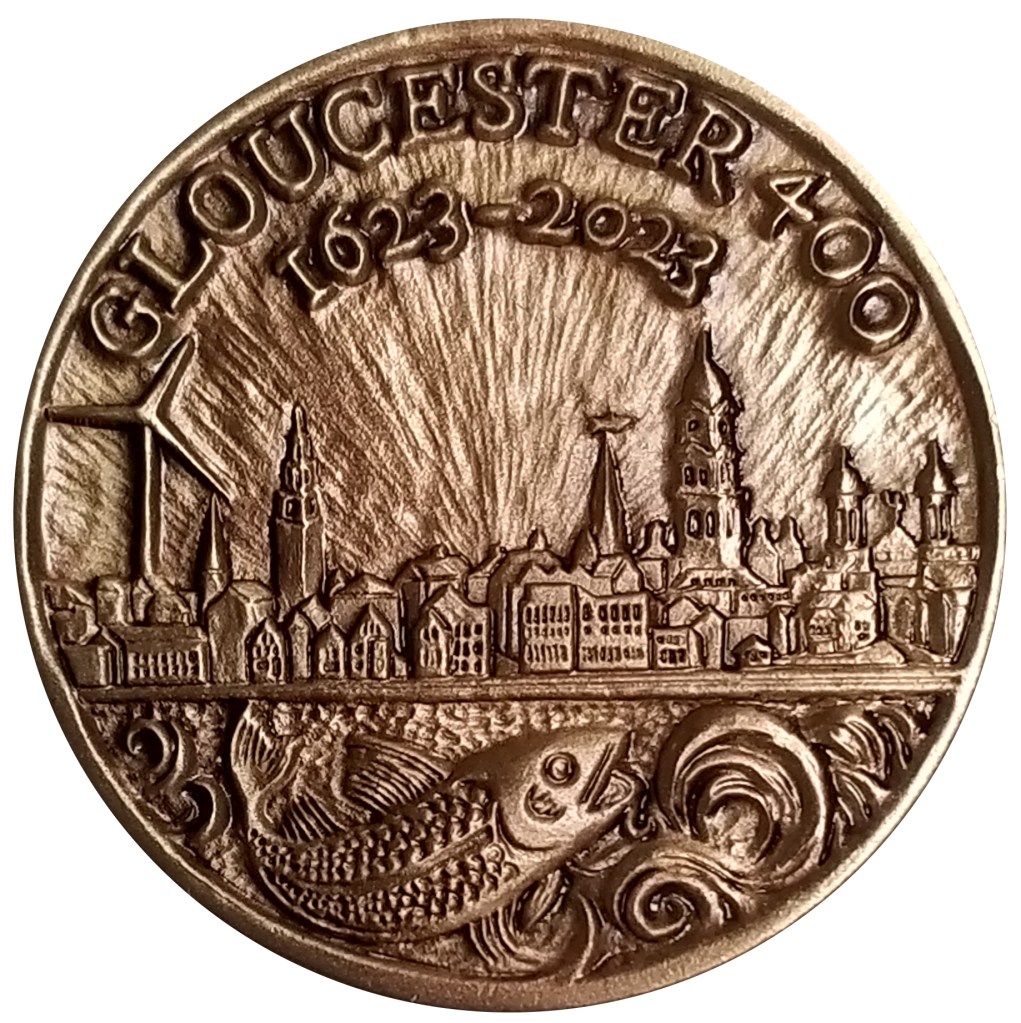
Local designer Beth Swan, who also created the Gloucester 400th commemorative medal, designed the logo. She is wonderfully talented and extremely generous and we are so appreciative of her gorgeous, thoughtful, and super fun logo. Tee shirts, with Beth’s logo, are in the pipeline and we will be featuring the tees in the coming weeks.

Beth Swan’s stunning Gloucester 400 commemorative medal

GOOD HARBOR BEACH PIPING PLOVERS FEATURED IN TODAY’S GLOUCESTER TIMES!!

Many, many thanks to Gloucester Daily Times’s writer Ethan Forman and Editor-in-Chief Andrea Holbrook for today’s story about out GHB Plovers.  Ethan always takes the time to get it right. Thank you!!!

By Ethan F orman Staff Writer

Despite the loss of some tiny chicks to storms this summer, efforts to protect the threatened piping plover shorebirds at Gloucester’s Good Harbor Beach by the Piping Plover Ambassadors and Mass Audubon were deemed a success this summer.

Three pairs of piping plovers nested at Good Harbor Beach, one more than usual.

Those watching over the piping plovers said they again spotted Super Mom, the onelegged piping plover who has been coming to the beach since 2016.

“It was fantastic in many ways,” said Gloucester resident Kim Smith, who heads up the efforts of about 20 Piping Plover Ambassadors. She believes climate change affected the piping plovers “in a funny way this year.”

“I think because of the extreme storms that we had,” she said. “We lost basically six chicks during extreme weather. That’s a lot.”

Despite the loss of those chicks, efforts to protect them and the survivors were successful, Smith said.

“We worked with Mass Audubon this year, we had many more eyes on the chicks, and if we hadn’t had those storms, we would’ve fledged

READ THE FULL STORY HERE

CONGRATULATIONS TO MASSACHUSETTS WITH 1,100 PAIRS OF PIPING PLOVERS – OUTSTANDING COASTAL WATERBIRD COOPERATORS MEETING!

The annual Northeast Coastal Waterbird Cooperators meeting was held live last week in Barnstable at Cape Cod Community College’s new science and engineering center. After several years of attending virtually, it was a joy to meet in person.

Conservation organization’s representatives from all eight Massachusetts coastal regions, along with representatives from New Jersey, New York, Connecticut, Rhode Island, New Hampshire, and Maine share numbers and anecdotes about breeding pairs of endangered and threatened shorebirds including Piping Plovers, Least Terns, American Oyster Catchers, Roseate Terns, and Black Skimmers. It’s fascinating to learn how we are largely all sharing similar experiences with predators and disturbances of all shapes and kinds. Carolyn Mostello, the Massachusetts Coastal Waterbird Biologist, directs the event and she does an extraordinary job of weaving all the information together.

Sharing numbers is followed by “Strange and Unusual,” a super fun section where field agents share funny/odd occurrences, photos, and videos for example, PiPl nests with five eggs, strangely colored and oddly shaped eggs, parking lot nesters, and more. Carolyn shared the trailer for my forthcoming film, The Piping Plovers of Moonlight Bay, and I am happy to share that it was very much enjoyed by the attendees!

The afternoon programs are especially fascinating with presenters sharing experiments and projects including two of special interest; one on using odors to deter mammalian predators and another with music and different sounds to deter Black-crowned Night Herons from eating shorebird eggs. All the programs are wonderfully educational.

Perhaps the most outstanding piece of information is that this year, Massachusetts was home to 1100 breeding pairs of Plovers. That may not sound like a whole heck of a lot considering our hundreds of miles of coastline, but 1,000 pairs has been a long held goal of shorebird recovery programs in Massachusetts. We should be super proud of our state. While many regions are seeing very little, none, or even worse, declining numbers, Massachusetts is leading the way in Piping Plover recovery!

Smooshed!

WHERE DO PIPING PLOVERS GO AFTER DEPARTING MASSACHUSETTS AND NEW ENGLAND BEACHES?

Dear PiPl Friends,

As our Cape Ann Piping Plovers will be departing soon, our thoughts turn to where the adults and newly minted ace flyers will spend the winter months?

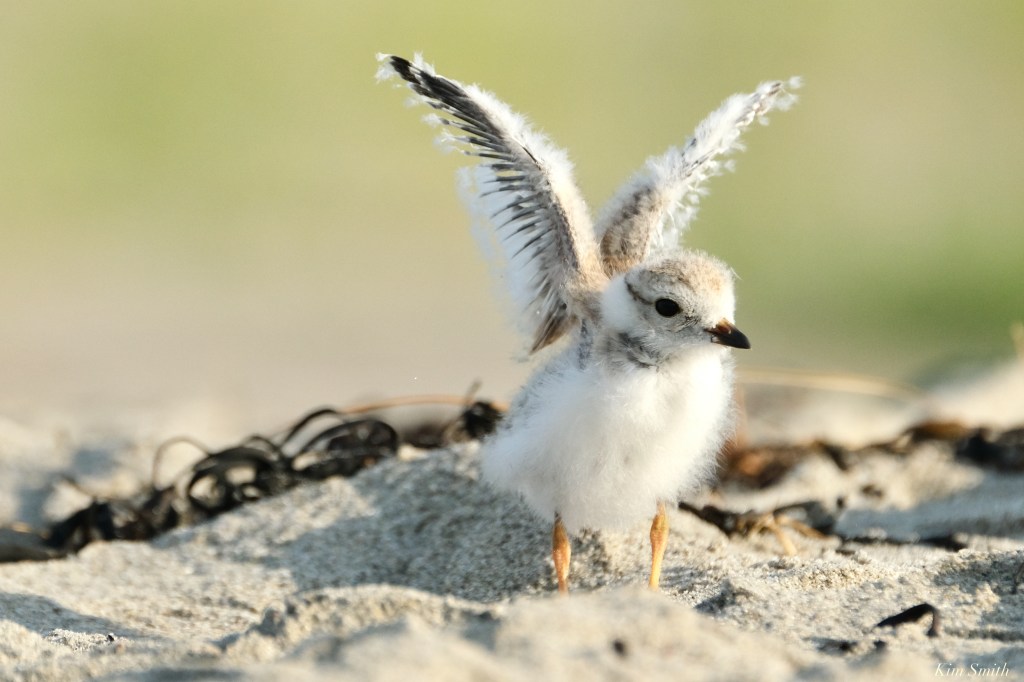
Practicing lift-off – snapshot of one of the chicks that fledged Good Harbor in July

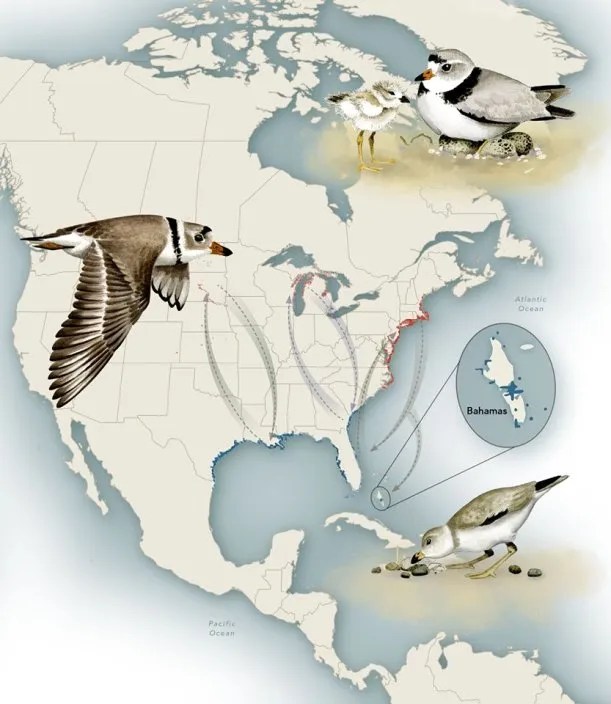
Where do Piping Plovers migrate to when they leave their northern breeding grounds?

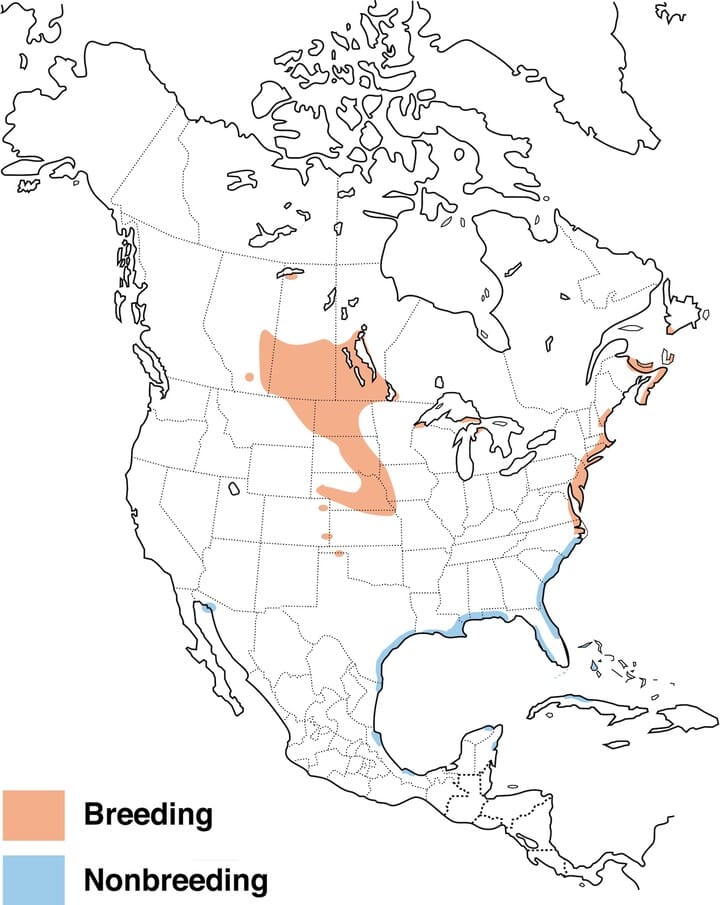
Like all migratory species of birds (and butterflies), the chicks must first build their lipid, or fat, reserves before undertaking the journey. We know from Plover banding programs conducted at the University of Rhode Island that the majority of Massachusetts Piping Plovers fly non-stop to the outer banks of North Carolina. Here they will stage for about a month, undergoing a semi-molt, where they lose their old worn out feather and grow fresh new feathers. After fattening up for the next leg of their journey, many Plovers from the north Atlantic region migrate to the Bahamas, Cuba, and the Turks and Caicos.

Just as Piping Plovers are site faithful to their breeding grounds, so too are they are site faithful to their winter homes.

Congratulations to Piping Plover Conservation in Nova Scotia!

We have exciting plover news to share today! 🐣

After nearly 20 years (2004), a Plover pair has hatched a nest at Crescent Beach in Lockeport, NS this summer! We are celebrating the fantastic community of supporters who helped the plovers get there, including our amazing volunteer, Jane.

We hope the chicks survive and fledge but we need your help. Please stick to the wet sand, keep your pets on leash and give these chicks plenty of space to thrive. And keep in mind that these chicks will venture around the beach so make sure to #sharetheshore #pipingplover #conservation #shorebirds #beach #protection #novascotia

HAPPY FATHER’S DAY TO ALL THE SUPER DADS!

HAPPY FATHER’S DAY TO ALL THE WONDERFUL SUPER DAD’S, both human and avian!

My husband Tom is the best Dad you could ever imagine. From Tom, I inherited the best father-in-law, his Dad. My heart is filled with much joy when I see my son Alex with his daughter and know he has inherited their same thoughtful and kind, gentle loving nature. I don’t want to go on about this because I realize not everyone is so blessed and that there are many absentee fathers out there, mine included. Enjoy all the Dads in your life and know you are so blessed if you are fortunate to know a good one.

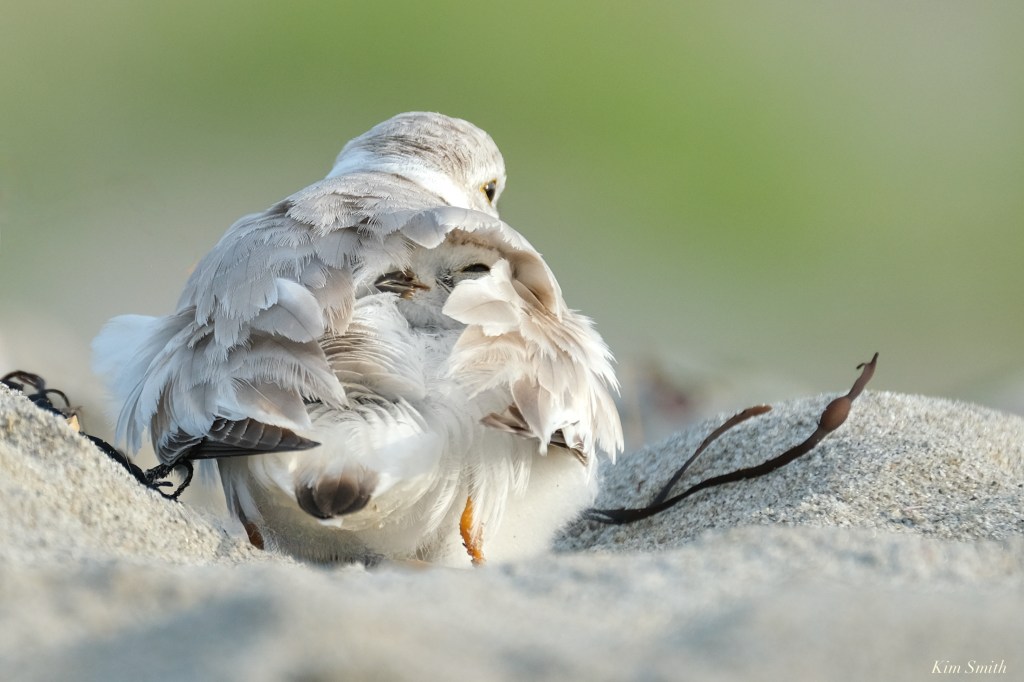
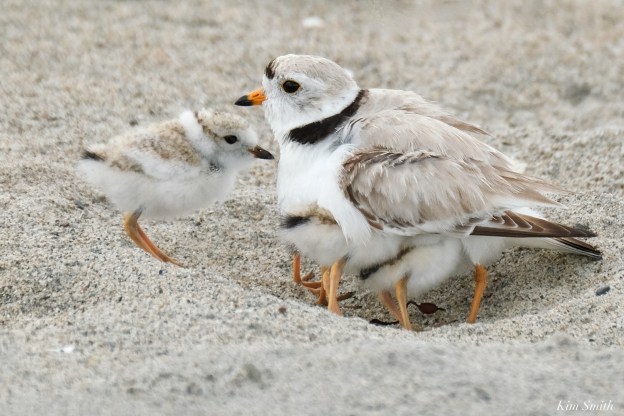
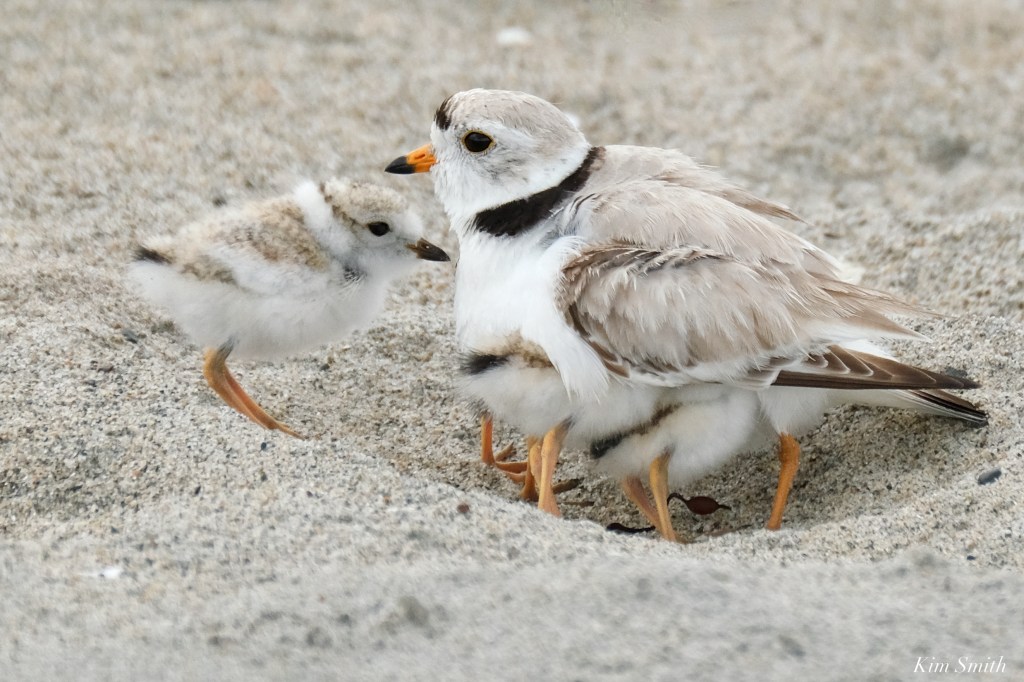
The first photo is of a Piping Plover Dad thermosnuggling his three chicks and was taken recently at a beach on the south shore. I think the chicks are about three weeks old in the photo and it reminded me of our Good Harbor Super Dad. We call him Super Dad for a variety of reasons, but one of the most poignant is how he stayed with the handicapped chick for a month beyond the date when HipHop’s siblings had already learned to fly. It took Hip Hop twice as long to manage sustained flight but Super Dad was with him every step of the way. I think this is very unusual in the animal kingdom and is counter intuitive to the survival of the adult.

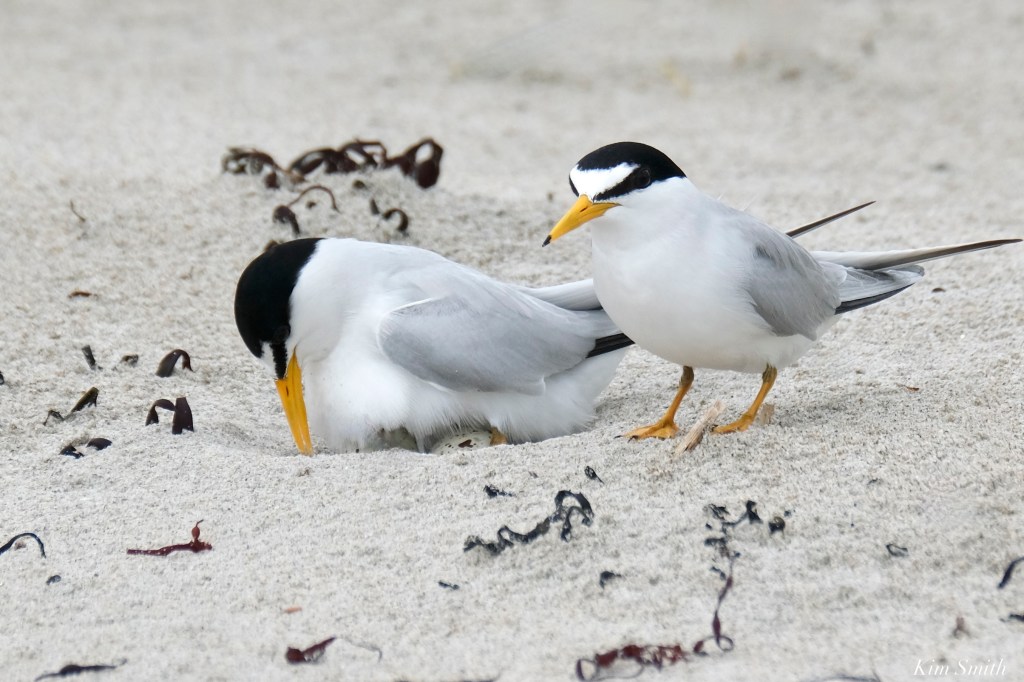
The second photo is of another species of shorebird that breeds along the New England coast, the Least Tern. Least Tern Dads share equally in brooding eggs.

Unlike Piping Plover chicks, which are precocial birds and can feed themselves within hours after hatching, Least Terns are semi-precocial and need to be fed by the adults. Least Tern Dads share equally in feeding the chicks.

Gloucester Ambassadors First Full Week Working with Mass Audubon – June 11th Plover Lover Weekend Update

Dear PiPl Friends,

As many of our PiPl followers are aware, this year the City of Gloucester hired Mass Audubon to help manage Cape Ann’s Plover population. We’ve had our first full week of collaborating with Mass Audubon and I have to say it just could not be better for all involved, but most importantly, for the Piping Plovers! The Mass Audubon staff is tremendously professional, kind, friendly, dedicated to wildlife conservation, and very personable. Lyra, who heads the coastal waterbird program for Mass Audubon, and Devon, Gloucester’s assistant conservation agent both have a great deal of experience managing Piping Plovers and are quick to respond to questions and challenges as they arise.

A few changes have been made to the beach. The roped off Plover areas to protect the Plovers has increased, however, there is still loads of space for beachgoers. An added bonus to creating safe spaces for Plovers is that over time, we have seen how the established protected areas for the Plovers has vastly improved the overall health of the beach. Why is that? Because when people and pets aren’t recreating up against the dunes, new vegetation is allowed to take hold including native American Beach Grass (Ammophila breviligulata), American Sea-rocket (Cakile edentula), Common Milkweed (Asclepias syriaca), Beach Pea (Lathyrus japonicus) and Seaside Goldenrod (Solidago sempervirens). Protecting the dunes is one of the best coastal strategies for combating a warming climate. It’s truly a beautiful thing to see how much healthier are our dunes!

Another change that has taken place are the guidelines in how close we should stand when observing the Plovers. One of the most important ways to help the Plovers is to give them lots and lots of space. If we hover/stand/place camera gear for long periods of time pointing to the Plovers, wildlife biologists working with Mass Audubon have documented that this activity attracts Crows and Gulls! You may ask, “why is that a bad thing?” Crows voraciously eat Plover eggs and hungry seagulls eat Plovers at all stages of development, including eggs, hatchlings, and even 3 week old chicks.

The best way for we beachgoers to help the Plovers is to watch from a distance and not hover near the birds. With a half-way decent lens and a camera sensor with a good crop factor we can get beautiful shots from a safe distance. The City, Mass Audubon, and we Ambassadors are all asking this of the community and we are deeply appreciative of your help.

Piping Plover smackdown – The video is of our handicapped Super Mom. Her disability does not impede her determination nor ability in defending her territory. She is perhaps Good Harbor Beach’s most fierce Plover, despite her missing foot.

Piping Plovers ferociously defend their nesting territory from intruders of every shape and size; puffing up their feathers to appear larger, chasing, and even biting the offender. Here she is in early spring defending her little slice of Good Harbor Beach from Scruffy Boy’s shenanigans!