I hope you are doing well. What a lovely weekend weather wise for we in southern New England although we’re getting ready for the big cold snap coming. Right after Dia de Muertos, we plant paperwhites and amaryllis bulbs to force indoors. We switch up the colors of the soft furnishings in the music living room from warm weather blues and greens to white, rose, red, and greens. It’s a cozy (and gradual) way to get in the holiday spirit.
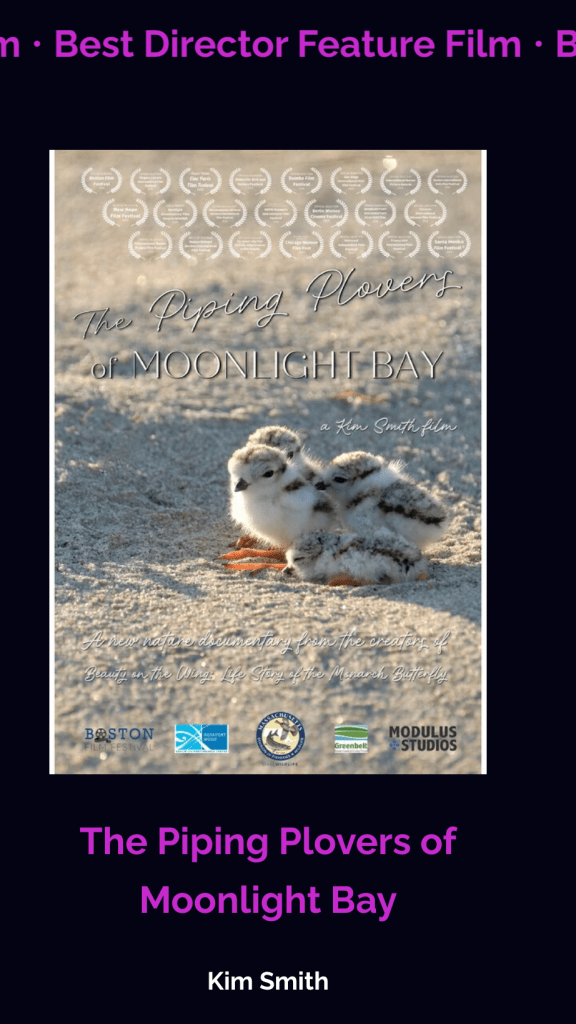
I am so very delighted to write that we received the Best Director Feature Film award at the London Vision Film Festival. It’s a wonderful honor and my first ‘Best Director’ award. I thank all of you everyday. Both Beauty on the Wing and The Piping Plovers of Moonlight Bay would not have been made possible without your generosity and I am so very grateful for your interest and kind support.
The Rat
If you have a chance, there’s a very fun new film about the vibrant music scene in Boston during the 70s and 80s, Life on the Other Planet. Beautifully produced and directed by Vincent Straggas, we went to the premiere at the Regent Theatre in Arlington several weeks ago and it is again playing at the Regent on Thursday, November 19th. Along with a great many Boston musicians, my husband Tom Hauck and Fred Pineau from The Atlantics are featured, as well as local Gloucester musicians Willie Alexander and Jon Butcher. There is talk of Life on the Other Planet coming to The Cut!
Here’s a link to a short video and photos of the amazing Pectoral Sandpiper that stopped over for a day on its arduous migration to southern South America. I mentioned the pair last time I wrote and wanted to make the video before too much time had passed. I wonder what the predicted whoosh of arctic weather will bring to our shores next!
I am so very honored to receive a nomination from our Ward One City Councilor, Scott Memhard, for the City of Gloucester’s 2025 Kindness Campaign. I accept this nomination on behalf of myself and all our Piping Plover Ambassadors, DPW, Conservation Commission, and Mass Audubon. Our Gloucester Plovers are very fortunate to have such a dedicated and kind team working to keep them safe and their habitat intact.
I’d also like to thank Scott especially, who has been a supporter since the Plovers first arrived in 2016. He has been a tremendous help navigating with the City to develop conservation protocols for the Plovers. The Plovers are under Scott’s ‘jurisdiction,’ so to speak, as Good Harbor Beach is part of Scott’s ward, and we couldn’t ask for a more helpful and engaged advocate.
Thank you to Scott, all our PiPl Ambassadors, the Gloucester DPW, Conservation Commission, Mass Audubon, and all our Plover friends and advocates ❤
“I would nominate Kim Smith for her tireless environmental advocacy & her documentary photography and film educational outreach, now on PBS.
For years Kim has worked tirelessly with the Gloucester DPW, Conservation Commission & MA Audubon. Kim has organized the local citizen group of the Piping Plovers Ambassadors at Good Harbor Beach.
In addition to the Piping Plovers, with her new documentary “Piping Plovers of Moonlight Bay”, and working to protect Good Harbor Beach and dunes, Kim has produced a remarkable film documentation “Beauty on the Wing” of migrating Monarch butterflies which pass through Cape Ann every Fall.
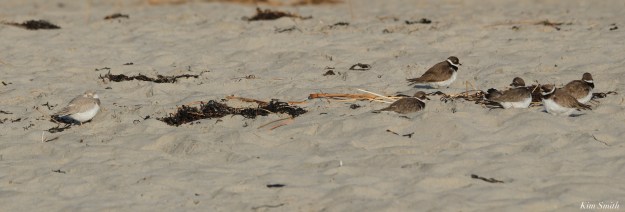
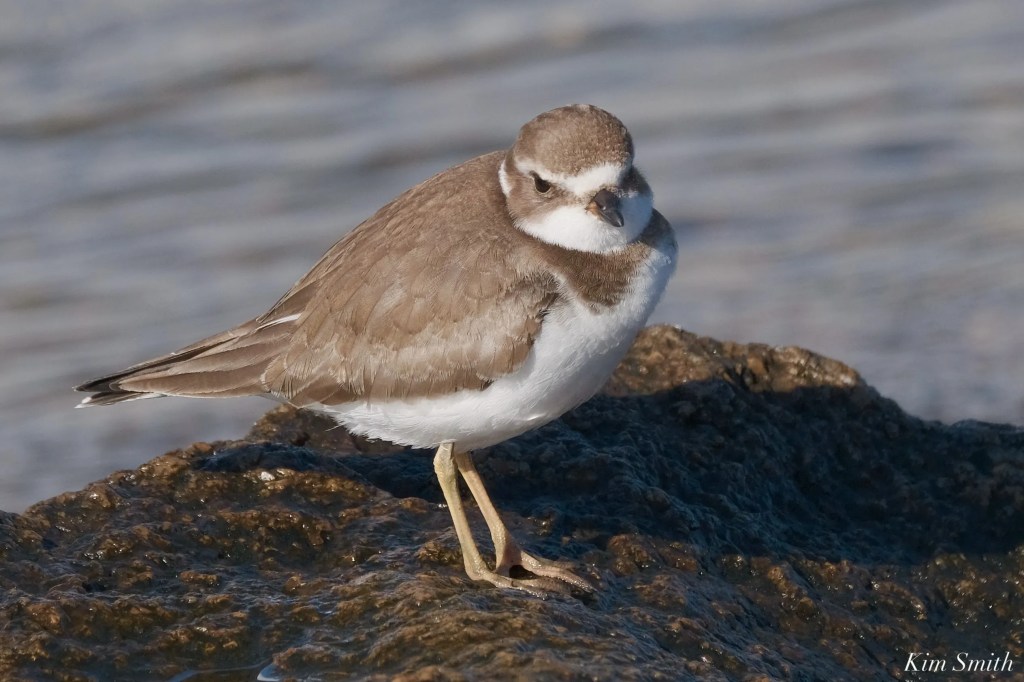
Our youngest fledgling has resurfaced at Good Harbor Beach! He/she had not been since the morning of the fierce hail and rain storm but there she was in the soft sand today, preening and sleeping alongside a mini flock of Semipalmated Plovers. Will they migrate south together? Piping Plovers are reportedly solitary but are often seen during the non-breeding months foraging in mixed groups of Semipalmated Plovers, Sanderlings, and Dunlins. Several years ago, during their southward migration, I saw a flock of a dozen Piping Plovers tucked in with several hundred Semipalmated Plovers, all resting on the upper part of the beach.
39 day old Piping Plover fledgling with Semipalmated Plovers
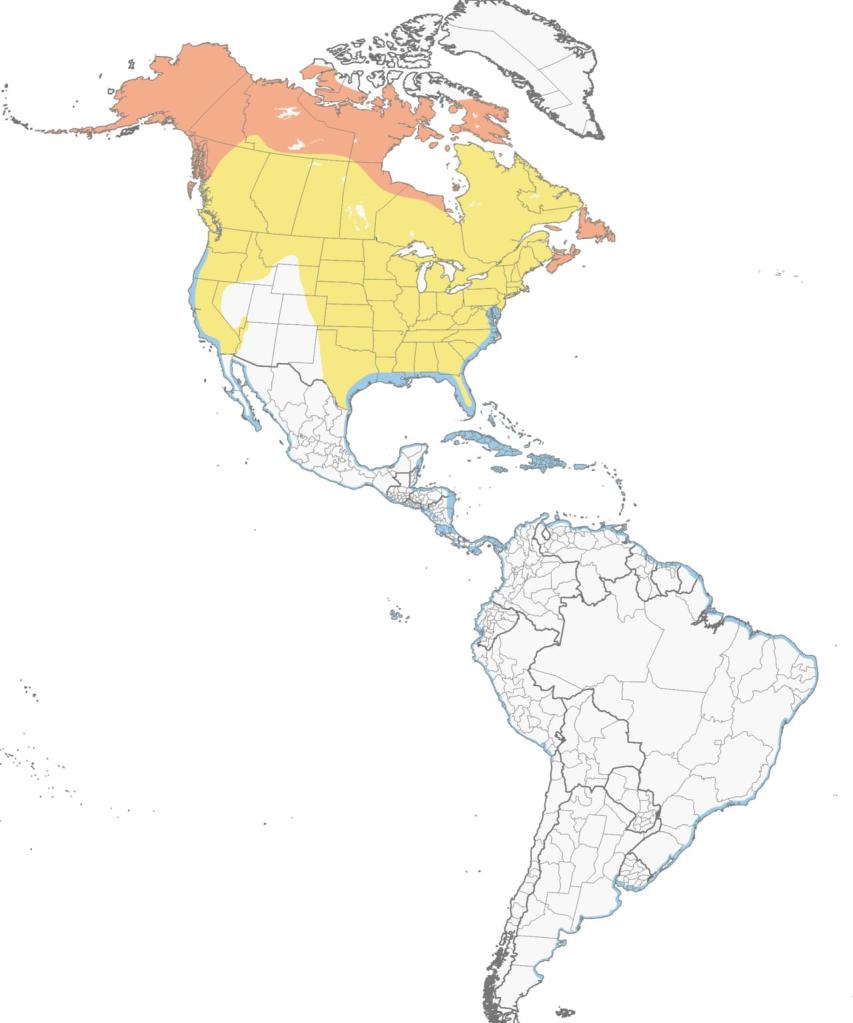
Semipalmated Plover range map – orange = breeding, yellow = migration, blue = wintering grounds
You can see from the map that the range of Semipalmated Plovers is vast when compared to Piping Plovers. They nest in subarctic and arctic environments and that is why we do not see them nesting at our local beaches. August is the peak time of year for the Semipalmated Plover’s southbound migration and we have seen many at Good Harbor Beach over the past month. Partners in Flight estimates the global population to be about 200,000 while the Piping Plover population as of 2020 was only about 8,000 adults.
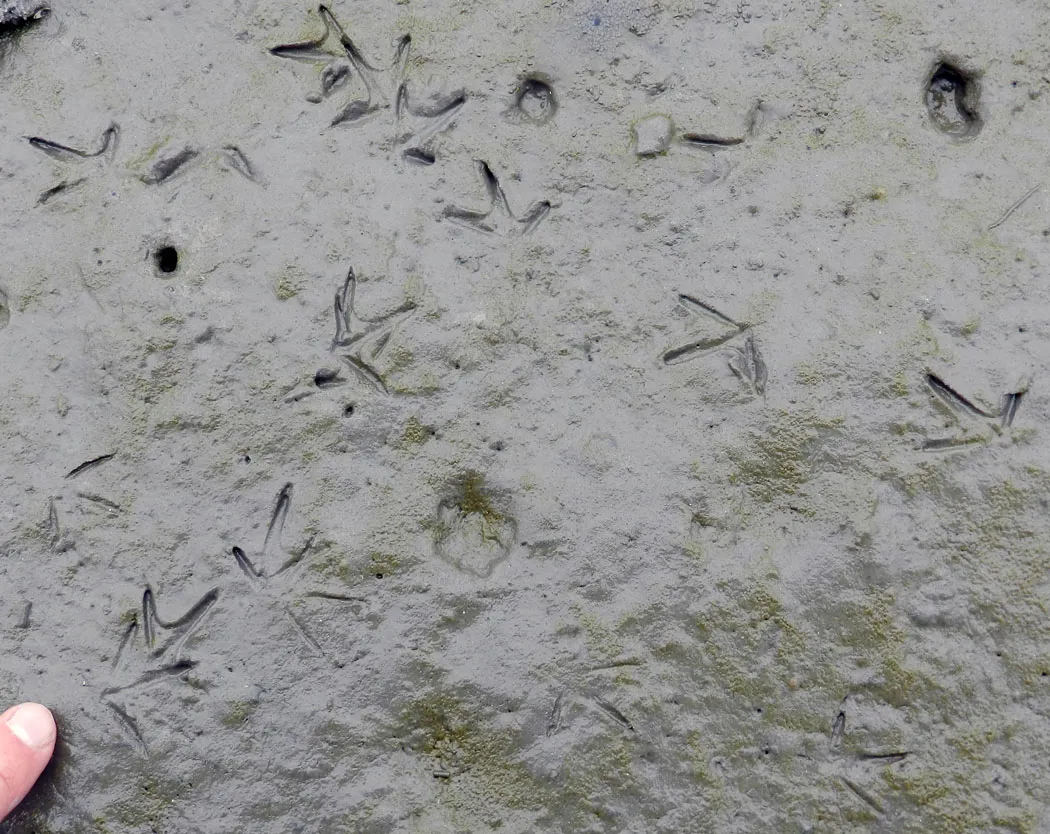
Semipalmated Plovers are called as such because only their two outer toes are webbed, ie. semi. The photos show the webbed tracks and the partial webbing of the toes.
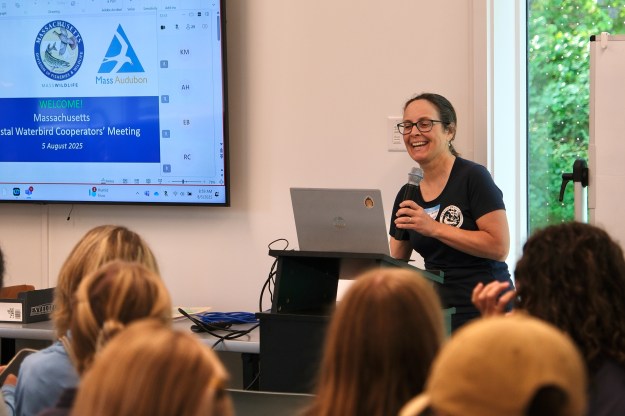
Carolyn Mostello, the Massachusetts Coastal Waterbird Biologist
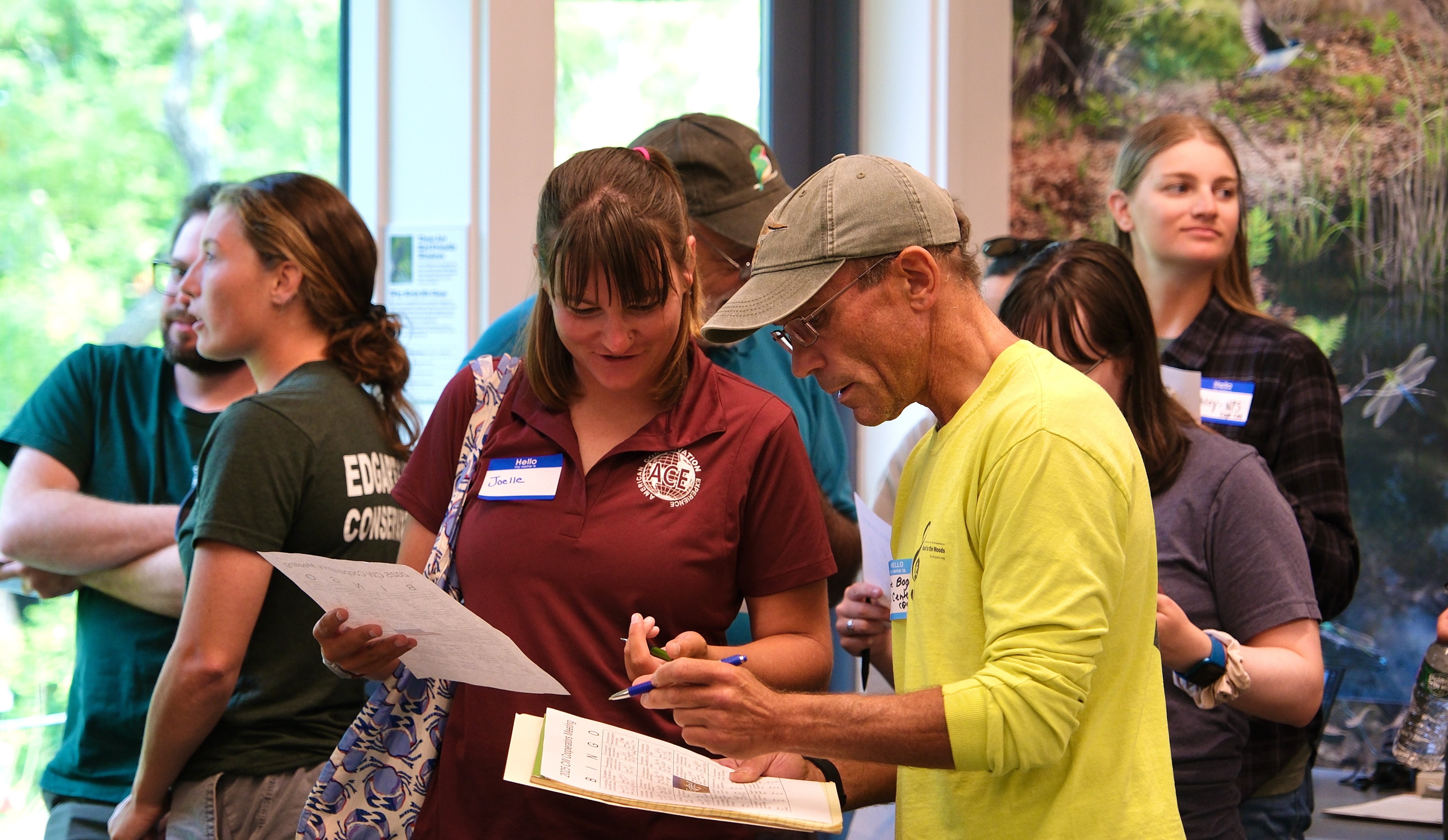
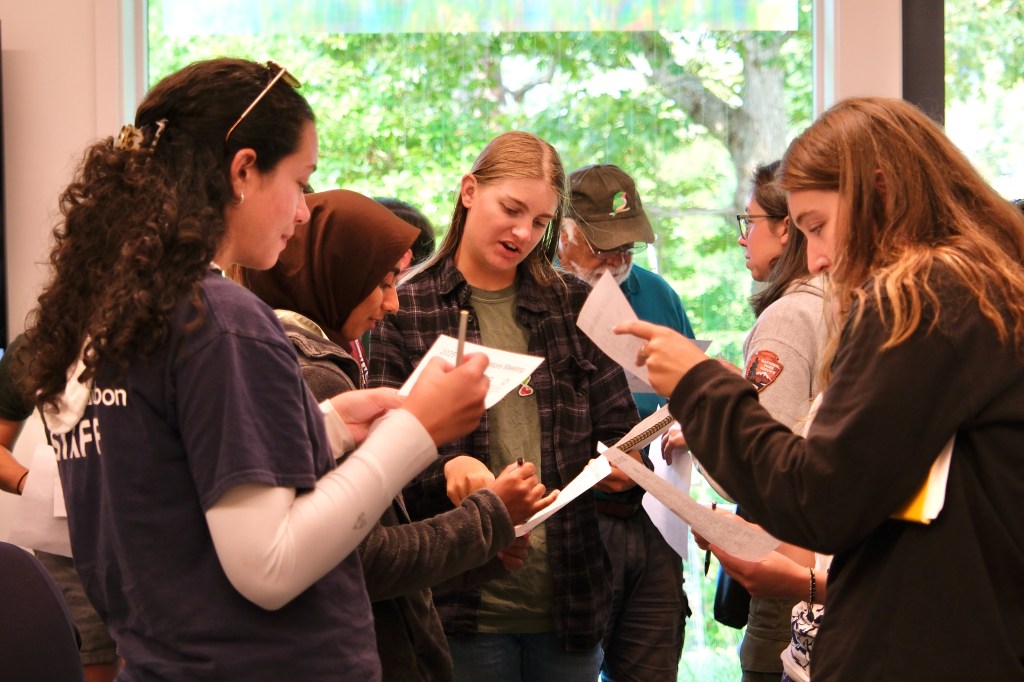
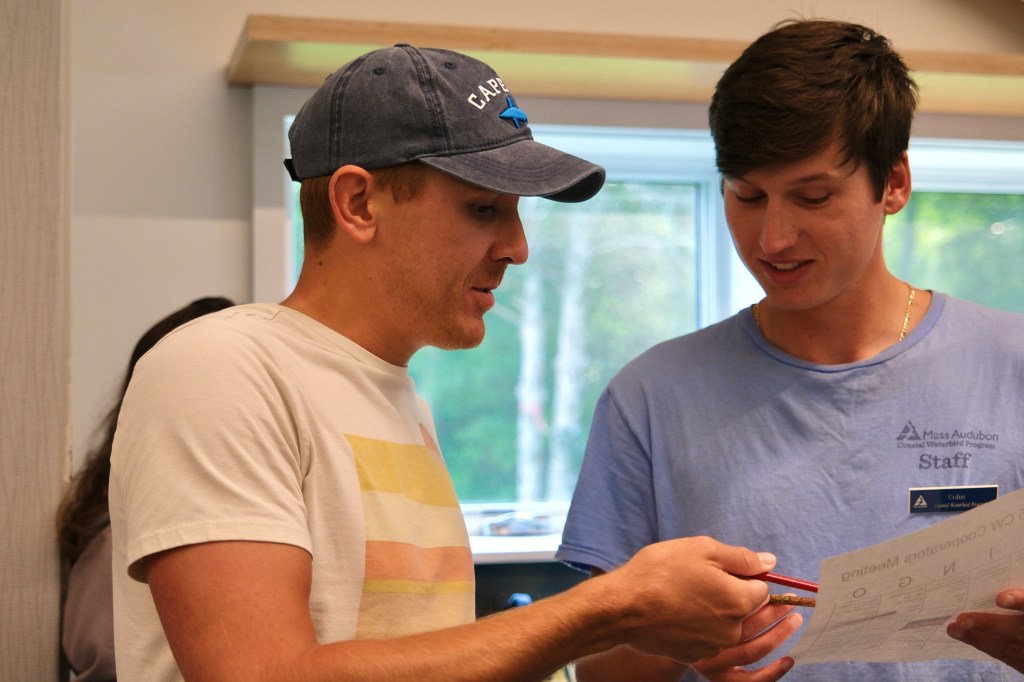
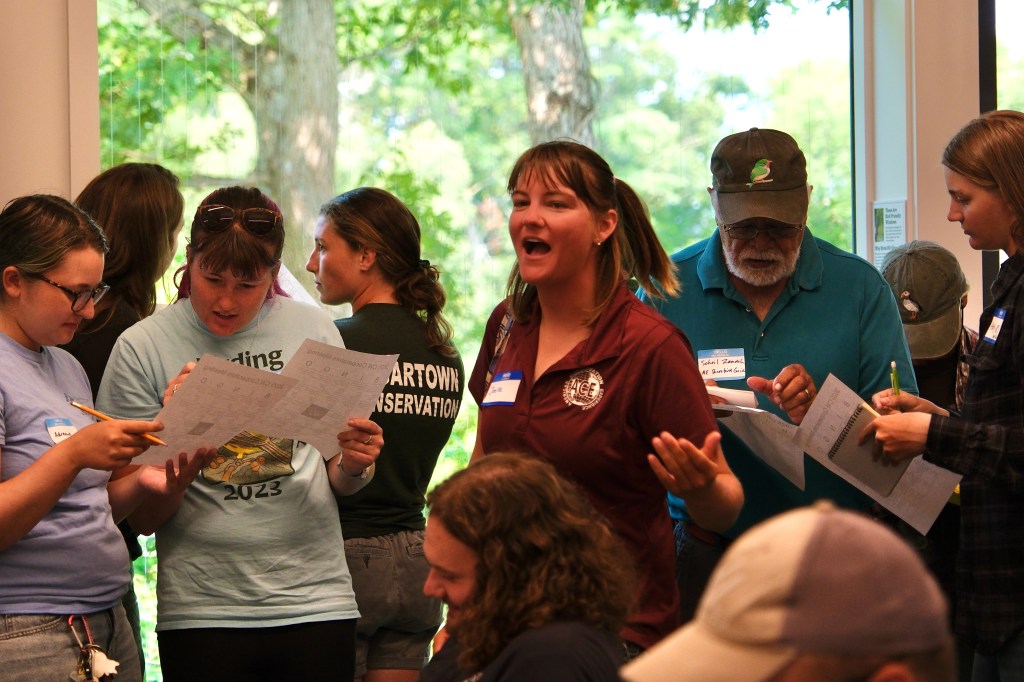
Last week I has the opportunity to attend the Massachusetts Coastal Waterbird Cooperators’ Meeting. The meeting is held annually to bring together people and organizations that are involved with population monitoring and conservation efforts on behalf of coastal waterbirds.
Representatives from the seven Massachusetts coastal regions gather to share information, anecdotes, and data collected throughout the season. This year the meeting was held at Audubon’s stunning Barnstable Great Marsh Wildlife Sanctuary; hosted by Audubon staff and Carolyn Mostello, the Massachusetts Coastal Waterbird Biologist.
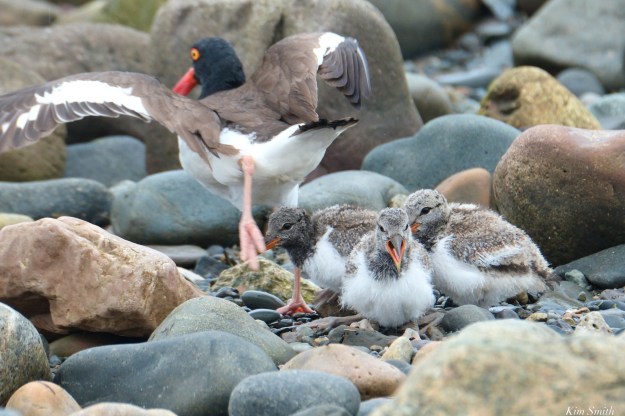
American Oystercatcher chicks
Threatened and endangered species such as Least Terns, Piping Plovers, Roseate Terns, and American Oystercatchers are given the greatest attention.
It’s fascinating to learn how we are all sharing similar experiences including egg predation by Crows, gulls, and Coyotes, disturbances of all shapes and kinds, low egg hatching, and storm washouts. Carolyn directs the event and she does an extraordinary job of weaving all the information together.
Reporting population numbers is followed by “Strange and Unusual,” a super fun section where field agents share funny/odd occurrences, photos, and videos. A special tribute was given to honor Shiloh Schulte, who perished in a tragic helicopter crash while studying shorebirds in Alaska. Shiloh Shulte was a beloved friend and mentor to shorebird conservationists every where and one of the coordinators for the American Oystercatcher Recovery Program. You can read more about Shiloh and his work HERE.
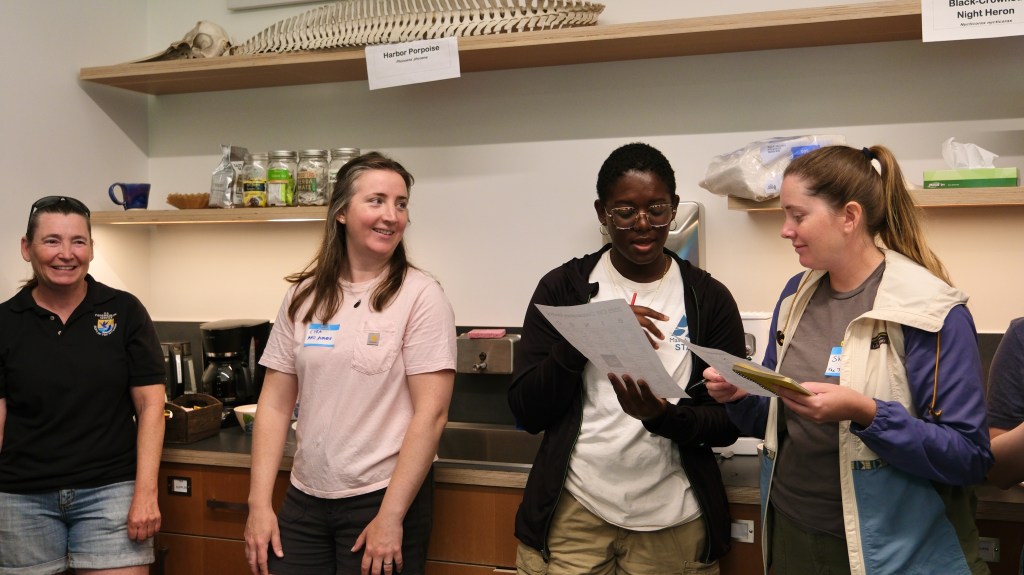
The afternoon programs are especially interesting with presenters sharing experiments, projects, and best practices, including two of special interest to our region; one on launching in-depth data collection on fireworks, and best practice for engaging with landowners. All the programs are wonderfully educational.
Handicapped Mom and Super Dad’s second attempt at nesting
Handicapped Mom and Super Dad’s second attempt at nesting
Despite an extremely challenging year, largely due to the fact that most of the nests around the State were washed out in a late spring storm, perhaps the most outstanding take-away is that this year again, Massachusetts is at the leading edge edge of Piping Plover recovery. We should be super proud of our state. While many regions are seeing very little, none, or even worse, declining numbers, Massachusetts is leading the way in Piping Plover recovery!
I hope you are having a lovely summer. I am so looking forward to these last three weeks of August and then we go into the wonderfully atmospheric months of September and October. Is there anywhere in the north Atlantic region where these months aren’t sublime?
I have held off on writing about PiPls all summer because we have had some very late season nesters. I’ll share an extensive report about the Plovers when I feel its safe for them and they are well on their way to fledging. In the meantime, I am very delighted to write that our Piping Plovers of Moonlight Bay has been accepted to the New Hope Film Festival and is screening on Monday, August 18th at 6:00pm. We are sharing the billing with another animal welfare documentary, The Ramba Effect, about an Asian Elephant and her 2,550 mile journey to her new home at an elephant sanctuary. If you are in the New Hope area and would like to see The Piping Plovers of Moonlight Bay and The Rhamba Effect, please go here: https://www.goelevent.com/NewHopeFilmFestival/e/AnimalWelfareDocumentaries
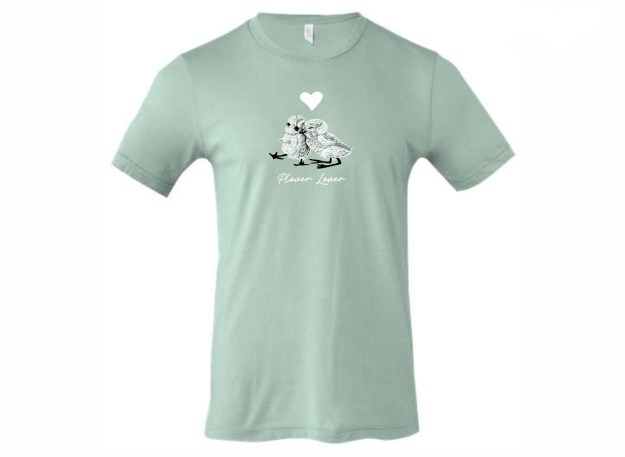
We also have all new Plover Lover T-shirts in all sizes and a great color, a sort of light sea green. For fans of West Coast Snowy Plovers, these chicks could easily pass for Snowy Plovers too. Please let me know if you like the new color. They are a beautiful quality, all cotton, unisex sizing from xs to xl. The Tees are 30.00 plus 5. shipping.
We have had some adorable “Butterballs” on the beach this summer. I define a Butterball as a fledgling that is so pudgy it looks nearly as big, if not bigger, than its parent and barely seems as though it can become airborne. Rest assured these Butterballs do fly, eventually ❤
Screenshot
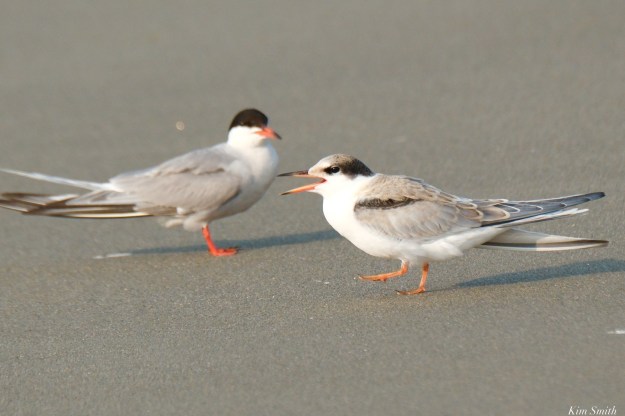
Common Tern fledgling squawking to parent, “Feed Me, Feed Me, I’m Starving!”
Fairly frequently when coming onto Good Harbor Beach to check on the Plovers, we find the birds off their nests and in utter panic. I have learned over time that there is only one reason why the birds along the one mile stretch of beach are frightened enough to leave their nests, in unison. Sure enough, in a moment or two, you hear the drone’s whirring motor first and then observe as it passes over the protected areas of the beach. Usually not one go-around, but the operators make repeated passes over the birds. Whether zooming at top speed or hovering, the Plovers are terrified by these modern day avian predator-like cameras.
It is illegal and considered harassment under the Migratory Bird Treaty Act to operate a drone over breeding areas. People are either unaware, feign ignorance, or even worse, are aware and simply don’t care. Countless times we have come onto our shifts to find all the birds in the area in complete meltdown mode. The birds think the drone is a predator that has come to eat their eggs, chicks, or themselves. There are even instances where a bird has flown after the drone and becomes injured. Today a man told me he was fully licensed to fly his drone over Good Harbor Beach. Drone operators need to understand that state, federal, and local ordinances supersede any licensing permit (see below for Good Harbor Beach regulations regarding drones).
There is accumulating evidence that the mere presence of drones causes direct harm to birds, not just during breeding season. The unfamiliarity and noise interrupts courtship, mating, and feeding. Entire tern and heron colonies have been abandoned due to drone disturbances.
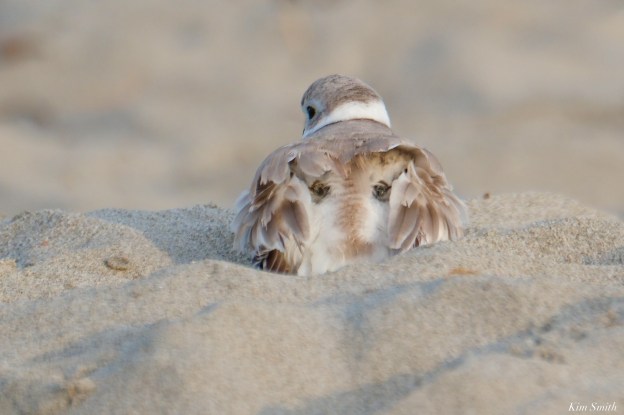
Plover in crouched position, frightened by overhead drone, and off her nest
This past spring there was a political rally at Good Harbor Beach. We thought it tremendous that people were gathering in support of their views and the birds had absolutely no problem with the steady stream of people entering the beach from all directions. However, the representative’s organizers began preparing a sign that could be read only from an aerial pov, which meant they intended to fly a drone over the beach. We asked the organizers to please not fly the drone but they ignored our pleas and told us the drone was only going to fly over the water and the drone would only be on the beach for a few minutes. Of course we knew that would not be the case and sure enough the drone flew repeatedly over the dunes, disturbing every bird along the entire length of the beach. After fifteen minutes of sounding their alarm calls, all the birds on the beach flew off in unison. The drone was documented flying low over the beach for 45 minutes. Clearly, a beach with nesting birds is not the place to hold a rally if a drone is part of the equation, particularly when there are other locations as easily accessed.
Over millennia, nesting birds evolved with the constant threat of avian predators, including hawks, falcons, crows, gulls, and eagles. They have not adapted to understand that a drone is not a predator, no matter how much the drone operator protests that the birds are unbothered by the drone and have become used to its presence.
It is imperative for the safety of the birds that they have a healthy fear of drones. The last thing we want are nestlings thinking that hovering airborne shapes are nothing to be afraid of.
In our collective experiences monitoring the Plovers, we come across unethical behavior not only on the part of drone operators but also by fellow wildlife enthusiasts. We have seen photographers mashed up against the symbolically roped off areas, despite massively long telephoto lens, parking themselves for hours on end, and also following the birds relentlessly up and down the beach, despite the bird’s clear signals it is trying to get away and/or tend to its chicks. Early on in the pursuit of my dream to document wildlife, I was part of crowds that photographed owls. Observing how sensitive are owls, I no longer film owls in known locations. If I come across an owl or rare bird when out filming, I take a few photos and footage and go on my way. Crowds and hovering persons are also the reason why I no longer post specific locales and keep location information general.
To ethically document wildlife requires thought and is also a tremendous responsibility. We can all do our part to protect the beautiful creatures in our midst by being mindful and sensing their boundaries, especially, especially during the time of year when they are breeding.
Thank you for taking the time to read this information. I hope your question is answered, and why. Please share this post. Thank you 🙂
Many thanks to City Councilman Scott Memhard for helping me locate the regulations on the City’s website!
City of Gloucester Good Harbor Beach Regulations for Model Airplanes, Radio Controlled Aircraft, Drones
Good Harbor Beach Parking Lot
1. Permitted to fly only when beach parking lot is not in operation (no attendant on duty).
2. Restricted to times when pedestrian and vehicle traffic are at a minimum.
3. Not permitted before 8:30am.
4. Shall fly over the parking lot and marsh areas, not the road or beach.
5. Noise levels will be restricted to an acceptable level (non-flow thru, expansion chamber mufflers only).
6. Pilots shall fly in a safe and responsible manner at all times.
7. Pilots will be responsible and liable for their actions.
8. Pilots will abide by regulations in effect and maintain a safe environment.
9. Pilots will be considerate of wetlands and wildlife.
We have wonderful news to share. Our Good Harbor Beach Piping Plovers are returning! Not only that, but the original pair that have been nesting at GHB since 2016 were the first to arrive. Both Mom and Dad appeared on the very same day, March 19th, the earliest date ever. At this time of year, my husband and I check the beach daily so that we can track from year to year when Plovers begin arriving. Last year I believe it was March 25th.
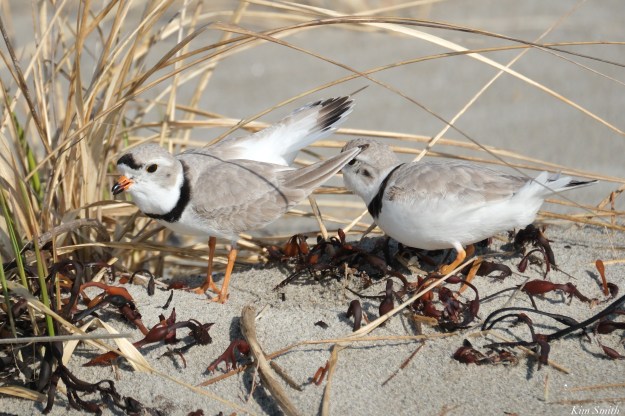
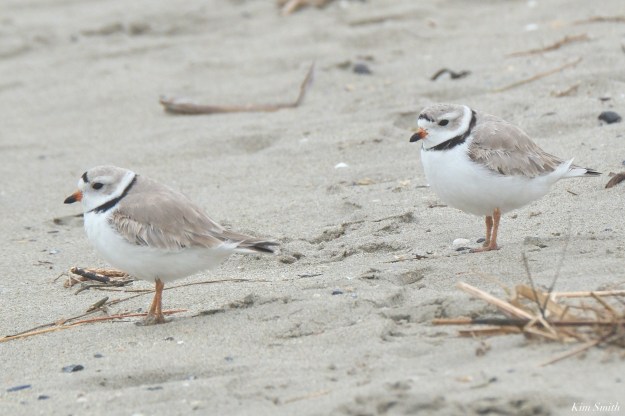
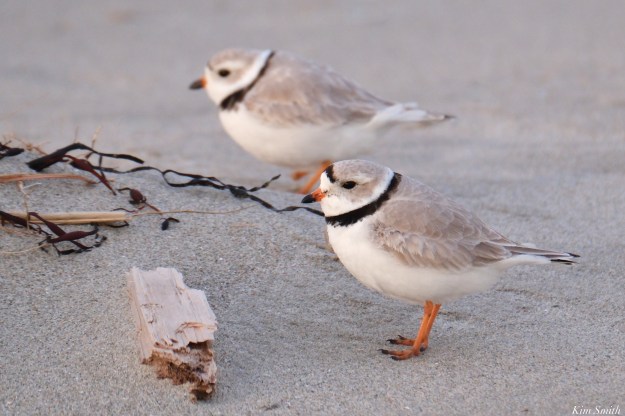
Super Dad and Handicapped Mom, March 19, 2025
A Plover love story for the ages is how my friend Todd describes it when Plover pairs nest together for many years. These two sweet Plovers must be at a minimum of 11 years old because Plovers don’t begin breeding until they are at least one year old. Eleven years is quite a ripe old age for Plovers as most live on average only five years. We wait with a combination of fear and excitement each spring, hoping and praying our Plover family makes it through another winter, especially now that Mom’s right foot is missing. She lost her foot several years ago after nylon fishing line and seaweed became tightly wound around her lower leg.
When you think about it, we have been through so much with this little Mom and Dad. The first several years especially were extremely challenging. Beachgoers did not yet understand how to help protect the birds and pets had the run of the beach. In fact, conditions were so bad on the beach that in 2018 Mom and Dad decided ‘enough with dog disturbances,’ and the safest place to nest was the GHB parking lot. Because of this, Massachusetts State and US Federal wildlife officials became heavily involved with helping to protect Gloucester Plovers and the local government began to take Plover protections more seriously. Little by little, things began to change for the better.
I remember our tender little handicapped Plover, nicknamed HipHop for his gimpy walk. It was Mom’s first season breeding without her right foot and she was extremely clumsy when transitioning to get in and out of the nest and when she was snuggling the chicks. I think she must have injured HipHop somehow because his injury manifested itself when he was about ten days old. Mother and chick were quite the pair with their hip hopping gaits. We thought HipHop would never grow to the size of his siblings and wondered if he would ever be able to fly. Mom departed early as is not unusual for females to begin migrating before their mates. Our Super Dad stayed with HipHop for many weeks after and throughout the entire summer. Both departed around the beginning of September, but not until HipHop was flying just as well as his siblings.
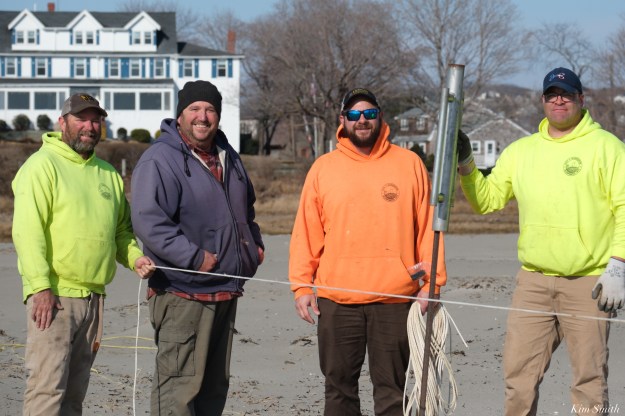
Dean Horne, Brian Watson, John Trupiano, and Adam Kelley installing Piping Plover protections
Thank you to the Gloucester DPW crew for installing the symbolic ropes and Plover signs. We appreciate everything the DPW does to keep Plovers safe and our local beaches looking beautiful!
If you happen to see Plovers on the beach, please give them lots and lots of space. Know that they are weary from the long migration and need to rest and refuel before ‘setting up house.’
Piping Plovers are returning to beaches all along the Atlantic Coast. The addendum to this note is for several new Plover friends from beaches in Maine and New Jersey who have written to ask how they can better help their community’s Plover families successfully fledge chicks.
Happy Spring from Ploverville!
Warmest wishes,
Kim
Actions that communities and beachgoers can take early in the season to help Plovers successfully breed include the following. I can not stress ‘early in the season’ enough. The earlier the Plovers nest without disturbances, the earlier they will begin laying eggs, and the earlier the chicks will fledge and begin migrating.
1) Disallow all pets on the beach, ideally beginning March 15th, April 1st at the latest.
2) Install symbolic roping around known Plover nesting areas by March 15th.
3) Install informational signage on beaches where Plovers nest by March 15th.
4) Do not permit off-road vehicles on beaches where shorebirds are nesting.
5) Do not rake the beach. Beach raking destroys a vital food source and machines can scoop up and kill chicks that can’t yet fly out of the way of danger.
6) Respect symbolically roped off areas. Do not play ball close to the roping. It is against state and federal law to run into the nesting area to retrieve a ball or for any other reason. Do not allow pets to run through the roped off areas and do not cross the roped off areas to take shortcuts through the dunes.
Thank you to all who attended our documentary screening of The Piping Plovers of Moonlight Bay on Sunday afternoon. We had a terrific group of attendees, both very generous and wonderfully engaged in the Qand A following the screening. I loved discussing Plovers and filmmaking with our guests and appreciate so much everyone who took the time out of their busy schedules to come and support the film.
Many, many thanks to Sarah, MAGMA’s founder and director, for hosting the event. In addition to offering a range of youth and adult dance classes, MAGMA provides an exceptional space for the community. Sarah hosts a range of events including films, dance performances, and local musicians, from punk bands, to string quartets! See MAGMA’s upcoming events here.
A very special shout out to Piping Plover Ambassadors Jonathan and Sally for their continued support and kind generosity. They provided all the beverages, Jonathan made an excellent bartender, and they both made everyone feel very welcome.
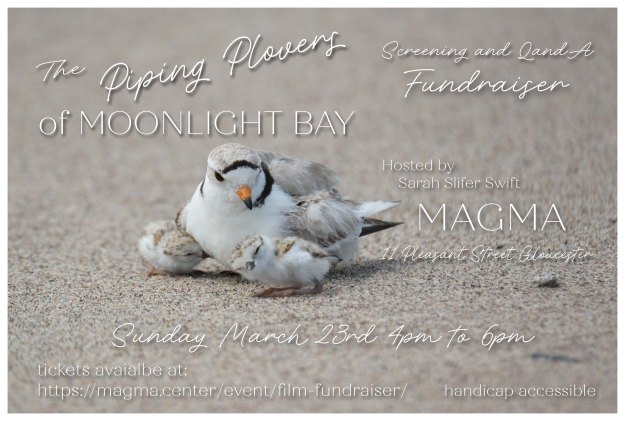
I hope to see you Sunday at our film screening fundraiser. Refreshments will be provided and following the screening, we’ll have lots of good discussion and wonderful news to share.
Although the postcard says handicapped accessible, unfortunately the elevator is now temporarily not working. Please let me know if you have purchased tickets and can no longer attend due to inaccessibility.
The Piping Plovers of Moonlight Bay is a 57-minute narrated documentary by Kim Smith that tells the story of the Piping Plover as it unfolds along the North Atlantic coastline. The film features a pair of courageous Plovers that overcome life-threatening obstacles while nesting at one of the region’s most popular beaches.
On Sunday March 23 at 4pm, MAGMA will host a fundraiser to help support the production and distribution of the film. This evening will include a showing of the film and a Q & A with filmmaker Kim Smith. Refreshments will be served. Suggested donation for this event is $50 (or what you can afford). For tickets please go here.
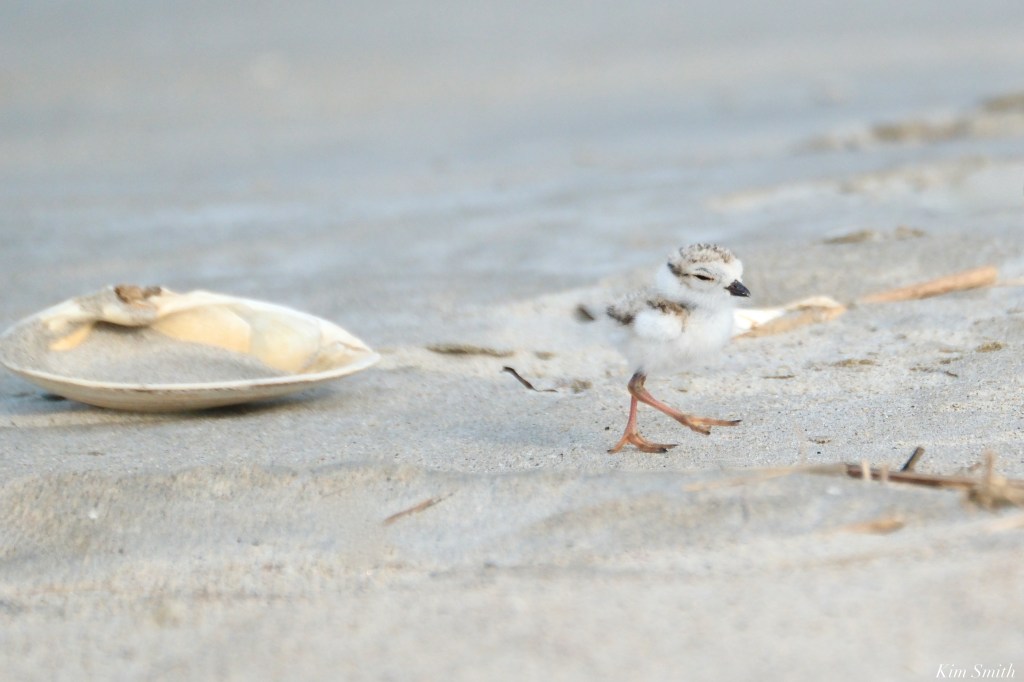
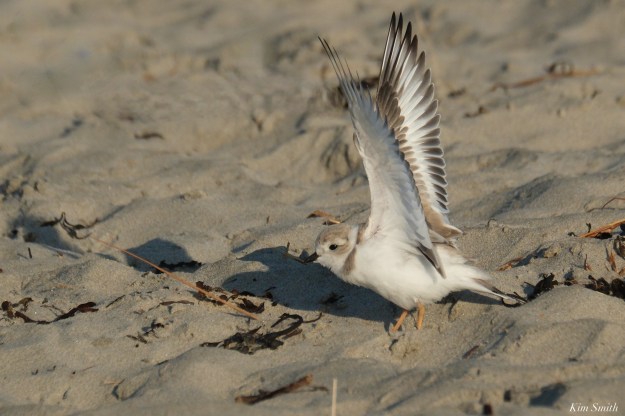
Each spring, northward migrating Atlantic coast Piping Plovers return to breeding sites located from North Carolina to Newfoundland. Amazingly, nesting often takes place on public beaches, where anyone can observe their beautiful life story unfolding. But in such areas, where people enjoy a full range of recreational activities, nesting and raising chicks is a perilous occupation.
Set against the backdrop of the ever-dynamic Atlantic shoreline, the documentary illustrates how conservation partners have provided safe corridors that allow these highly vulnerable birds to raise chicks to fledge at even the most well-loved beaches.
The Piping Plovers of Moonlight Bay is a film for all ages, and was created to inspire a love for wild creatures and their habitats, and to develop a deeper understanding of the vital role that wildlife play in our interconnected ecosystem.
Every stage of the Plover’s life cycle is experienced in vibrant HD and 4K close-up, from egg to chick to adult.
Production and distribution of The Piping Plovers of Moonlight Bay will be made possible by tax-deductible contributions from individuals, corporations, foundations, and public agencies.
To date, among other generous donations, we have received a leadership grant of $15,000 from the Massachusetts Division of Fisheries and Wildlife.
Gifts for The Piping Plovers of Moonlight Bay will support post production and distribution costs, color and sound editors, picture mastering, studio time, festival fees and applications, music and map rights, and an underwriting agent to bring the film to the wide audience of public television. Our goal is to raise $115,000.


















 The Piping Plover Project