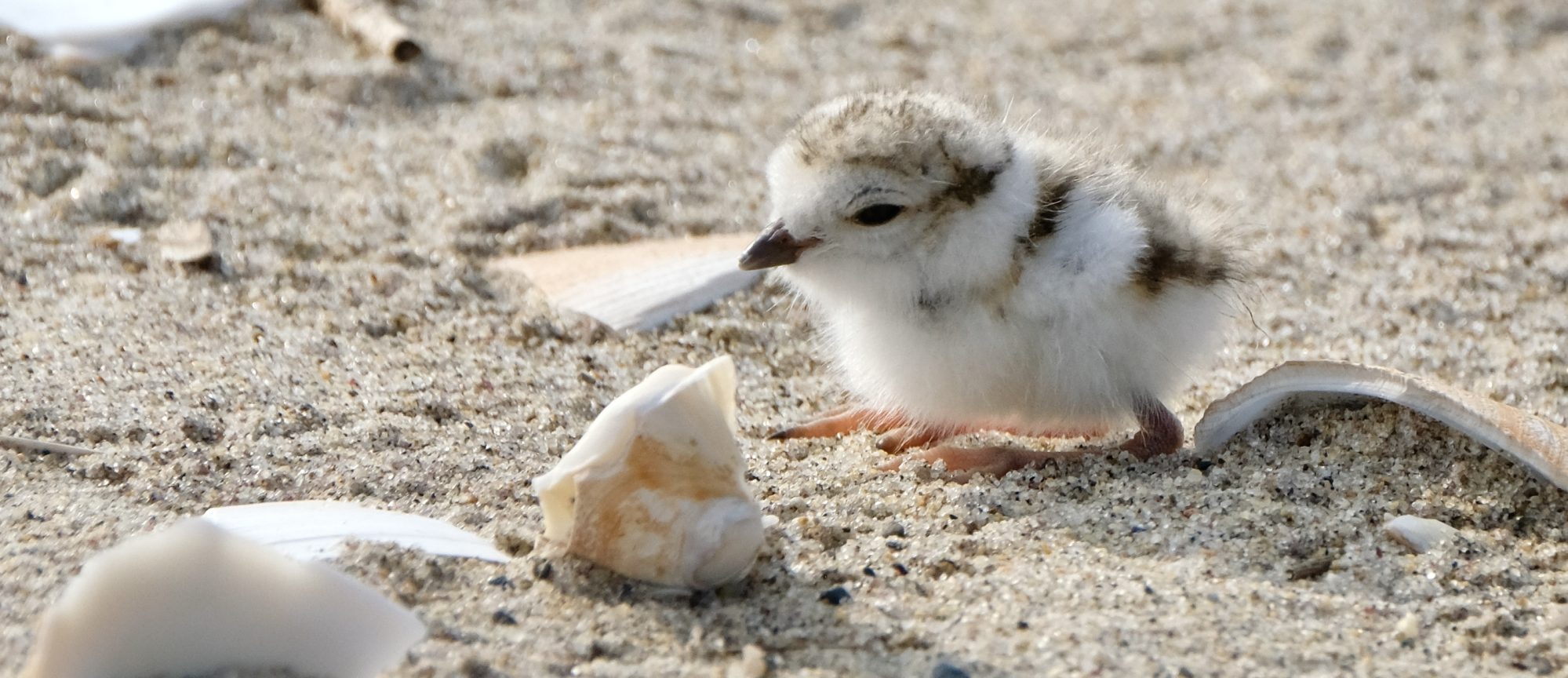
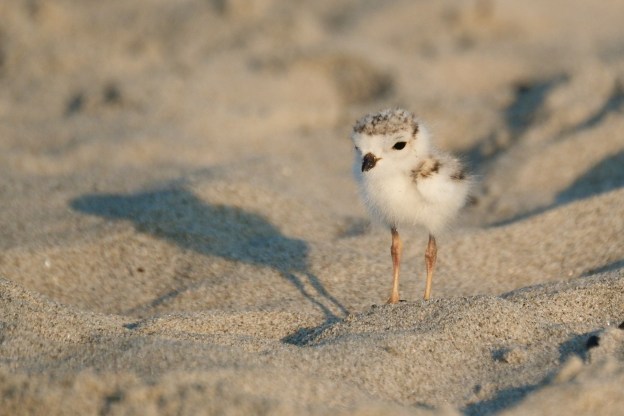
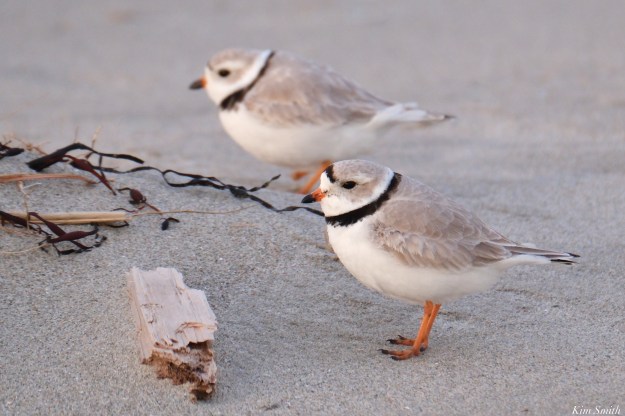
Happy Bday to our 45-day-old Piping Plover fledgling! He/she is the last of the Good Harbor Beach flyers. The photo/video was taken on Thursday when the little one was 42 days, or six weeks old. This is the age when we typically see them head out for their southbound migration. He’s still here as of Saturday but we are hoping to not see him any day now 🙂
I am very sorry to share that the rescue Plover did not survive. Tufts wrote that the chick had multiple chronic healed fractures and that the wing was held in a permanently drooped position. He would never be able to fly. I was at first feeling extremely low about this but both our partners at Audubon and Lis from DCR wrote that if left on the beach its demise would have been very traumatic and, if not eaten by a predator, would slowly starve to death.
Thank you so very much to everyone who wrote with well-wishes for the injured Plover.
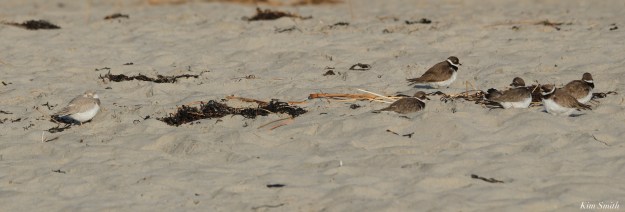
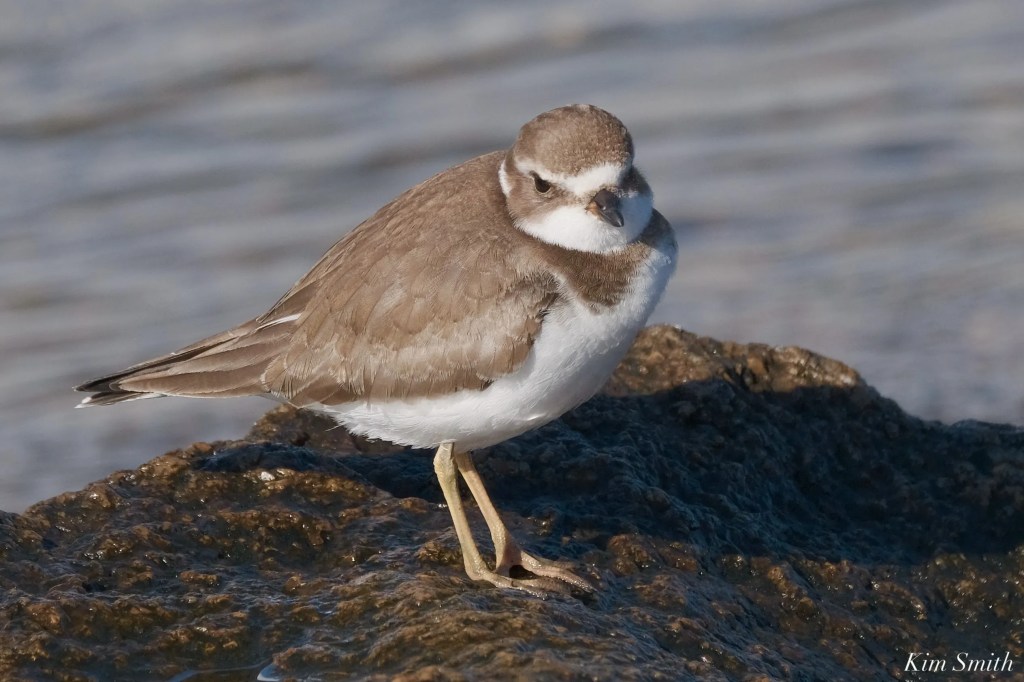
Our youngest fledgling has resurfaced at Good Harbor Beach! He/she had not been since the morning of the fierce hail and rain storm but there she was in the soft sand today, preening and sleeping alongside a mini flock of Semipalmated Plovers. Will they migrate south together? Piping Plovers are reportedly solitary but are often seen during the non-breeding months foraging in mixed groups of Semipalmated Plovers, Sanderlings, and Dunlins. Several years ago, during their southward migration, I saw a flock of a dozen Piping Plovers tucked in with several hundred Semipalmated Plovers, all resting on the upper part of the beach.
39 day old Piping Plover fledgling with Semipalmated Plovers
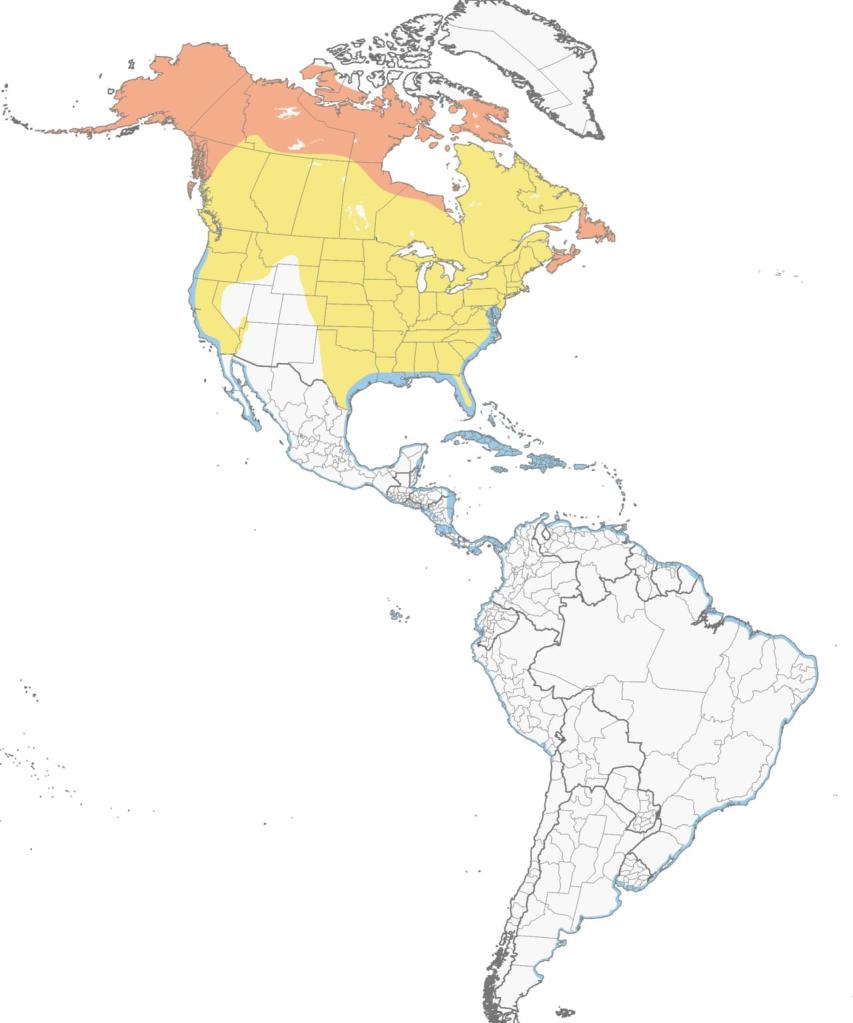
Semipalmated Plover range map – orange = breeding, yellow = migration, blue = wintering grounds
You can see from the map that the range of Semipalmated Plovers is vast when compared to Piping Plovers. They nest in subarctic and arctic environments and that is why we do not see them nesting at our local beaches. August is the peak time of year for the Semipalmated Plover’s southbound migration and we have seen many at Good Harbor Beach over the past month. Partners in Flight estimates the global population to be about 200,000 while the Piping Plover population as of 2020 was only about 8,000 adults.
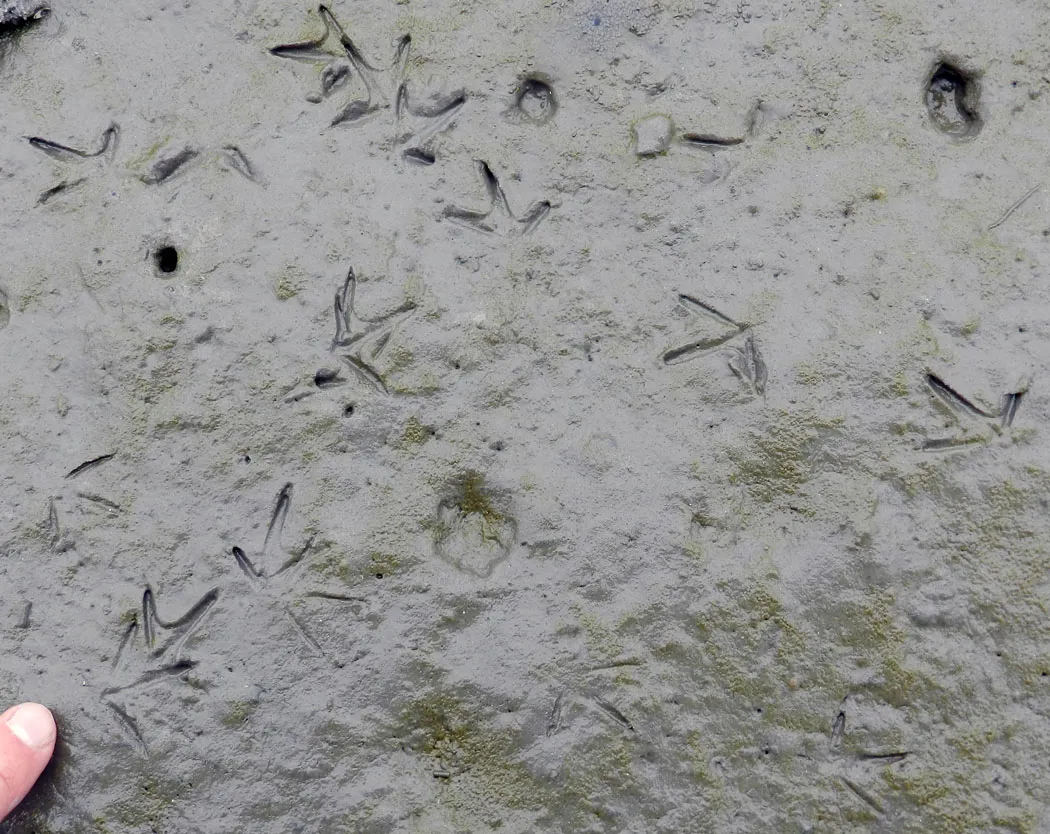
Semipalmated Plovers are called as such because only their two outer toes are webbed, ie. semi. The photos show the webbed tracks and the partial webbing of the toes.
Our Plover partners at Audubon received a call over the weekend that there was a Piping Plover at Coffins Beach with a broken wing. Plover Ambassador Deborah B located the Plover yesterday afternoon and Charlotte and I headed over to Coffins. Sure enough, its left wing was dragging on the ground but it appeared otherwise in good shape, foraging and running the length of the beach. It also seemed very bonded with another Plover, possibly a sibling.
Through Carolyn Mostello, the Massachusetts Coastal Waterbird Biologist with Mass Wildlife, we received clearance to rescue the Plover. Because Plovers are listed as a threatened species there are specific protocols that must be followed before handling the bird. Next we needed to get the go ahead from Tufts Wildlife Clinic that they could at this time accept the Plover.
After the all clear, Lis Kernan , Mass DCR Shorebird Recovery Program Coordinator, and I met at Coffins. We quickly found the Plover. Lis had brought two nets and she expertly guided me on how we could safely steer the bird into the nets. She was soooo fast and in no time, the bird was safely tucked into a waiting cardboard box outfitted with a soft towel, as was recommended by local wildlife rehabber Jodi Swenson from Cape Ann Inc..
As I was driving the little one to Tufts Wildlife Clinic in Grafton he/she began piping. It wasn’t the sharply piercing warning call Plovers make when stressed but the gentle sing-song piping that we hear when they are communicating with one another. I think it was calling to see if there were other Plovers in the vicinity. I responded (with words, not piping) and we seemed to have a back and forth conversation but then I wanted it to conserve its energy and stop piping. I tried singing lullabies to see if that would soothe its little soul, but he kept piping all along until the car stopped.
A very kind staff member, Patrick, was waiting at the clinic. He provided us with a case number so that we can check in periodically. If all goes well, it should take about three weeks for the broken wing to heal and then several more weeks to learn how to fly. I am afraid it will miss peak migration and see a road trip to North Carolina in our future 🙂
As Jamie from Audubon mentioned, today was a great example of cross-organization collaboration to help an injured creature.
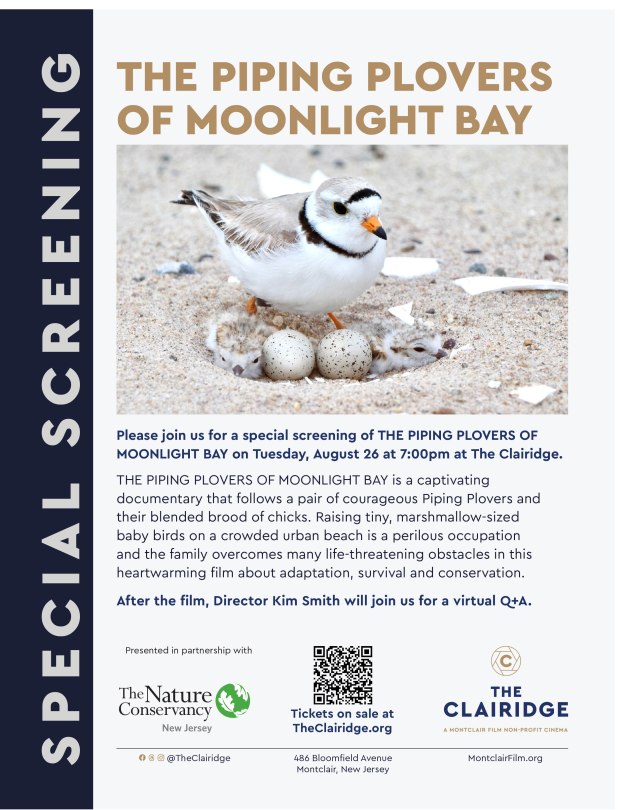
For my New Jersey Friends and Family – Montclair Film and The Nature Conservancy of NJ are hosting a special screening of The Piping Plovers of Moonlight Bay on Tuesday, August 26th at 7pm. QandA with me to follow. To purchase tickets, please go here: https://theclairidge.org/events/the-piping-plovers-of-moonlight-bay/
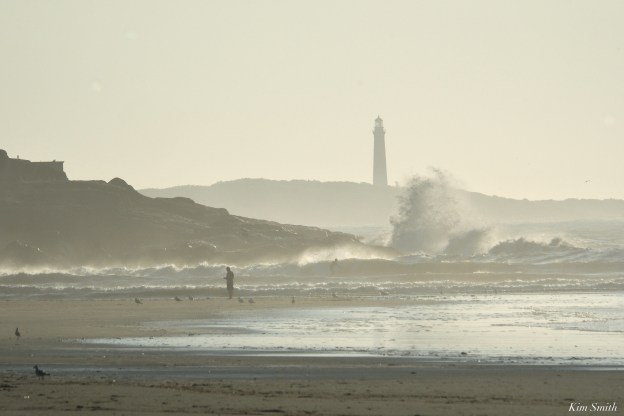
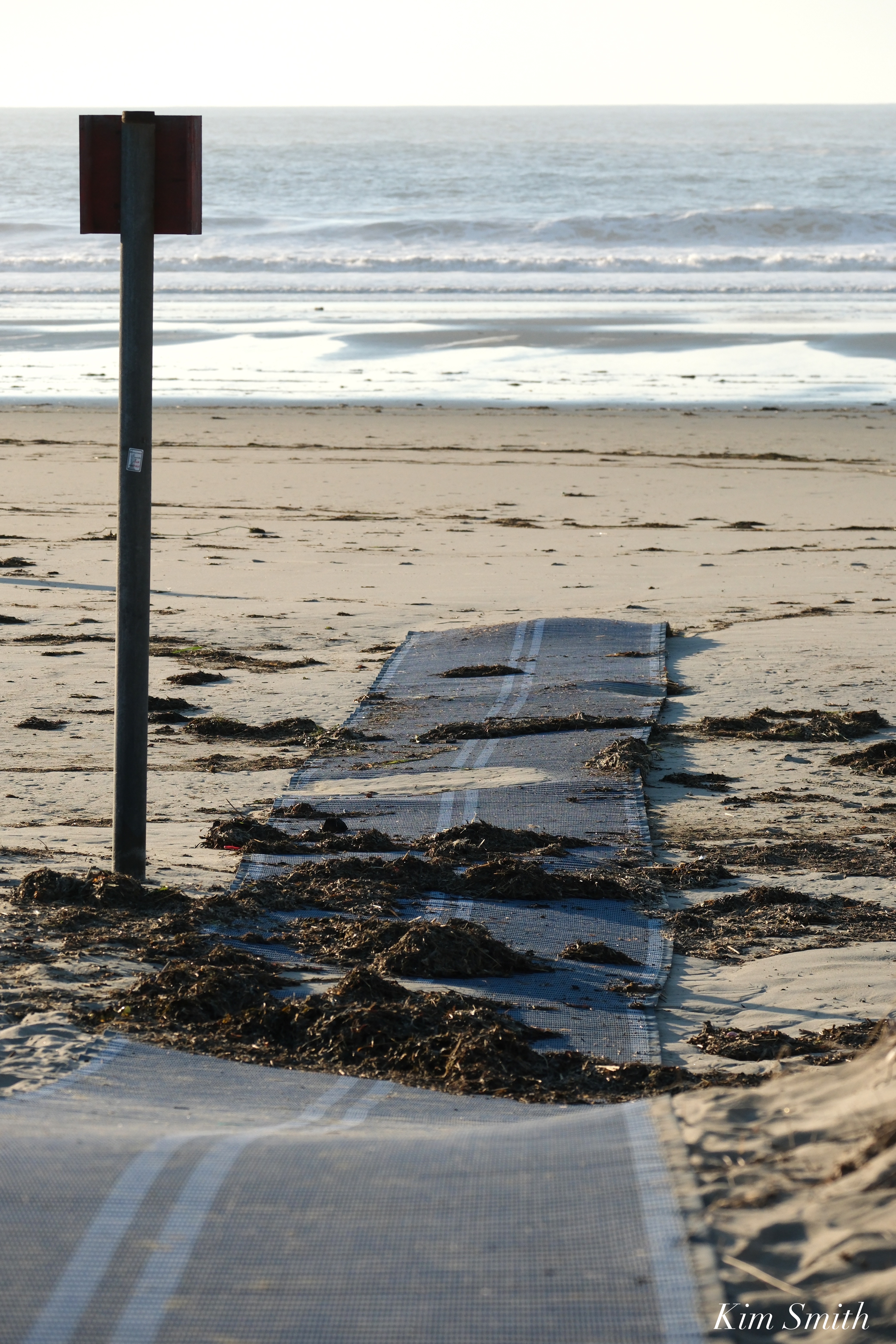
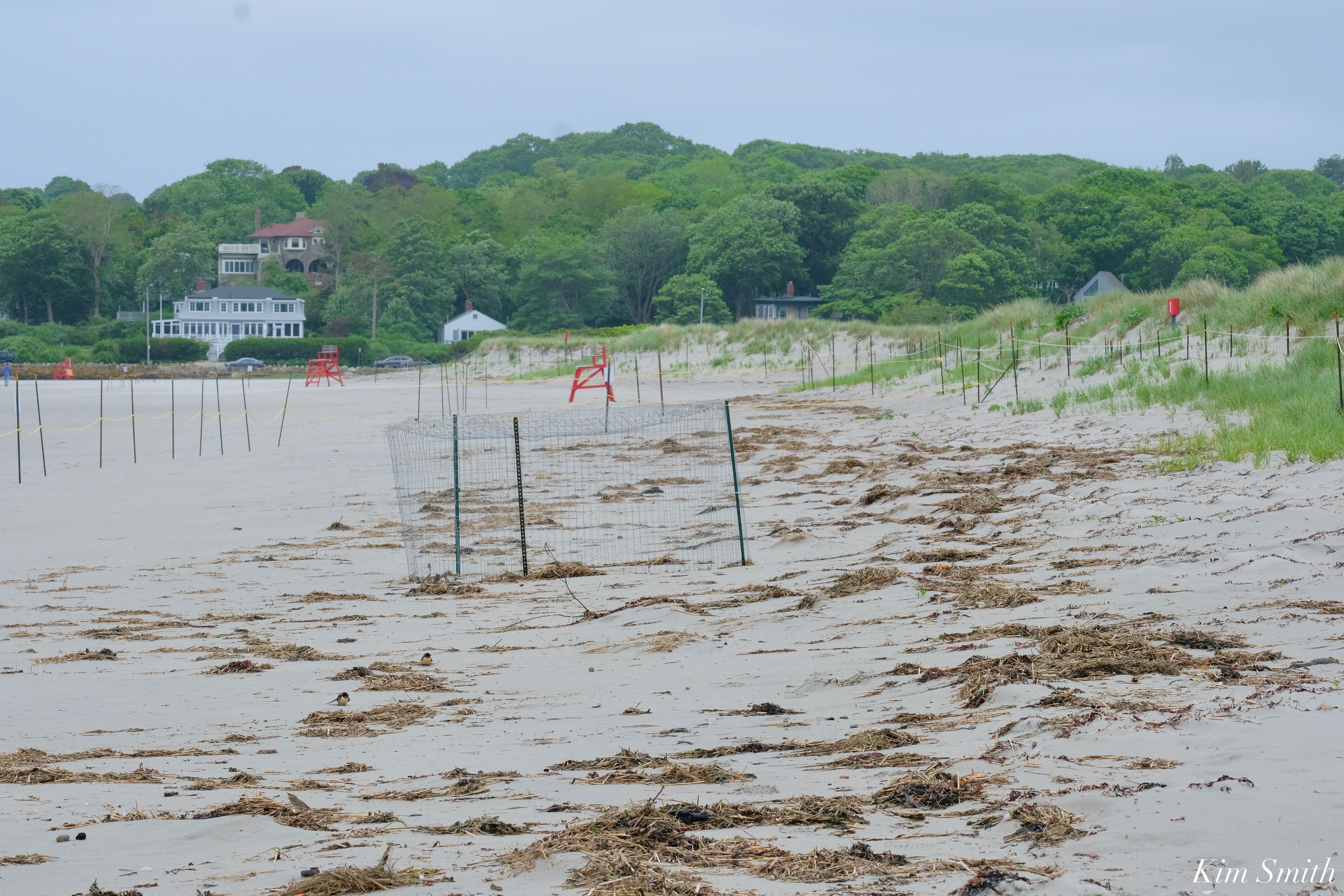
We are having a wind/wave/tidal event at Good Harbor Beach and I think the tide may even be higher tonight than last night. There was absolutely no beach last night, the tide came up to the base of the dunes and the water went well up onto the boardwalk paths. It was beautiful and atmospheric this morning at GHB but also concerning to see such a high tide so early in the hurricane season.
Note the seaweed goes past the roped off areas into the dunes –
Mobi mats in the boardwalk paths covered in seaweed
I am filming at coastal locations south of us and just outside of Boston and every beach today had waves equally as giant and red with seaweed as are the waves at GHB, including Revere, Nahant, Winthrop, and Swampscott.
Left to right – Fierce Dad, Mystery Plover, and chick (sleeping)
I can tell from the Plover’s foot prints in the sand that they spent the night up into the dunes, as far away as they could get. Our Fierce Dad and his offspring have been joined by a mystery Plover and the three are relishing the seaweed deposited from end to end.
According to the Gloucester City ordinance code, it is a $300.00 fine (doubled during the season) to bring a dog to Good Harbor Beach. For example, if you bring two dogs, that is 600. x 2 = $1200.
But stating the fines right off doesn’t explain why.
Health and Safety
Our beaches are wonderfully filled with beachgoers during the summer months. Can you imagine adding dogs, either on or off leash, to the mix? Dog ownership is at a record high, much greater than even a generation ago. In 2000 there were roughly 68 million pet dogs, today there are about 90 million dogs. What if everyone who owns a dog brought theirs to the beach?
Let’s face the facts, a great many dogs are not on voice command. We have dogs jumping on children, knocking over the young and old, biting people, and getting into dog fights and biting each other. That is not a safe scenario for any beachgoer.
But what if the law were changed to allow dogs on leash?
We would have half abiding by the leash law and half saying “I left my leash at home,” or “I thought it was okay to let my dog off leash after 5pm,” or “I thought it was okay before 8am,” etc. etc. How do we know this? Because we already hear these statements during the off leash/on leash days at Good Harbor Beach.Pile of poop at the Good Harbor Beach snack bar area
Good Harbor Beach Footbridge
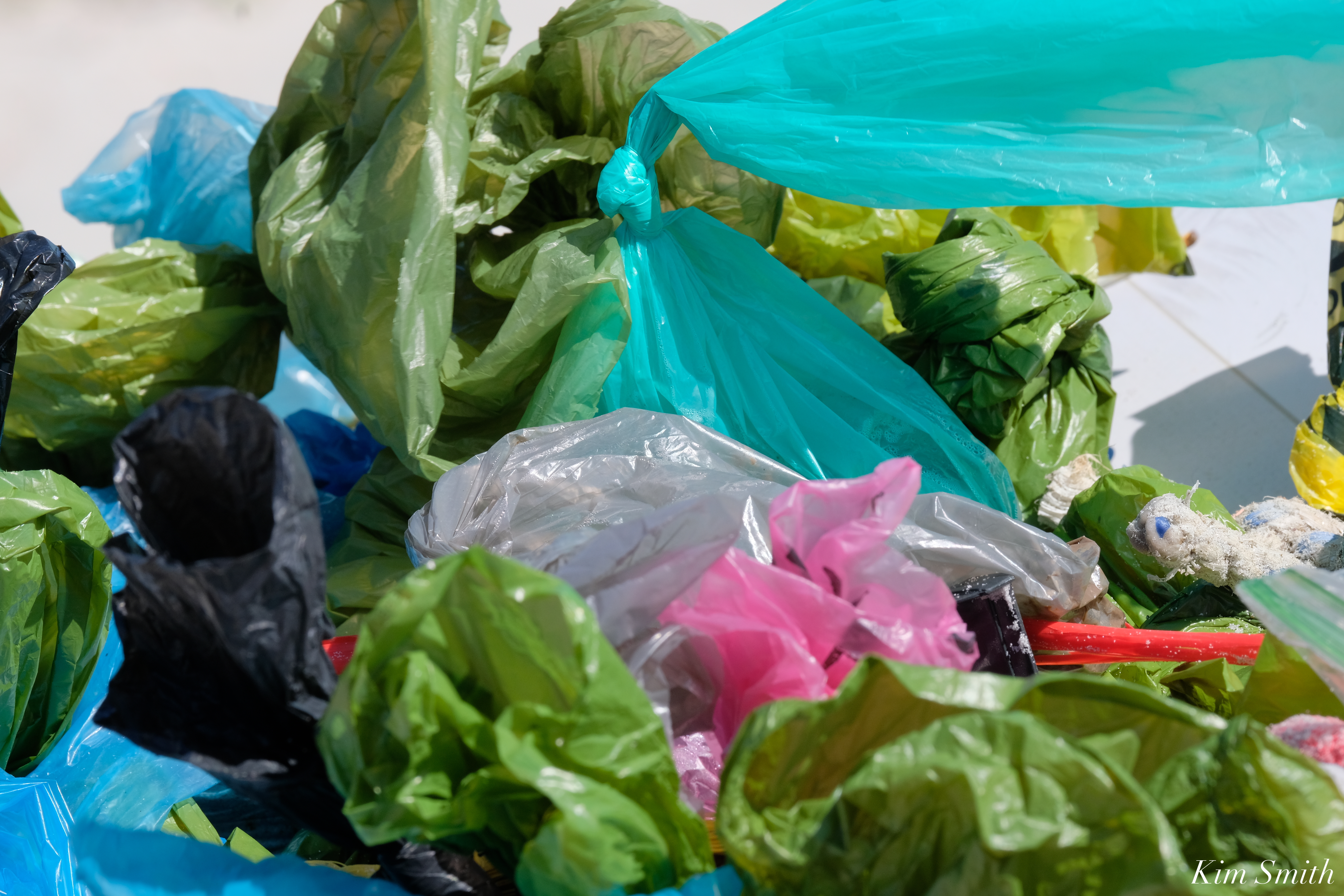
Dog Poop is a consequential environmental issue. During the season when dogs are allowed on the beach we see the gamut of poop-maintenance behaviors. Most people clean up after their pet. However, many people bury the poop in the sand or leave their poop bags behind. When someone leaves their bag by the footbridge, then other dog owners take it as a sign as a place to deposit their bag. The pile of dog poop in a rainbow color of bags grows and grows. Do we want beachgoers stepping in sand covered poop or being confronted with piles of dog poop? There is no poop cleaning fairy. It is left to our awesome DPW or one of the very nice volunteers, like Chris Cefalo, his brother, and Michael Cook who regularly cleans GHB to remove garbage and also the bags of poop.
Keeping Dogs out of the Dunes During the Growing Season Helps Protect the Dune Ecosystem
If you regularly visit Good Harbor Beach during the off season, you can’t help but notice, the “Keep out of Dunes” signs are frequently ignored by pet owners. There are many who do respect this vital habitat, but also many who don’t. Dogs running and playing vigorously through the vegetation tears at the roots and weakens the plants. Vegetation holds the dune sand in place and without plants the dunes continually recede.
Over the past several years, you may also have noticed the vast improvement in the overall health of the dunes. There is a direct correlation to keeping the symbolically roped off areas up through out the summer season and into the fall because by preventing people and pets from recreating right up to the base of the dunes, it allows just that much more room for vegetation to take hold, and is one fantastic tool in the tool box against fighting erosion.
Dog going pooh within nesting area
Keeping Dogs off the Beach Helps Nesting Shorebirds Survive
Last, but not least, dogs on the beach are a well-known threat to shorebird nests and especially to young birds that can’t yet fly to escape danger.
How so you may wonder? “My dog is so sweet and would never harm a baby bird.”
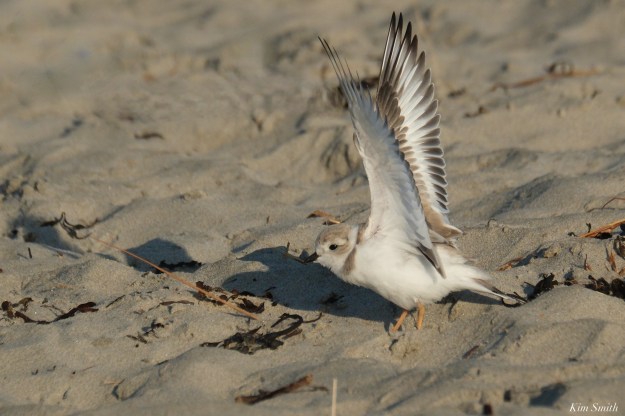
When there are baby birds on the beach, the Plover parents do their absolute utmost best to keep the chicks safe. The parents exhibit all sorts of distraction behaviors including dragging and fluttering their wings on the ground to fake injury, thereby encouraging the predator to follow it and drawing the threat away from their most vulnerable chicks.
Plovers cannot tell the difference between a domestic dog, Fox, or Coyote. Dogs bound exuberantly on the beach through nesting areas and Coyotes and Fox dig in the sand for eggs and chicks. The ever vigilant Plover parent will leave the nest and fly at any creature Canid. Often, both parents will fly away from the nest in a sort of tag team distraction method. But while they are busy defending the chicks from a member of the dog family, that is the perfect time for a gull, crow, hawk, or falcon to swoop in and snatch the eggs or eat the baby chicks. Crows focus on eggs and gulls not only eat the eggs, they also eat chicks at every stage of development, even fledglings that have grown as large as the parent. Coyotes eat both eggs and chicks.
Especially during pupping season, Red Fox scavenge the beach looking for shorebird eggs, small mammals, and birds to feed their growing family. Plovers cannot distinguish the difference between a Coyote, Fox, or domestic dog.
Fierce Dad and FairFeathered Mom tag team distracting a Herring Gull
As I am writing this message, please know that we still have young birds at Good Harbor Beach that can’t yet fly well enough to escape predators. This is extremely late in the season and is due to the tremendous loss of nests during the May Nor-easter; losses all along the coast of Massachusetts. Many of the nesting birds eventually re-nested and we are seeing their offspring. Shorebird managers across Massachusetts are contending with taking care of these late flying chicks.
Here are on Cape Ann we are blessed with many beautiful alternative locations to walk our dogs, including Crab Beach (adjacent to the Boulevard), which is open year round to dogs and dog owners.
If you would like to see scenes of Plovers displaying their fascinating distraction techniques and learn more about predators on beaches, please watch our film The Piping Plovers of Moonlight Bay, which I created specifically for people to learn more about how we can all help protect shorebird wildlife and their habitats. Our documentary is streaming on the PBS Passport AP 24/7. Anyone can become a member of PBS Passport by donating to PBS. It’s so worthwhile, especially for young children with curious minds. What other streaming service can you get for $5.00 a month!!
As I first wrote, it is a $300.00 fine and doubled during the season to bring dogs to Good Harbor Beach, so please dog owners, for your sake, for the health of the beach ecosystem, and for the safety of growing shorebirds, please do not walk your dog at Good Harbor Beach or any beach where there is precious habitat and baby birds. Thank you!The No Dogs from April 1st through September 30th signs are boldly displayed at every entryway to Good Harbor Beach
I am very delighted to write that our Piping Plovers of Moonlight Bay is screening on Monday, August 18th at 6:00pm. We are sharing the billing with another animal welfare documentary, The Ramba Effect, about an Asian Elephant and her 2,550 mile journey to her new home at an elephant sanctuary. If you are in the New Hope area and would like to see The Piping Plovers of Moonlight Bay and The Rhamba Effect, please go here https://www.goelevent.com/NewHopeFilmFestival/e/AnimalWelfareDocumentaries
First the bad news – our Super Mom and Dad’s nest was washed away during Thursday’s nor’easter. We are very sad about this especially as chick hatching was imminent.
Our Original Pair have never before lost a nest because of a storm however, several years ago, a pair at GHB did lose their nest due to wash out as it was in a very unsafe place, smack dab in the middle of the beach. That pair successfully renested.
We are much more fortunate than some beaches. Our Plover ambassador friends at Hull lost a total of 25 nests and the high tides have destroyed miles of their symbolic shorebird protections.
Super Mom and Dad after the nor’easter
Fierce Dad catching breakfast after the storm
Now for the good news – Piping Plovers often renest, especially when this early in the season. One pair was documented renesting a total of seven times in one season. And it appears as though Super Mom and Dad are preparing to do just that. After a day of looking lost and forlorn, Dad is making scrapes in the sand and calling to Mom. Producing a new batch of eggs is very taxing for the female and our Super Mom is already very vulnerable due to her loss of one foot. A gentle reminder that when you see Plovers on the beach, please give them lots of space to forage, and hopefully, make new eggs.
Despite the extremely high storm tide going all the way to the base of the dunes, Good Harbor Beach survived the storm fairly well and looks better after this nor’easter than any nor’easter that I can recall. Why you may wonder? As a direct result of the symbolically roped off areas in place for the Plovers, beachgoers and pets are restricted from recreating right up to the base of the dunes. This has allowed native vegetation to take hold, and in some areas, to thrive. This vegetation, such as beach grass and Sea Rocket, holds the sand in place and is our very best defense against rising sea level and the ravaging effects of the highest of tides and gale force winds.
The photos tell the story best
Compare the photos from storm damage in 2018 and how the dunes looks in 2024.Note how far back is the dune, the sheer drop off, and complete lack of vegetation. I recall a time when people were so very worried about how much beach we were losing each year to severe storm damage. That is no longer the case!
Click on the above photos from 2018 to enlarge and get a sense of how much the beach has filled in and how much healthier are the dunes.
Good Harbor Beach 2021, 2024, and 2025 – vegetation gradually taking hold and the sand is filling in.
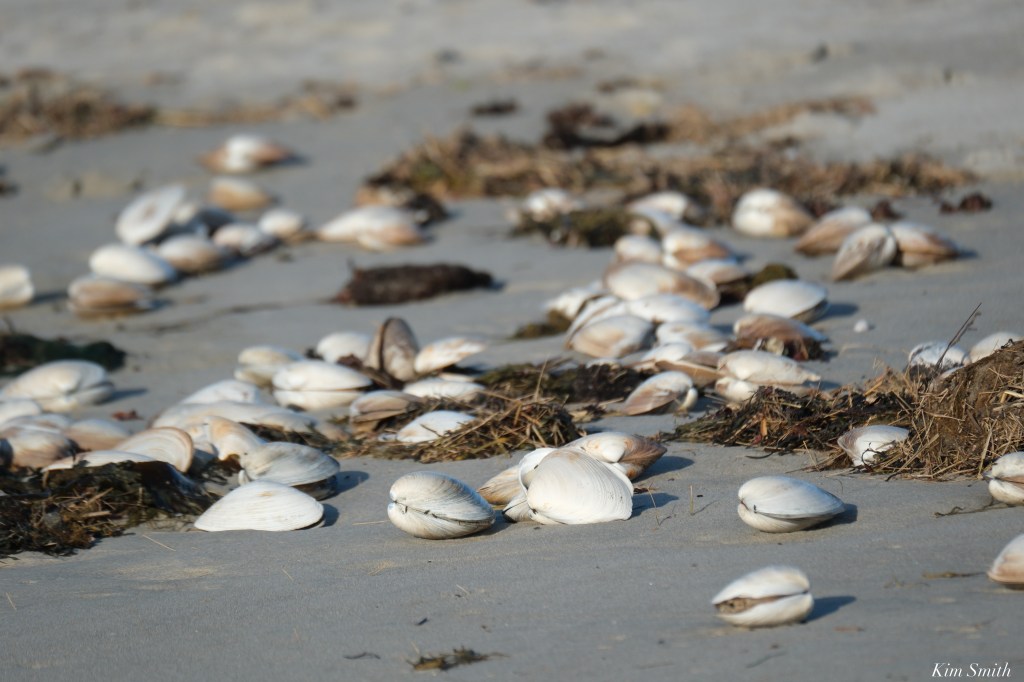
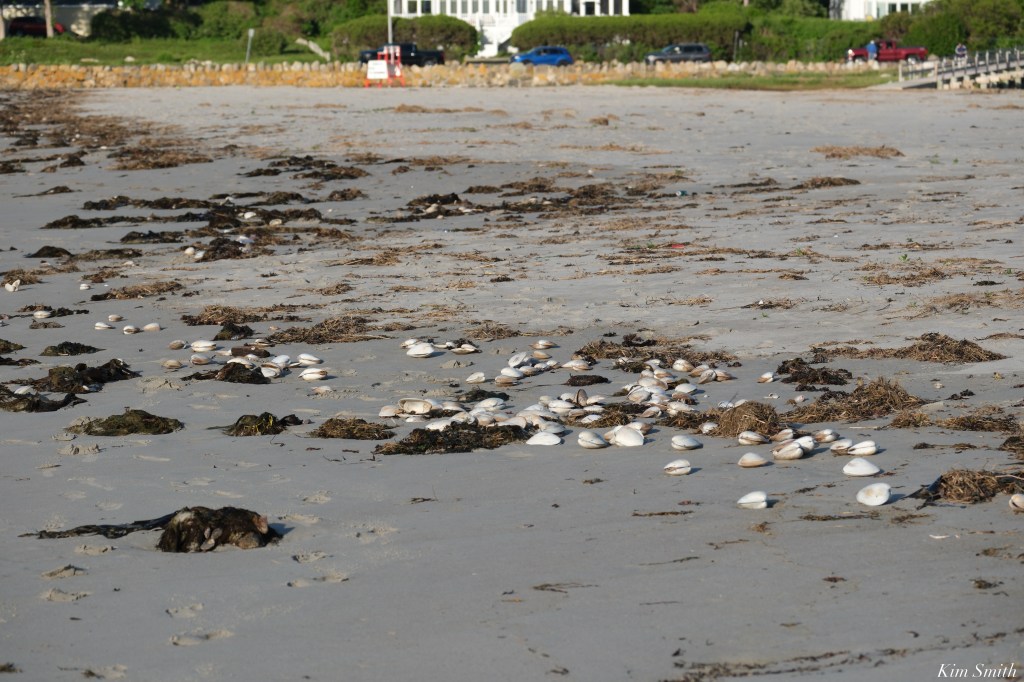
A plethora of Atlantic Surf Clams tossed ashore by the sea
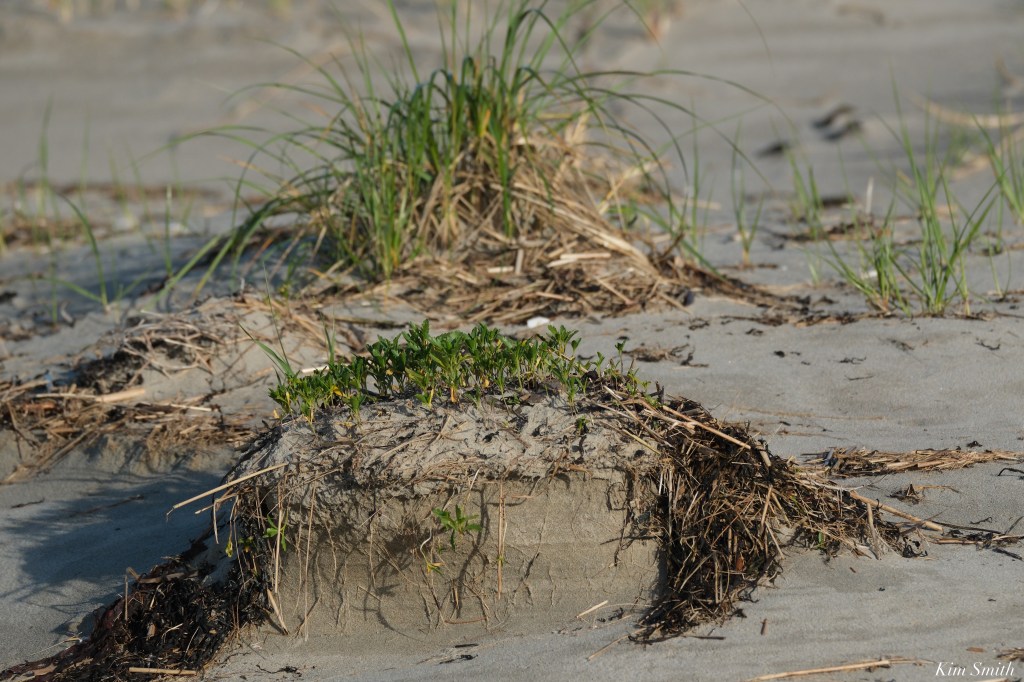
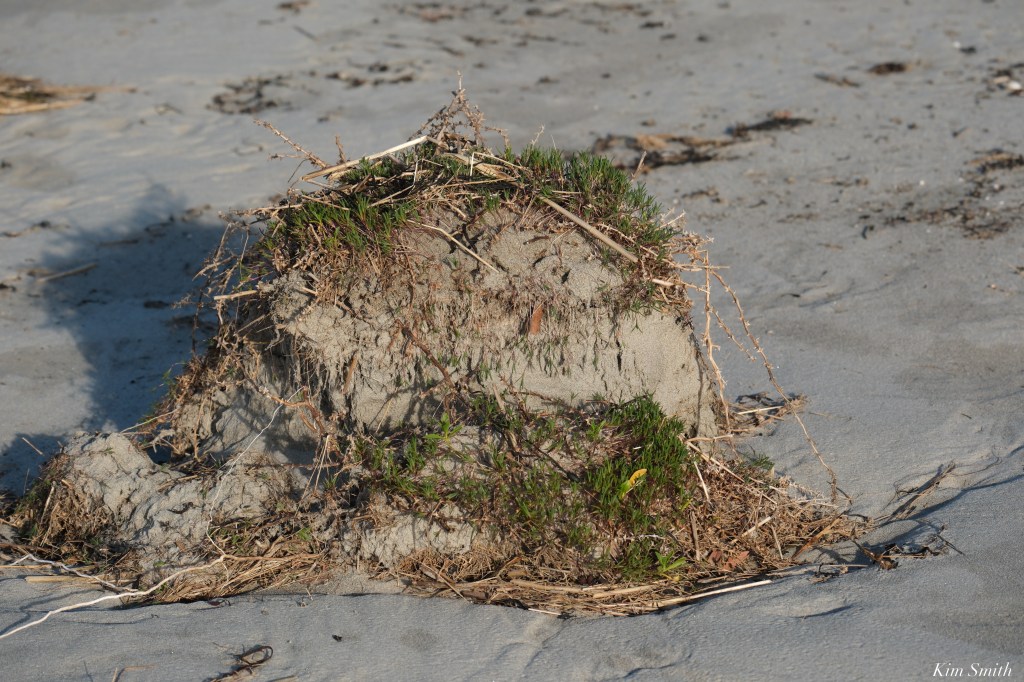
What are these peculiar mounds dotting the beach after the nor’easter? The photos are included to show how much the sand shifted during the storm and how vegetation helps keep sand in place
Soooo much seaweed at Brace Cove! The insects attracted to the drying seaweed is fantastic for wildlife, but get ready for super smelliness!
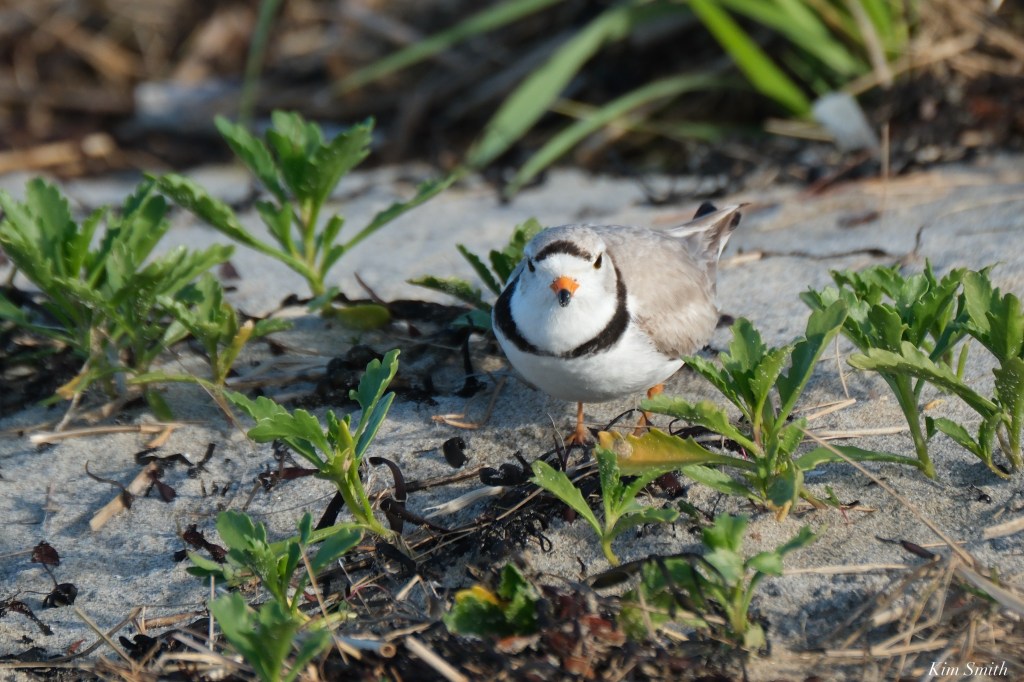
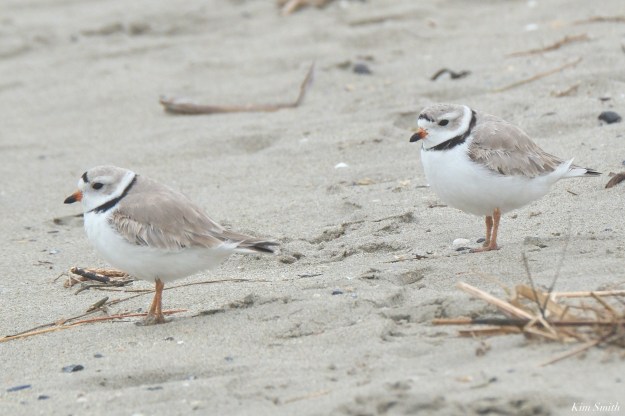
We have wonderful news to share. Our Good Harbor Beach Piping Plovers are returning! Not only that, but the original pair that have been nesting at GHB since 2016 were the first to arrive. Both Mom and Dad appeared on the very same day, March 19th, the earliest date ever. At this time of year, my husband and I check the beach daily so that we can track from year to year when Plovers begin arriving. Last year I believe it was March 25th.
Super Dad and Handicapped Mom, March 19, 2025
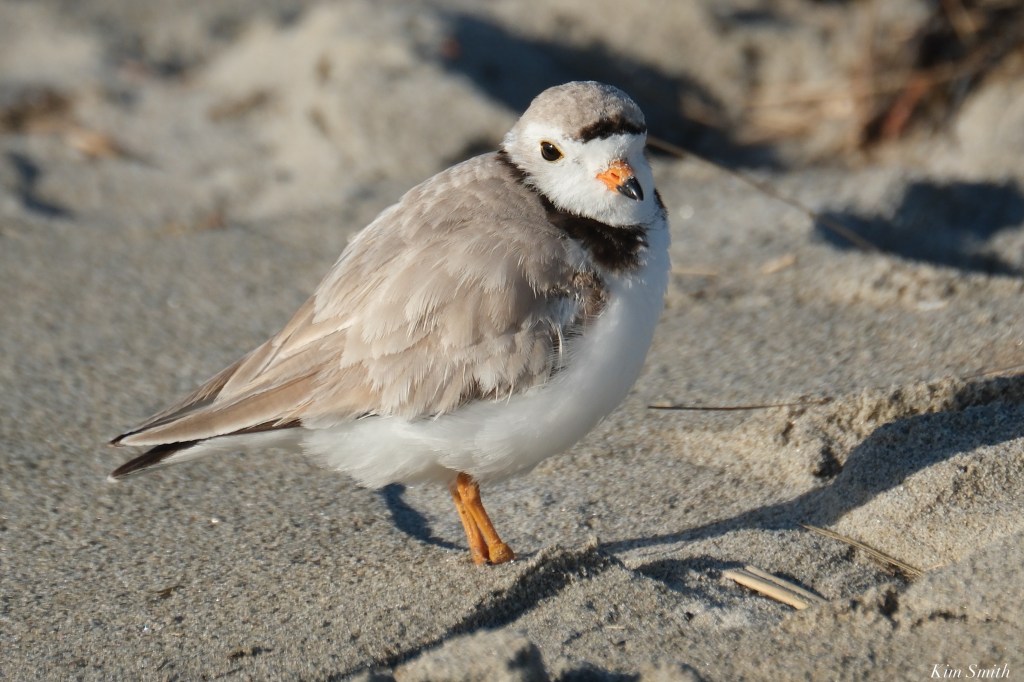
A Plover love story for the ages is how my friend Todd describes it when Plover pairs nest together for many years. These two sweet Plovers must be at a minimum of 11 years old because Plovers don’t begin breeding until they are at least one year old. Eleven years is quite a ripe old age for Plovers as most live on average only five years. We wait with a combination of fear and excitement each spring, hoping and praying our Plover family makes it through another winter, especially now that Mom’s right foot is missing. She lost her foot several years ago after nylon fishing line and seaweed became tightly wound around her lower leg.
When you think about it, we have been through so much with this little Mom and Dad. The first several years especially were extremely challenging. Beachgoers did not yet understand how to help protect the birds and pets had the run of the beach. In fact, conditions were so bad on the beach that in 2018 Mom and Dad decided ‘enough with dog disturbances,’ and the safest place to nest was the GHB parking lot. Because of this, Massachusetts State and US Federal wildlife officials became heavily involved with helping to protect Gloucester Plovers and the local government began to take Plover protections more seriously. Little by little, things began to change for the better.
I remember our tender little handicapped Plover, nicknamed HipHop for his gimpy walk. It was Mom’s first season breeding without her right foot and she was extremely clumsy when transitioning to get in and out of the nest and when she was snuggling the chicks. I think she must have injured HipHop somehow because his injury manifested itself when he was about ten days old. Mother and chick were quite the pair with their hip hopping gaits. We thought HipHop would never grow to the size of his siblings and wondered if he would ever be able to fly. Mom departed early as is not unusual for females to begin migrating before their mates. Our Super Dad stayed with HipHop for many weeks after and throughout the entire summer. Both departed around the beginning of September, but not until HipHop was flying just as well as his siblings.
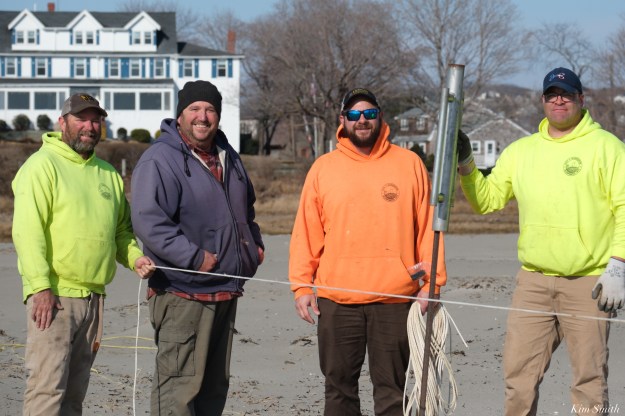
Dean Horne, Brian Watson, John Trupiano, and Adam Kelley installing Piping Plover protections
Thank you to the Gloucester DPW crew for installing the symbolic ropes and Plover signs. We appreciate everything the DPW does to keep Plovers safe and our local beaches looking beautiful!
If you happen to see Plovers on the beach, please give them lots and lots of space. Know that they are weary from the long migration and need to rest and refuel before ‘setting up house.’
Piping Plovers are returning to beaches all along the Atlantic Coast. The addendum to this note is for several new Plover friends from beaches in Maine and New Jersey who have written to ask how they can better help their community’s Plover families successfully fledge chicks.
Happy Spring from Ploverville!
Warmest wishes,
Kim
Actions that communities and beachgoers can take early in the season to help Plovers successfully breed include the following. I can not stress ‘early in the season’ enough. The earlier the Plovers nest without disturbances, the earlier they will begin laying eggs, and the earlier the chicks will fledge and begin migrating.
1) Disallow all pets on the beach, ideally beginning March 15th, April 1st at the latest.
2) Install symbolic roping around known Plover nesting areas by March 15th.
3) Install informational signage on beaches where Plovers nest by March 15th.
4) Do not permit off-road vehicles on beaches where shorebirds are nesting.
5) Do not rake the beach. Beach raking destroys a vital food source and machines can scoop up and kill chicks that can’t yet fly out of the way of danger.
6) Respect symbolically roped off areas. Do not play ball close to the roping. It is against state and federal law to run into the nesting area to retrieve a ball or for any other reason. Do not allow pets to run through the roped off areas and do not cross the roped off areas to take shortcuts through the dunes.
Thank you to all who attended our documentary screening of The Piping Plovers of Moonlight Bay on Sunday afternoon. We had a terrific group of attendees, both very generous and wonderfully engaged in the Qand A following the screening. I loved discussing Plovers and filmmaking with our guests and appreciate so much everyone who took the time out of their busy schedules to come and support the film.
Many, many thanks to Sarah, MAGMA’s founder and director, for hosting the event. In addition to offering a range of youth and adult dance classes, MAGMA provides an exceptional space for the community. Sarah hosts a range of events including films, dance performances, and local musicians, from punk bands, to string quartets! See MAGMA’s upcoming events here.
A very special shout out to Piping Plover Ambassadors Jonathan and Sally for their continued support and kind generosity. They provided all the beverages, Jonathan made an excellent bartender, and they both made everyone feel very welcome.
















 The Piping Plover Project