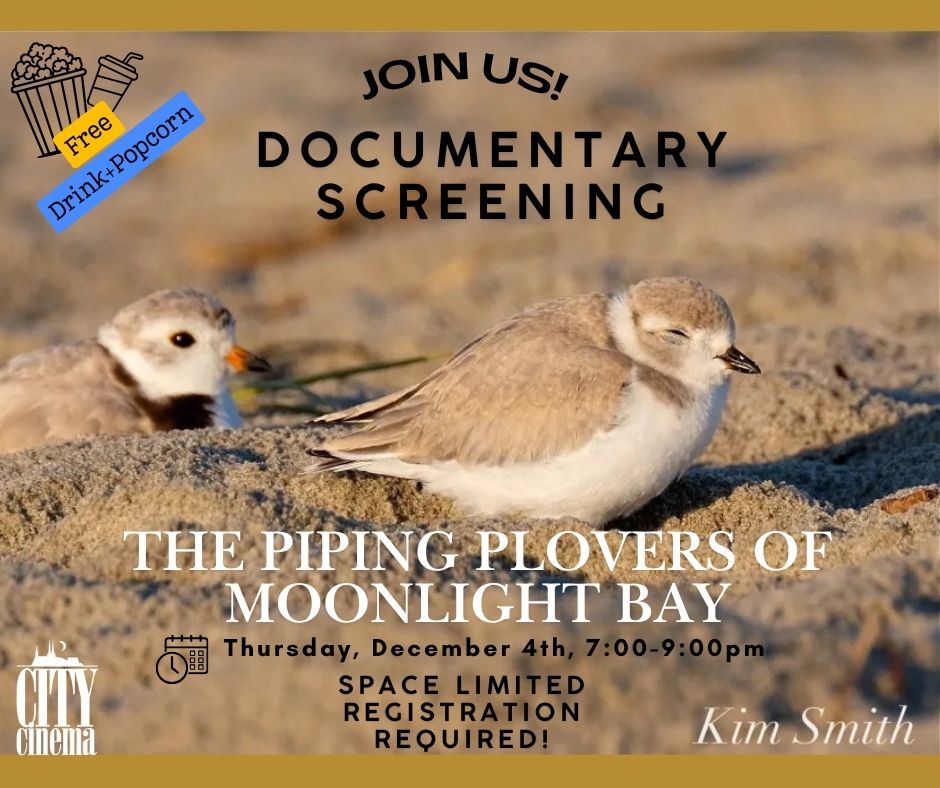
I am delighted to share that The Piping Plovers of Moonlight Bay is playing at the City Cinema of Charlottetown, PEI, on Thursday evening. This is a very special screening to me, brought to you by the Island Nature Trust; special because the INT is a fabulous organization striving to protect species at risk and to conserve their habitats. The Island Nature Trust is a model of great stewardship and I am honored that our film has been selected for screening.
I hope you are doing well. What a lovely weekend weather wise for we in southern New England although we’re getting ready for the big cold snap coming. Right after Dia de Muertos, we plant paperwhites and amaryllis bulbs to force indoors. We switch up the colors of the soft furnishings in the music living room from warm weather blues and greens to white, rose, red, and greens. It’s a cozy (and gradual) way to get in the holiday spirit.
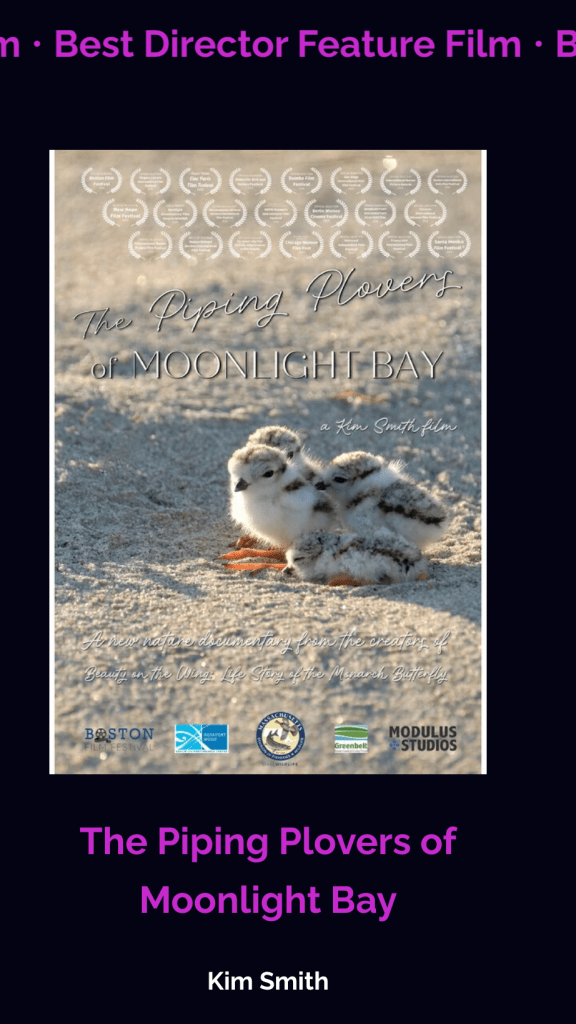
I am so very delighted to write that we received the Best Director Feature Film award at the London Vision Film Festival. It’s a wonderful honor and my first ‘Best Director’ award. I thank all of you everyday. Both Beauty on the Wing and The Piping Plovers of Moonlight Bay would not have been made possible without your generosity and I am so very grateful for your interest and kind support.
The Rat
If you have a chance, there’s a very fun new film about the vibrant music scene in Boston during the 70s and 80s, Life on the Other Planet. Beautifully produced and directed by Vincent Straggas, we went to the premiere at the Regent Theatre in Arlington several weeks ago and it is again playing at the Regent on Thursday, November 19th. Along with a great many Boston musicians, my husband Tom Hauck and Fred Pineau from The Atlantics are featured, as well as local Gloucester musicians Willie Alexander and Jon Butcher. There is talk of Life on the Other Planet coming to The Cut!
Here’s a link to a short video and photos of the amazing Pectoral Sandpiper that stopped over for a day on its arduous migration to southern South America. I mentioned the pair last time I wrote and wanted to make the video before too much time had passed. I wonder what the predicted whoosh of arctic weather will bring to our shores next!
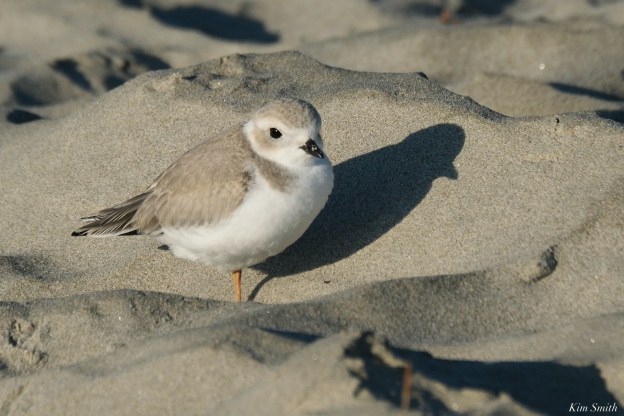
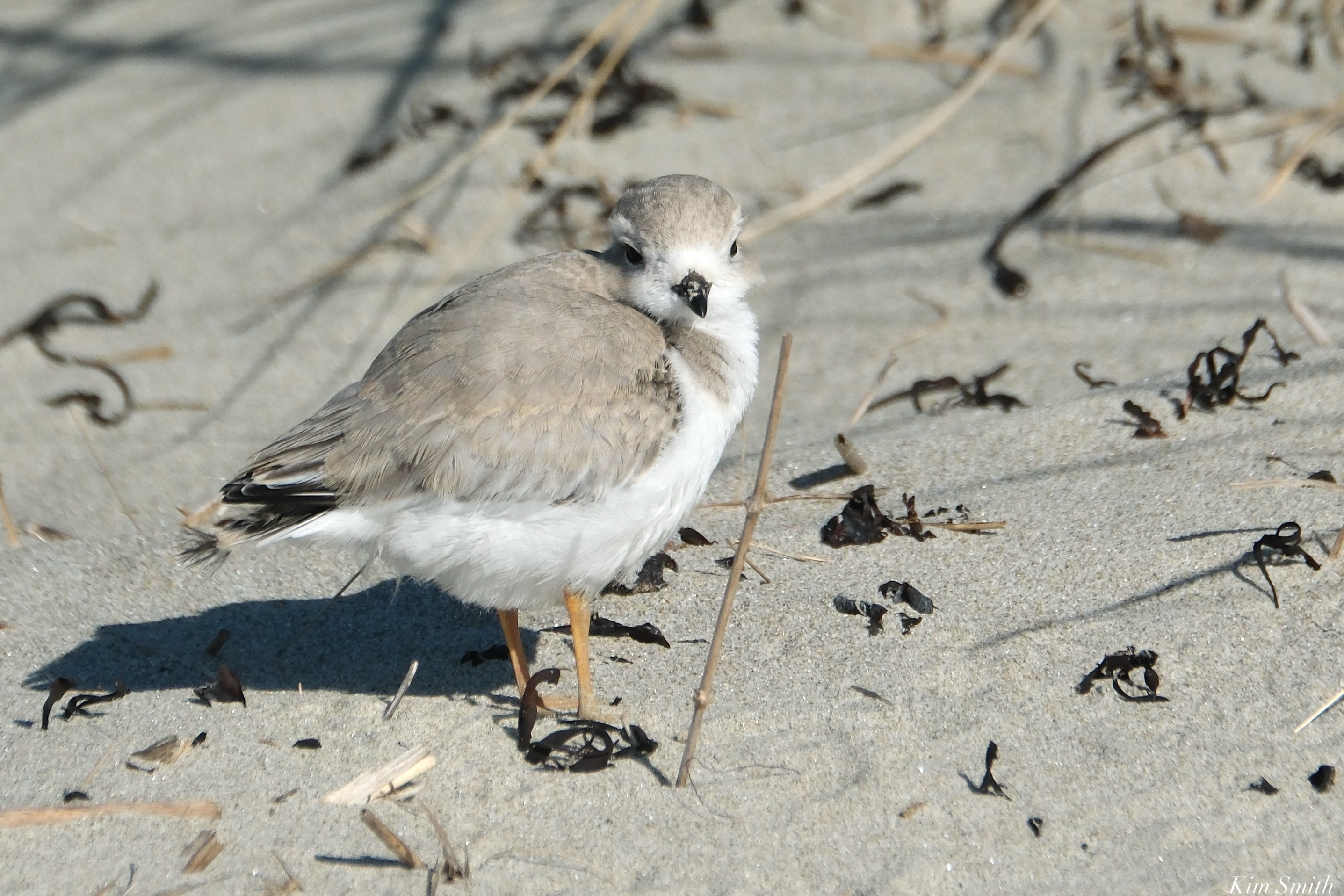
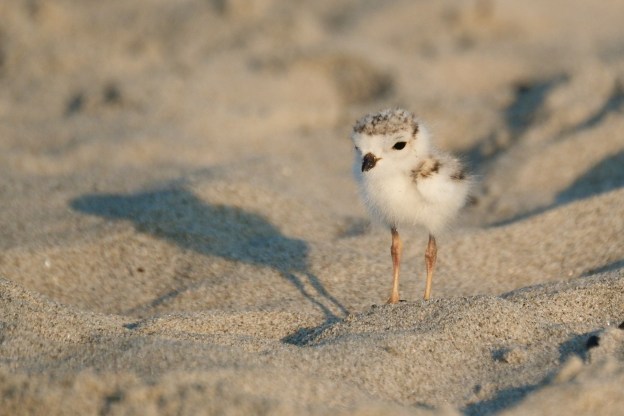
Happy Bday to our 45-day-old Piping Plover fledgling! He/she is the last of the Good Harbor Beach flyers. The photo/video was taken on Thursday when the little one was 42 days, or six weeks old. This is the age when we typically see them head out for their southbound migration. He’s still here as of Saturday but we are hoping to not see him any day now 🙂
I am very sorry to share that the rescue Plover did not survive. Tufts wrote that the chick had multiple chronic healed fractures and that the wing was held in a permanently drooped position. He would never be able to fly. I was at first feeling extremely low about this but both our partners at Audubon and Lis from DCR wrote that if left on the beach its demise would have been very traumatic and, if not eaten by a predator, would slowly starve to death.
Thank you so very much to everyone who wrote with well-wishes for the injured Plover.
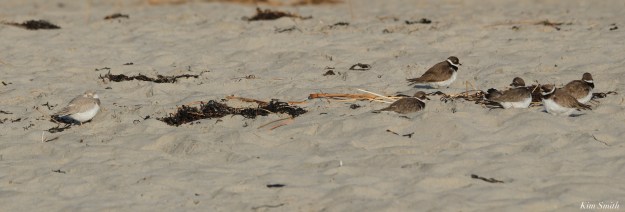
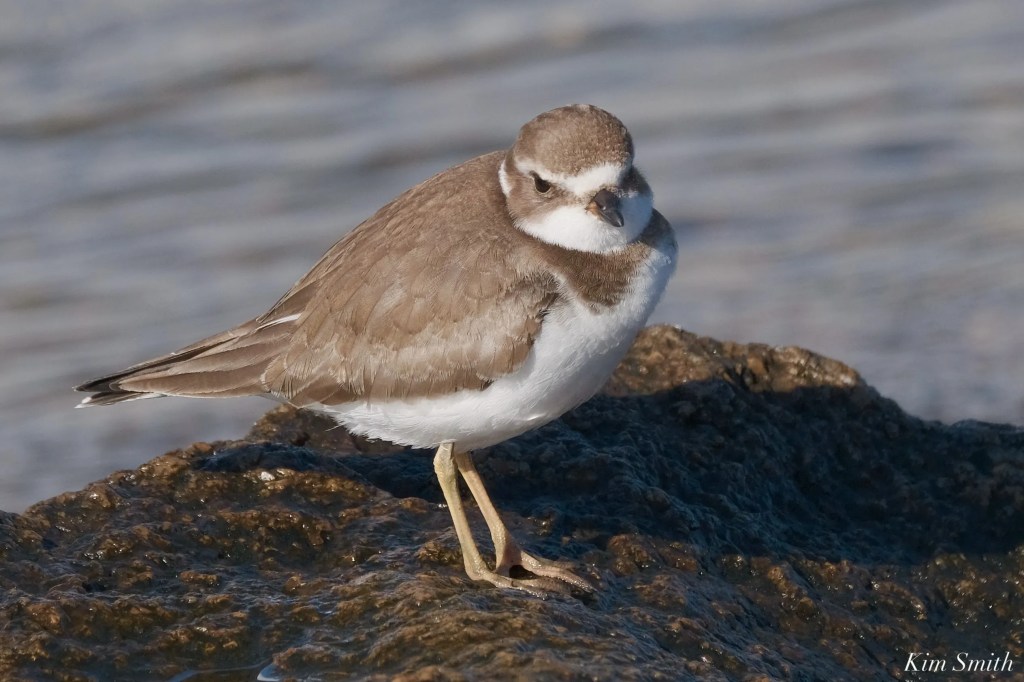
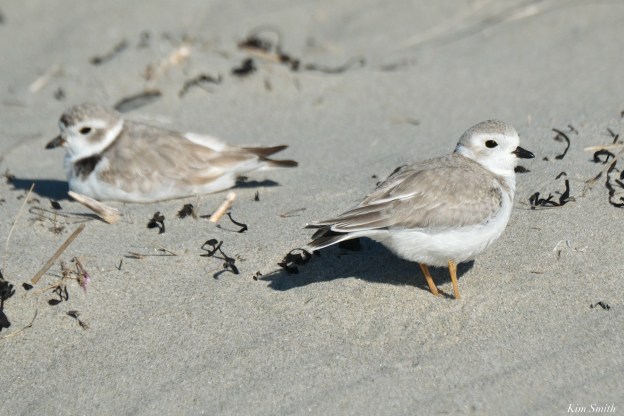
Our youngest fledgling has resurfaced at Good Harbor Beach! He/she had not been since the morning of the fierce hail and rain storm but there she was in the soft sand today, preening and sleeping alongside a mini flock of Semipalmated Plovers. Will they migrate south together? Piping Plovers are reportedly solitary but are often seen during the non-breeding months foraging in mixed groups of Semipalmated Plovers, Sanderlings, and Dunlins. Several years ago, during their southward migration, I saw a flock of a dozen Piping Plovers tucked in with several hundred Semipalmated Plovers, all resting on the upper part of the beach.
39 day old Piping Plover fledgling with Semipalmated Plovers
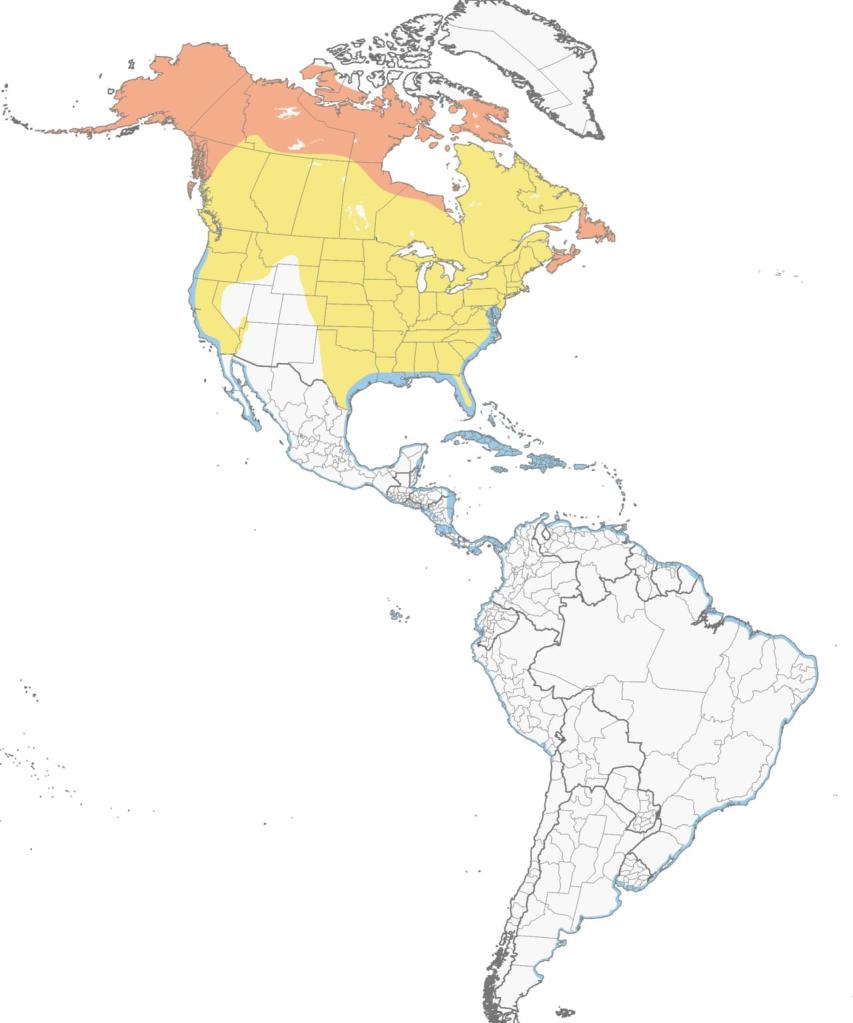
Semipalmated Plover range map – orange = breeding, yellow = migration, blue = wintering grounds
You can see from the map that the range of Semipalmated Plovers is vast when compared to Piping Plovers. They nest in subarctic and arctic environments and that is why we do not see them nesting at our local beaches. August is the peak time of year for the Semipalmated Plover’s southbound migration and we have seen many at Good Harbor Beach over the past month. Partners in Flight estimates the global population to be about 200,000 while the Piping Plover population as of 2020 was only about 8,000 adults.
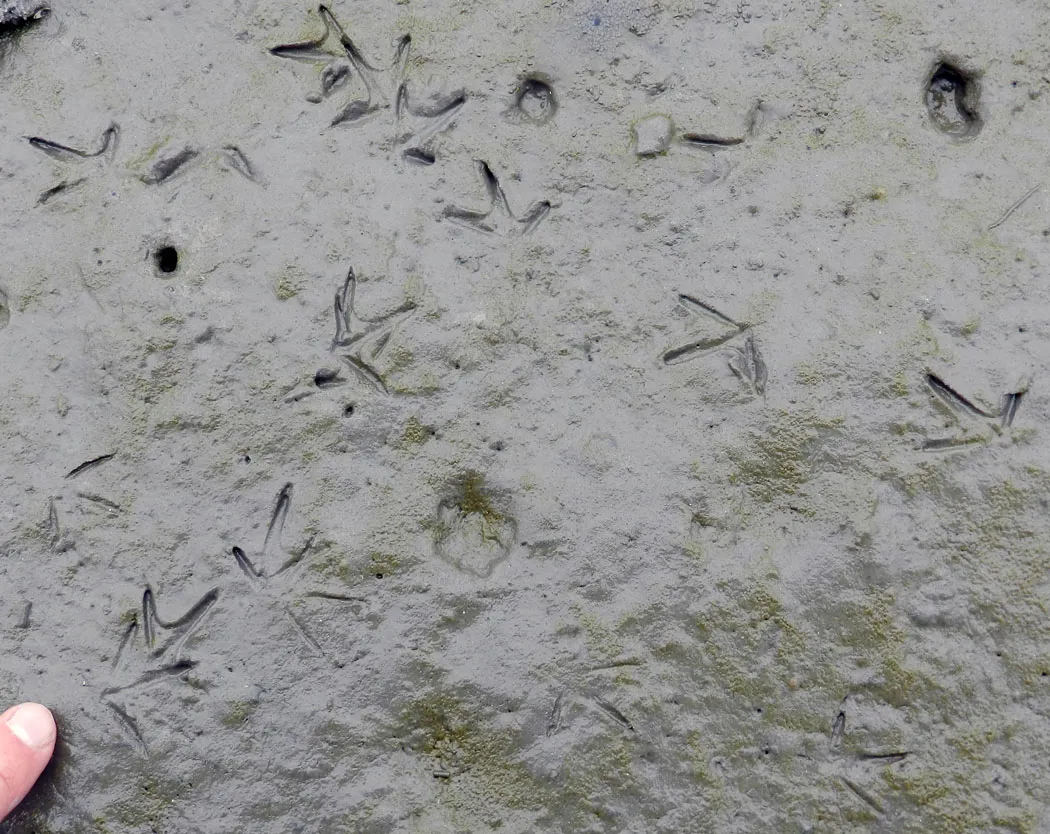
Semipalmated Plovers are called as such because only their two outer toes are webbed, ie. semi. The photos show the webbed tracks and the partial webbing of the toes.
The morning after the first super high tide at Good Harbor Beach we were surprised and delighted to see a third Plover had joined our Fierce Dad and his almost-fledged chick. We found the three on the narrowest strip of beach that had not been impacted by the hurricane tide. They have been seen together ever since!
First Photo: Mystery/Butterball left, Fierce Dad right Second Photo: 30 day old Piping Plover chick
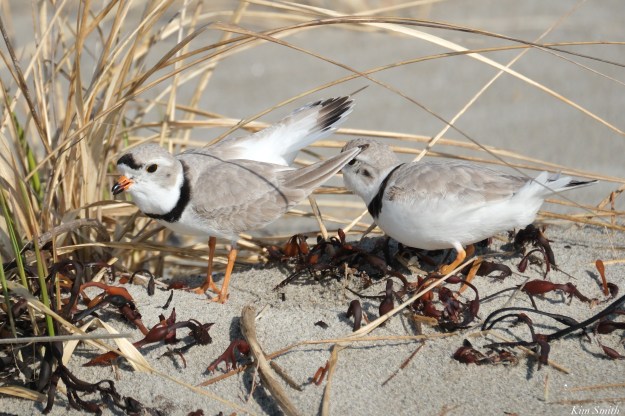
I think my daughter may have solved the Mystery and we believe this Plover could be what would now be the 54-day-old fledgling we were calling Butterball. He appears to be a similar stage of development and it makes sense; after Butterball’s Dad departed, Butterball attempted to forage alongside Fierce Dad’s chick several weeks back, but FDad would have none of it and was in maximum defensive mode for his little one at that time. Now that his chick is older and more independent perhaps he feels it’s safe to socialize with other Plovers; although at one point FDad planted himself firmly between his chick and Mystery.
Below are photos of 40 to 42 day old Plovers from years past and they are the only photos I can locate at the moment of Plovers past 36 days. Our Mystery Plover looks to be at least as old as the Plovers in the photos
This last photo if of HipHop, Super Dad, and HipHop’s 46-day-old sibling. Although the sibling is out of focus, you can see its feather patterning is similar to the Mystery Plover. This was such a sweet sibling; he stayed with HipHop until he could fly. You may recall HipHop who was developmentally challenged. The first year Mom returned to Good Harbor Beach missing a foot, one of her chicks sustained a hip injury.He was nicknamed HipHop for his hopping gait and it took him many, many weeks to catch up to his siblings. Both Super Dad and this one sibling gave HipHop lots of snuggles and stayed with him well beyond the time frame in which they would typically migrate.
For my New Jersey Friends and Family –
For my New Jersey Friends and Family – Montclair Film and The Nature Conservancy of NJ are hosting a special screening of The Piping Plovers of Moonlight Bay on Tuesday, August 26th at 7pm. QandA with me to follow. To purchase tickets, please go here: https://theclairidge.org/events/the-piping-plovers-of-moonlight-bay/
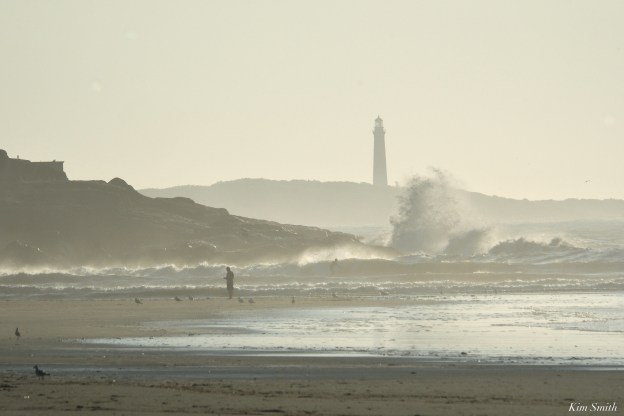
We are having a wind/wave/tidal event at Good Harbor Beach and I think the tide may even be higher tonight than last night. There was absolutely no beach last night, the tide came up to the base of the dunes and the water went well up onto the boardwalk paths. It was beautiful and atmospheric this morning at GHB but also concerning to see such a high tide so early in the hurricane season.
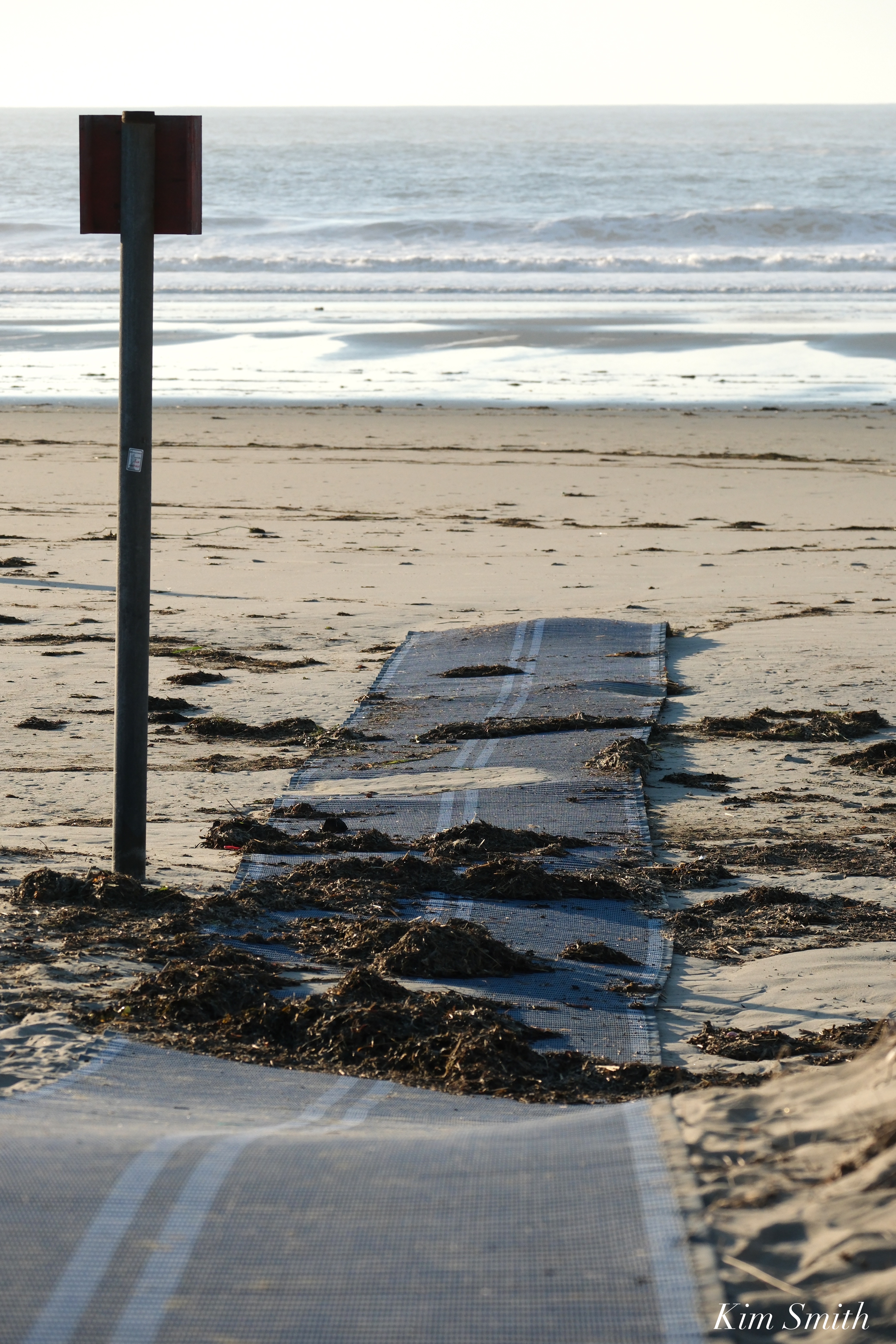
Note the seaweed goes past the roped off areas into the dunes –
Mobi mats in the boardwalk paths covered in seaweed
I am filming at coastal locations south of us and just outside of Boston and every beach today had waves equally as giant and red with seaweed as are the waves at GHB, including Revere, Nahant, Winthrop, and Swampscott.
Left to right – Fierce Dad, Mystery Plover, and chick (sleeping)
I can tell from the Plover’s foot prints in the sand that they spent the night up into the dunes, as far away as they could get. Our Fierce Dad and his offspring have been joined by a mystery Plover and the three are relishing the seaweed deposited from end to end.
According to the Gloucester City ordinance code, it is a $300.00 fine (doubled during the season) to bring a dog to Good Harbor Beach. For example, if you bring two dogs, that is 600. x 2 = $1200.
But stating the fines right off doesn’t explain why.
Health and Safety
Our beaches are wonderfully filled with beachgoers during the summer months. Can you imagine adding dogs, either on or off leash, to the mix? Dog ownership is at a record high, much greater than even a generation ago. In 2000 there were roughly 68 million pet dogs, today there are about 90 million dogs. What if everyone who owns a dog brought theirs to the beach?
Let’s face the facts, a great many dogs are not on voice command. We have dogs jumping on children, knocking over the young and old, biting people, and getting into dog fights and biting each other. That is not a safe scenario for any beachgoer.
But what if the law were changed to allow dogs on leash?
We would have half abiding by the leash law and half saying “I left my leash at home,” or “I thought it was okay to let my dog off leash after 5pm,” or “I thought it was okay before 8am,” etc. etc. How do we know this? Because we already hear these statements during the off leash/on leash days at Good Harbor Beach.Pile of poop at the Good Harbor Beach snack bar area
Good Harbor Beach Footbridge
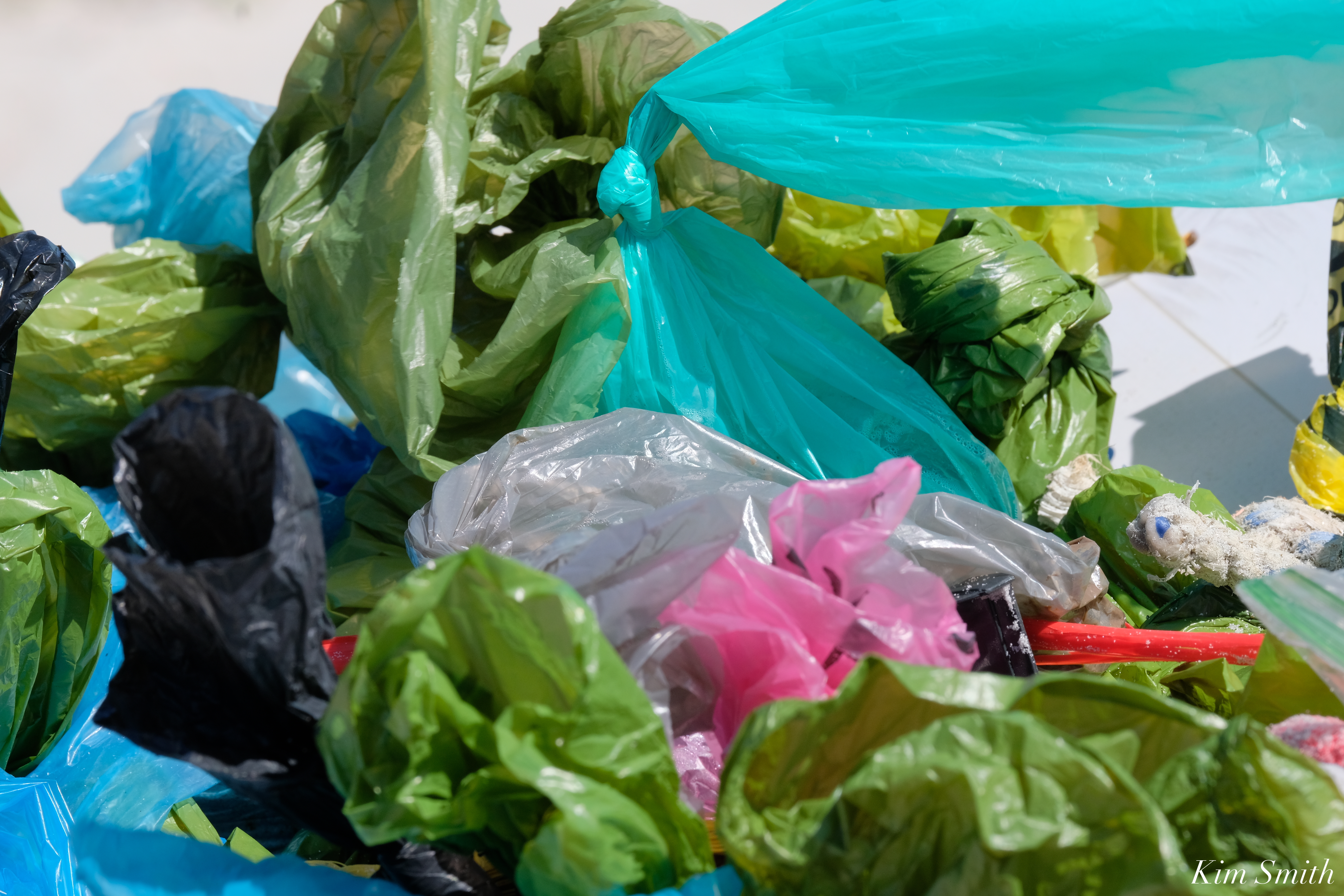
Dog Poop is a consequential environmental issue. During the season when dogs are allowed on the beach we see the gamut of poop-maintenance behaviors. Most people clean up after their pet. However, many people bury the poop in the sand or leave their poop bags behind. When someone leaves their bag by the footbridge, then other dog owners take it as a sign as a place to deposit their bag. The pile of dog poop in a rainbow color of bags grows and grows. Do we want beachgoers stepping in sand covered poop or being confronted with piles of dog poop? There is no poop cleaning fairy. It is left to our awesome DPW or one of the very nice volunteers, like Chris Cefalo, his brother, and Michael Cook who regularly cleans GHB to remove garbage and also the bags of poop.
Keeping Dogs out of the Dunes During the Growing Season Helps Protect the Dune Ecosystem
If you regularly visit Good Harbor Beach during the off season, you can’t help but notice, the “Keep out of Dunes” signs are frequently ignored by pet owners. There are many who do respect this vital habitat, but also many who don’t. Dogs running and playing vigorously through the vegetation tears at the roots and weakens the plants. Vegetation holds the dune sand in place and without plants the dunes continually recede.
Over the past several years, you may also have noticed the vast improvement in the overall health of the dunes. There is a direct correlation to keeping the symbolically roped off areas up through out the summer season and into the fall because by preventing people and pets from recreating right up to the base of the dunes, it allows just that much more room for vegetation to take hold, and is one fantastic tool in the tool box against fighting erosion.
Dog going pooh within nesting area
Keeping Dogs off the Beach Helps Nesting Shorebirds Survive
Last, but not least, dogs on the beach are a well-known threat to shorebird nests and especially to young birds that can’t yet fly to escape danger.
How so you may wonder? “My dog is so sweet and would never harm a baby bird.”
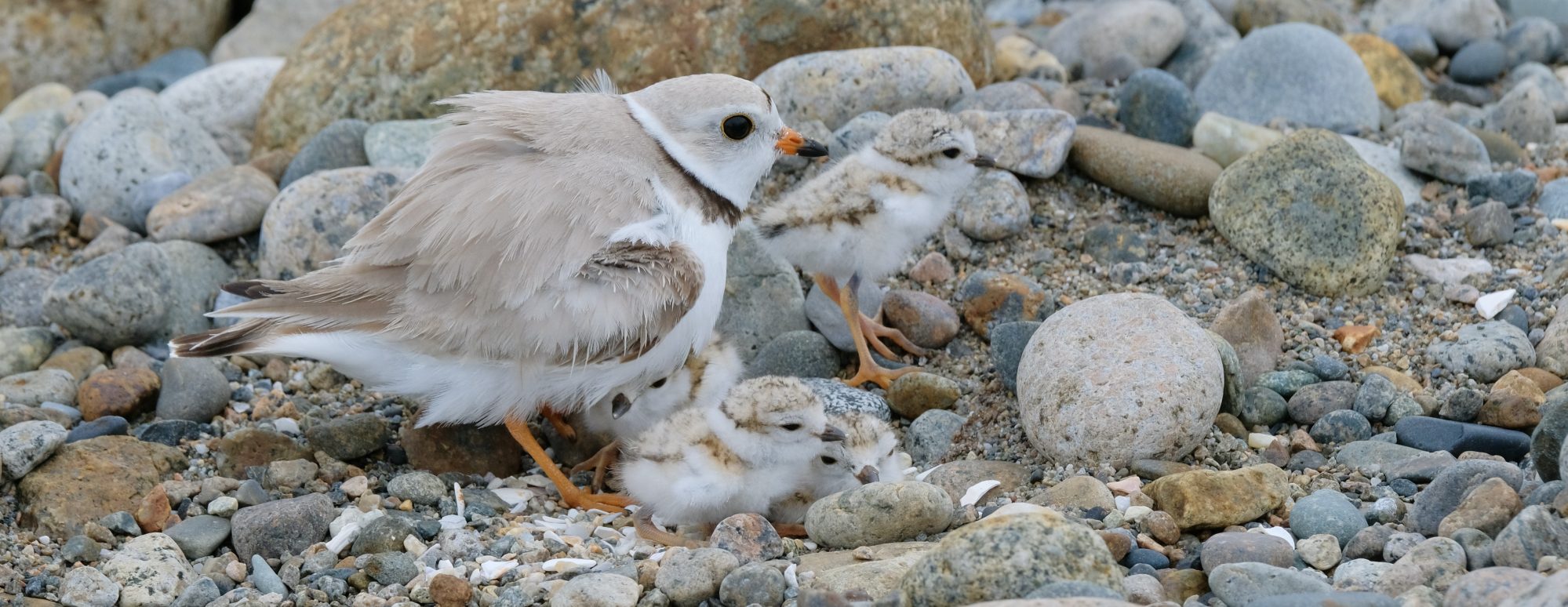
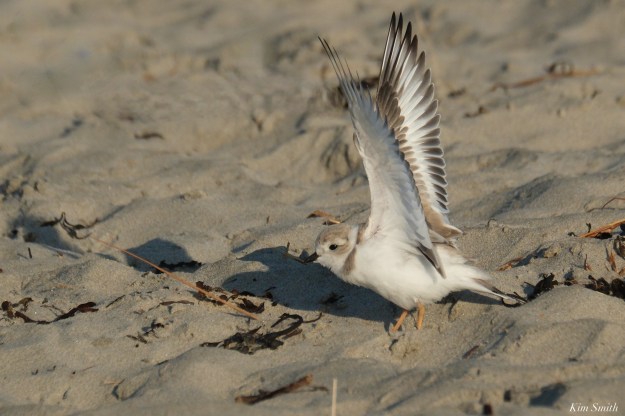
When there are baby birds on the beach, the Plover parents do their absolute utmost best to keep the chicks safe. The parents exhibit all sorts of distraction behaviors including dragging and fluttering their wings on the ground to fake injury, thereby encouraging the predator to follow it and drawing the threat away from their most vulnerable chicks.
Plovers cannot tell the difference between a domestic dog, Fox, or Coyote. Dogs bound exuberantly on the beach through nesting areas and Coyotes and Fox dig in the sand for eggs and chicks. The ever vigilant Plover parent will leave the nest and fly at any creature Canid. Often, both parents will fly away from the nest in a sort of tag team distraction method. But while they are busy defending the chicks from a member of the dog family, that is the perfect time for a gull, crow, hawk, or falcon to swoop in and snatch the eggs or eat the baby chicks. Crows focus on eggs and gulls not only eat the eggs, they also eat chicks at every stage of development, even fledglings that have grown as large as the parent. Coyotes eat both eggs and chicks.
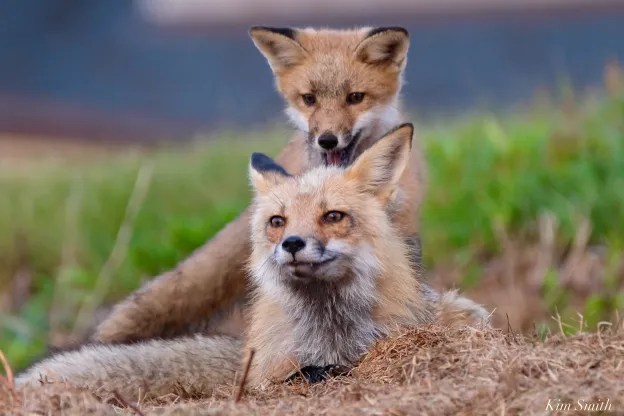
Especially during pupping season, Red Fox scavenge the beach looking for shorebird eggs, small mammals, and birds to feed their growing family. Plovers cannot distinguish the difference between a Coyote, Fox, or domestic dog.
Fierce Dad and FairFeathered Mom tag team distracting a Herring Gull
As I am writing this message, please know that we still have young birds at Good Harbor Beach that can’t yet fly well enough to escape predators. This is extremely late in the season and is due to the tremendous loss of nests during the May Nor-easter; losses all along the coast of Massachusetts. Many of the nesting birds eventually re-nested and we are seeing their offspring. Shorebird managers across Massachusetts are contending with taking care of these late flying chicks.
Here are on Cape Ann we are blessed with many beautiful alternative locations to walk our dogs, including Crab Beach (adjacent to the Boulevard), which is open year round to dogs and dog owners.
If you would like to see scenes of Plovers displaying their fascinating distraction techniques and learn more about predators on beaches, please watch our film The Piping Plovers of Moonlight Bay, which I created specifically for people to learn more about how we can all help protect shorebird wildlife and their habitats. Our documentary is streaming on the PBS Passport AP 24/7. Anyone can become a member of PBS Passport by donating to PBS. It’s so worthwhile, especially for young children with curious minds. What other streaming service can you get for $5.00 a month!!
As I first wrote, it is a $300.00 fine and doubled during the season to bring dogs to Good Harbor Beach, so please dog owners, for your sake, for the health of the beach ecosystem, and for the safety of growing shorebirds, please do not walk your dog at Good Harbor Beach or any beach where there is precious habitat and baby birds. Thank you!The No Dogs from April 1st through September 30th signs are boldly displayed at every entryway to Good Harbor Beach
I am very delighted to write that our Piping Plovers of Moonlight Bay is screening on Monday, August 18th at 6:00pm. We are sharing the billing with another animal welfare documentary, The Ramba Effect, about an Asian Elephant and her 2,550 mile journey to her new home at an elephant sanctuary. If you are in the New Hope area and would like to see The Piping Plovers of Moonlight Bay and The Rhamba Effect, please go here https://www.goelevent.com/NewHopeFilmFestival/e/AnimalWelfareDocumentaries
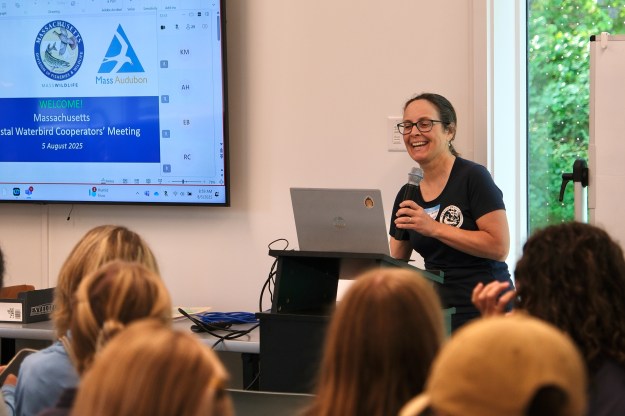
Carolyn Mostello, the Massachusetts Coastal Waterbird Biologist
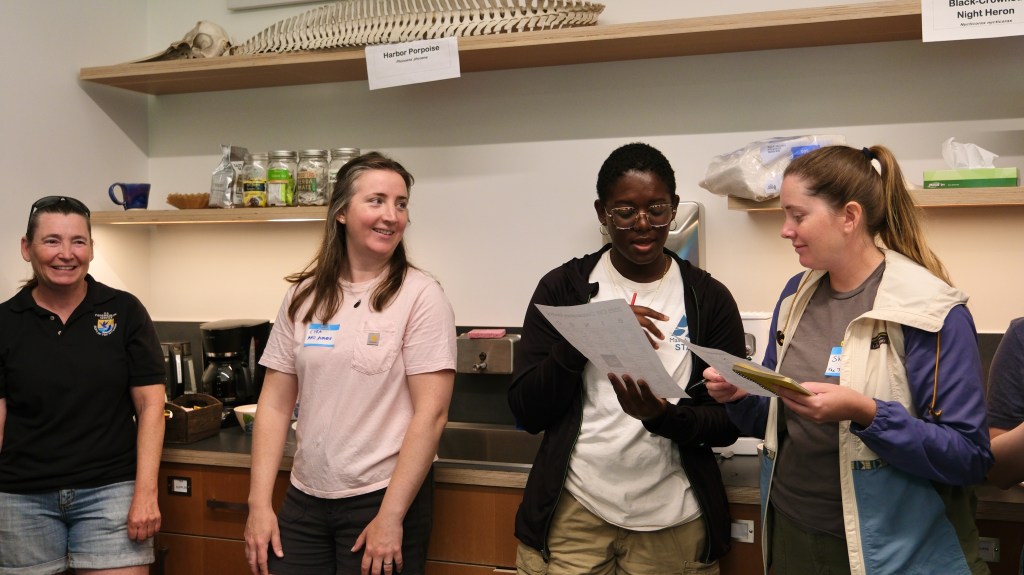
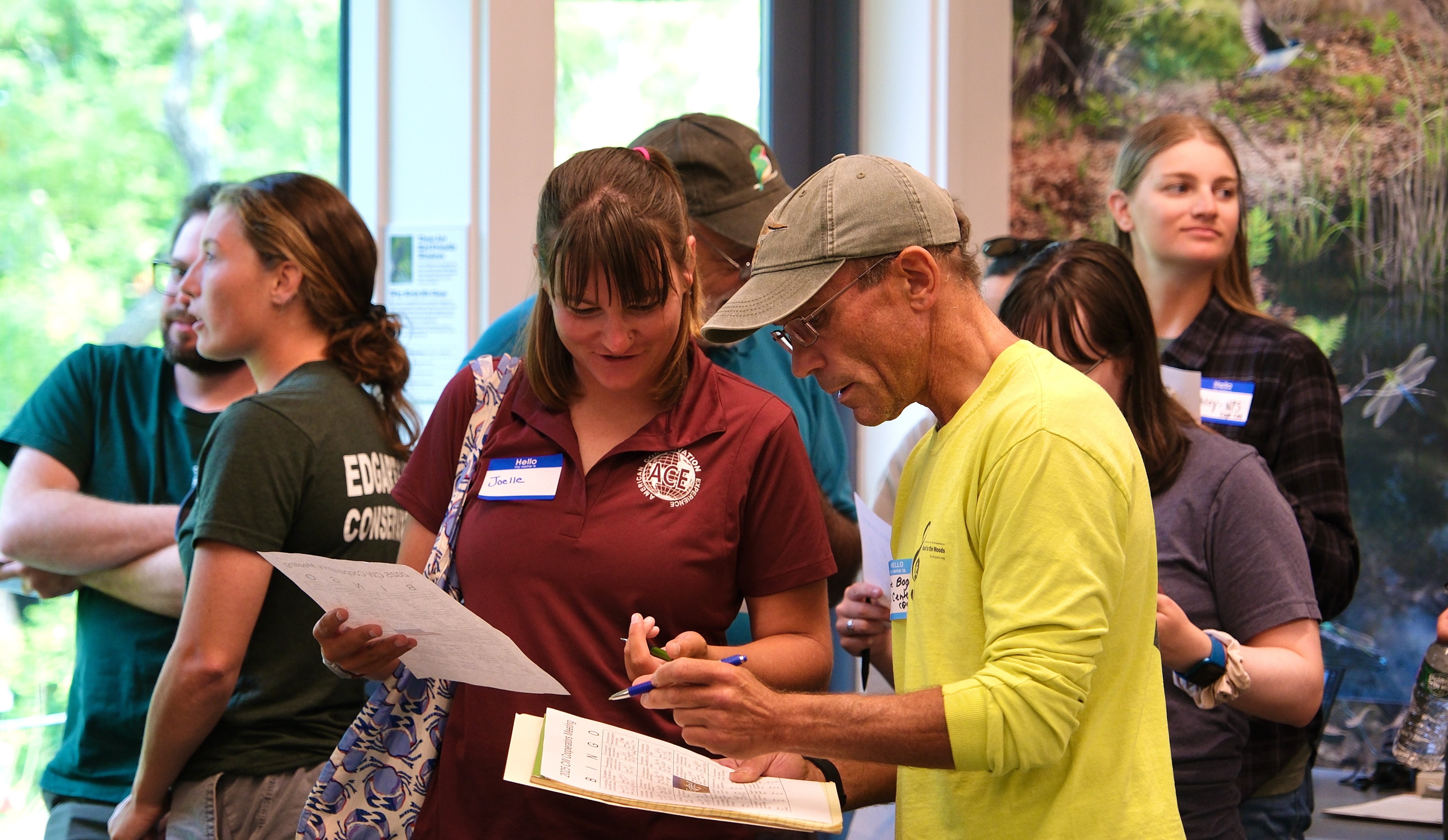
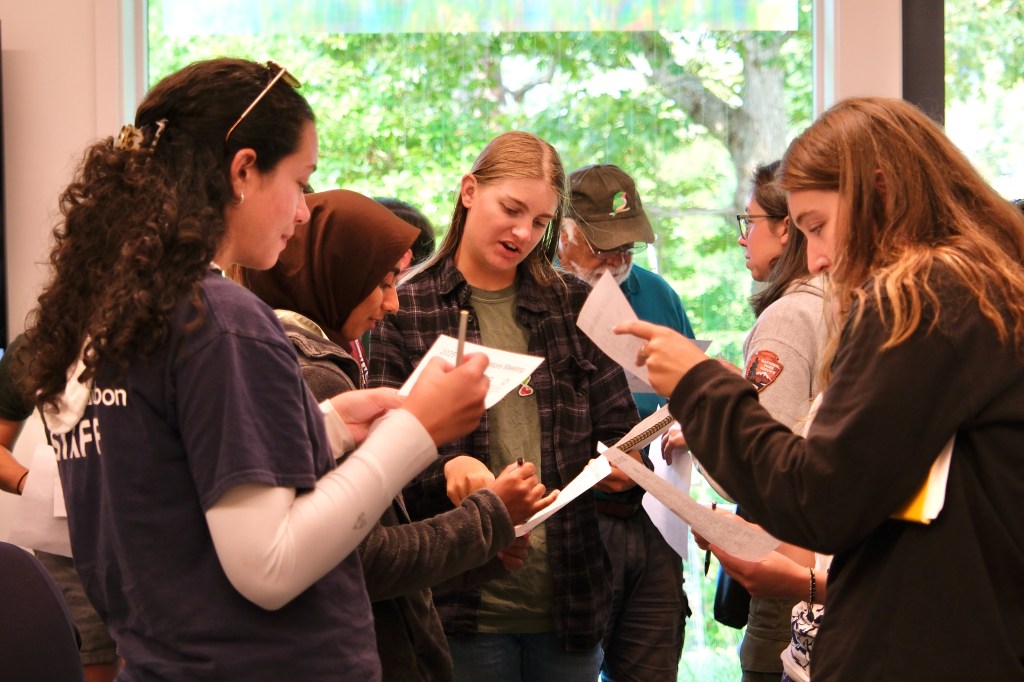
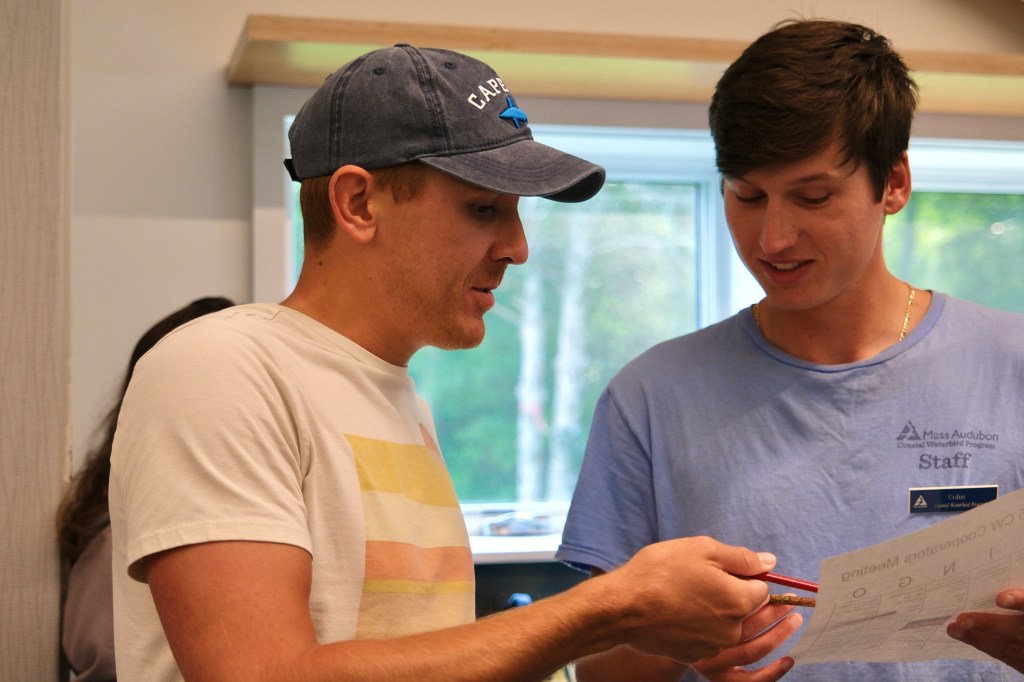
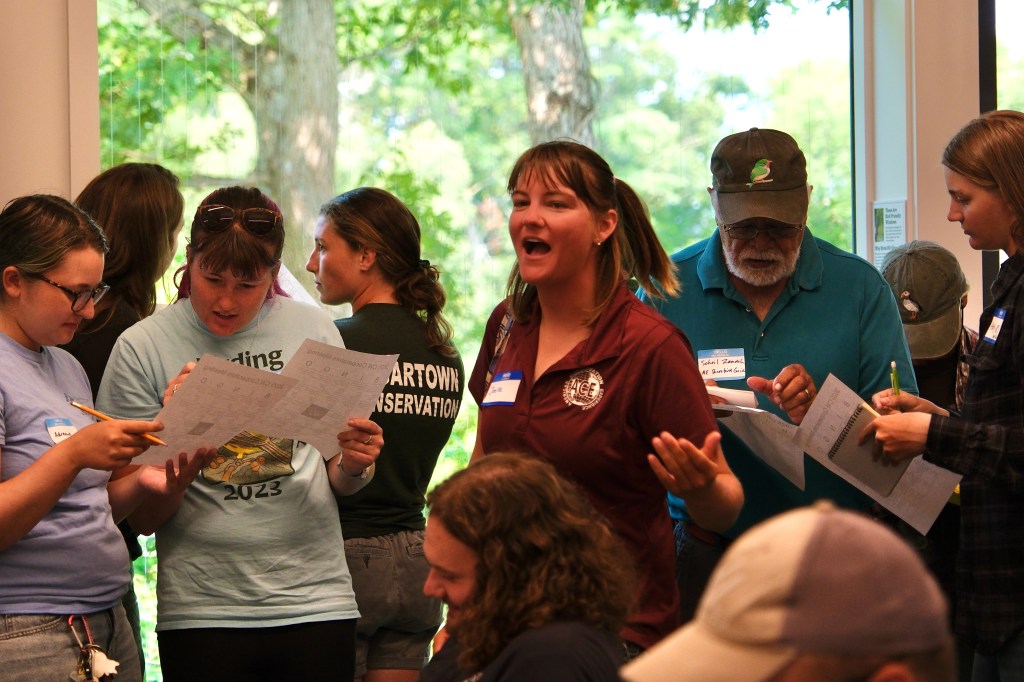
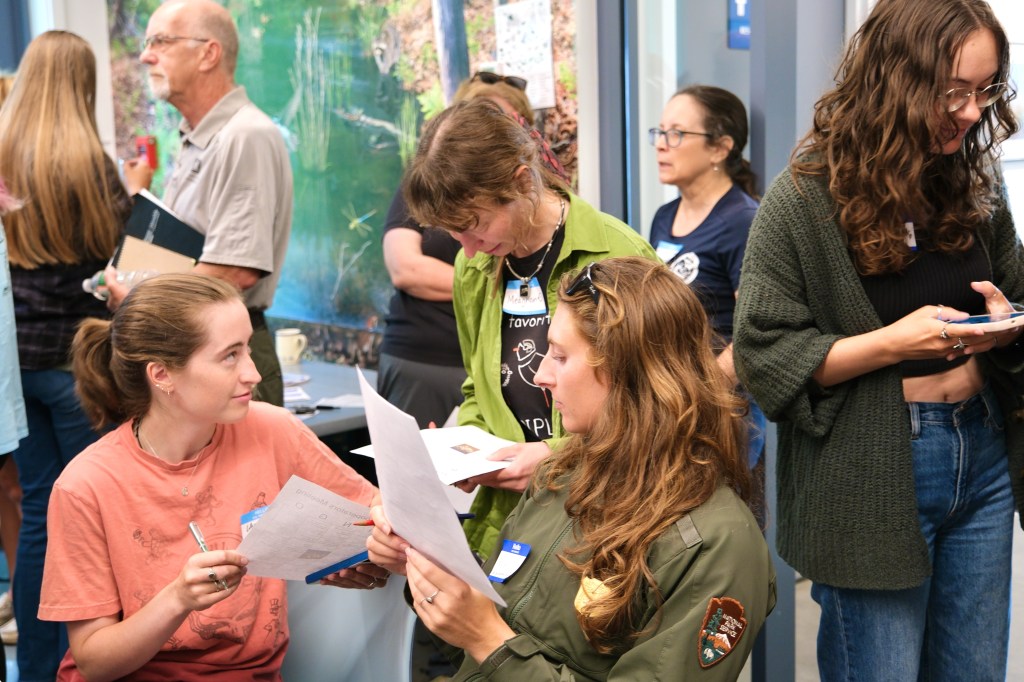
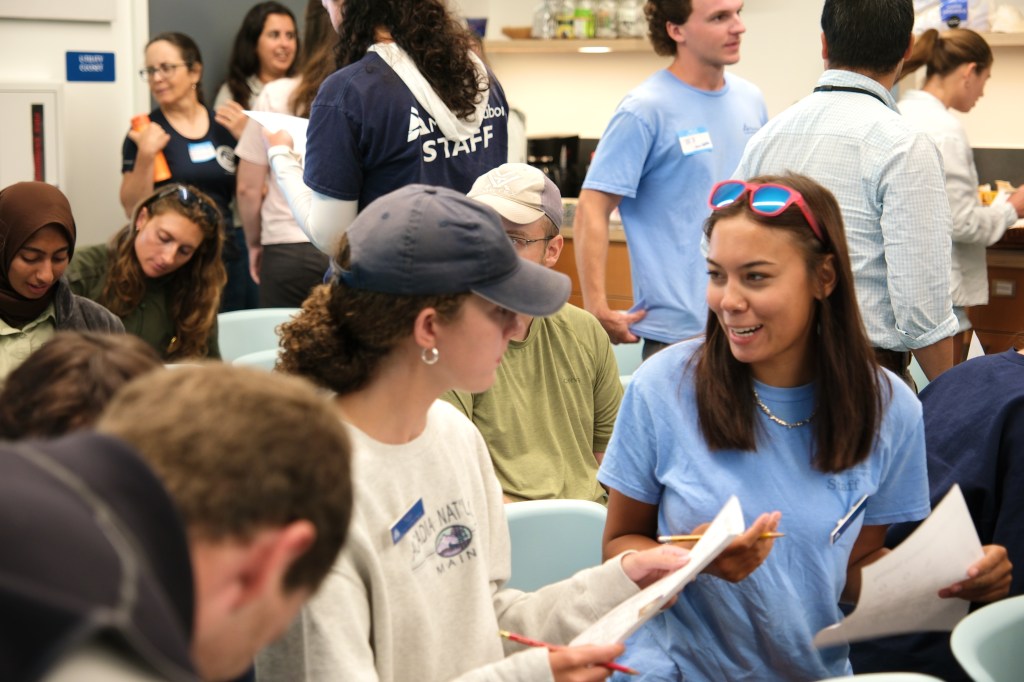
Last week I has the opportunity to attend the Massachusetts Coastal Waterbird Cooperators’ Meeting. The meeting is held annually to bring together people and organizations that are involved with population monitoring and conservation efforts on behalf of coastal waterbirds.
Representatives from the seven Massachusetts coastal regions gather to share information, anecdotes, and data collected throughout the season. This year the meeting was held at Audubon’s stunning Barnstable Great Marsh Wildlife Sanctuary; hosted by Audubon staff and Carolyn Mostello, the Massachusetts Coastal Waterbird Biologist.
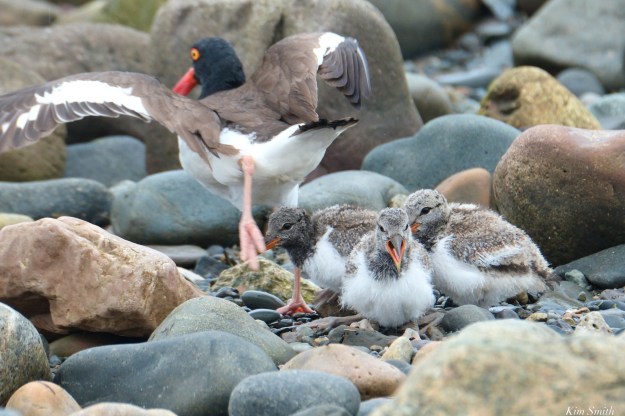
American Oystercatcher chicks
Threatened and endangered species such as Least Terns, Piping Plovers, Roseate Terns, and American Oystercatchers are given the greatest attention.
It’s fascinating to learn how we are all sharing similar experiences including egg predation by Crows, gulls, and Coyotes, disturbances of all shapes and kinds, low egg hatching, and storm washouts. Carolyn directs the event and she does an extraordinary job of weaving all the information together.
Reporting population numbers is followed by “Strange and Unusual,” a super fun section where field agents share funny/odd occurrences, photos, and videos. A special tribute was given to honor Shiloh Schulte, who perished in a tragic helicopter crash while studying shorebirds in Alaska. Shiloh Shulte was a beloved friend and mentor to shorebird conservationists every where and one of the coordinators for the American Oystercatcher Recovery Program. You can read more about Shiloh and his work HERE.
The afternoon programs are especially interesting with presenters sharing experiments, projects, and best practices, including two of special interest to our region; one on launching in-depth data collection on fireworks, and best practice for engaging with landowners. All the programs are wonderfully educational.
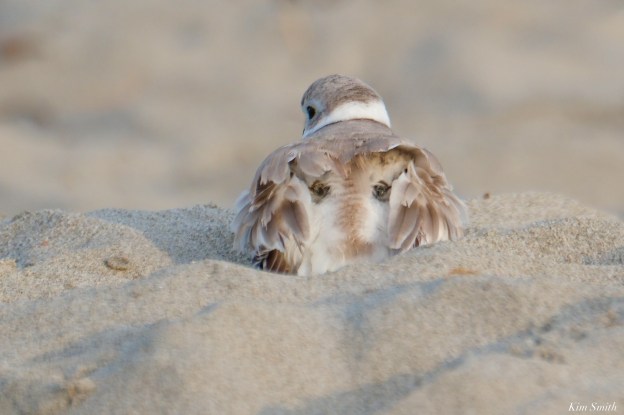
Handicapped Mom and Super Dad’s second attempt at nesting
Handicapped Mom and Super Dad’s second attempt at nesting
Despite an extremely challenging year, largely due to the fact that most of the nests around the State were washed out in a late spring storm, perhaps the most outstanding take-away is that this year again, Massachusetts is at the leading edge edge of Piping Plover recovery. We should be super proud of our state. While many regions are seeing very little, none, or even worse, declining numbers, Massachusetts is leading the way in Piping Plover recovery!





















 The Piping Plover Project