I am very delighted to write that our Piping Plovers of Moonlight Bay is screening on Monday, August 18th at 6:00pm. We are sharing the billing with another animal welfare documentary, The Ramba Effect, about an Asian Elephant and her 2,550 mile journey to her new home at an elephant sanctuary. If you are in the New Hope area and would like to see The Piping Plovers of Moonlight Bay and The Rhamba Effect, please go here https://www.goelevent.com/NewHopeFilmFestival/e/AnimalWelfareDocumentaries
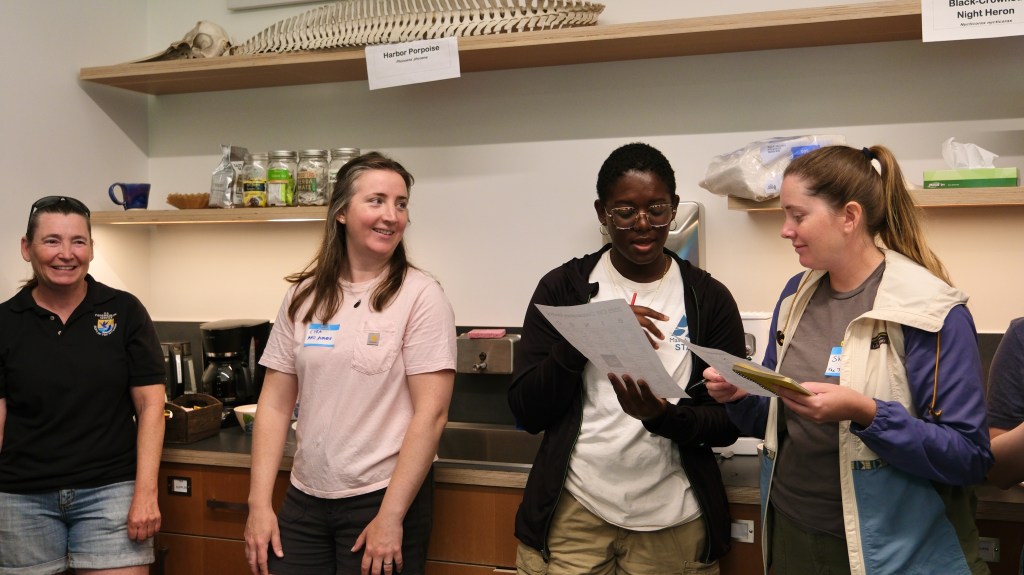
Carolyn Mostello, the Massachusetts Coastal Waterbird Biologist
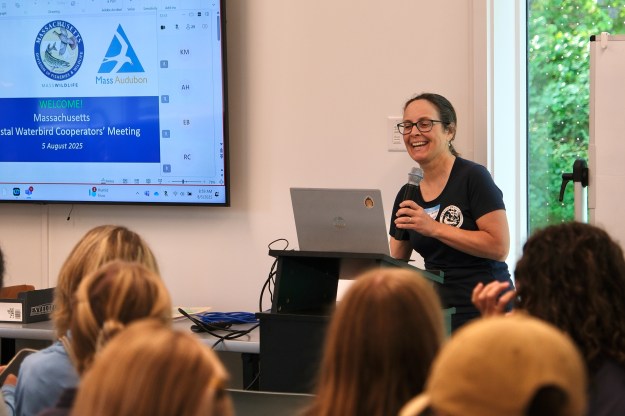
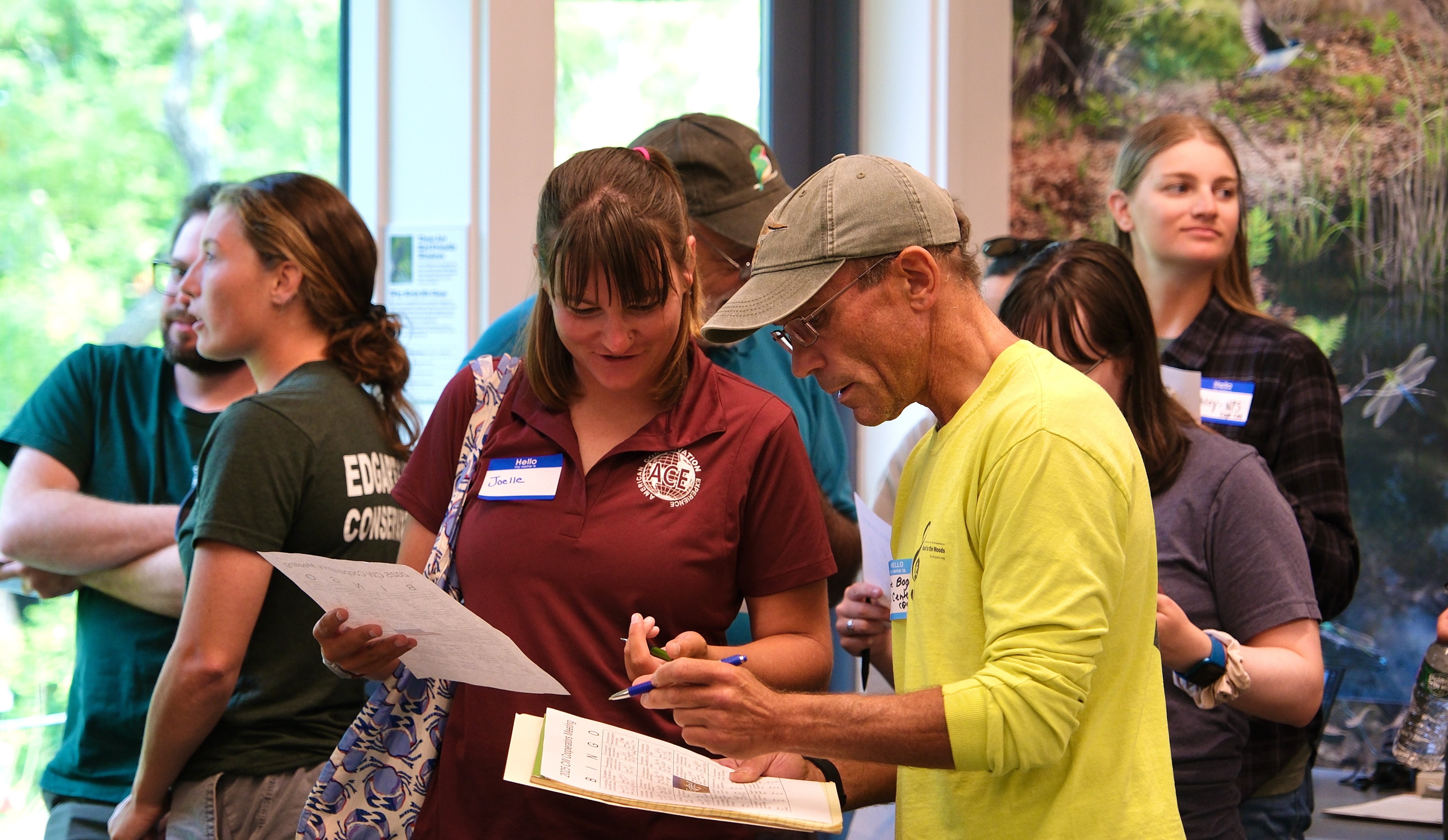
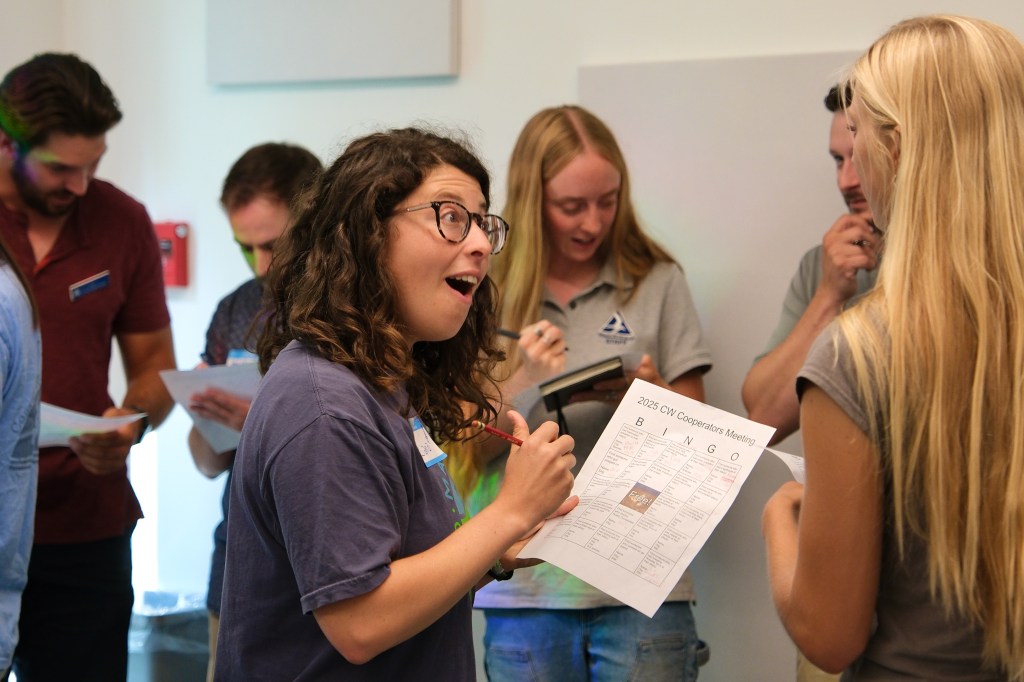
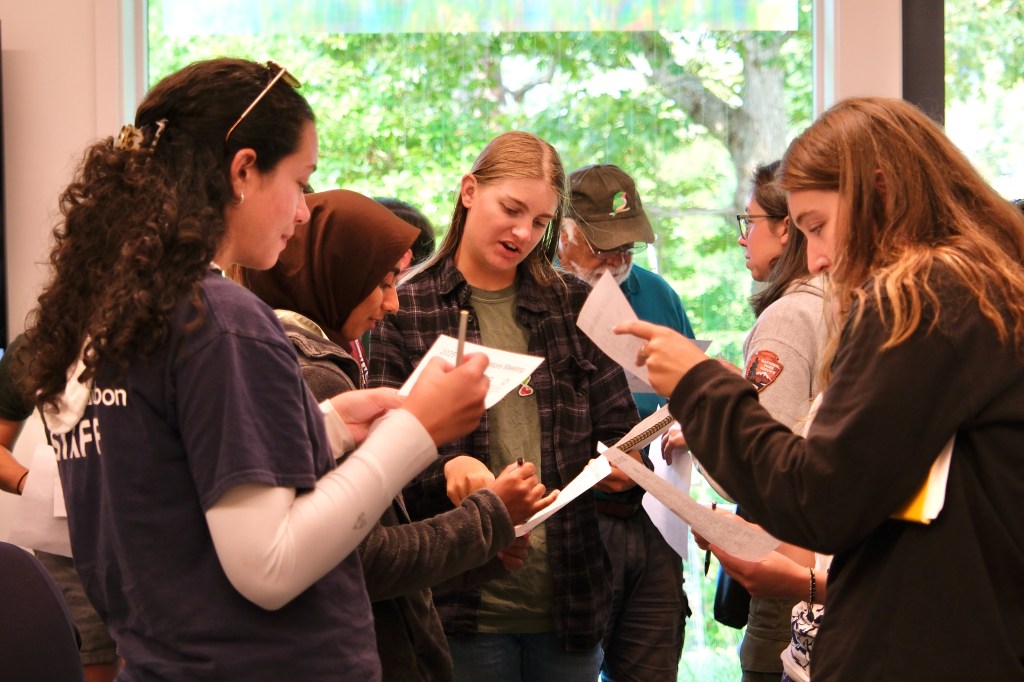
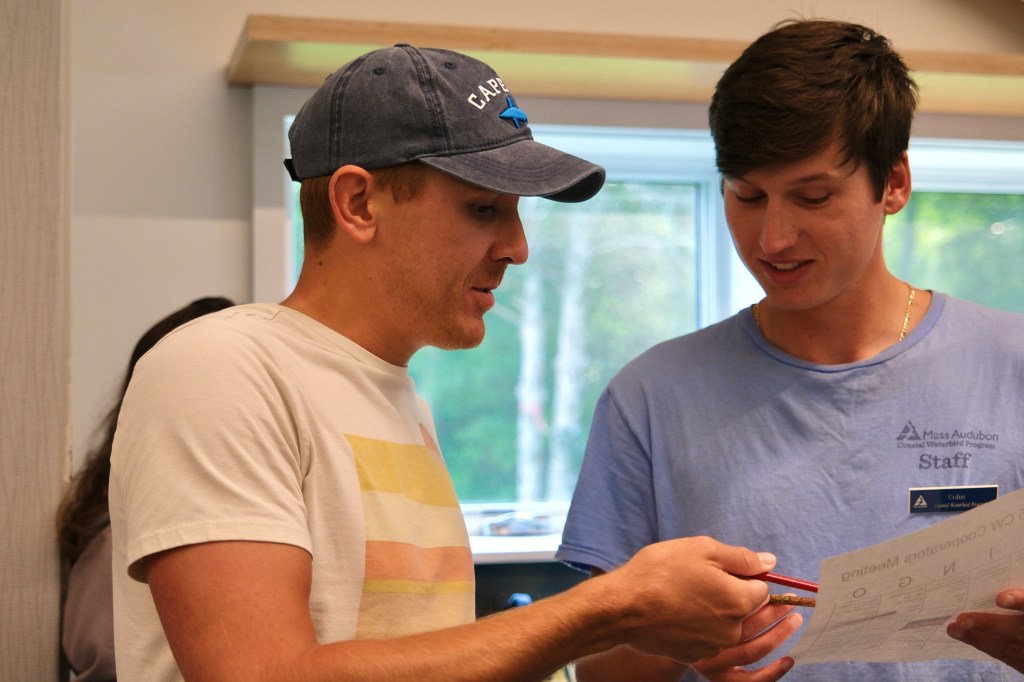
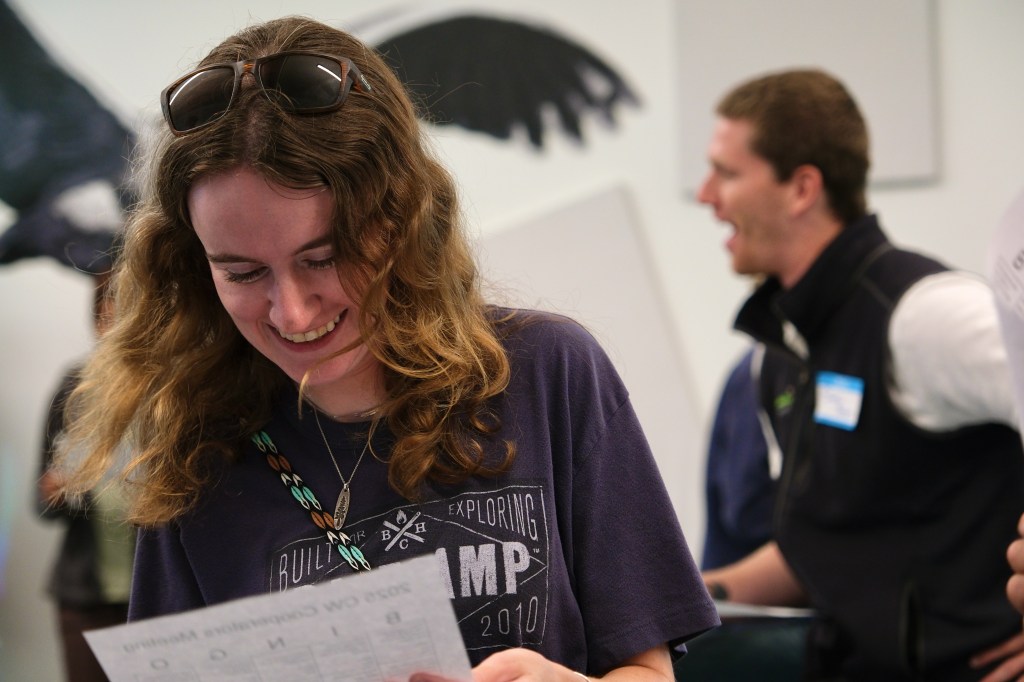
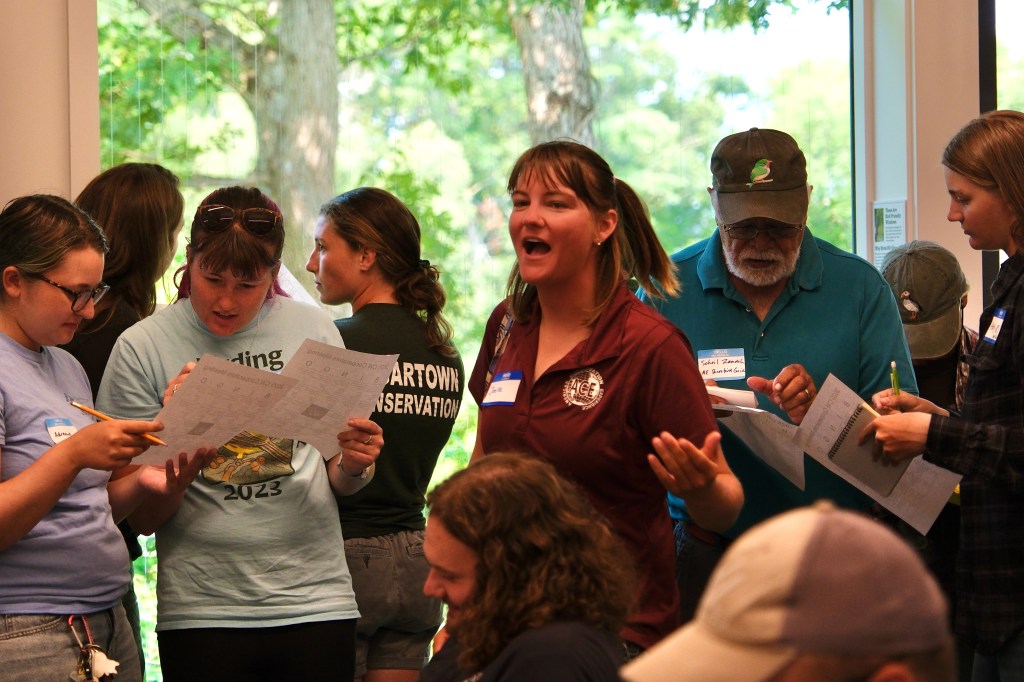
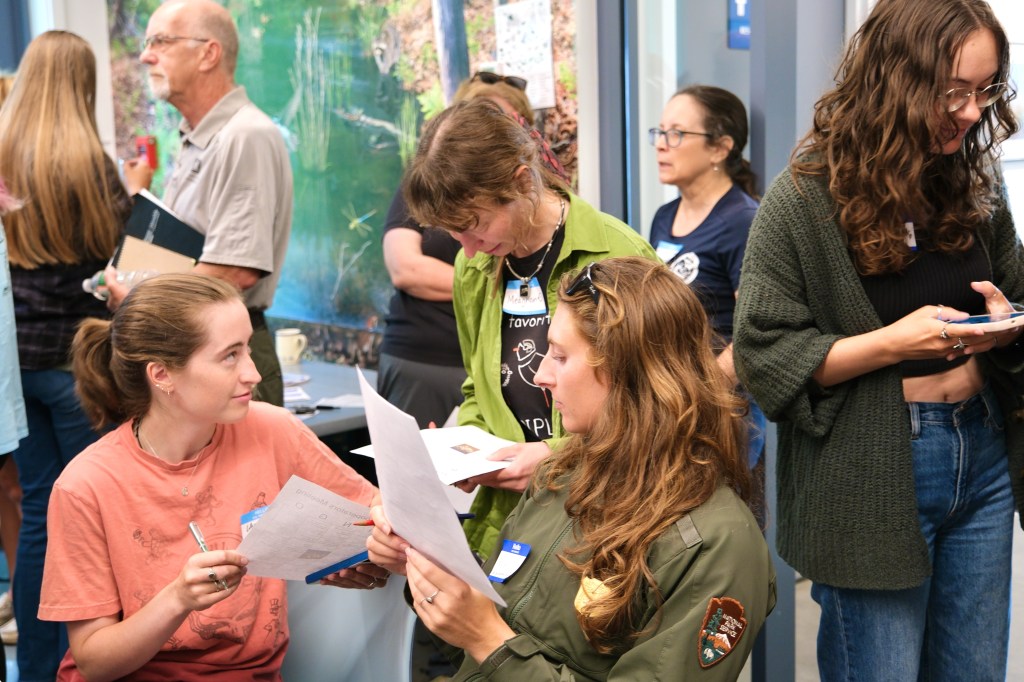
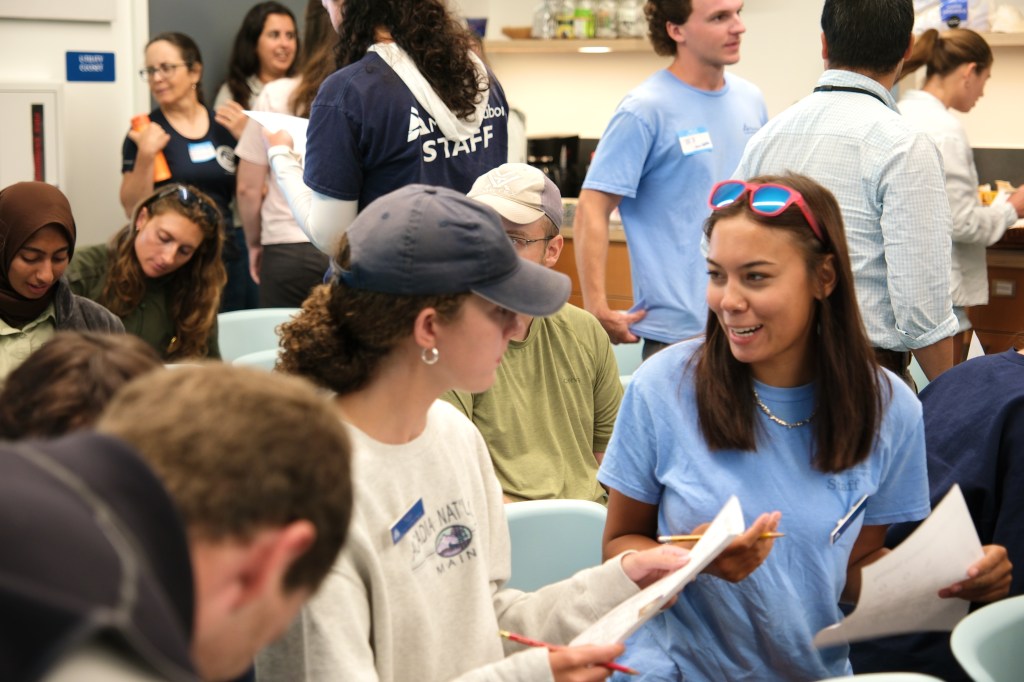
Last week I has the opportunity to attend the Massachusetts Coastal Waterbird Cooperators’ Meeting. The meeting is held annually to bring together people and organizations that are involved with population monitoring and conservation efforts on behalf of coastal waterbirds.
Representatives from the seven Massachusetts coastal regions gather to share information, anecdotes, and data collected throughout the season. This year the meeting was held at Audubon’s stunning Barnstable Great Marsh Wildlife Sanctuary; hosted by Audubon staff and Carolyn Mostello, the Massachusetts Coastal Waterbird Biologist.
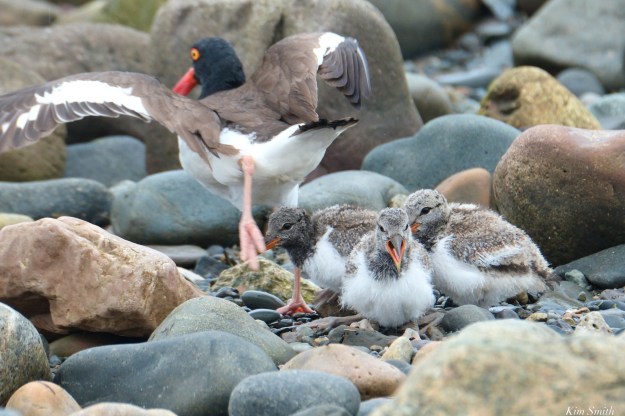
American Oystercatcher chicks
Threatened and endangered species such as Least Terns, Piping Plovers, Roseate Terns, and American Oystercatchers are given the greatest attention.
It’s fascinating to learn how we are all sharing similar experiences including egg predation by Crows, gulls, and Coyotes, disturbances of all shapes and kinds, low egg hatching, and storm washouts. Carolyn directs the event and she does an extraordinary job of weaving all the information together.
Reporting population numbers is followed by “Strange and Unusual,” a super fun section where field agents share funny/odd occurrences, photos, and videos. A special tribute was given to honor Shiloh Schulte, who perished in a tragic helicopter crash while studying shorebirds in Alaska. Shiloh Shulte was a beloved friend and mentor to shorebird conservationists every where and one of the coordinators for the American Oystercatcher Recovery Program. You can read more about Shiloh and his work HERE.
The afternoon programs are especially interesting with presenters sharing experiments, projects, and best practices, including two of special interest to our region; one on launching in-depth data collection on fireworks, and best practice for engaging with landowners. All the programs are wonderfully educational.
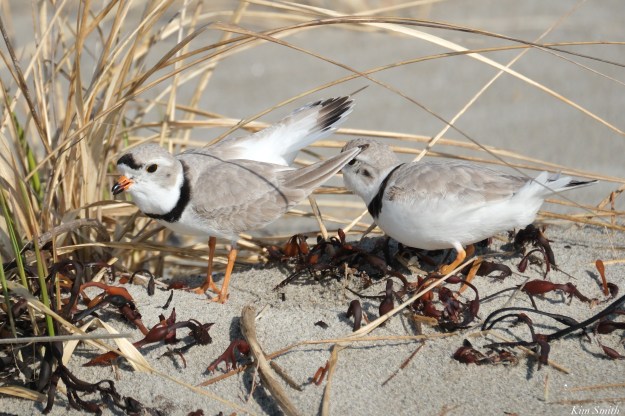
Handicapped Mom and Super Dad’s second attempt at nesting
Handicapped Mom and Super Dad’s second attempt at nesting
Despite an extremely challenging year, largely due to the fact that most of the nests around the State were washed out in a late spring storm, perhaps the most outstanding take-away is that this year again, Massachusetts is at the leading edge edge of Piping Plover recovery. We should be super proud of our state. While many regions are seeing very little, none, or even worse, declining numbers, Massachusetts is leading the way in Piping Plover recovery!
I hope you are having a lovely summer. I am so looking forward to these last three weeks of August and then we go into the wonderfully atmospheric months of September and October. Is there anywhere in the north Atlantic region where these months aren’t sublime?
I have held off on writing about PiPls all summer because we have had some very late season nesters. I’ll share an extensive report about the Plovers when I feel its safe for them and they are well on their way to fledging. In the meantime, I am very delighted to write that our Piping Plovers of Moonlight Bay has been accepted to the New Hope Film Festival and is screening on Monday, August 18th at 6:00pm. We are sharing the billing with another animal welfare documentary, The Ramba Effect, about an Asian Elephant and her 2,550 mile journey to her new home at an elephant sanctuary. If you are in the New Hope area and would like to see The Piping Plovers of Moonlight Bay and The Rhamba Effect, please go here: https://www.goelevent.com/NewHopeFilmFestival/e/AnimalWelfareDocumentaries
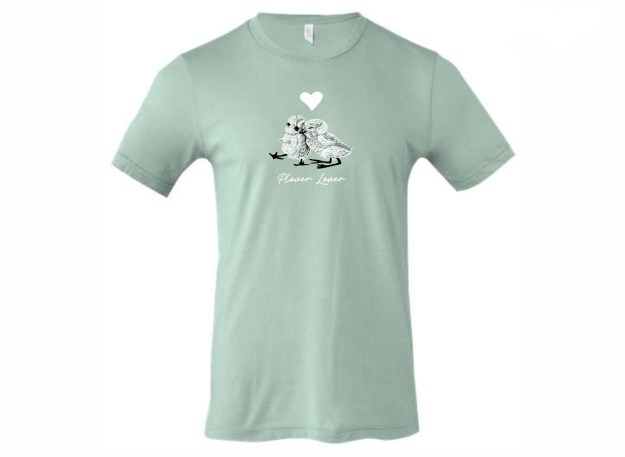
We also have all new Plover Lover T-shirts in all sizes and a great color, a sort of light sea green. For fans of West Coast Snowy Plovers, these chicks could easily pass for Snowy Plovers too. Please let me know if you like the new color. They are a beautiful quality, all cotton, unisex sizing from xs to xl. The Tees are 30.00 plus 5. shipping.
We have had some adorable “Butterballs” on the beach this summer. I define a Butterball as a fledgling that is so pudgy it looks nearly as big, if not bigger, than its parent and barely seems as though it can become airborne. Rest assured these Butterballs do fly, eventually ❤
Screenshot
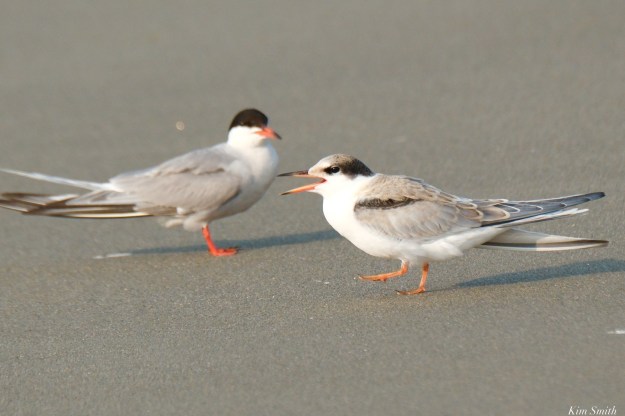
Common Tern fledgling squawking to parent, “Feed Me, Feed Me, I’m Starving!”
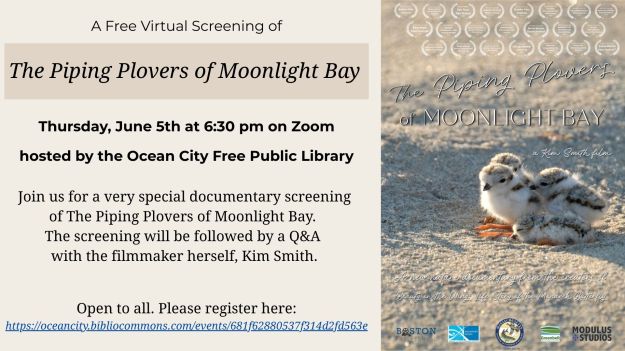
Please join me Thursday at 6:30pm for a free virtual screening and QandA of The Piping Plovers of Moonlight Bay. My new Plover friend Rhonda, from Ocean City, New Jersey, has created this event. She is hosting the screening along with the Ocean City Free Public Library. They have very generously made the screening free and open to the public. To register, please go here:
Fairly frequently when coming onto Good Harbor Beach to check on the Plovers, we find the birds off their nests and in utter panic. I have learned over time that there is only one reason why the birds along the one mile stretch of beach are frightened enough to leave their nests, in unison. Sure enough, in a moment or two, you hear the drone’s whirring motor first and then observe as it passes over the protected areas of the beach. Usually not one go-around, but the operators make repeated passes over the birds. Whether zooming at top speed or hovering, the Plovers are terrified by these modern day avian predator-like cameras.
It is illegal and considered harassment under the Migratory Bird Treaty Act to operate a drone over breeding areas. People are either unaware, feign ignorance, or even worse, are aware and simply don’t care. Countless times we have come onto our shifts to find all the birds in the area in complete meltdown mode. The birds think the drone is a predator that has come to eat their eggs, chicks, or themselves. There are even instances where a bird has flown after the drone and becomes injured. Today a man told me he was fully licensed to fly his drone over Good Harbor Beach. Drone operators need to understand that state, federal, and local ordinances supersede any licensing permit (see below for Good Harbor Beach regulations regarding drones).
There is accumulating evidence that the mere presence of drones causes direct harm to birds, not just during breeding season. The unfamiliarity and noise interrupts courtship, mating, and feeding. Entire tern and heron colonies have been abandoned due to drone disturbances.
Plover in crouched position, frightened by overhead drone, and off her nest
This past spring there was a political rally at Good Harbor Beach. We thought it tremendous that people were gathering in support of their views and the birds had absolutely no problem with the steady stream of people entering the beach from all directions. However, the representative’s organizers began preparing a sign that could be read only from an aerial pov, which meant they intended to fly a drone over the beach. We asked the organizers to please not fly the drone but they ignored our pleas and told us the drone was only going to fly over the water and the drone would only be on the beach for a few minutes. Of course we knew that would not be the case and sure enough the drone flew repeatedly over the dunes, disturbing every bird along the entire length of the beach. After fifteen minutes of sounding their alarm calls, all the birds on the beach flew off in unison. The drone was documented flying low over the beach for 45 minutes. Clearly, a beach with nesting birds is not the place to hold a rally if a drone is part of the equation, particularly when there are other locations as easily accessed.
Over millennia, nesting birds evolved with the constant threat of avian predators, including hawks, falcons, crows, gulls, and eagles. They have not adapted to understand that a drone is not a predator, no matter how much the drone operator protests that the birds are unbothered by the drone and have become used to its presence.
It is imperative for the safety of the birds that they have a healthy fear of drones. The last thing we want are nestlings thinking that hovering airborne shapes are nothing to be afraid of.
In our collective experiences monitoring the Plovers, we come across unethical behavior not only on the part of drone operators but also by fellow wildlife enthusiasts. We have seen photographers mashed up against the symbolically roped off areas, despite massively long telephoto lens, parking themselves for hours on end, and also following the birds relentlessly up and down the beach, despite the bird’s clear signals it is trying to get away and/or tend to its chicks. Early on in the pursuit of my dream to document wildlife, I was part of crowds that photographed owls. Observing how sensitive are owls, I no longer film owls in known locations. If I come across an owl or rare bird when out filming, I take a few photos and footage and go on my way. Crowds and hovering persons are also the reason why I no longer post specific locales and keep location information general.
To ethically document wildlife requires thought and is also a tremendous responsibility. We can all do our part to protect the beautiful creatures in our midst by being mindful and sensing their boundaries, especially, especially during the time of year when they are breeding.
Thank you for taking the time to read this information. I hope your question is answered, and why. Please share this post. Thank you 🙂
Many thanks to City Councilman Scott Memhard for helping me locate the regulations on the City’s website!
City of Gloucester Good Harbor Beach Regulations for Model Airplanes, Radio Controlled Aircraft, Drones
Good Harbor Beach Parking Lot
1. Permitted to fly only when beach parking lot is not in operation (no attendant on duty).
2. Restricted to times when pedestrian and vehicle traffic are at a minimum.
3. Not permitted before 8:30am.
4. Shall fly over the parking lot and marsh areas, not the road or beach.
5. Noise levels will be restricted to an acceptable level (non-flow thru, expansion chamber mufflers only).
6. Pilots shall fly in a safe and responsible manner at all times.
7. Pilots will be responsible and liable for their actions.
8. Pilots will abide by regulations in effect and maintain a safe environment.
9. Pilots will be considerate of wetlands and wildlife.
First the bad news – our Super Mom and Dad’s nest was washed away during Thursday’s nor’easter. We are very sad about this especially as chick hatching was imminent.
Our Original Pair have never before lost a nest because of a storm however, several years ago, a pair at GHB did lose their nest due to wash out as it was in a very unsafe place, smack dab in the middle of the beach. That pair successfully renested.
We are much more fortunate than some beaches. Our Plover ambassador friends at Hull lost a total of 25 nests and the high tides have destroyed miles of their symbolic shorebird protections.
Super Mom and Dad after the nor’easter
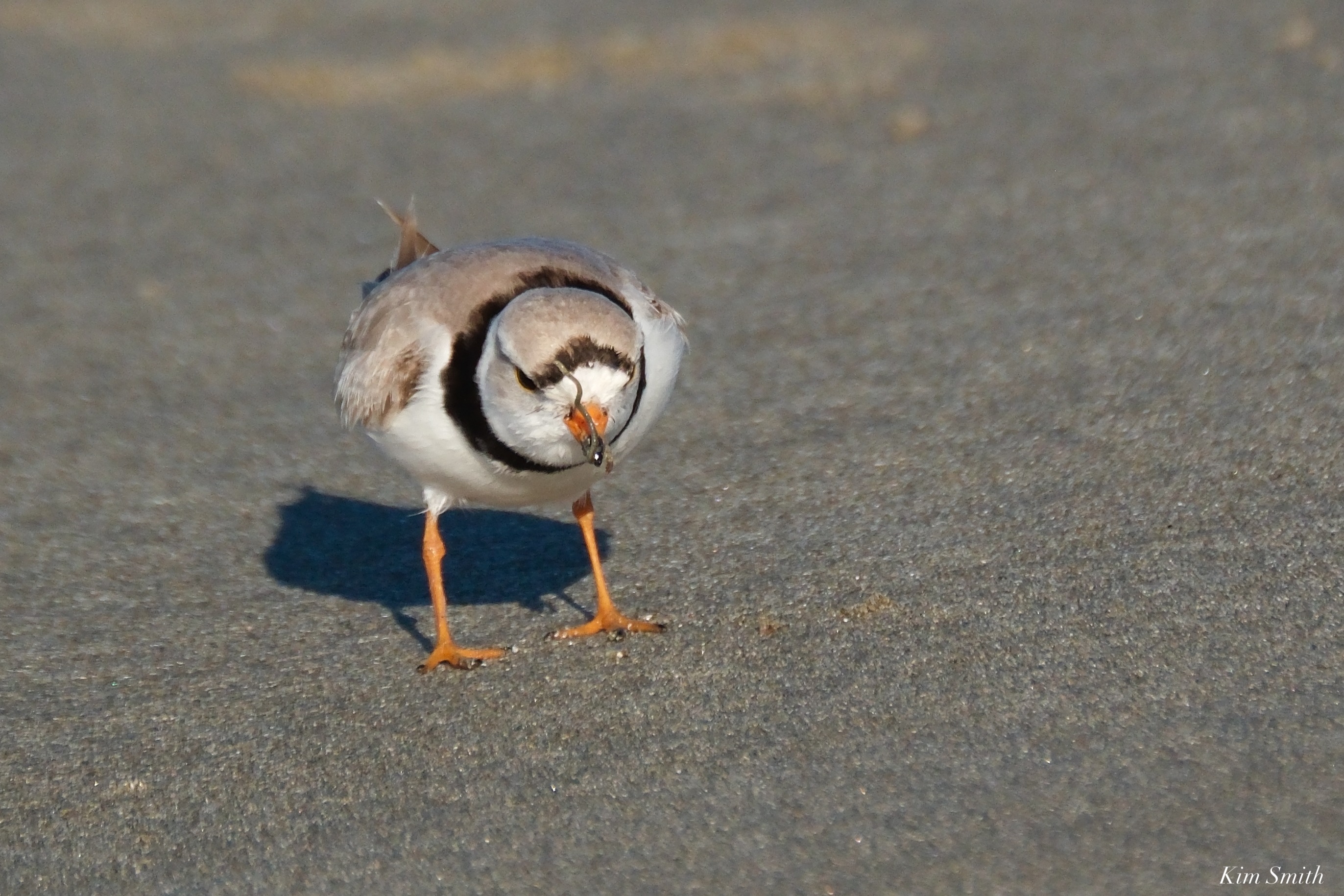
Fierce Dad catching breakfast after the storm
Now for the good news – Piping Plovers often renest, especially when this early in the season. One pair was documented renesting a total of seven times in one season. And it appears as though Super Mom and Dad are preparing to do just that. After a day of looking lost and forlorn, Dad is making scrapes in the sand and calling to Mom. Producing a new batch of eggs is very taxing for the female and our Super Mom is already very vulnerable due to her loss of one foot. A gentle reminder that when you see Plovers on the beach, please give them lots of space to forage, and hopefully, make new eggs.
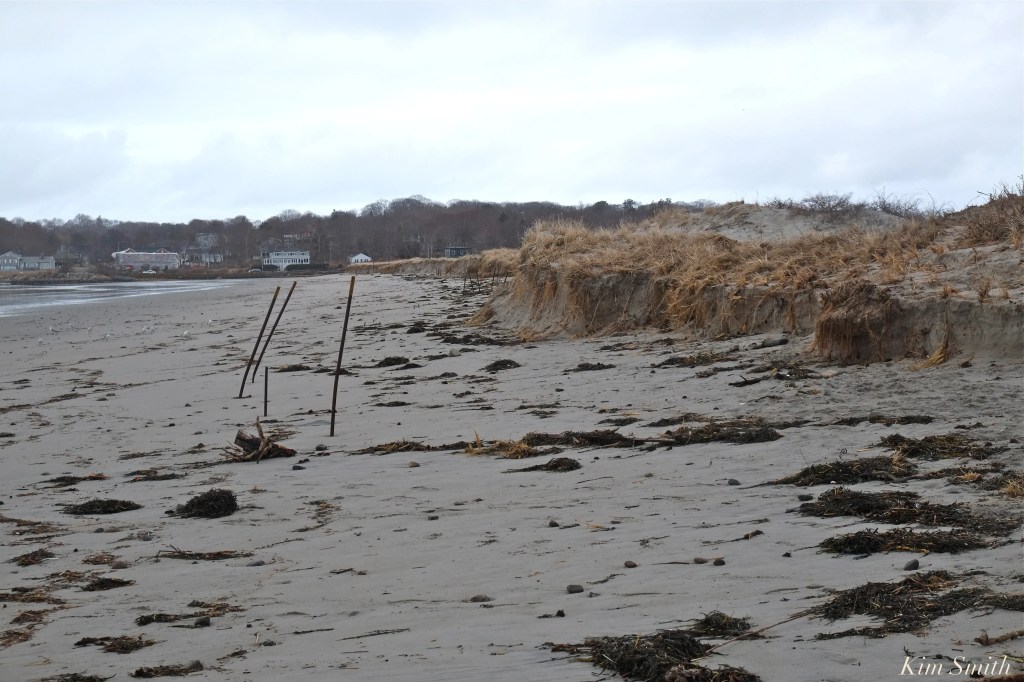
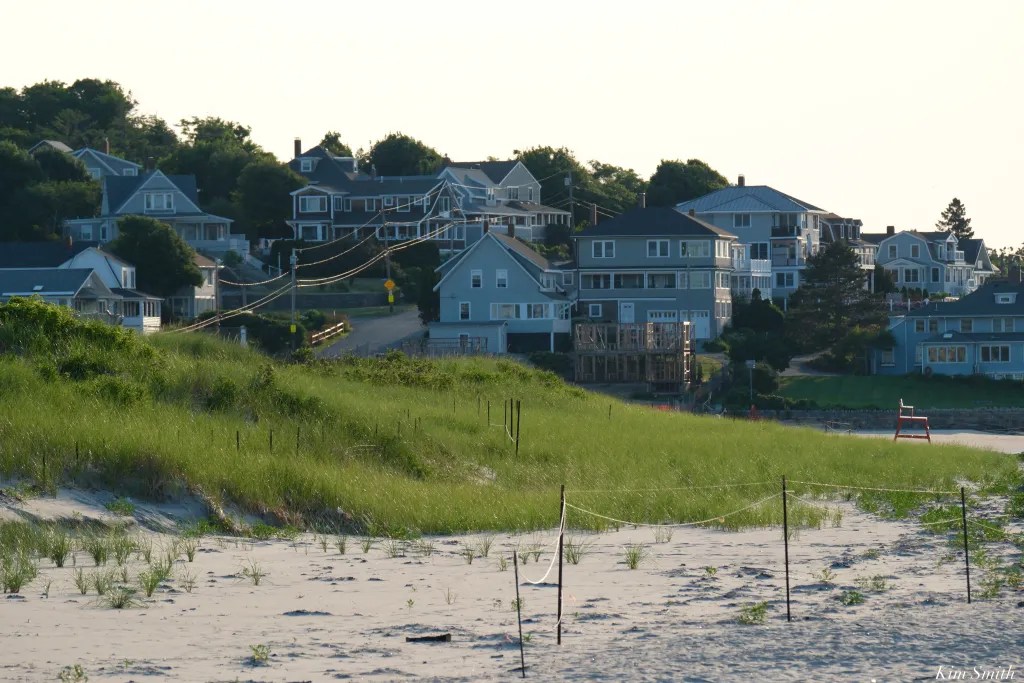
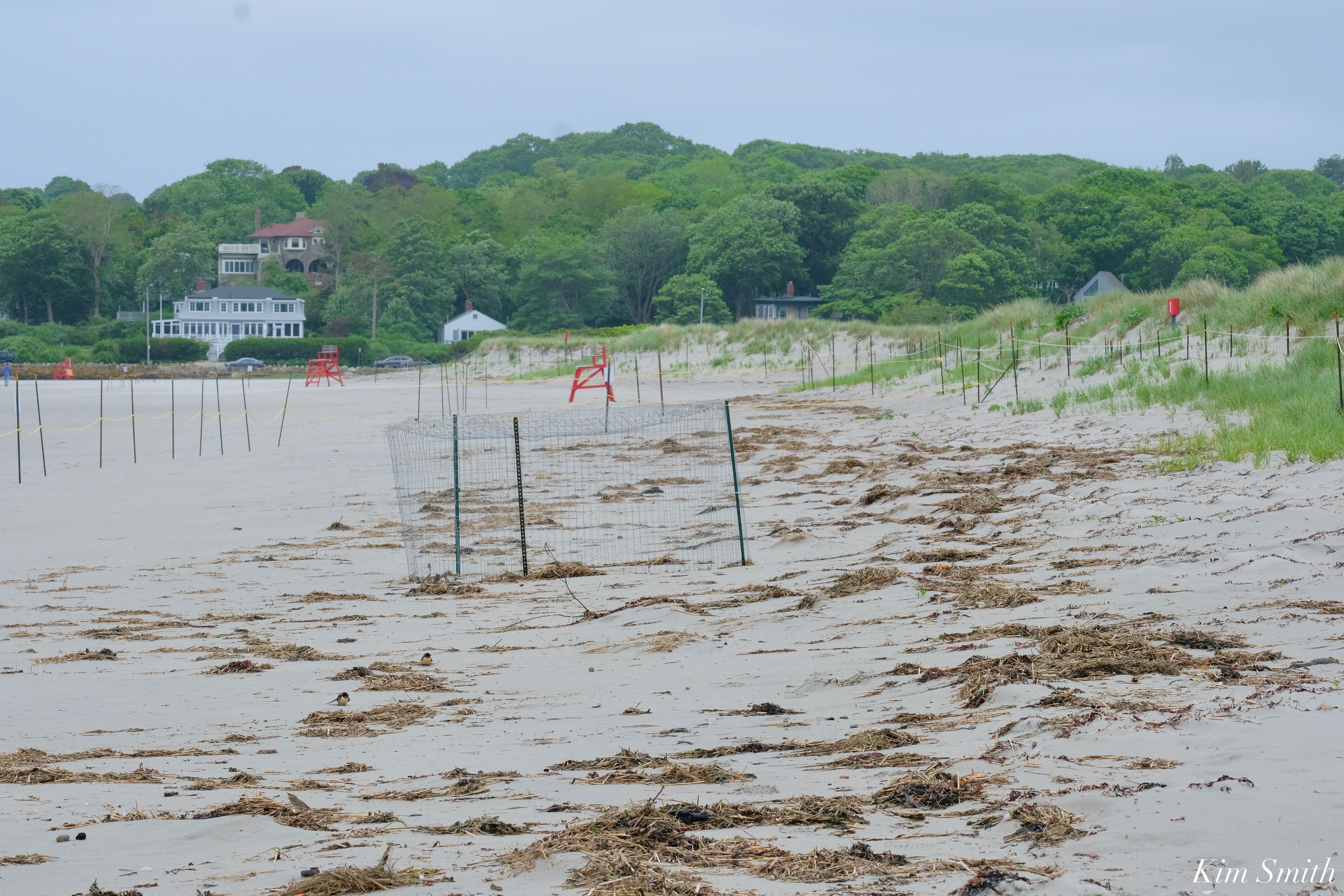
Despite the extremely high storm tide going all the way to the base of the dunes, Good Harbor Beach survived the storm fairly well and looks better after this nor’easter than any nor’easter that I can recall. Why you may wonder? As a direct result of the symbolically roped off areas in place for the Plovers, beachgoers and pets are restricted from recreating right up to the base of the dunes. This has allowed native vegetation to take hold, and in some areas, to thrive. This vegetation, such as beach grass and Sea Rocket, holds the sand in place and is our very best defense against rising sea level and the ravaging effects of the highest of tides and gale force winds.
The photos tell the story best
Compare the photos from storm damage in 2018 and how the dunes looks in 2024.Note how far back is the dune, the sheer drop off, and complete lack of vegetation. I recall a time when people were so very worried about how much beach we were losing each year to severe storm damage. That is no longer the case!
Click on the above photos from 2018 to enlarge and get a sense of how much the beach has filled in and how much healthier are the dunes.
Good Harbor Beach 2021, 2024, and 2025 – vegetation gradually taking hold and the sand is filling in.
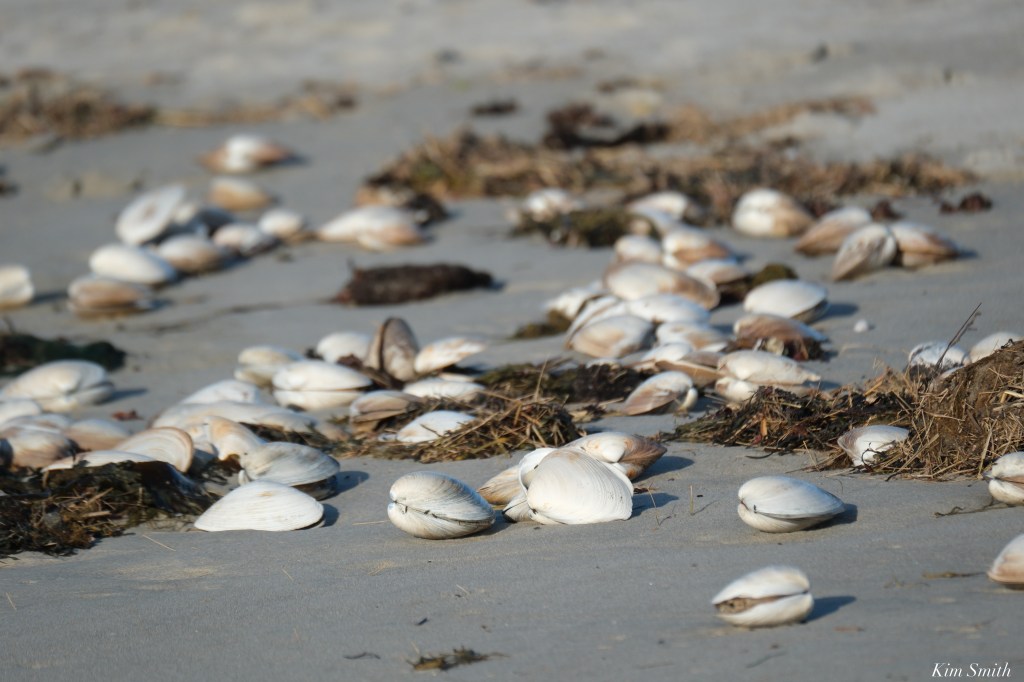
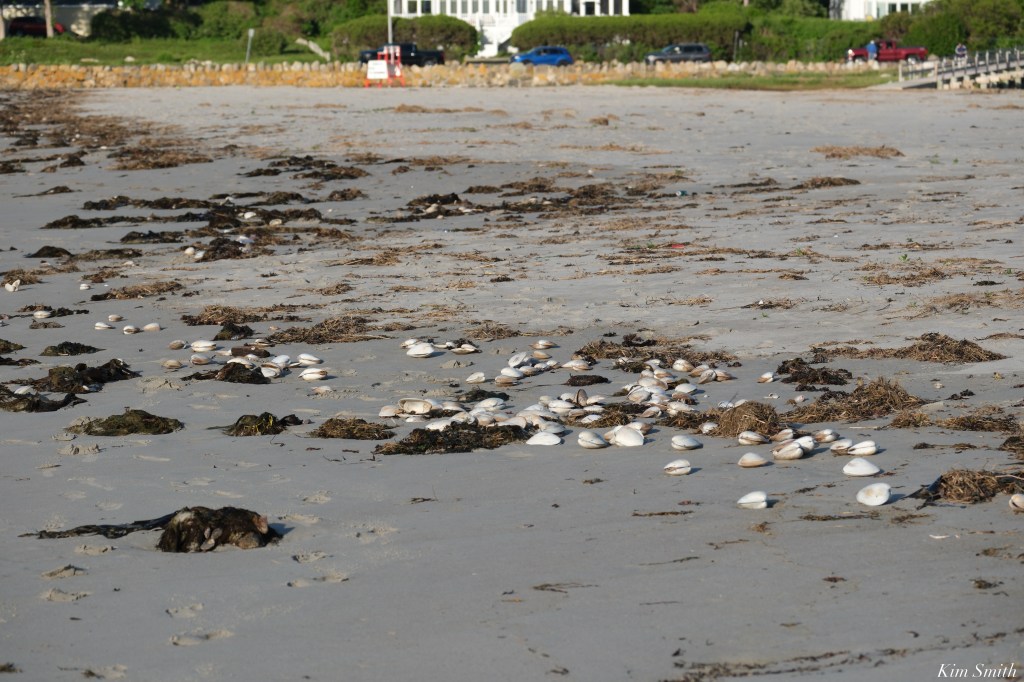
A plethora of Atlantic Surf Clams tossed ashore by the sea
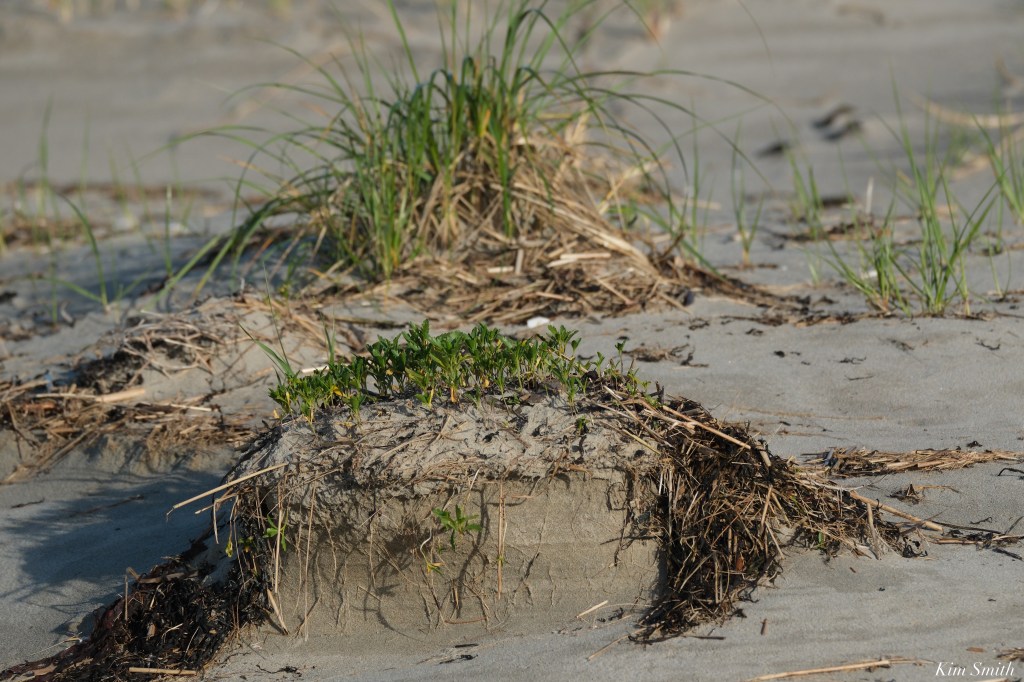
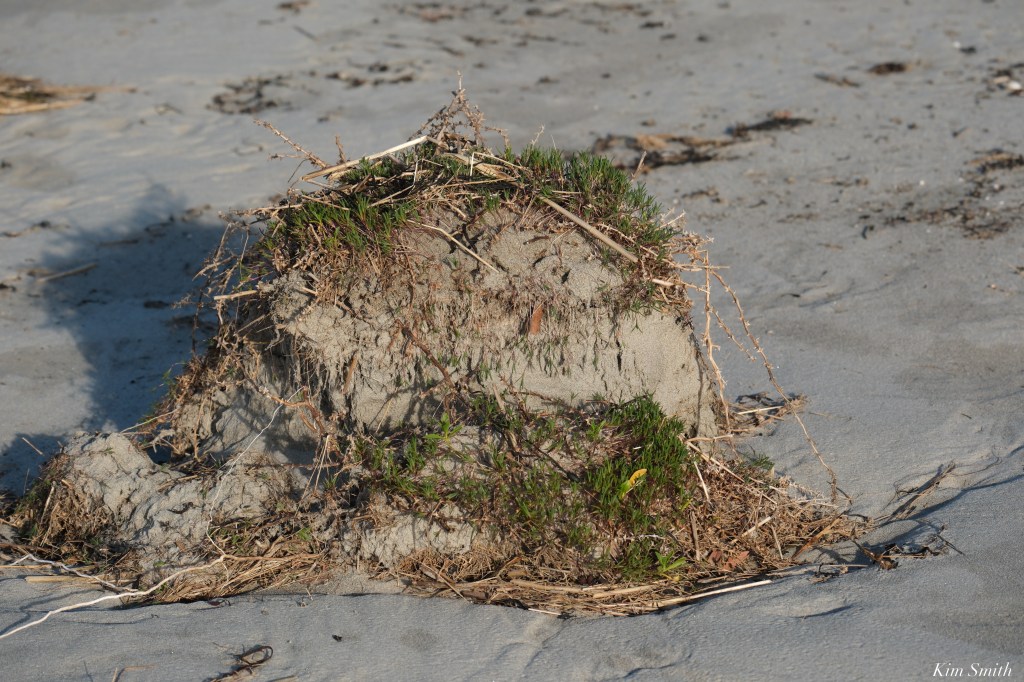
What are these peculiar mounds dotting the beach after the nor’easter? The photos are included to show how much the sand shifted during the storm and how vegetation helps keep sand in place
Soooo much seaweed at Brace Cove! The insects attracted to the drying seaweed is fantastic for wildlife, but get ready for super smelliness!
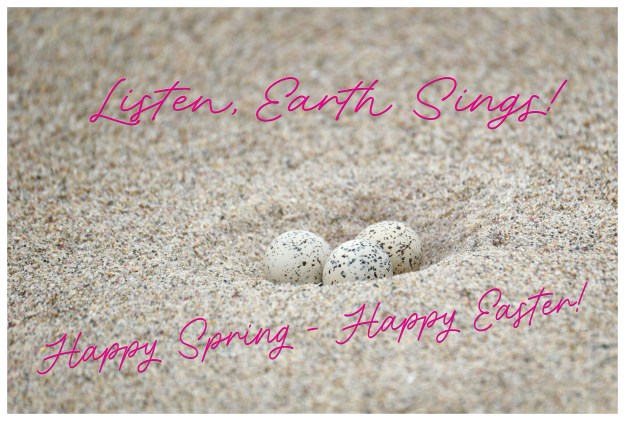
I wanted to share with you two things of beauty for Easter Sunday –
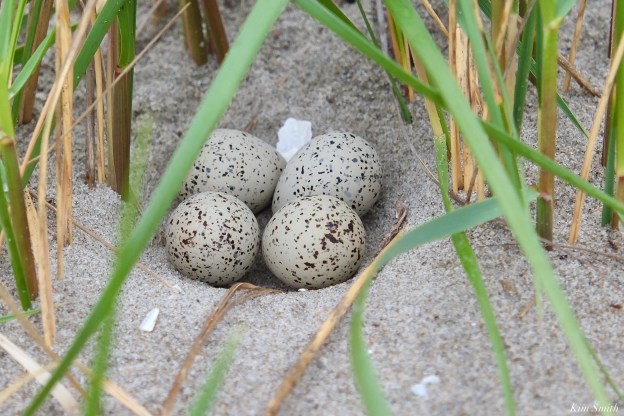
This image of three Piping Plovers eggs in the sand is one of my forever favorite PLover nests. The nest was located in the most impossibly dangerous area, dangerous because it was on a highly crowded beach several feet from a City sidewalk. Not only that, as you can see from the photo, it was fully out in the open; not near a patch of beach grass or piece of driftwood, stone, or shell. The new, inexperienced PLover parents had not added a single bit of broken shell or pebble to line the nest either. Like all Plover parents though, they did sit on the eggs night and day. Unlike many PiPl parents, when danger arose, they did not leap up and try to distract the predator, but sat very, very still, camouflaged in the naked sand by their sheer stillness.
We who were aware of the nest had serious doubts as to whether or not the eggs would survive the plethora of crows and dogs off leash that frequent this beach. Miracle of miracles, all three chicks hatched. And all three grew to fly and to migrate.
Our Charlotte is seven and like all grandparents the world over, we think she is tops. She writes and illustrates these sort of sing-songy poems and for Easter she wrote one each for myself, her Grandfather, and her Dad. Here is mine –
the trees told the bushes and the bushes told the flowers and the flowers told the rain and the rain told the sun and the sun told the clouds Happy Easter! Spring is Here!
Time to add Emily Dickinson to our nightly bedtime reading I think.
This annual festival takes place at the Bay of Somme and is not only a film festival but a magnificent celebration of the natural world. There are over 400 guided walks, photo and art exhibits, screenings of the best nature documentaries, activities dedicated to children such as workshops and shows, debates, and conferences.
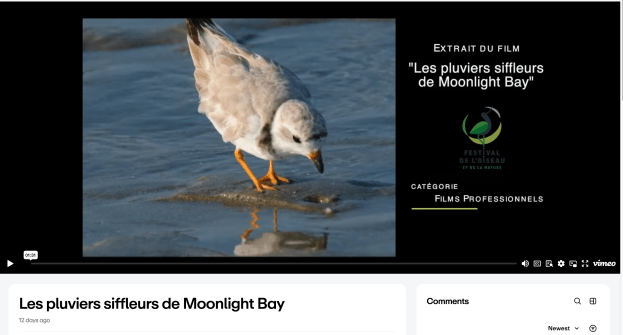
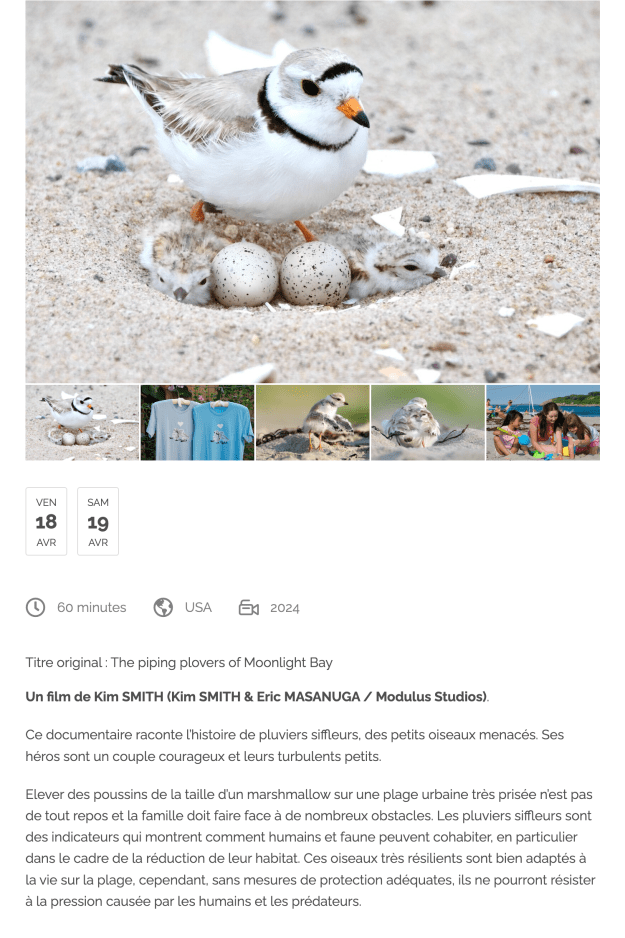
Ce documentaire raconte l’histoire de pluviers siffleurs, des petits oiseaux menacés. Ses héros sont un couple courageux et leurs turbulents petits.
Elever des poussins de la taille d’un marshmallow sur une plage urbaine très prisée n’est pas de tout repos et la famille doit faire face à de nombreux obstacles. Les pluviers siffleurs sont des indicateurs qui montrent comment humains et faune peuvent cohabiter, en particulier dans le cadre de la réduction de leur habitat. Ces oiseaux très résilients sont bien adaptés à la vie sur la plage, cependant, sans mesures de protection adéquates, ils ne pourront résister à la pression causée par les humains et les prédateurs.
See what Los Angeles PBS has to say about our film!
The Piping Plovers of Moonlight Bay airs Tuesday, April 15 at 8 PM
“Against the ever-changing tides of the Atlantic, a tiny but mighty family fights for survival. The Piping Plovers of Moonlight Bay follows a devoted pair of these rare shorebirds as they raise their marshmallow-sized chicks on a bustling urban beach. Every day is a test of their resilience—avoiding predators, braving unpredictable weather, and navigating a world where humans and wildlife collide. Will their fragile brood make it to adulthood?
This heartwarming and visually stunning special takes you inside the incredible journey of one of nature’s most determined parents. Witness breathtaking moments of survival and the deep bonds that keep these feathered families together. A story of hope, adaptation, and the delicate balance of our ecosystems.
Tune in for an unforgettable look at one of nature’s most compelling underdog stories. Sometimes, the smallest creatures have the most powerful stories to tell.”
California Friends, please check listings as The Piping Plovers of Moonlight Bay is airing at your local stations – KCET, KOCE, KVCR, KPJK, KQED, KQEH, KRCB, and KVPT.
Film screenings are designed to be presented to conservation organizations, schools, libraries, clubs, and special events for both private and public groups.
Film Screening and Q&A with the Director, Kim Smith
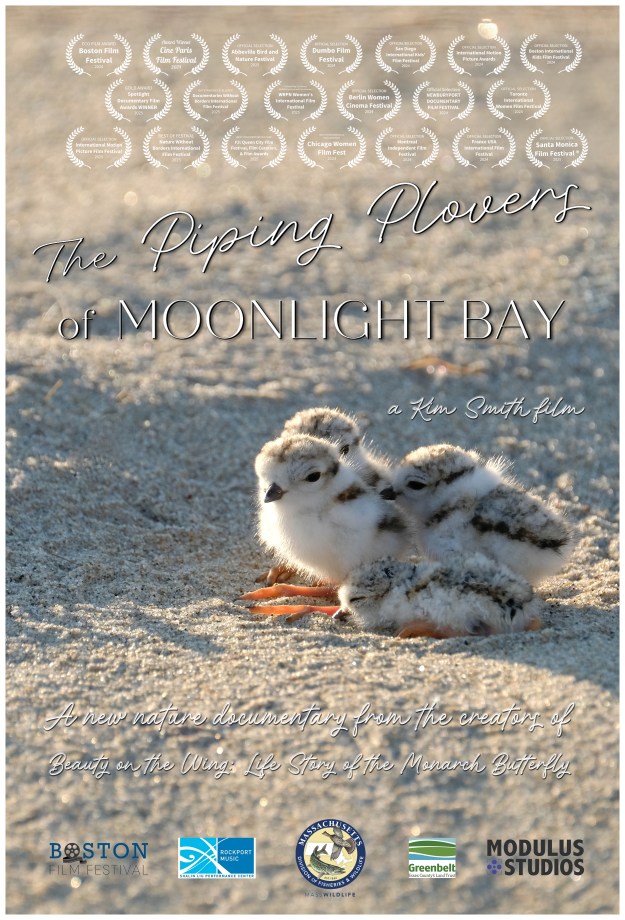
The Piping Plovers of Moonlight Bay
Discover how we can all become stewards of these pocket-sized, endangered shorebirds.
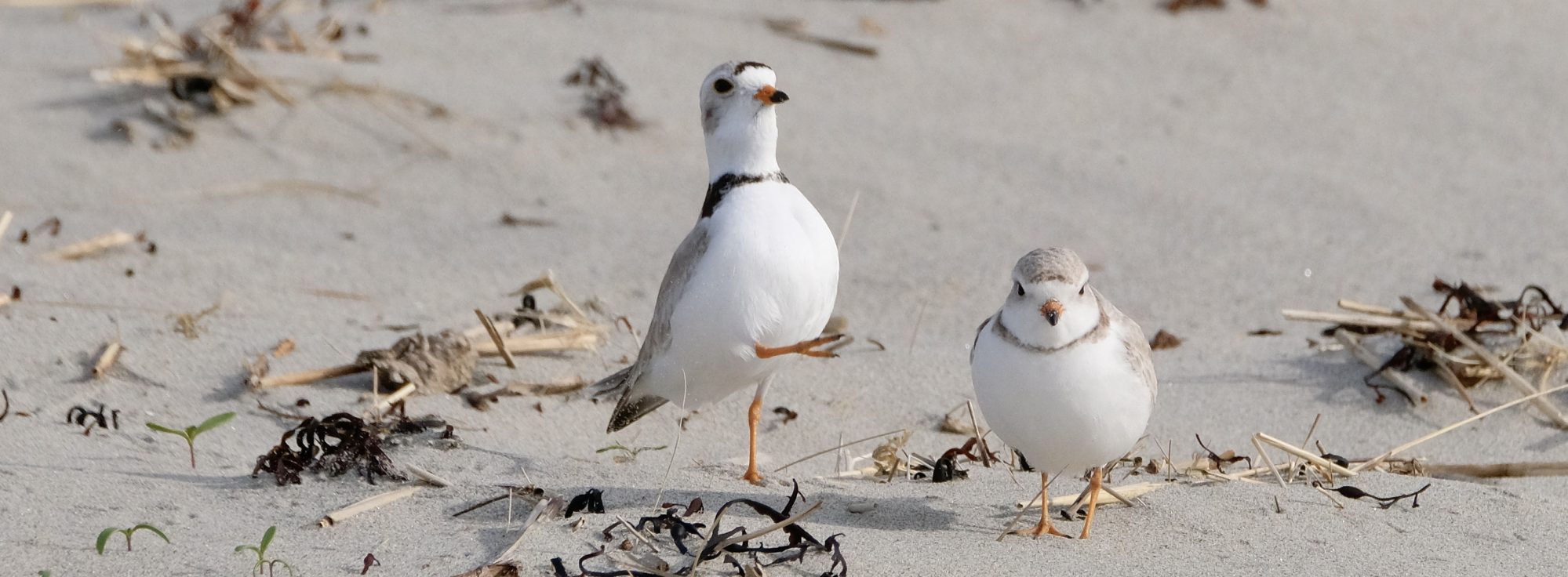
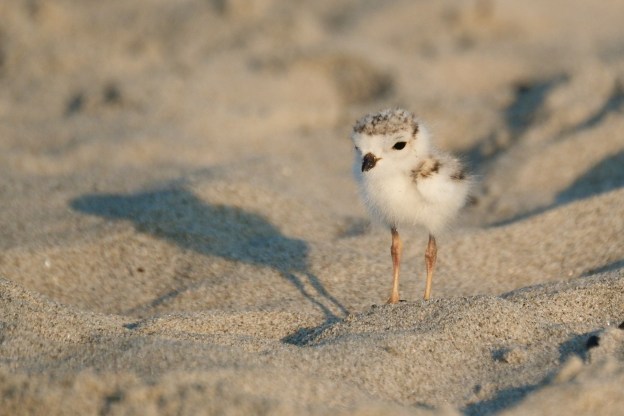
Synopsis:The Piping Plovers of Moonlight Bay is a one-hour nature documentary that tells the life story of these captivating and endangered birds. The film features a pair of courageous Plovers and the adventures of their blended brood of chicks. Raising tiny, marshmallow-sized baby birds on a crowded urban beach is a perilous occupation and the family overcomes many life-threatening obstacles.
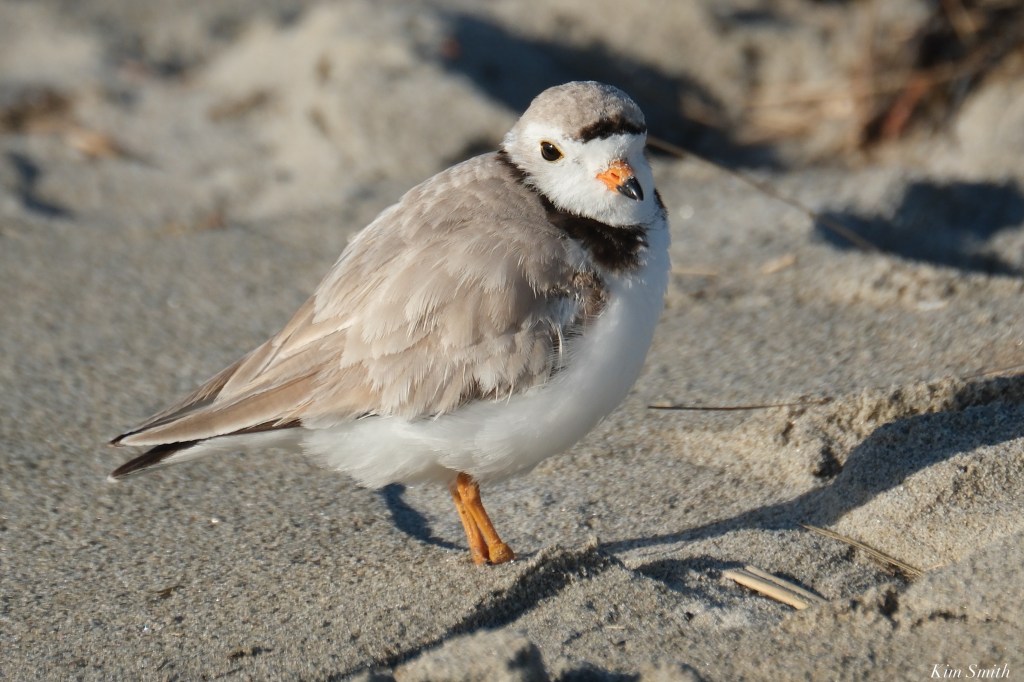
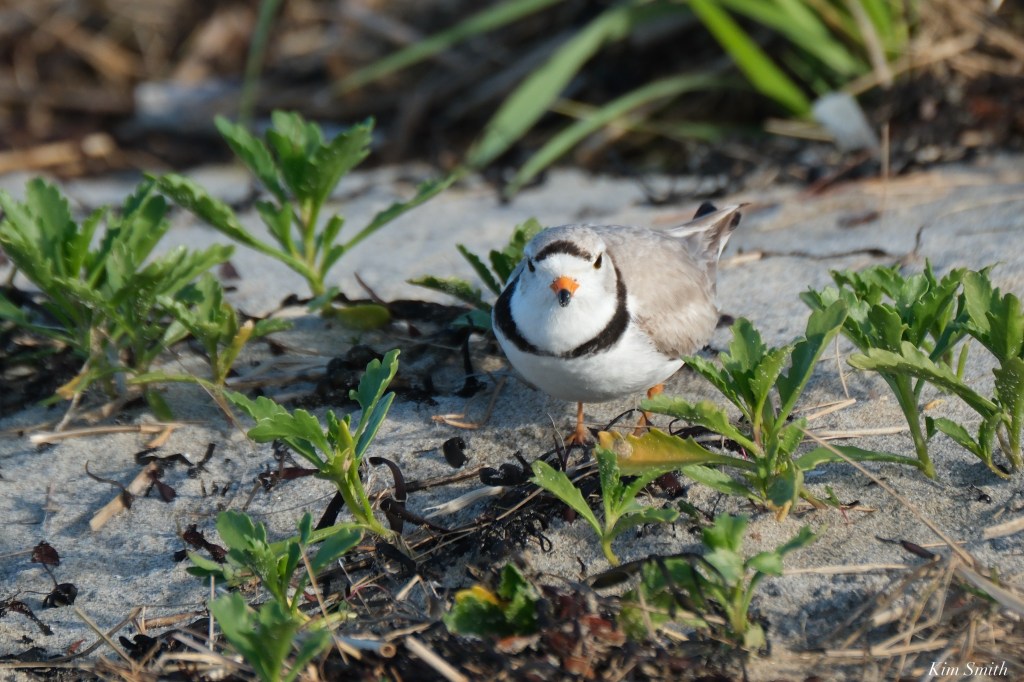
Piping Plovers are a bellwether species that speaks to how successfully wildlife and people interact with one another, especially in light of the growing threat of habitat loss. These remarkably resilient birds are well adapted to life on the beach however, without adequate protective measures, Piping Plovers will fail in the face of pressure created by people and predators.
We are inspired by the beauty of the Plover’s life story and also highly aware of the formidable challenges these valiant little birds face at every stage of life
For schedule a screening, please contact Kim Smith at kimsmith.designs1@gmail.com and visit the film’s website here: The Piping Plover Project











 The Piping Plover Project