The Piping Plover (Charadrius melodus) is a sparrow-sized bird named for its distinct, highly varied, and melodic piping vocalizations.
The diminutive shorebirds are well-camouflaged, mirroring coastal hues of the surrounding shoreline, of weathered driftwood and sandy beaches. Piping Plovers sport a black or brown crescent moon-shaped headband and wider black or brown collar band. Their black-tipped orange bills are darker in winter, more brilliant in summer, and slender orange legs and teeny-taloned toes propel them around the beach with lightning speed.

Piping Plover male, left, female right
The difference between a male and female Piping Plover is usually easy to spot. The female’s headband is typically paler and her shoulder collar less pronounced however, males with the lightest markings look similar to females with the darkest markings.
Piping Plovers forage along the shoreline, just as do Sandpipers, and the two are often confused. They eat a wide variety of invertebrates including insects, marine worms, tiny mollusks and crustaceans.
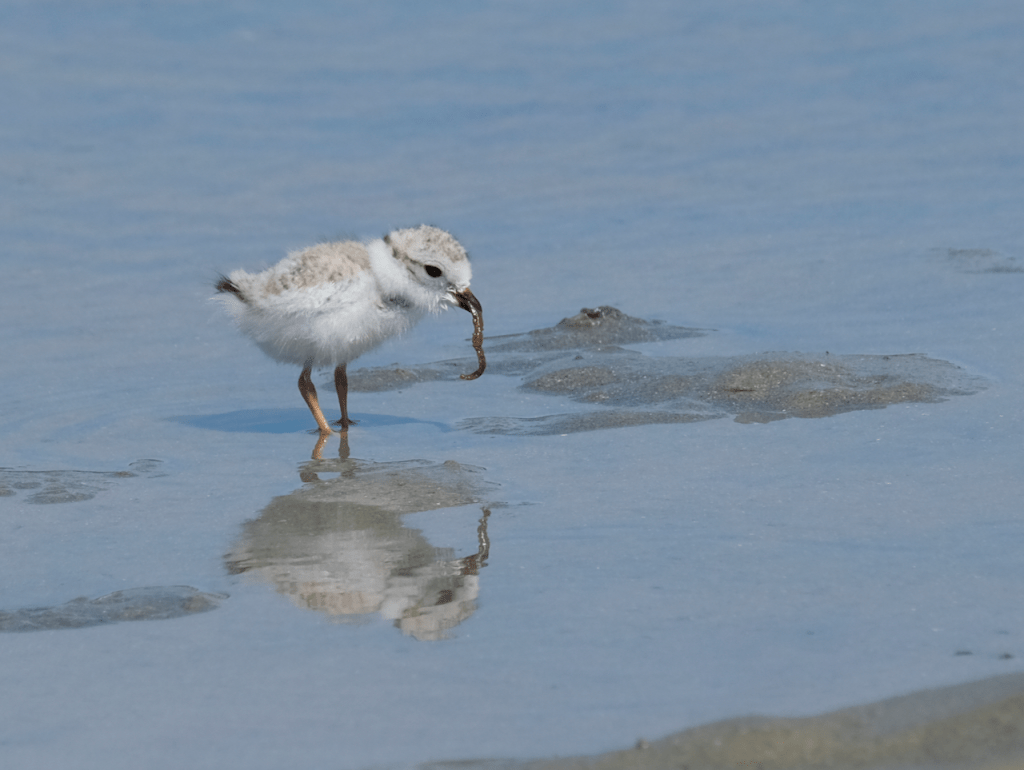
Chick eating a marine worm
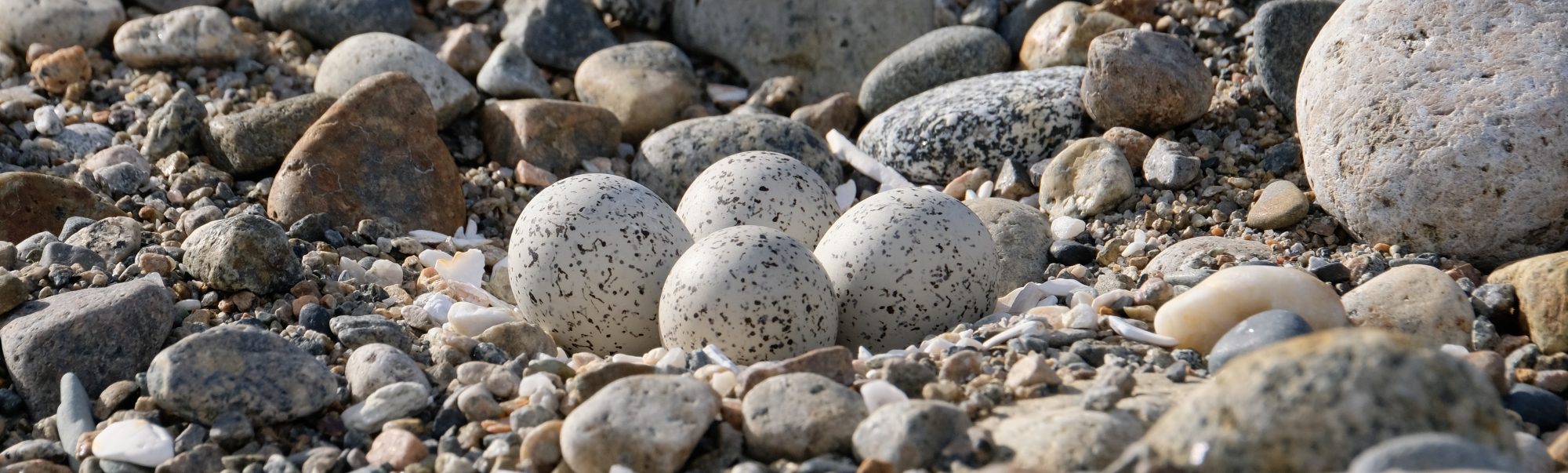
Piping Plovers nest on beaches, the same area of the beach that people enjoy, too. Their nests, eggs, and chicks are so well-camouflaged that it is easy for people and pets to step on them before they are even aware of their presence.

Shoreline development, off road vehicles, free roaming cats and dogs, crows, and seagulls have contributed to the decline of the Piping Plover. Currently, there are only about 8,000 individuals. Critical Piping Plover breeding habitats are protected to help the birds successfully nest and rear chicks to fledge.
The Piping Plover is federally listed as Endangered in the Great Lakes region and as Threatened in the Atlantic Coast region and Great Plains; and is also listed as Endangered in Canada. Threatened species of wildlife share the exact same protections as Endangered species.
In 2016, a pair of Piping Plovers arrived at Good Harbor Beach, quite possibly, the first nesting pair in nearly a century. A loosely formed bunch of volunteers began watching over the Plovers and subsequently formed the Piping Plover Ambassador group. We provide full coverage at Good Harbor Beach, monitoring the Plovers and sharing information with beachgoers about our most vulnerable summer beach residents.
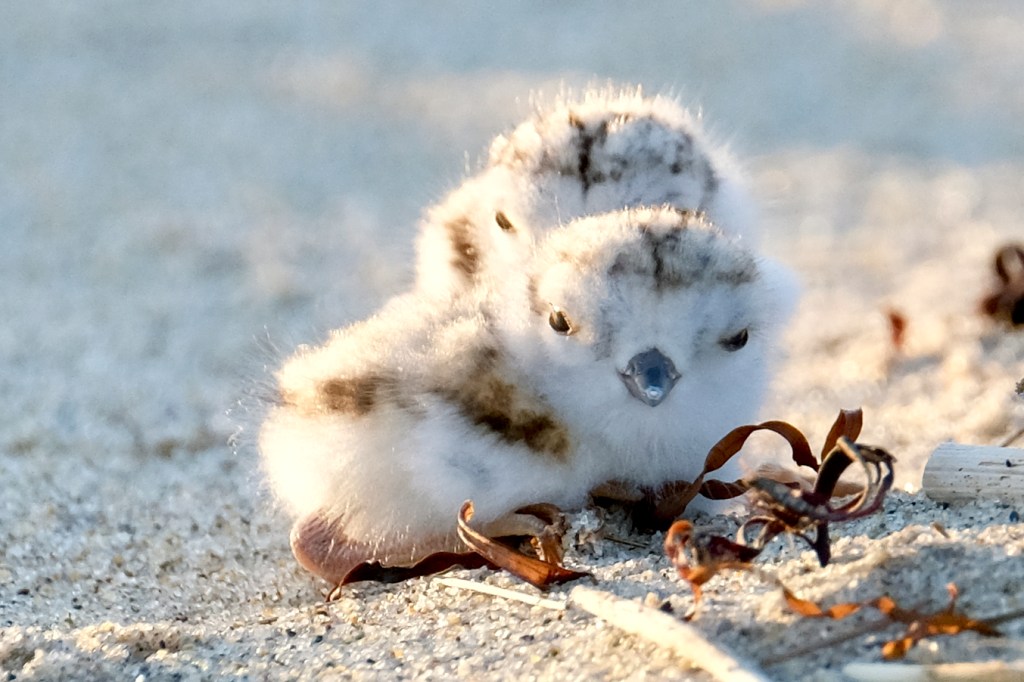
Piping Plover chicks are considered fully fledged at about 5 to 6 weeks, or 35-42 days. The fledglings typically continue to forage and rest at the beach of their hatching for approximately one to two weeks more, building their fat reserves for the southward migration. Plovers spend the winter months at beaches along the Gulf Coast, Southern Atlantic Coast, and Caribbean Islands.

You, too, can be excellent Piping Plover stewards. Please respect the restricted areas set aside by conservationists for the birds. If you see Piping Plovers on the beach, give them lots and lots of space; they wander far outside of denoted nesting areas, from the dunes to the shoreline. When Plovers are at the shoreline and in the tide pools, they are usually foraging. Undisturbed feeding allows the birds to grow strong and to migrate successfully. Please do not follow the birds while they are feeding in hopes to get a close up with your camera.
Thank you for helping to protect Piping Plovers!
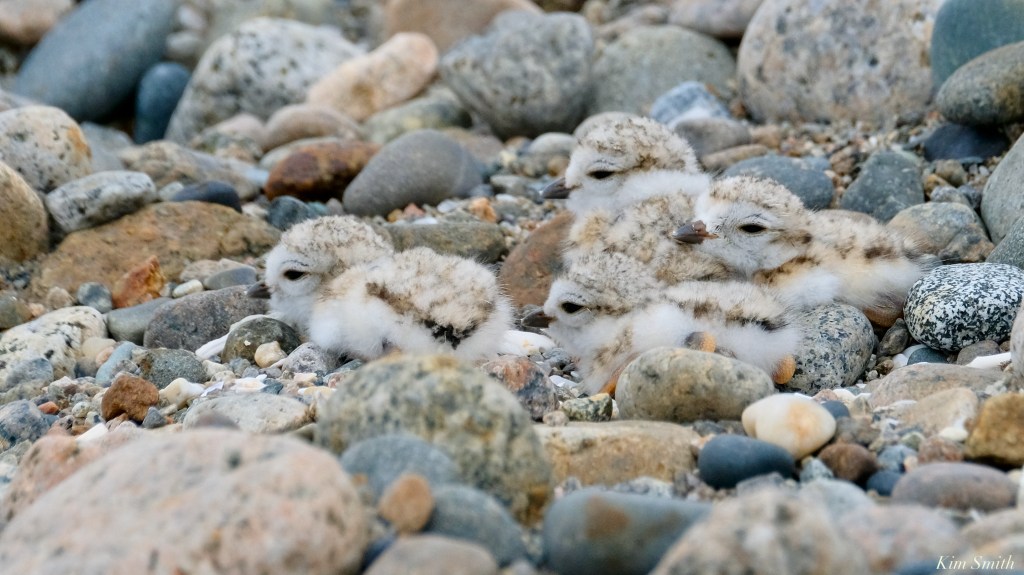
Piping Plover are well camouflaged in the popples
 The Piping Plover Project