
Adorably long-legged Killdeer Plover fledgling, one of four Killdeer chicks that hatched at a Cape Ann beach this summer
One of the shorebirds often confused with Piping Plovers are Killdeers, which are another type of Plover that nests on beaches. Killdeers not only nest on beaches, they breed at a wide variety of habitats including grasslands and dunes. They have even been known to nest on rooftops, golf courses, and parking lots! If you see a Piping Plover and Killdeer near to each other, it’s easy to see the difference. Killdeers are noticeably larger and their mantle (upper back) feathers are chocolatey shades of brown, not the soft tan of the Piping Plovers.
One way to tell whether Killdeer or Piping Plover when they are not side-by-side is to look at the collar bands. Piping Plovers have one; Killdeers have two– a wide band that encircles the neck and a shorter band across the upper front part of its chest. If you are close enough to see the eyes, the Killdeer’s pupil is black surrounded by a red iris , while both the iris and pupil of the PiPl is black. The Killdeers legs are pinkish gray, the Piping Plovers legs are orange. There are many other differences but this will get you started when comparing the two.

Killdeer adult and three chicks – note the double black bands, pinkish legs, red iris, and solid black bill.


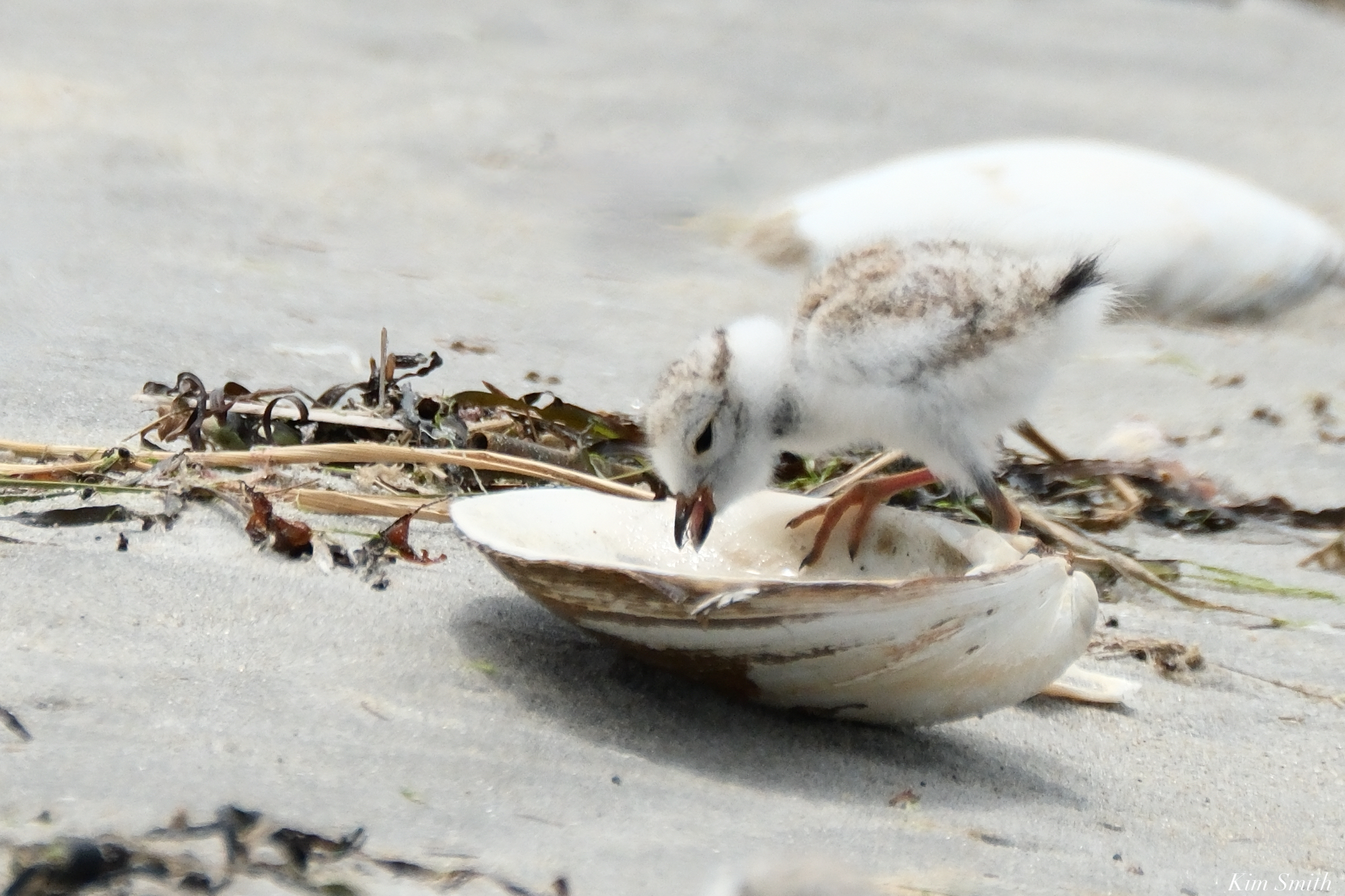
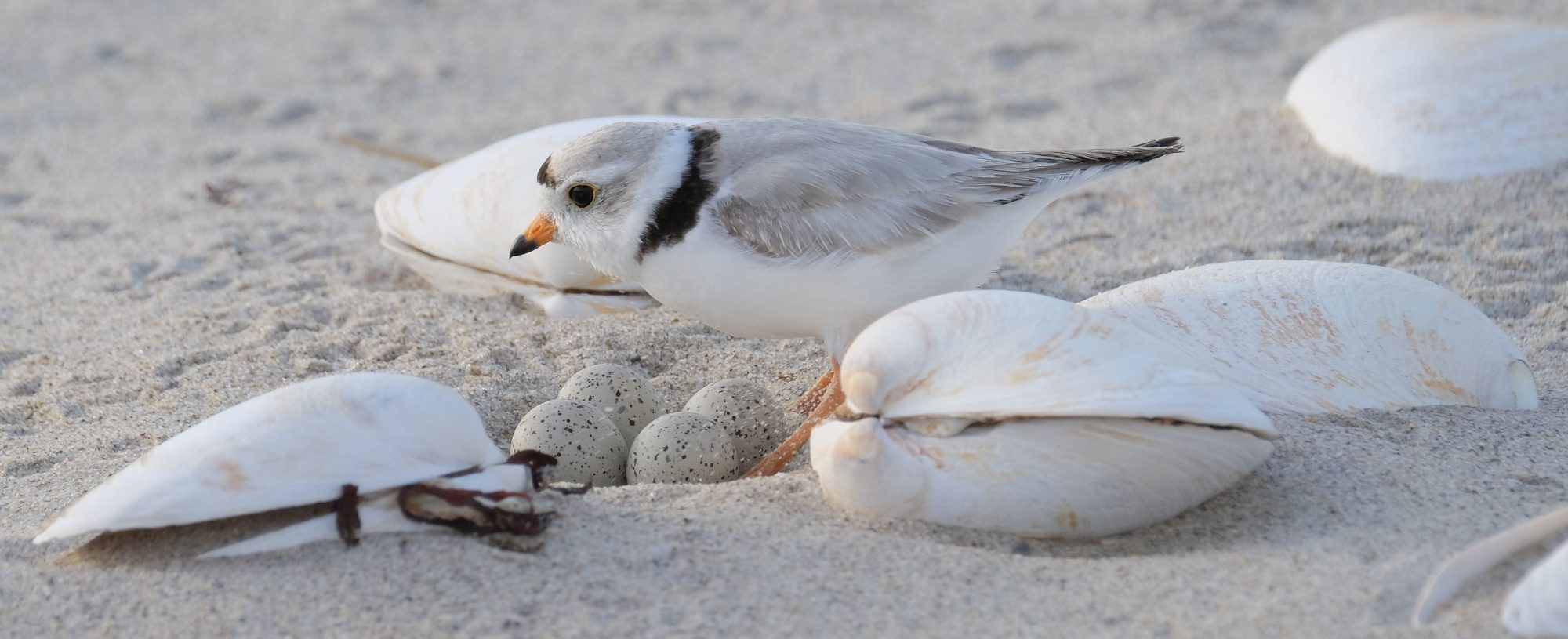
Piping Plover adult (Super Mom) with singe collar band, light gray-tan mantle, black-tipped orange beak, and jet black eyesKilldeer chickPiping Plover chick
Listen to the Killdeer parents calling to the fledglings. Killdeers are thought to be named for their distinctive vocalizations. Kill-dee, kill-dee eventually became Killdeer. I think I prefer Killdee 🙂
 The Piping Plover Project